
Wind power generates noise at levels that Ontario says must meet enforceable standards—but it has no enforceable standards. The long shabby story of wind noise from the province’s wind energy regime: Misguided Direction or Failure to Communicate?
The issue of noise from Ontario’s wind farms deserves a full public review. Instead, people are getting a run around from bureaucrats and politicians. Standards don’t exist, yet approvals are being issued without regard to consequences or the impact on people of noise levels.
Donna Cansfield, in November 2005, as Ontario Minister of Energy issued a “Direction” to the Ontario Power Authority instructing it to enter into contracts for up to 1000 MW of new electricity supply from renewable energy. Most were wind turbines. The health and other effects of wind turbines wasn’t actively studied before the contracts were signed. Noise, building codes, environmental standards etc. existed and were adapted tofit. No real review was undertaken.
To cite an example, the Amaranth wind contract used Stantec Consulting Ltd. of Guelph, Ontario to complete an Environmental Screening Report in February. They used Helimax Energie Inc. for the “noise” sector portion of that report. Three and a half years later Helimax presented a paper at the June 2008, World Wind Energy Conference which stated: “no recognized standard exists for measuring the noise impact of an operational wind farm.”
So the “noise” information used for Amaranth in the Environmental Screening Report in 2005 to secure the licence from the Environment Ministry was done without a “recognized standard”.
A leaked paper from the Guelph district office of the Ontario Ministry of the Environment stated the local authority “knowingly issued a series of Certificates of Approval (AIR) that are unenforceable.”
Sound measurement reports from the Ministry of the Environment exceeded the approved 40 decibel limit by almost 30%. The Ministry notes that allowances are related to wind speed and will allow 51 decibels based on higher wind speeds. This is almost 30% greater than those “experienced in a quiet office”. Research indicates a “clearly notable change” occurs with only a 5dB change and a 10dB increase is roughly equivalent to being a doubling in the perceived sound level as noise is measured on a logarithmic scale similar to earthquakes.
Noise produced by wind turbines is defined as “tonal” (eg: sirens, saws, etc.) and intrusive. Normally a 5dB penalty is applied for tonal noise, including that emanating from wind turbines. It is not clear that this penalty is applied by the Ontario regulators.
Dr. Arlene King, Ontario’s Chief Medical Health Officer, has accepted the findings of others in the May 2010 review endorsing setbacks established by the Ontario Ministry of the Environment so that noise levels that do not exceed 40 decibels at the nearest residence. However, health complaints by residents are generally ignored and end up tangled in provincial bureaucracy. A recent story indicates the MOE received 750 complaints in two years.
Most complaints about how people have suffered wind turbine related health effects remain unresolved, but over 25 families (five in Amaranth alone) have publicly disclosed their problems. Families have abandoned their homes and others have had their homes purchased by the developers and signed “gag” orders. Despite all of this, the various Ministries have not altered or changed their outright denial that there are any health effects.
We don’t really know what the health and quality of life issues are related to wind farms, but the evidence so far seems at odds with the basic premise that politicians are elected to execute the “will of the people.” We clearly need a full open factual review of the wind/noise issue. We have the noise, what we don’t is sold review of the facts on the impact on citizens who have to live with it.
to read a more complete version of my comments and report on this subject. click here
Financial Post, Parker Gallant, July 8 2011


 The Danish press reports the case of a garden centre going out of business because of nearby wind turbines. Headaches are frequent among employees, and female workers complain of unusual bleeding and problems with their menstruation cycles. They are worried that more serious illnesses may follow and five of them recently resigned from their jobs. The owner is now closing shop for fear of being held responsible should a child be born with deformities, as happened to numerous mink puppies at a fur farm near wind turbines in Jutland (1).
 Take a good look around your home, your yard, your community and
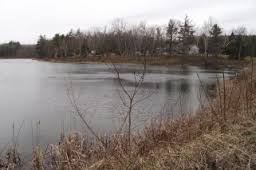 the NRWC project for West Lincoln and Wainfleet and Haldimand
 way things will
 Audible – Something that can be heard by the general public
 I would like to congratulate you in your re-election and as the new Minister of the Environment. I was impressed to see your experience as Minister of Transportation and as a former mayor. At the same time I understand what challenges you will be facing in this new position dealing with the incompetence you are inheriting within that department, handed down through the entire inappropriate process created in the Green Energy Act. This Act took away municipal powers and sidelined 21 other Acts of protection for the environment, human and wildlife habitat for the sake of wind energy development as first priority. This is also why the Liberals are facing a rebellion in rural Ontario by residents who have been ignored and bullied with no consideration as citizens in this province.
 Fossil fuel and insurance company executives “could face personal liability for funding climate denialism and opposing policies to fight climate change,” Greenpeace recently warned several corporations. In a letter co-signed by WWF International and the Center for International Environmental Law, the Rainbow Warriors ($155 million in 2013 global income) suggested that legal action might be possible.
 Mothers Against Wind Turbines Inc.