Category Archives: Health

CONNECT THE DOTS….ARE YOU AFFECTED BY THE INDUSTRIAL WIND TURBINES IN WEST LINCOLN

Let us help you Connect The Dots

I feel fine. So what is the problem?
Not everyone is affected. READ ON and find out who is and why. LISTEN to your spouse, your children, your neighbours. PAY ATTENTION to your pets, your livestock. OBSERVE your wild life.

Connect the Dots_posters-2.docx

Reporting Wind Project Concerns / Complaints in Niagara

You should make 3 Reports each time you call or write. Each time you call, identify the project , and ask for a Confirmation # So your call / complaint will be registered.

Contact Info for Open House.docx

Use this form to record your current observations,

what you have noticed or done so far. For your Pets or Livestock you may have noticed a loss of appetite, prowling at night, avoidance of certain areas of the house or barn or field, agitation, bad temper. Mark down the changes.

SAMPLE Property Assement.doc

SOLUTIONS … are there any?

The more information you keep the better you will understand the problem. The better you understand the problem the closer we all are to finding solutions. Your compiled notes will help you to find some of those solutions.

SOLUTIONS.doc

Suggestions for information to keep in your journal.

The purpose of a journal is:
(a) To help you to identify when you are most affected; (b) What the factors contributing to your symptoms may be; (c) Tracking the symptoms/problems; (d) Monitoring when the symptoms go away; (e) Clarifying in your own mind what the problems really are.

Suggestions for information to keep in your journal.docWhat is happening.doc

What is happening? I don’t hear anything.

You cannot see the wind, but you can feel it on your cheeks. You cannot SEE an earthquake but you can feel the vibrations, you can see things falling down or shaking. Turbines create turbulence. Turbines vibrate. Turbines transmit sound. All of it is WAVES that are passing through the ground, the air and through your property. Some properties, some buildings and some people are more vulnerable.

What is happening.doc

An Inconvenient Stewardship

“Does the Minister believe it is appropriate for the Government to approve a project that puts out inaccurate and incomplete information?”

lsarc's avatarlsarc

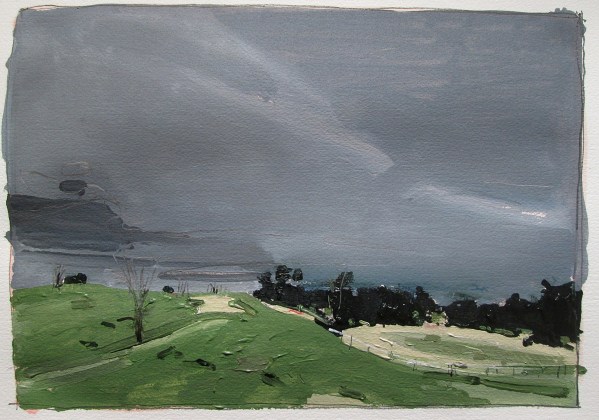
Oak Ridges Moraine scene
painting by Oak Ridges Moraine artistHarry Stooshinoff
 

The Oak Ridges Moraine region was a model of how community stewardship of the great aquifer, which was dubbed the “rain barrel” of southern Ontario, could become a driving force for protective environmental legislation such as the ORM Protection and Conservation Act.

Development is carefully controlled to protect water resources in municipalities like City of Kawartha Lakes. So the imposition of greed energy on the communities has been seen as an insult to their established culture of stewardship.

Protecting the Oak Ridges Moraine was an important issue for the Liberals during the election campaign which saw Dalton McGuinty elected Premier in 2003. Dalton McGuinty is now an Independent Director of a renewable energy company:

Key people..

Dalton McGuinty, Independent Director
Innergex Renewable Energy, Inc.
 

Description Innergex Renewable Energy Inc.

Innergex Renewable Energy, Inc. operates as a Canadian independent renewable power producer…

View original post 591 more words

Kafkaesque: Lawless loophole lets wind company endanger human lives

FauxGreen's avatarFAUXGREEN

Another Kafkaesque industrial wind turbine nightmare in Ontario. A regional airport (Collingwood), with an aerodrome close by (Stayner), and eight 500’ (152 metres) air-space-invading industrial wind turbines (wpd Canada’s Fairview Wind Project) to be wedged between both airfields, posing grave danger to pilots and their passengers—and the whole thing approved by the Ontario Liberal government.

IMG_1490

What could possibly go wrong when pilots, flying visually without instrumentation (as is the case in over 90% of the flights at these two airports), have to negotiate a safe take-off or landing through a blur of Georgian Bay fog, or lake-effects snow, and an indiscernible phalanx of gigantic 50-storey-tall white windmills?

All eight of the planned wind turbines will “penetrate” the safe arrival and departure airspace mandated by Transport Canada standards.

The Collingwood-Stayner airspace is a no-man’s-land of regulation, a lawless vacuum with respect to wind turbine installations. Ontario’s Green Energy Act deliberately 

View original post 498 more words

Health controversy continues

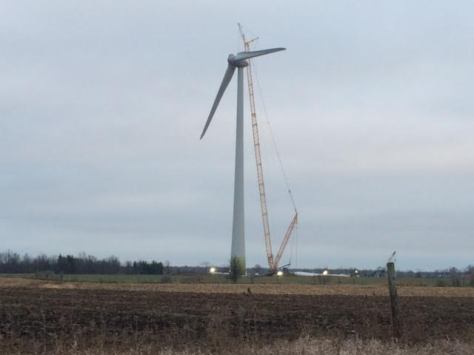
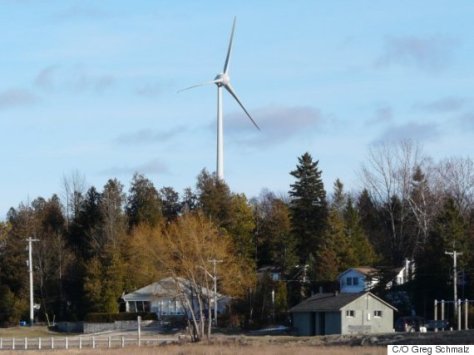
el pasoSheriff and NextEra to conduct infrasound study at El Paso County wind project located in United States.

By Lindsey Harrison
   Calhan residents attended the El Paso County Board of County Commissioners meeting again Nov. 3 to voice their concerns about potential health hazards related to the Golden West Wind Farm project. Joe Cobb, a resident who lives within the wind farm’s footprint, said he left the meeting as frustrated as when he went in.“I take two days off of work to come to talk, and I get three lousy minutes,” Cobb said. “I am spending a lot of money just to be heard.”

In all, Cobb said he has spent $3,700 on his animals, which includes veterinary and farrier bills and extra hay because the animals won’t go out to pasture, since the wind turbines became active in September. His animals and his family are feeling the negative effects from the turbines.

“We’ve got a blind duck, four out of seven horses that can hardly walk because their feet hurt so badly, donkeys that will not go out to graze, two guinea fowls have died; our little dog has congestive heart failure and mastitis, and four of my son’s five neon tetra (fish) have died,” he said. “The fifth is blind in one eye. These animals all acted normally for the many, many years that we have lived here, and you put these turbines up and there are dramatic changes in my animals’ health and my family’s health.”

According to an article published online in the Bulletin of Science, Technology & Society Sept. 20, 2011, “The electromagnetic waves are generated by the conversion of wind energy to electricity. This conversion produces high-frequency transients and harmonics that result in poor power quality … . High-frequency transient spikes that contribute to poor power quality, also known as dirty electricity, can flow along wires, damage sensitive electronic equipment, and adversely affect human and animal health.”

Cobb said his other concern is the infrasound emitted by the turbines. Infrasound is acoustic energy or sound pressure felt as separate pressure pulsations, according to an article written by acoustic engineer Richard James, published on wiseenergy.org Feb. 20.

Dr. Nina Pierpont published a book in 2009 called “Wind Turbine Syndrome: A Report on a Natural Experiment.” In it, she lists adverse effects of living near a wind farm, which include “sleep disturbance and deprivation, headache, tinnitus (ringing in ears), ear pressure, dizziness, vertigo (spinning dizziness), nausea, visual blurring, tachycardia (fast heart rate), irritability, problems with concentration and memory, and panic episodes associated with sensations of movement or quivering inside the body that arise while awake or asleep.”

People can find information to support claims for either side of the issue, said Dan Martindale, director of El Paso County Public Health. “In terms of infrasound, that is something that is very difficult to measure,” Martindale said. “It depends on who is studying it, the length of the study and so on. There is just no conclusive evidence of what the residents are claiming of the noise and infrasound projected by the turbines.”

Laura Wilson, another resident living within the wind farm’s footprint, said she pleaded with the BOCC to hold off approving the project in 2013 (when it first went to the board), until the county had a chance to further review all the available information about turbines.

“These very issues were brought to the commissioners’ attention before they approved the project on Dec. 19, 2013,” Wilson said. “There is no excuse for anyone to try to plead ignorance about any of this.”

Amy Lathen, BOCC member, said she has read literature that states wind turbine syndrome is a legitimate concern, and she has read other literature that states it is a placebo effect. Because of the conflicted literature, the BOCC has directed the El Paso County Sheriff’s Office to work with NextEra Energy Resources, the company that owns the wind farm, to study the existence of infrasound on the wind farm, she said.

“Because it can be considered a noise ordinance issue, the sheriff’s office is responsible for investigating that,” Lathen said. “The sheriff’s office has already been out there testing prior to the Nov. 3 meeting because we had complaints about audible noise.”

Lathen said the county does not have the equipment to study inaudible noise or infrasound, so they are in discussions with NextEra to supply the equipment to conduct the study. The county will ensure that someone qualified to study inaudible or infrasound will help with the process and calibrate the equipment readings, she said. “We want to make sure we are doing this right.”

Lathen said she voted against the project in 2013 because she thinks the turbines have an impact on people, and some turbines have been built too close to some of the residences. “I do not like the federal mandates or the subsidies,” she said. “I have a problem with the whole wind power program and the mandates that exist there. I am just not a fan; I never have been. I am just trying to do my best dealing with these issues, but I lost the vote about whether or not to approve the wind farm.”

The BOCC only has authority when it comes to land use issues, Lathen said. Any health issues would need to be addressed through the board of health, she said.

Wilson said she has no faith that the board of health will take the issue seriously. “I feel that they have intentionally ignored all of the information we have given them,” she said.

EPC Public Health could easily do what the health department in Brown County did, but they have chosen not to do anything, Wilson said. “I truly believe that each and every one of them has the attitude that they are too big to be accountable to anybody, and that is a problem.”

According to the September issue of The New Falcon Herald, the Brown County Wisconsin Board of Health declared the Shirley Wind Farm Project a human health hazard.

Cobb said that with all the evidence the BOCC and EPC Public Health have received on the health hazards of the turbines, a similar declaration by the EPC Public Health board should be made.

Commissioner Dennis Hisey, who also sits on the EPC Public Health board, said he was not aware that the declaration handed down in Brown County was made by their board of health. “I did not read all of the information (presented to me),” he said.

Martindale said the situation in Brown County is different from the one in El Paso County. “The board of health here does not have the authority to determine what happens with the wind farm here,” he said. “The board of health and myself are very sympathetic to these individuals that have come to us with their requests and information regarding the wind farm. I truly believe that they are having these symptoms.”

The only recourse citizens have is the study, Lathen said. NextEra has to supply the equipment and coordinate with the sheriff’s office to conduct a study of the infrasound within the wind farm’s footprint.

“It is a very difficult balance, but it is the reality now, and we want to work within that reality,” she said. No date for the study has been set.

READ ARTICLE:  http://www.newfalconherald.com/DisplayPrintArticle.php?ArticleID=10921

Unifor’s Hypocrisy On Noise Hazards

unifor-WIND-TURBINE-570

By: Karen Hunter

The National Day of Mourning sends “a strong message to all governments of their obligation and responsibility to strongly enforce health and safety laws and regulations,” says Unifor, Canada’s largest private-sector union, formerly the CAW.

There’s a “serious lack of commitment,” Unifor says of the provincial government, “to enforce the health and safety protections that we have fought for,” so “unfortunately, the suffering continues.” One of the hazardous dangers flagged by the union on its website notice is noise.

Meanwhile, a new online petition targets Unifor for its failure to comply with provincial health and safety protections, specifically noise regulations.

Unifor owns and operates the controversial CAW Wind Turbine, located on its property in Port Elgin, Ontario on the shore of Lake Huron. The turbine began operation in 2013 to generate money for the union. At the time, the Ministry of the Environment (MOE) approved the turbine on the condition that the Union would conduct noise audits within the first two years of operation and provide MOE with the results.

Now, as the turbine begins its fourth year of operation, the tests and results are, at a minimum, two years late.

140 noise complaints prompted town council to pass a motion asking the CAW to honour President Ken Lewenza’s commitment to shut down the turbine if it harmed residents.

MOE knew — as did everyone else — how important noise monitoring would be. Unifor’s turbine is located just 210 metres from the nearest home, less than half of the 550-metre distance required by provincial noise regulations. MOE approved Unifor’s turbine after the union had the community’s zoning changed from a rural tourist/recreational classification to city semi-urban to allow for increased noise.

To further address noise levels, the union stated that its powerful 800kw turbine would operate at just 500kw (despite reduced revenue generation) and that it would self-monitor its operation. Since its startup, Unifor and MOE have received hundreds of noise complaints, day and night, from the nearly 200 families who live within the turbine’s 550-metre radius. Still, the noise testing has not been done.

Back in 2013, during the turbine’s first six months of operation, 140 noise complaints prompted town council to pass a motion asking the CAW to honour President Ken Lewenza’s commitment to shut down the turbine if it harmed residents. The union dismissed the request.

In the turbine’s second year of operation, the district MOE office asked the union to hire an independent acoustic consultant, conduct tests to determine if the turbine is exceeding ministry standards, and provide the results to the ministry. The test results have still not been received.

In the turbine’s third year of operation, town council asked Unifor and MOE to meet and discuss the community’s ongoing noise problems plus documents (obtained through a Freedom of Information request) that reveal incidents where the turbine’s noise exceeded government standards. Unifor declined to attend.

Unifor’s turbine is now in its fourth year of operation without the required tests showing proof of compliance. Nearby residents have even tried to conduct their own professional tests. But their efforts have been thwarted by MOE guidelines that require Unifor’s participation. So, the families continue to suffer from the turbine’s noise. And both Unifor and MOE are well aware.

The families hope their petition will generate enough public pressure to force Glen Murray, Minister of the Environment and Climate Change, to enforce the noise tests and result in Unifor doing them. So far, nothing else has worked.

Will the union-promoted National Day of Mourning convince the provincial government to enforce legislation that protects health and safety? If so, what will it take to convince Unifor to comply?

READ ARTICLE: http://www.huffingtonpost.ca/karen-hunter/unifor-wind-tubrine_b_9781936.html

Please sign the petition.

Living With Wind Turbines

Community Information Open Househouse surrounded by wind turbines

May 17th,  2016    3-7pm 

Abingdon Community Hall, 9184 Regional Road (Silver Street):   https://www.google.com/maps/d/viewer?hl=en&mid=1ToLNLuNTtV1jlj25jc1BN6lu1W4

This will be a small drop- in style open house which will provide a private opportunity to compare experiences, share resources and learn from others living within Industrial Wind Turbine areas. It will give us the opportunity as a community to better understand how IWTs are affecting us and learn what to do about it.  We hope to empower you as we discuss the issues.  Please invite your neighbours.

Incorrect to use the word “farm”

Grimsby Lincoln News

I looked at my free copy of the Grimsby Lincoln News this week and could not help wondering why your publication needs twelve five-inch by ten-inch advertisements related to what is called “Niagara Region Wind Farm”.

8c0c0554-b1cf-4cac-a1f6-9ab51c25619eSurely a simple description with a smaller picture for each of the 12 areas would be enough to remind your readers of the ecological disaster that is being unequivocally forced on the citizens of the Niagara Region.

If you think about it, just the sly use of the name “farm” is an oxymoron. When I think of a farm, what comes to mind is ducks and geese and chickens and hens and cows and pigs and plows and fields abundant with edible plants that have been planted or seeded and are being grown and harvested to feed and support the survival of the human race.1297813168809_ORIGINAL

So where does the relationship between a farm and a 300-ft monstrosity in a field that causes visual and noise pollution and uses wind [when available] that cannot be seen by the naked eye, cannot be stored or planted and cannot be harvested.

Wind Farm. I don’t think so!

unnamed (4)Now, what we have here is field that used to be an active farm and is now defunct. What is left of the farm is now no more than the foundation of a mini power generator that causes death to flying birds along with all the other negative possible resultant health problems from the generation off low frequency sounds and infrasound for anyone living close by.Of course, one mini generator is not enough, so we get hundreds being erected all over the Niagara Region. Make you wonder why the politicians did not simply build a nuclear power station beside the existing Nanticoke Generating Station where there is an abundance of cooling water available from Lake Erie. It would only take one Nuclear Power station to replace every mini generator in Ontario. Not sure if Samsung are in the nuclear power business. Seems like they are in everything else.

But I digress, how about the Grimsby/Lincoln/Niagara News asking your advertiser for the wind Turbines to drop the word “farm”.

Perhaps our own Tim Hudak will step up to the plate and become our own Don Quixote and fight, if not to stop the windmill installations, then at least fight to drop the use of the word “farm”.

Peter Kelly, Grimsby

Letter Published May 4, 2016 via  Niagara This Week.

http://www.niagarathisweek.com/opinion-story/6526880-incorrect-to-use-the-word-farm-/

Danish Workers at Siemens Chronically Ill

siemensMay  2nd, 2016 8:50 am| by Shifa Rahaman

DR reports that up to 64 workers at Siemens Wind Power in Denmark have developed chronic illnesses after prolonged exposure to dangerous chemicals over the last decade.

Scandal
As part of its 21 Søndag series, DR yesterday revealed it has access to reports from the National Board of Industrial Injuries in Denmark dealing with 64 compensation cases brought by employees against the company.

According to DR, the National Board of Industrial Injuries has reached the decision that the illnesses developed by the employees in question, including asthma and eczema, are a direct result of exposure to the toxic chemicals epoxy and isocyanates.  The chemicals are known allergens, and they are on the EU’s list of carcinogenic substances.

According to the Danish Working Environment Act, workers can seek compensation if they have been exposed to such chemicals for prolonged periods of time.

64 too many
According to experts, 64 is a high number – even for a company as large as Siemens.

[The numbers are] shockingly high and very serious. When someone becomes sick as a result of these substances, they remain sick for life,” Hans Jørgen Limborg, a workplace researcher and manager at TeamArbejdsliv, told DR.

Rasmus Windfeld, a public relations officer at Siemens Wind Power, stated that Siemens was committed to improving working conditions and called the current situation “totally unacceptable”.

Sixty-four people injured working for us is 64 too many. We’re committed to working at it, and the number will soon be down to zero,” he told DR.

According to DR, Siemens has confirmed it illegally used isocyanates during the manufacturing process for wind turbines from 2003 to 2011.


READ ARTICLE:  http://cphpost.dk/news/business/dr-news-reports-danish-workers-at-siemens-have-become-chronically-ill-after-prolonged-exposure-to-dangerous-chemicals.html

Wind Turbine Investigation Begins

page_Wind_Turbines_109Health Unit investigation based on perceived health effects of wind turbines.

(Huron County, Ontario) – May 2, 2016

The first phase of a Huron County Health Unit investigation on the perceived adverse health effects of wind turbines is about to get under way.

Leading the investigation is Health Unit epidemiologist Doctor Erica Clark.

She tells Bayshore Broadcasting News that the first phase launching this month will be dedicated to information gathering.

Doctor Clark says she will interview each participant personally, before any turbine-related information is received.

The questions asked will include the number of turbines located near where the participant lives, and what kind of structures are on their property.

Doctor Clark notes that each person taking part will then be given a personal code to use when answering questions in the on-line portion of the survey.

For those without Internet access, the survey is available in hard copy form.

She points out that further action in the second phase of the survey will depend on analysis of phase one questionnaires.

Phase two will involve actual measurements of things like ambient noise coming from the turbines.

Doctor Clarke says the Health Unit will share survey information with the provincial and federal governments.

She stresses that the Health Unit initiative is not related to the Health Canada survey of health issues connected to wind turbines that was done in 2013 and 2014.

Acoustical measure analysis is still being examined, and findings of the federal study have not been released yet.

READ MORE:   http://www.bayshorebroadcasting.ca/news_item.php?NewsID=84200

How Does Noise Affect Us?

The following article is about a researcher who is mapping an American city’s soundscape. Community noise audible and non audible impacts our health and wellbeing both in urban environments and quiet rural settings.

Listen: There’s noise we can hear and noise we can feel. Both can affect our health

Mapping Boston’s soundscape

Erica Walker, SD ’17, biked around Boston to take the measure of a city’s noise and its effects on residents.Feature

Hot coffee dripping. Steamed milk hissing. Muzak droning. Keyboards clacking. Patrons murmuring: Erica Walker’s soft voice was almost drowned out by the ambient noise in a Starbucks. It was an ironic touch, considering that Walker has spent the past five years intently tuned in to Boston’s cacophonous urban soundscape.

The 36-year-old researcher, who will receive her doctorate in environmental health next year from the Harvard T.H. Chan School of Public Health, has pedaled nearly every inch of the city on a purple commuter bike—hauling a bulky sound monitor, a boom microphone, and a camera in her backpack—all in the service of plotting sound levels in 400 separate locations and collecting residents’ subjective responses to the aural onslaught.

Most people have approached her with curiosity and, on learning her mission, gratitude. A few, alarmed by the paraphernalia of her sonic surveillance, have reported her to the police.

It’s all in a day’s research for Walker, a former artist who was compelled to undertake the study after suffering her own noise nightmare. The children living in the apartment above hers “ran across the floor literally 24 hours a day, and it drove me crazy,” says the Mississippi native. Plagued with headaches and sleeplessness, she sent out an impromptu Craigslist survey asking about annoying footstep sounds and was flooded with responses. She began to suspect her auditory torment was not isolated.

SIGNATURE SOUNDS

Walker has discovered that each Boston neighborhood carries a unique acoustic signature. The dominant note of Dorchester, for example, is transportation. “You have planes, you have trains, you have automobiles,” Walker says. But Dorchester’s rich cultural diversity also lends evocative countermelodiesChart

to the main theme. “Something I hadn’t planned on is people standing outside and yelling across the street to each other, or sitting on their porches talking really loud—that human element,” Walker laughs. She wonders: “If people are part of that cultural landscape, is it ‘noise’ or just ‘sound’?”

By contrast, East Boston, which abuts Logan International Airport, is perpetually assaulted by the din of low-flying jets. In a community survey that Walker created, one resident called the commotion “a regular horror.” Another lamented, “Everybody is walking around looking wrung out, some are getting nasty, kids are crying more, kids with behavioral issues are out of control. People don’t know what to do.”

THE MISMEASURE OF NOISE

Most formal surveys of sound gauge what are known as “A- weighted decibel levels,” or dB(A)—sounds that are perceptible by the human ear. Boston’s noise ordinance defines “unreasonable or excessive noise” as that in excess of 50 dB(A) between 11 p.m. and 7 a.m., or in excess of 70 dB(A) at other hours. To put this in context, normal human speech at about 3 feet apart takes place at between 55 and 65 dB(A).

Walker found that the city’s ordinance thresholds are rou- tinely flouted. Boston’s two loudest enclaves—East Boston, with the roar of jet engines, and Savin Hill, awash in jangling nightclub noise from across Marina Bay—average 80 dB(A). Passing ambulances clock in at 105 decibels. Construction site jackhammers reach 112. Even those neighborly conversations between porches can hit 85 decibels.

And these numbers don’t tell the whole story. Walker
is also measuring a type of low-frequency noise called “infrasound.” Although vibrations at this level are not picked up by the ear, our bodies still register them. “Infrasound is totally inaudible; we don’t hear it, we just feel it, such as when a bus passes by or a plane takes off,” Walker says.

In nature, low-frequency vibrations take the form of thunder, earthquakes, volcanoes, or nearby herds of wild animals. Such vibrations signal approaching danger—a clue to the toll they may take on mental and physical health in modern urban environments. “Maybe our body is processing these vibrations and we don’t know it,” Walker suggests. Making matters worse, infrasound is not only highly prevalent in cities but also persistent, hard to mitigate, and it travels long distances.

What Walker wants to know is: Are these low-frequency noises, which are rife in urban environments but not included in standard A-weighted decibel measurements, exacting a hidden public health toll?

 Read rest of article:  http://www.hsph.harvard.edu/news/features/mapping-bostons-soundscape/

To listen to an interview (first 5 minutes of podcast): http://www.hsph.harvard.edu/news/multimedia-article/podcast-noise-health/?utm_source=Twitter&utm_medium=Social&utm_campaign=Chan-Twitter-General