Category Archives: Green Energy

Behind the scenes at Premier Wynne’s news conference

wind-blown

Parker Gallant Energy Perspectives

March 8, 2017

While the Premier was promising relief for Ontario electricity customers (and blaming lots of other people), more proof of the government’s mistakes was occurring …

The press conference and press release on March 2nd for Premier Wynne’s announcement on reducing electricity bills by 25% took a full hour — she and Energy Minister Glenn Thibeault hung around to answer questions from the media.

The speech and the press release were a mea culpa — she apparently hadn’t noticed rates had climbed and referred to those high rates as the “elephant in the room.” She laid the blame on all previous governments in her answers to questions, for example:

Decades of under-investment in the electricity system by governments of all stripes resulted in the need to invest more than $50 billion in generation, transmission and distribution assets to ensure the system is clean and reliable.

The decision to eliminate Ontario’s use of coal and produce clean, renewable power, as well as policies put in place to provide targeted support to rural and low-income customers, have created additional costs.

If the premier was genuinely interested in the cause for high electricity bills she could have looked no farther back than her immediate predecessor, Dalton McGuinty. Premier McGuinty brought Ontario the Green Energy Act and the misinformed, unfounded belief that getting power from industrial wind turbines and solar panels, while paying at price multiples of other available reliable power, would work!

Those wind turbines and solar panels were generating power out of phase with Ontario demand even during her news conference, for which ratepayers are paying as much as 80.2 cents a kilowatt hour (kWh).

During the news conference hour, Ontario ratepayers consumed 17,300 megawatt hours (MWh); 85% of that consumption was provided by nuclear (10,000 MWh) and hydro (4,900 MWh). The balance came from gas, wind, solar and biomass. The average generation cost of nuclear and hydro generation was about $59/MWh (5.9 cents/kWh) and $191/MWh (19.1 cents/kWh) for the 15% provided by gas, wind, solar and biomass. The former costs include the “water tax” on hydro generation and the “decommissioning and fuel disposal” costs of nuclear whereas the latter does NOT include the cost of curtailed wind, idling costs of gas plants or the costs of moving those two gas plants from Oakville and Mississauga to save Liberal seats during the McGuinty era!

Also during that hour, Ontario exported 1,075 MWh to Michigan and 1,203 MWh to New York. Those 2,078 MWh (20% of Ontario’s demand) were sold to our neighbours at an average of $11.38/MWh (1.14 cents/kWh). The exports cost about $202,000, under the contract terms, yet resulted in just $23,000 of revenue to offset that cost. Ontario ratepayers picked up the loss of $179,000.

In fact, for that whole day, “net exports” hit Ontario’s ratepayers with a cost of $2.4 million.

Admitting she made a “mistake” while blaming decades of previous “governments of all stripes” is not a solution. And the 25% reduction in bills isn’t real, either: Premier Wynne is kicking the can down the road and laying the burden of her mistake on taxpayers. She still doesn’t appear to have the political courage to admit she, Mr. McGuinty and their governments made a mistake believing the environmental non-government organizations who persuaded them to believe in a green dream that has now, negatively affected all ratepayers in the province, driving away jobs in the private sector.

The herd of elephants is still in the room. Premier Wynne should start clearing them out by cancelling all wind and solar contracts that have not put a shovel in the ground!

Source: Behind the scenes at Premier Wynne’s news conference

CANCEL WIND AND SOLAR CONTRACTS!!!

Deniers in Wind Industry

hear-no-evil

The human health consequences of manipulated measurements

Science deniers in the wind industry

By: Helen Schwiesow Parker, PhD, LCP

Like the tobacco industry before it, the wind industry has spent decades vehemently denying known harmful consequences associated with its product, while promoting its fraudulent feel-good image. Dismissing or denying the serious health impacts of industrial-scale wind turbines is wishful thinking, akin to insisting that tobacco is harmless because we enjoy it.

The problem with wind energy is not just its costly, subsidized, unreliable electricity; the need to back up every megawatt with redundant fossil-fuel power; or its impacts on wildlife and their habitats.

Infrasound (inaudible) and low-frequency (audible) noise (slowly vibrating sound waves collectively referred to as ILFN) produced by Industrial-scale Wind Turbines (IWTs) directly and predictably cause adverse human health effects.  The sonic radiation tends to be amplified within structures, and sensitivity to the impact of the resonance increases with continuing exposure.

These facts have been known to the wind industry and the US government since the 1980s when it became a ‘hot topic,’ with numerous studies presented and published by acousticians working under grants from the Departments of Energy, Defense and NASA. The wind industry response?

Deny the science.  Insist that “what you can’t hear can’t hurt you.” Claim that “neighbors will get used to it.” Measure only outside dwellings, and allow only noise measurements in the field that reflect the relative loudness perceived by the human ear, while drastically reducing sound-level readings in the lower frequencies that are known to cause problems……….

Read More: http://canadafreepress.com/article/science-deniers-in-the-wind-industry


Bat remedy hearing concludes

brown-bat

Simcoe-Grey MPP Jim Wilson demands to know why wind power developers get a remedy hearing on endangered bats when harm has been proven. Minister Murray replied he would have to resign if he intervenes in the independence of the Environmental Tribunal process but it is the Green Energy Act that allows wind projects to be approved. Under the Green Energy Act the Minister has authority to intervene.  The Minister to resign over the harm caused by wind projects?  What an interesting idea!

Wednesday, March 1, 2017

Turbine Hearing Concludes

Collingwood | by Catherine Thompson  

yet more submissions in long-running case

A hearing to do with a wind turbine proposal near Stayner took one day instead of three.

The Environmental Review Tribunal allowed WPD Canada to have a Remedy Hearing to present ways to reduce harm to natural heritage, mainly the Little Brown Bat.

The hearing, held in Collingwood council chambers, was originally to start on Monday, but that day was cancelled because a witness was unavailable. The hearing, on Tuesday, heard from three witnesses.

Dr. Scott Reynolds, presenting for WPD Canada, via Skype, says they would slow down the turbine speed when bats are in the air in an effort to decrease the number of bat deaths.

The second witness, Susan Holroyd, a wildlife biologist specializing in bats, appeared by Skype, on the appellant, Preserve Clearview’s side.

The third and last witness was Ecologist Sarah Mainguy, also for the opponent’s side. She told the hearing there are huge uncertainties in this application such as the number of bats and their exact route in the areas of the turbines. She added that the mitigation suggestions from WPD Canada are not good enough.

Witnesses and lawyers could not comment on the hearing proceedings, but Chuck Magwood of Preserve Clearview, was in the audience.  He says he agrees with their witnesses that one dead Little Brown Bat, which is an endangered species, is too many.

WPD has until March 31st to make written submissions, the opponents have four weeks to reply and then another two weeks for WPD to rebut the reply, taking the latest round in the turbine discussions to May 12th.

Magwood says he expects a decision by the Environmental Review Tribunal in June.

READ AT: http://www.bayshorebroadcasting.ca/news_item.php?NewsID=91434


Wind Power is an attack on Rural America

farm-and-turbinesBy: Robert Byrce  February 27, 2017

Urban voters may like the idea of using more wind and solar energy, but the push for large-scale renewables is creating land-use conflicts in rural regions from Maryland to California and Ontario to Loch Ness.

Since 2015, more than 120 government entities in about two dozen states have moved to reject or restrict the land-devouring, subsidy-fueled sprawl of the wind industry.

The backlash continued last month when a judge in Maryland ruled that the possible benefits of a proposed 17-turbine project did “not justify or offset subjecting the local community to the adverse impacts that will result from the wind project’s construction and operation.” The judge’s ruling probably spells the end of an eight-year battle that pitted local homeowners and Allegany County against the developer of the 60-megawatt project.

Objections to the encroachment of wind energy installations don’t fit the environmentalists’ narrative. The backlash undermines the claim – often repeated by climate activists such as 350.org founder Bill McKibben and Stanford engineering professor Mark Jacobson – that we can run our entire economy on nothing but energy from the wind and sun. Many of those same activists routinely demonize natural gas and hydraulic fracturing even though the physical footprint of gas production is far smaller than that of wind. Three years ago, the late David J.C. MacKay, then a professor at the University of Cambridge, calculated that wind energy requires about 700 times more land to produce the same amount of energy as a fracking site.

house-and-turbines-1
Rural residents are objecting to wind projects to protect their property values and viewsheds. They don’t want to live next door to industrial-scale wind farms. They don’t want to see the red-blinking lights atop the turbines, all night, every night for the rest of their lives. Nor do they want to be subjected to the audible and inaudible noise the turbines produce.

Even in California, which has mandated that 50% of the electricity sold in the state be produced from renewable energy sources by 2030, there is resistance to wind power. In 2015, the Los Angeles County Board of Supervisors voted unanimously to ban wind turbines in L.A.’s unincorporated areas. At the hearing on the measure, then-Supervisor Michael D. Antonovich said the skyscraper-sized turbines “create visual blight … [and] contradict the county’s rural dark skies ordinance.”

In New York, angry fishermen are suing to stop an offshore wind project that could be built in the heart of one of the best squid fisheries on the Eastern Seaboard. Three upstate counties – Erie, Orleans and Niagara – as well as the towns of Yates and Somerset, are fighting a proposed 200-megawatt project that aims to put dozens of turbines on the shores of Lake Ontario. As in California, New York has a “50 by 30” renewable-energy mandate.

Outside the U.S., about 90 towns in Ontario have declared themselves “unwilling hosts” to wind projects.In April 2016, a wind project near Scotland’s famous Loch Ness was rejected by local authorities because of its potential negative effect on tourism. Poland and the German state of Bavaria have effectively banned wind turbines by implementing a rule that allows turbines to be located no closer than 10 times their height to homes or other sensitive areas.

The defeat of the Maryland wind project came as a relief to K. Darlene Park, a resident of Frostburg and the president of Allegany Neighbors & Citizens for Home Owners Rights. “We were up against an army of suits,” she told me. “It’s like a brick has been taken off our shoulders.”Park’s tiny group relied on volunteers and a budget of about $20,000 as it fought the turbines all the way to the state’s public service commission.

Neither the communications director nor the CEO of the American Wind Energy Assn., which spends more than $20 million per year promoting wind power, would comment on the rural opposition to wind turbines. Their refusal isn’t surprising. If the wind lobby – and their myriad allies at the Sierra Club, Natural Resources Defense Council and other environmental groups – acknowledges turbines’ negative effects on landscapes and rural quality of life, it would subvert their claims that wind energy is truly green.

Just as problematic for the industry’s future: to increase wind-energy production to the levels needed to displace significant quantities of coal, oil and natural gas will require erecting more – and taller – turbines (new models reach to 700 feet). But the more turbines that get installed, and the taller they are, the more nearby residents are likely to object.

Wind energy simply requires too much territory. That means we can’t rely on it for major cuts in emissions. Indeed, the more wind energy encroaches on small towns and suburbs, the more resistance it will face. That resistance will come from homeowners like Park who told me, “We feel this renewable energy push is an attack on rural America.”

Robert Bryce is a fellow at the Manhattan Institute and the author, most recently, of “Smaller Faster Lighter Denser Cheaper: How Innovation Keeps Proving the Catastrophists Wrong.”

READ AT: http://www.latimes.com/opinion/op-ed/la-oe-bryce-backlash-against-wind-energy-20170227-story.html

Federal Government abandons wind project on Nova Scotia’s Sable Island

sable-island-horsesThe harsh environment of wind swept Sable Island located off the shores of Nova Scotia famed for its wild horses has claimed the demise of wind turbines. The turbines  are coming down. Sharing a place in the history of the island known as a graveyard for hundreds of shipwrecks  on the Atlantic. The toll now includes five failed wind turbines.


SableIsland postcards2.indd

By Aly Tomson   The Canadian Press    Sunday February 19. 2017

HALIFAX—The harsh conditions and extreme isolation of Sable Island has forced Ottawa to abandon a wind project on the iconic crescent-shaped sandbar — more than 15 years after it launched the initiative.

Parks Canada said wind turbines do not meet the needs of the windswept Nova Scotia island, famous for the wild horses that have roamed there since the 18th century.

“The wind turbines were part of a … project to reduce Sable Island’s dependence on fossil fuels, and were chosen based on the renewable energy technology that existed at that time,” the department said in an email statement about the million-dollar, overbudget initiative.

“Since then, there have been considerable advancements in the field of renewable energy systems.”

Dubbed the Graveyard of the Atlantic, some 350 vessels have wrecked on the island’s shores and hidden reefs since the mid-1700s. It is home to hundreds of namesake horses that have become synonymous with its romantic and untamed image.

Environment Canada launched the pilot project in 2000 — which would have seen the five wind turbines generate energy onto the grid of the island known for its shifting sand dunes and fragile environment.

But when Parks Canada took over management of the 40-kilometre-long island when it became a national park reserve in 2013, the wind turbines were not functioning.

“The project faced several delays due to the environmental sensitivity of the site and wildlife concerns, as well as the isolated and harsh conditions,” the department said, adding that the turbines were fully installed and running in 2006.

“Unfortunately, technical problems continued due to the harsh conditions and the inability to adapt the technology to the operations of the other infrastructure at the site.”

sable-island-horses-2

READ MORE  AT: https://www.thestar.com/news/canada/2017/02/19/federal-government-abandons-wind-energy-project-on-nova-scotias-sable-island.html

Tree Cutting Penalty. A Licence to Kill?

Cedar-Point-Trees-cut-3-1024x768.jpg
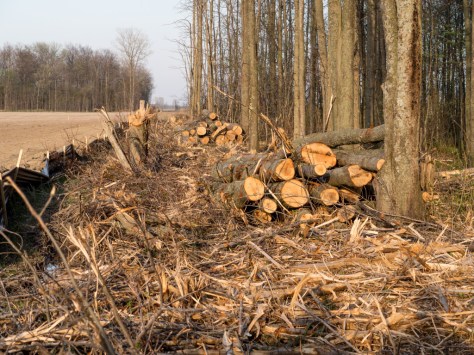
Site of unauthorized clear cutting that occurred during construction of Cedar Wind. Lambton County, Ontario

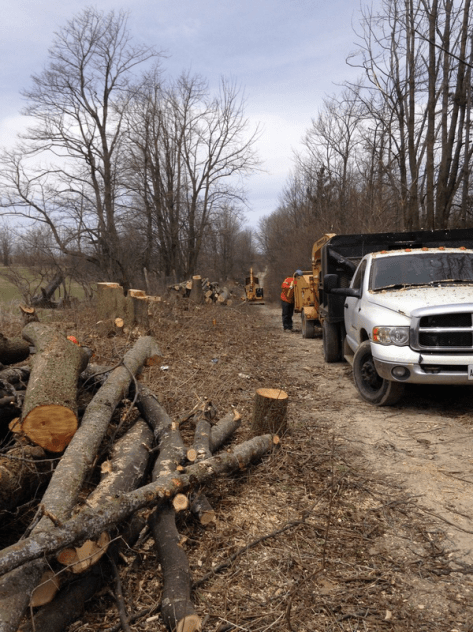
Taking down trees even those under provincial protection is occurring in multiple wind projects and punitive fines are less than a tap on the wrist for offenders.  Cedar Wind construction removed trees and the cost was a mere pittance.

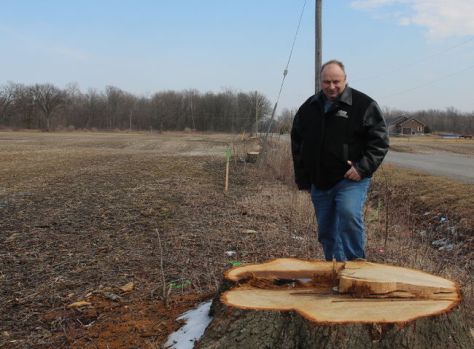
Niagara Wind destroyed well over 7 000 trees including individual trees  estimated to be centuries old including tree species at risk.

1297813168809_ORIGINAL
Old growth tree one of many removed for Niagara Wind. West Lincoln, Ontario

Presentation on trees removed  at Niagara Wind:  https://docs.google.com/presentation/d/1widGvicaK-VA1XXB4xC1OBtMlWopYG281sa94LKdktY/edit#slide=id.p3

WPD Wild Turkey Road
Clear cutting for wind development on ecological sensitive and protected Oak Ridges Moraines (head waters location supplying greater Toronto area)


Lambton landowner handed $6,000 fine in high- profile woodlot clearing case

By: Barbara Simpson  Sarnia Observer  Published: February 15, 2017

If trees are illegally cut in a woodlot and a fine of a few thousand dollars is handed out, is that enough to deter a landowner from clear-cutting again?

That’s the question several Lambton County politicians are raising after learning the details of the penalty the county leveled at a landowner for removing more trees than permitted during the construction of a Cedar Point wind turbine in 2015.

The high-profile case of clear-cutting – which involved an acre of trees in Lambton Shores – resulted in a fine of $6,000 for the private landowner. That amount was paid in full to the county in early 2016.

While mistakes are bound to happen, Sarnia Mayor Mike Bradley said Wednesday the dollar amount of the penalty was not “punitive.”

“In James Bond, they say it’s a licence to kill. This is a licence to cut.”

READ AT: http://www.theobserver.ca/2017/02/15/lambton-landowner-handed-6000-fine-in-high-profile-woodlot-clearing-case

Toolkit for Turbines

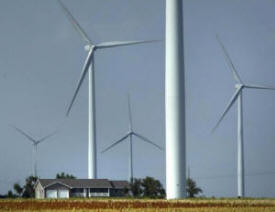
house-surrounded-by-wind-turbines“Pressures to stop (new) wind energy production in Ontario have increased significantly since the controversial GEA. “
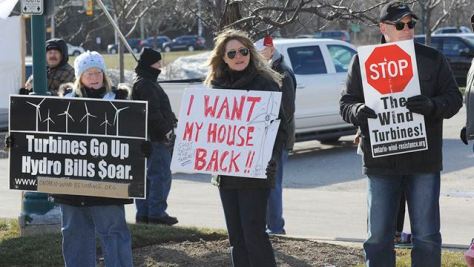
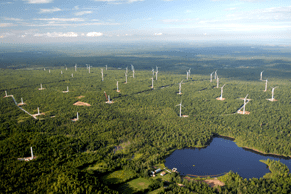
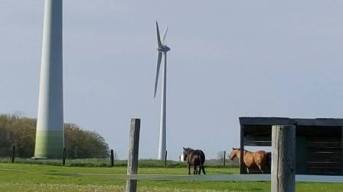
Opposition to wind turbines is facing a growing resistance not just in Ontario but globally. The acceptance and excitement over using an alternative way to generate electricity has  given way to the bitter nightmare  faced by abutting residents who are adversely impacted by these massive and intrusive structures. Courts worldwide are increasingly rendering decisions to compensate families and individuals who have been harmed.

The Toolkit document opines (give it a read and try not to choke on the obvious) as to why a few (smaller) turbines in a less densely populated rural area will meet with less resistance than clusters of hundreds (increasingly larger machines) placed adjacent to towns and settled areas.   It is suggested that entering into a more intimate relationship with wind development will mitigate the harms of not being able to give consent.

This is a false and misleading conclusion as landowners who host wind turbines have given witness that they too were harmed even when money was received.

“The ultimate goal is fairer and much less divisive turbine facility siting outcomes when governments and communities themselves decide that turbine development is the policy path they wish to pursue.”  Toolkit for Turbines: Wind Energy Development in Ontario and Nova Scotia, Canada

Harm from wind power will not be remedied with the stated goal. The document fails to address a fundamental flaw in reasoning- which is to examine if turbines justify the negative documented outcomes. Simply put the wind turbines are not fit for purpose. To continue to pursue an energy policy that accepts inflicting harm on a few without remedy and without proven benefits for the greater good is wilful blindness.

protest_02_72cd1___gallery
Protesters demonstrated in Oakville where Premier Kathleen Wynne was the guest speaker at a Chamber of Commerce luncheon.

Take Care of the Land.

clinton-county-wind

“Take care of the land, because they aren’t going to make anymore.”

Dear Editor:

Wendell Berry, an American environmental activist, cultural critic and farmer says it best: “The economy of money has infiltrated and subverted the economies of nature, energy and the human spirit.” Berry is an educated farmer who is the sum of what he believes. Government, he believes, should take its sense of reality from the ground beneath our feet and from our connections with our fellow human beings.

Last summer, The Clinton County Planning and Zoning Board held a series of hearings as to whether or not industrial (skyscraper sized) wind turbines be allowed to be built in Clinton County. These hearings presented (under-oath) testimony from expert witnesses from all over the country (and Canada) on both sides of the issue.

One of the topics discussed and testified to in a 6-hour session was the question of property values. I am going to refer to research done and testified to in the hearings by Mike McCann of Mike McCann Appraisers, LLC. Mr. McCann has done decades of studies and appraisals of properties located near wind turbine developments. His studies indicate that losses in value can be up to 40% where turbines are up to 3 miles from homes. He referred to a current study by the Economic Financial Studies School of Business at Clarkson University. The Clarkson study clearly shows value impacts out to three miles…..and clearly shows the closer the turbine, the greater the impact.

I found it most interesting that some of the loss of value happens when communities get “wind” of a turbine project coming to their areas and even greater when the project gets built. The value continues to go down when people hear of pending and increased wind turbine projects coming to their areas or neighboring communities. These can be staggering, in my opinion, and cause a no-growth epidemic in counties with potential wind turbine project growth. I can only guess that is why you see abandoned farms and homes in the middle of turbines.

Lastly, but not surprising, I want to list a small portion of the reasons these will affect your property values. They cannot be disputed.

1. Audible sound and low frequency sound.

2. Health concerns and widely reported adverse effects at sites.

3. Sleep deprivation due to noise and flashing red lights.

4. Aesthetic impact due to introduction of large industrial-scale turbines into immediate neighborhoods, which affects perception of compatibility and view from residential property values.

On the last day of the hearings in Clinton County, over 40 residents got up and gave compelling testimony of their own. I will always remember when Clinton County resident Mindy Masters quoted her dad John Thompson with a phrase he always told her as a young child. “Take care of the land, because they aren’t going to make anymore.”

Leslie Dyer,

Can’t Make This One Up

The absurdity for money making associated with wind power knows no limits.  Now you can purchase insurance to protect and maintain your cash flow when that pesky thing called weather interferes with your renewable energy installation.  No need to fret over wind or sun resources above or below par. Maintaining financial performance even with the sun doesn’t shine or the wind doesn’t blow (or blows too fast).

Weather Risk Transfer:

“For businesses and entities working in the renewable energy sector, the single greatest and most significant factor influencing availability and performance is weather. Wind and hydroelectric generators, in particular, face a persistent challenge as they look to manage the intermittency of wind and water resources.”

Source: http://www.gcube-insurance.com/en/coverage/weather-risk-transfer/ 


Enercon Admits Liability for Noise Pollution

13241387_952879334831276_3080059692547901511_n
Niagara Wind’s Enercon wind turbines in West Lincoln, Ontario

In Irish High Court Enercon admitted its liability for claims of noise pollution created by its wind turbines.  Several families in Cork sued the wind turbine manufacturer claiming the noise from its wind turbines were creating ill health that resulted in some of the families having to abandon their homes.  The decision is being watched closely worldwide. This  lawsuit has implications for Niagara Wind project in Ontario as some residents are already reporting ill health and negative symptoms since the installation was commissioned in late 2016.

Wind farm being sued by families admits its liability

Monday, February 06, 2017

By Claire O’Sullivan
Irish Examiner Reporter

The case is next listed for hearing on April 25, and will be closely observed by many of the families living in close proximity to wind farms and who claim that there should be a greater distance between homes and turbines.

The case against Enercon Windfarm Services Ireland Ltd and Carrigcannon Wind Farm Ltd was taken by the Shivnen family and another six households in Banteer including couples, families, and one single occupant.

The householders had claimed their health had been affected by the noise emanating from the turbines since they began operating in November 2011.

Planning regulation around wind turbines remain governed by 2006 guidelines which allow companies to build turbines within 500m of private dwellings.

Updated guidelines stipulating how far wind turbines should be set back from residential homes are three years overdue.

These guidelines will also deal with noise and ‘shadow flicker’ from the turning blades.

Up to 7,000 submissions were made in the public consultation process that followed the issuing of draft guidelines by the then minister for housing Jan O’Sullivan, which set down a mandatory minimum setback of 500m “for amenity considerations”.

The draft guidelines also set a maximum day and night noise limit of 40 decibels for future wind energy development, measured outdoors at the home nearest to the wind turbine.

The guidelines also stipulated that there should be no shadow flicker at home within 10 ‘rotor diameters’ of a turbine.

The Shivnen case appeared before Mr Justice Gilligan on December 6 where the Court recorded that liability had been admitted by the defendants.

A spokesman for Enercon was unavailable for comment.

A spokesman for the Department of Housing, Planning Community, and Local Government said that, due to the programme for government, ongoing policy, and legal developments, the Department is continuing “to advance work on the guidelines and related matters in conjunction with the Department of Communications, Climate Action and the Environment, in order to bring the various issues to a conclusion as early as possible”.

“It is expected that a statement on the matter will be made in the coming weeks, outlining the timelines for implementation of the various elements,” said the spokesman.

READ AT: http://www.irishexaminer.com/ireland/wind-farm-being-sued-by-families-admits-its-liability-442172.html