All posts by mum4kids

The Green Energy Act is Toast

“The Green Energy Act is toast,” he added. “But the act is a very large, far-reaching piece legislation. It’s not just about some wind and solar generation. It has huge impacts on the administration of the electricity system.”

Tom Adams-Energy Analyst & Researcher.

ford
Doug Ford is to be Ontario’s new Premier  

London Free Press|June 9, 2018|Randy Richmond

Post-election analysis: Five key local issues to watch

From deeply divisive wind energy projects, to school closings and transportation, five issues loomed large in the London region during the Ontario election.

GREEN ENERGY: ‘The pigs are not going to fly’

Randy Richmond

The London Free Press

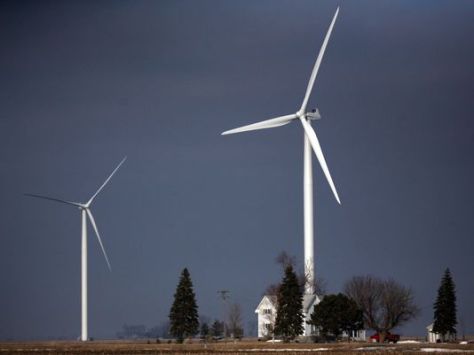
Despite Doug Ford’s commitment to tear apart Ontario’s energy system, consumers shouldn’t expect to see much change in their electricity bills, says an energy analyst and researcher.

“Don’t expect your rates to go down. The overall cost of power is likely to rise over the next four years. The power system will look a lot like it does today,” Tom Adams said.

What will likely be gone: The Liberals’ $600-million conservation fund that paid homeowners for installing energy efficiency upgrades.

But even that won’t come without strong opposition, said Adams, author of several academic papers on energy and a consultant for consumer organizations.

Ford has promised to scrap the controversial Green Energy Act, the legislation that led to costly wind turbine projects across Southwestern Ontario – often over the objection of municipalities stripped of control over the location of energy projects.

The legislation became the flashpoint for anger over rising energy bills, which were caused only in part by sweetheart contracts with green energy suppliers.

READ ARTICLE

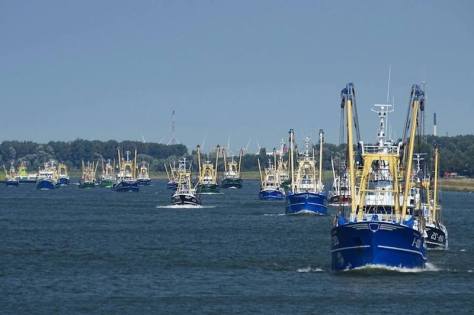
Dutch fishing armada sails into Amsterdam to protest wind turbines

dutch protest
Dutch fisherman take protest against offshore wind to Amsterdam

Fishermen take protest to Amsterdam

Published by FiskerForum, 03-06-2018 · info@fiskerforum.dk

Hundreds of fishermen from Holland and Belgium took their grievances against the discard ban and the loss of fishing grounds due to the expansion of wind farms to Amsterdam this weekend, making plain their dissatisfaction with the way their industry is heading.

Seventeen fishing vessels docked in the centre of Amsterdam, a city that built its wealth and prosperity on the herring fishery. Between 600 and 700 fishermen from Holland and Belgium arrived in the city for a peaceful but highly visible protest that was followed by dozens of journalists.

READ ARTICLE

Paying to Grease the Wheels of Justice

Falmouth wind turbine 4.jpg

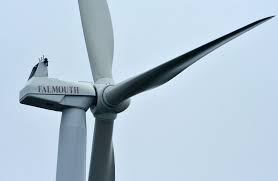
Falmouth wind litigation winds down

By Christine Legere |May 31, 2018 |Cape Cod Times

FALMOUTH — An eight-year legal battle between the town and residents who live near two controversial wind turbines at the municipal wastewater treatment plant off Blacksmith Shop Road has been brought to a close with the recent settlement of three remaining court cases involving monetary damages.

The town’s insurer paid the 10 complainants named in the suits a total of $255,000, according to Town Counsel Frank Duffy.

Eight litigants agreed to settlement amounts in March and have already been paid. Linda Ohkagawa, Kathryn Elder, Brian Elder, Todd Drummey, Terri Drummey, Robbie Laird, Mark Cool and John Ford each received $22,500.

While those amounts fell short of their legal expenses, the group decided to accept the payments.

“It was not wanting to pay any more for the grease to turn the wheels of the justice system,” Cool said. “Everybody was so tired.”

Diane and Barry Funfar agreed to a settlement amount last week as part of a separate nuisance complaint and will be paid in about a month. Each was awarded $37,500, for a total of $75,000.

That award won’t balance the financial books for the couple, who had to remortgage their home three times to cover the cost of their attorneys during years of court hearings.

READ REST OF ARTICLE

International Wind Turbine Noise Conference 2019

13241387_952879334831276_3080059692547901511_n
Enercon Wind Turbine- Niagara Wind  located in Southern Ontario

2019 Theme and Subjects

When: June 12-14, 2019   Where: Lisbon

Consolidating our Knowledge

In 2019 we would like to devote a part of the conference to consolidating what we know. As Bo Sondergard said when I suggested that to him “there is no single point in time, our knowledge is always on the move”. That’s true, but I think it would be a good time to try to pull together, perhaps in literature reviews, what we know about:

  • Propagation
  • Annoyance and other effects on people
  • Predicting background noise level
  • Amplitude Modulation
  • Modelling Source Noise

And, of course, what we don’t know – so where the research energy should go next.

Otherwise, we still want general papers and here are a few areas where more work is required:

  • Does background noise vary with seasons?
  • How well does background noise mask turbine noise?
  • Small turbines – they can be as much a problem as large.
  • Cyclical Pitch Control. Can it help reduce AM or overall sound power?
  • How do meteorological conditions affect propagation?
  • More dose response tests on turbine audible noise to allow us to produce more robust regulations.
  • More ways of reducing trailing edge noise.

And, of course any other subjects that are useful to further the knowledge of Wind Turbine Noise.

Dick Bowdler

May 2018

More Information: International Conferences on Noise 2019  

Mothers March Against Industrial Wind

DSC04218The mothers and their children took a walk on May 27, 2013 protesting the Summerhaven Wind project that was under construction at the time.  We marched together providing a record and demonstration of our non consent to the wind project. It also spiked a lot of interest from the Ontario Provincial Police and wind project security.   The police decided they needed to be present with a marked police escort and their undercover members.

Mothers Against Wind Turbines remains firm in giving a thumbs down to industrial wind.  We have not remained silent.  We will not remain silent.  No still means no.

Ontario Wind Resistance posting May 2013: Mothers March to Say NO!


This slideshow requires JavaScript.

“What am I Paying for?”

paying bills 1

The Cost Of Generating Electricity in Ontario

A key question at the top of my Hydro One electricity statement is “What am I paying for?” According to Hydro One the charge includes:

1) The cost of generating the electricity used – ‘the Ontario Energy Board (OEB) sets the cost and the money collected goes directly to the electricity generators.’

2) The delivery – ‘money collected by Hydro One to build, maintain, and operate the electrical infrastructure which includes power lines, steel towers, and wood poles covering 960,000 sq km’

3) Regulatory charges – the Independent Electricity System Operator (IESO) uses this money to manage electricity supply and demand in the province.

4) HST – harmonized sales tax

5) 8% Provincial Rebate.

In Ontario we can generate power from three nuclear power plants, 45 hydro generating stations, 30 gas plants, 38 industrial wind turbine installations, 5 solar installations and 5 biofuel generating stations. The website gridwatch.ca provides an hourly overview of power generated, Ontario demand and imports and exports.

The Cost of Electricity Generation in Ontario –

GENERATOR

TYPE

UNIT COST/ MWh (1) OUTPUT / HR

(2)

OUTPUT / DAY COST / DAY COST / YEAR (3)

+ constrained

Power

HYDRO $ 62.00 /

MWh

 3143 MW /hr    75,442

MWh / day

$ 4,677,379

/ day

$ 1,707.243

Million / year

NUCLEAR $ 77.00 /

MWh

7551.5 MW/hr 181,236.6

MWh / day

$13,955,218

/ day

$ 5,093.66

Million / year

WIND $ 159.00 /

MWh

 765 MW / hr  18,353

MWh / day

$ 2,918,057

/ day

$ 1,065.09

Million / year

NATURAL GAS $ 188.00 / MWh   489 MW / hr   11,736

MWh / day

$ 2,206,368

/ day

$ 805.324

Million / year

SOLAR $ 513.00 /

MWh

  45 MW / hr    1086

MWh / day

$ 556,872

/ day

$ 203.258

Million / year

BIO FUELS $ 236.00 /

MWh

  37 MW / hr     884 MWh /

day

$ 208,718

/ day

$ 76.182

Million / year

 12,030.5 MW

/ hr

$24,522,612

/ day

 (1) Total Electricity Supply Costs Source:Power Advisory p.16 https://www.oeb.ca/sites/default/files/RPP-Supply-Cost-Report-20180501-20190430-correction.pdf
(2) IESO Generator Output by Fuel Type Monthly Report 2017
http://reports.ieso.ca/public/GenOutputbyFuelMonthly/PUB_GenOutputbyFuelMonthly_2017_v12.xml
(3) Cost per Year is for power produced so payment for constrained power must be added to the cost.

According to the IESO we have a total installed capacity of 36,853 MW of power that could be produced per hour if all generators were running flat out. To allow for maintenance and emergencies the IESO forecasts capability at peak demand rather than using total installed capacity. The forecast capability at peak demand for Ontario is 26,704 MW/hr, which is the production of power generation we count on.

The demand for power fluctuates with time of day, day of the week, weather conditions, and season. In 2017 the average hourly demand for power was 12,031 MW per hour. Therefore, we have tremendous capacity in the Ontario power system.

It is further complicated because not all generators are equal – nuclear, hydro and gas are reliable baseload generators that can be ramped up or down. But wind and solar are unreliable, intermittent and only produce power when the wind blows and the sun shines.

To accommodate a fluctuating supply considerable flexibility exists in the system. We pay for production, but we also pay for generation that is constrained or held back from the grid. Some generators are underutilized, and we pay them to sit idle and provide backup.

Using the information provided by the Independent Electricity Systems Operator (IESO):

The least expensive power Ontario generates is HYDRO. Our cleanest, greenest, cheapest renewable energy costs $62.00 per MWh. The Ontario Hydro power generating system has a total installed capacity of 8480 MW per hour potential production, with a capability at peak demand of 5786 MW / hr. On average the output from the Hydro generating system for 2017 was 3143 MW/hr. Although we only used 54% of the capability of Ontario hydro generation plants (the rest of the time we ran the water over the dam) Hydro provided 26% of our hourly generation of power in Ontario in 2017. The Hydro supplied to the electrical grid cost $1.707 billion dollars in 2017.

The second least expensive power generated in Ontario is NUCLEAR which cost $77.00 per MWh. Nuclear is the work horse for Ontario providing more than 63% of the power produced in this province. The average hourly output for 2017 was 7551 MW per hour. Costing $5.093 billion dollars per year.

Ninety percent of the power produced in Ontario is from Hydro and Nuclear and we underutilize both these systems to accommodate wind and solar energy. The daily cost for Hydro and Nuclear power produced is $18.6 million dollars per day or $6.8 billion dollars per year.

The total unit cost for WIND power is $159.00 per MWh produced (two and one-half times the cost of hydro and double the cost of nuclear). Wind has an installed name plate capacity of 4213 MW/hr but is an intermittent and unreliable energy source and only provided 765 MW per hour or 6% of the hourly generation of power for Ontario in 2017. Using the installed capacity wind energy should be providing 35% of the power production of this province, but due to the unreliable nature of wind the production could be 0% so nineteen gas plants were built since 2003 to back up wind and solar. The daily cost of wind energy that was produced was $2.9 million dollars per day or $1.065 billion dollars per year. This does not include the amount paid for constrained wind energy so under-represents the actual cost.

If we add in the cost of constrained wind which was 3.396 million MWh in 2017 and pay that out at $120.00 per MWh then the cost increase for constrained wind in 2017 was $407.5 million. The total cost of wind energy for 2017 then is closer to $1,065 + 407.5 = $1,472.5 million dollars or $1.4725 billion dollars per year.

The total unit cost for NATURAL GAS is $188.00 per MWh produced. Because natural gas is used as a back-up power for wind and solar the demand fluctuates hourly and again we have an energy source that is also paid when constrained. The gas plants are capable of producing 10,277 MW/ hr but only produced 489 MW/ hr in 2017. So we operated the gas plants at 5% of their potential! The daily cost of natural gas energy that was produced was $2.2 million per day or $ 805 million per year plus cost for constrained natural gas.

Constrained natural gas is paid $10,000.00 per month per potential MWh of production. So with a potential production of 10,277 MWh X $10,000 X 12 = $1,233,240,000 per year. The total for natural gas would be closer to $2,038.24 million dollars per year or $2.038 billion dollars.

The elephant in the room is definitely SOLAR weighing in at $513.00 per MWh produced (eight times the cost of hydro!) The contribution of roughly 1000 MWh per day is minimal but the cost is phenomenal at just over $0.5 million per day. A cost of $203 million per year. Again, we have not accounted for the huge amount of solar energy that is embedded in the local distribution systems eg small solar installations and panels mounted on your house. So the cost of solar is grossly under-represented, probably to keep us in the dark.

If the embedded solar is indeed 2,300 MW of installed capacity (using 13% as the potential production) we have an additional 299 MW/hr solar to pay for. At $513.00 per MWh that would be an additional 299 X 24 hr per day X $513 = $3.693 million per day or $1.348 billion dollars per year. So, the total cost of solar could be closer to $1.551 billion per year. ($1.348 +$0.203)

Only 10% of our power is produced from wind, solar and natural gas, made possible by underutilizing our nuclear and hydro power generation. The total cost for wind energy in 2017 was upwards of $1.4725 billion dollars plus solar at $1.551 billion dollars plus natural gas at $2.038 billion dollars for a total of $5.062 billion dollars!

That final 10% of the power generated in Ontario is probably costing us closer to $5 billion dollars – over 40% of the total cost of the generation of electricity in this province! And we still need to include the cost of the delivery charges, the regulatory charges and the HST!! Waste, waste and more government waste as we pay for duplication, underutilization and huge government subsidies for the generation of power in Ontario.

Catherine Mitchell – a concerned citizen

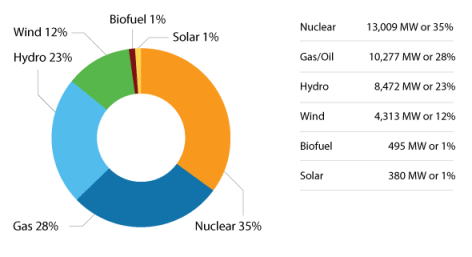
Current_Supply_Mix-Tx-18MO
Image Source: IESO Ontario’s installed generation capacity (*Note that these figures do not include generators that operate within local distribution service, except for those that participate in the IESO-administered market. Most solar facilities in Ontario are currently connected to the distribution system. )

Wind Turbine Nuisance: a lawsuit against the Ontario Minister of the Environment

do no harm 1

May 25,2018|André Fauteux| La Maison Saine et Ecologique

(original article in French- Translation via Google Translate)

A group of Ontario citizens personally sued a minister for violating the Environmental Protection Act, allowing wind turbines to undermine their sleep and health, while respecting the limits allowed for audible noises. This law prohibits “discharging a contaminant into the natural environment or allowing or causing it to occur if the release causes or may cause a harmful consequence”. It “means bodily injury, loss of life, loss of use or enjoyment of property and loss of money”.

On April 30, Wind Concerns Ontario (WCO) served on Chris Ballard, who heads the Ministry of the Environment and Climate Change (MOECC), to attend court on the 17th. may. A judge will then decide whether or not the Attorney General of the province must lay charges.

Through the Access to Information Act, WCO obtained copies of more than 4,500 citizen complaints sent to the Ministry between 2006 and 2016, many of which had had to abandon their homes that had become unlivable. “Since the MOECC did not respond to thousands of reports of excessive noise from wind turbines, which affects the sleep and health of Ontario families, we had no choice,” said in a statement. organization, nurse Jane Wilson. According to her, “citizens report not sleeping for days, weeks, even months. Sleep disorder is linked to other health problems, such as high blood pressure and diabetes. In 2015-2016, the Ministry responded to only 7% of complaints and only to those living within 1,500m of wind farms, according to WCO. According to Ms. Wilson, the Ministry is not enforcing its own regulations to ensure that the noise level does not exceed 40 decibels dB at the nearest dwelling. “It does not respond to complaints and relies on operators who measure only the average noise in dBA. They ignore other types, including low frequencies (infrasound). ”

Scientific controversy

Health Canada has already published a study on wind turbine noise and health in 2014. Among its findings: “No statistically significant relationship was found between measured blood pressure, or resting heart rate, and exposure. to the sound of wind turbines. In addition, “the researchers did not establish a link between the noise levels of wind turbines measured outdoors, near the residences of participants, and the effectiveness of sleep, the rate of awakening, the duration of awakenings, the total time of sleep or the time needed to fall asleep “.

Findings contested by Carmen Krogh, a former Health Canada employee who has been investigating industrial wind turbines since 2007. “In rural areas, it is very difficult to obtain a statistically significant number of cases. In addition, we can estimate exposure levels, but it takes time to know the effects, “says the author 1 of various scientific articles on the subject.

In 2007, Carmen Krogh found that installing giant wind turbines in Ontario was a great idea, to replace nuclear and coal plants with renewable energy that does not pollute the air and does not contribute to climate change. A retired pharmacist, she naturally investigated whether industrial wind turbines could harm health. “I thought I would not be involved in this file for long,” says the former director of a hospital pharmacy who was also a consultant and employee of Health Canada and former editor-in-chief of the Compendium of Products and Specialties used by professionals who prescribe drugs in Canada.

For the past eleven years, she has been volunteering for wind energy, writing scientific articles and advising individuals, businesses and various levels of government. A former director of pharmacy at a hospital, Ms. Krogh was also a consultant to Health Canada’s Prescription Drug Administration and a director of its Canadian Pest Management Regulatory Agency. In addition, she is the former editor-in-chief of the Compendium of Pharmaceuticals and Specialties, which is used by professionals who prescribe drugs in Canada. She believes that the burden of proof of safety must rest with industry, just as in the pharmaceutical field. “When a wind project is contested, citizens are always asked to predict the future and prove that wind turbines will hurt them. Because of product differences, evidence of causality is rare in the health field in the absence of a biological mechanism. In the pharmaceutical sector, manufacturers must prove the safety of their products or an acceptable risk / benefit ratio. And doctors, nurses and citizens can file complaints. Thus, over-the-counter doses of ibuprofen were reduced significantly, to 200 mg, because the patients complained of unexpected adverse reactions. ”

Similarly, when it comes to industrial pollution, you always have to focus on people’s reactions to exhibitions and read independent studies, Krogh insists. In 2007, she found that installing giant wind turbines in Ontario was a great idea, to replace nuclear and coal-fired plants with renewable energy that does not pollute the air and does not contribute to climate change. But his inquisitive mind made him discover that installing them near homes could be harmful. “I have studied the symptoms declared at the international level and the points in common are remarkable. When people talk about the same sleep and cognitive problems in Japanese and other languages, it’s very convincing. Another thing that is very convincing is that those who leave their homes intermittently feel better and that their symptoms reappear when they come home. In all cases, the installation of wind turbines was the only major factor that had changed in their environment before the onset of symptoms … I have never heard of a developer of wind turbines ask if residents were sensitive noise or had pre-existing medical conditions and special needs. For example, children with autism are more sensitive to blinking. ”

Ms. Krogh is particularly interested in infrasound. These inaudible vibrations, whose oscillation frequency is less than 20 hertz, are related to a host of symptoms ranging from headaches to insomnia, through acoustic pressures, tinnitus, nausea and dizziness. “The teratogenic congenital malformations of the heart and brain due to infrasounds worry me. In particular, I asked Health Canada to provide me with details about female military pilot helicopters regarding the effects of pulsed propeller noise, which is like large fan blades. I never receive answers from the Ministry. These are important considerations. Already in 2007, a hundred German doctors sounded the alarm by advocating the precaution in infrasound.

According to toxicologist Magda Havas ( an interview she gave us ), an Ontario expert in electromagnetic pollution and a professor at Trent University, industrial wind turbines generate five types of pollutants: audible noise, inaudible noise (infrasound) , the stroboscopic effect caused when the blades shade the sun, stray currents in the ground accentuated by the water table and the interference of high transient frequencies (dirty electricity). These circulate in the air and on the domestic current and are caused by wiring errors as well as the power supplies of electronic devices. Carmen Krogh comments, “I often wonder if people are not exposed to both noise and electrical pollution. The symptoms are dramatic because they are doubly stunned. ”

Ms. Krogh said that sensitivities to pollution vary from one individual to another. “Those who move to rural areas dream of silence and are often very sensitive to noise. But every wind turbine is the equivalent of a factory. I feel that the wind turbines were installed very hastily, without knowing what would be the safe distances and the noise levels. There are some 700 industrial wind turbines in Ontario and the province requires wind farms to be located at least 550 m from homes.

In 2012, the Society for Wind Vigilance , an advisory body of which Mrs. Krogh is a member, recommended that industrial wind turbines be installed at least 2 km from any residence, as required by the Haut-Saint-Laurent RCM. Montérégie. “But some people report adverse effects up to 5 km. It is difficult to recommend a safe distance because the exposure changes constantly and varies depending on several factors, including the terrain and density of the wind farms. The power and height of wind turbines increase with the years. The blades are longer and the experts say that the slower rotations make the sound inaudible. The direction of the wind and the disposition of the wind turbines must also be taken into account. Some are aligned while others are crescent-shaped or circle-shaped. ”

For his part, US professor of internal medicine David R. Lawrence recommends holding wind turbines at least 4-6 miles (6.5-10 km). He and his wife live as much as possible in their basement since two wind turbines were installed 500 m from their home in Connecticut. He also says he also treats several patients who suffer from insomnia, pain and pressure in the head, balance problems, the brain in the heat, pressure bumping into their chest and heart rate problems. “My wife is experiencing all these symptoms, and closer to the antennas,” he wrote in a 2016 submission to the Wisconsin Public Utilities Board. Her symptoms go away when they are not in operation or she walks away at least 2-3 miles (3.2-4.8 km) away. ”

Diagnosis criteria for adverse health effects in the vicinity of wind turbines

Original Article

World Turtle Day

blandings-turtle 3
Blanding’s Turtle

May 23rd is celebrated as world turtle day.  Ontario residents take to the courts battling its own government  in order to protect and save globally endangered Blanding’s turtles from harm and destruction habitat of its due to wind turbine construction.

Where is MOECC?