German authorities are now clear in that there is a very real issue with low frequency sound

The German authorities are now clear in that there is a very real issue with low frequency sound and recognise that they both need to update their regulations and complete more research.

Machbarkeitsstudie zu Wirkungen von Infraschall

Abstract

This feasibility study evaluated the state of knowledge about the effects of infrasound on human beings, the identification of infrasound sources and the potential concernments in Germany due to infrasound. Furthermore, a study design was developed for a noise impact study concerning infrasound immissions. Based on these findings, recommendations for the further development of regulations on immission control were made. The study led to the following conclusions:

  •   The literature review does not present a coherent picture about the determination and assessment of low frequency sounds. Especially in Germany, there are just a few studies that deal with infrasound. A database was created for further research projects.
  •  Survey tools that allow for an initial acoustic description and classification were developed for the acoustic identification and assessment of potential infrasound sources. 
  •  The surveys of the immission control authorities of the Länder (German states) and the evaluation of Internet communication on infrasound show a somewhat higher level of noise pollution in Southern Germany. Above all, noise pollution from air-conditioning systems and biogas facilities were mentioned. In the official practice, the Technical Instructions on Noise Abatement and DIN 45680 generally apply in cases of conflicts concerning infrasound. 
  • A study design was developed for an interdisciplinary field study and the essential survey contents and sources were defined. 
  • The DIN 45680 Measurement and Assessment of Low Frequency Noise Immissions in the Neighbourhood can be used for the assessment of low frequency noise (<100 Hz). The international standard ISO 7196 Acoustics – Frequency-Weighting Characteristic for Infrasound Measurements was especially created for the measurement of infrasound immissions (<20 Hz). The research findings indicate that these standards have deficits with regards to the assessment of infrasound and should be further developed. The current revision of DIN 45680 shows a path for how inconsistencies in the area of low frequency sounds can be rectified.

On page 15 of the document, which is about the state of knowledge about the effects of infrasound on people, we get a really important conclusion:

  • Wind energy plants are a frequently studied source of noise in connection with infrasound. The publications show that the measurement of emission and propagation of noise from wind energy plants is plagued by uncertainties that complicate a substantiated noise forecast. With an increasing height of the wind energy plants, the rotor blades cut through an even more varied wind profile. It is therefore questionable whether the emission and propagation models of smaller wind energy plants can be applied to more modern and larger wind farms. This is very unlikely given the theoretical observations of aeroacoustic scientists. Deeper knowledge of the above-mentioned processes would not only be a prerequisite of better immission forecasting, but the acquired knowledge could also provide information for an improved noise reduction of wind energy plants.

On Page 55 we have another important statement:

  • The A-evaluation method is seen many times in the literature as unsuitable, in order to correctly assess the the impacts of low frequency sounds. 

The next page (P 56) states how with wind energy there are frequent discrepancies between measured results and those predicted by the models. This is also followed by a section, which explains as to why wind turbines have a more pronounced impact at night, due to the meteorological conditions. Page 110 talks about the harmonics in wind turbine noise found in the range 1 Hz to 8 Hz.

There seems to be quite a bit in this document, maybe one could criticise it for being a bit of a literature review rather than a new study.   However, the main thing is that the German authorities are now clear in that there is a very real issue with low frequency sound and recognise that they both need to update their regulations and complete more research. On the other hand here in Scotland and the UK we are in absolute denial that there is a problem with such low frequency noise.

Winds of Justice, Posted August 2, 2014

Turbine neighbour prompts noise probe by ministry

[She scoffed at regulations that mandate 500-meter setbacks to neighbouring homes pointing out the rule doesnt take into account the cumulative, “overlapping” impact of multiple turbines that surround. Nor does the regulation change with the actual size of a turbine, she adds, asserting that, at 3-megawatts apiece, “these are the largest turbines in Ontario.”]
BRINSTON Leslie Disheau has her ear to the ground in South Dundas, and for 10 days last month, a very powerful ear trained on the sky around her Brinston home as well.
Ontarios Ministry of Environment and Climate Change installed the basketball-sized microphone atop a temporary 30-foot listening post in her backyard, along with a smaller meteorological tower.
The ministrys move was prompted by Disheau and partner Glen Baldwins complaints about nighttime noise emanating from two industrial wind turbines on either side of their place, one to their immediate northwest, the other to the southeast. Comprising part of the 10-turbine South Branch project that went into service earlier this year, both of the nearest units are less than one kilometre away from the home the couple shares with their two teenaged children.
But Disheau, candidate for deputy mayor in the municipal election and a fierce critic of the turbine industry, feared that developer EDP Renewables was intentionally slowing the two windmills to quiet them down while the ministry data-collection and audio-recording effort was underway with her participation.
The Houston-based firm almost immediately learned about the microphone on the day of the install, she said with some frustration.
Located just down the road from the projects main depot, it wasnt more than three hours after the arrival of two ministry trucks in her driveway that EDP called the same ministry to question the presence of those vehicles, according to Disheau.

read more: Eastern Ontario, AgriNews, By Nelson Zandbergen, Aug 2014


An ill wind blows as the surge of turbines stirs fears of silent danger to our health

TENS of thousands of Scots may be suffering from a hidden sickness epidemic caused by wind farms, campaigners have warned.

Andrew Vivers has suffered from headaches since a wind farm was built near his home [PAUL REID]
The Sunday Express can reveal that the Scottish Government has recently commissioned a study into the potential ill effects of turbines at 10 sites across the country.

More than 33,500 families live within two miles of these 10 wind farms – which represent just a fraction of the 2,300 turbines – already built north of the Border.

Hundreds of residents are now being asked to report back to Holyrood ministers about the visual impacts, and effects of noise and shadow flickers from nearby wind farms.

Campaigners fear that many people do not realise they are suffering from ailments brought on by infrasound noise at such a low frequency that it cannot be heard but can be felt.

One such person is Andrew Vivers, an ex-Army captain who has suffered from headaches, dizziness, tinnitus, raised blood pressure and disturbed sleep since Ark Hill wind farm was built near his home in Glamis, Angus.

Mr Vivers, who served almost 10 years in the military, said the authorities had so far refused to accept the ill effects of infrasound despite it being a “known military interrogation aid and weapon”.

He said: “When white noise was disallowed they went on to infrasound. If it is directed at you, you can feel your brain or your body vibrating.With wind turbines, you don’t realise that is what’s happening to you.

It is bonkers that infrasound low frequency noise monitoring is not included in any environmental assessments. It should be mandatory before and after turbine erection.”

He is raising concerns about an “acknowledged and unexplained increase of insomnia, dizziness and headaches in Dundee”, where two large wind turbines have been operating since 2006. Mr Vivers, 59, said all medical explanations of his own sudden health issues had been ruled out and it was more than 12 months before he was convinced of the link to the wind farm.

read more: Scottish Sunday Express, By: Paula MurrayPublished: Sun, August 10, 2014


Battle over Turbines Heating Up in West Lincoln & Niagara

  We are only just getting started Hope you can come out to Support our very own at the Appeal

 A big Thank You goes out to Anne and Deb for their continued dedication to the fight and for all the hard work they have put into preparing for this Tribunal.  All of West Lincoln’s, and Ontario’s , eyes will be on you!!

Hearing set for September 3th at Kerr Church

B821406432Z.1_20131006220008_000_GOB1386DL.3_ContentA report from the troops on the ground regarding the appeal Fairfield vs MoE.

The Appeal can go forward except for what the Tribunal has struck, in part, which includes the Gas Wells and electrical collector Lines & pipeline
Hazardous Waste
Health Issues
Charter Challenge under s. 47.5
……………so, only what was in the Amendment per se stays.
 
What is left for the ERT are:
  • the Property line setback issues
  • the Raptor post -Construction Monitoring
  • the Constitutional Challenge under 142.1 of the EPA.
 
So, what we have told the Approval Holder and the MOE / Att. Gen. is that we will be going forward ASAP to either an Appeal or a Judicial Review.  We would still like to go ahead with Mediation as discussed Wednesday, and would they provide Transcripts, even Drafts, as they did in the Wainfleet case which assisted in Closing Arguments, and would they please respond as to any points by next week.
 
But the Gas Well and Electrical Collector Line issue cannot be dismissed, even though it was not mentioned in the Amendment.
 
The Tribunal will issue an Order shortly with reasons to follow for its Disposition, which we think will include the above statement.
 

The ERT file may be found here

Fund-raising contact details to follow

The project in question: HAF Wind Energy Project

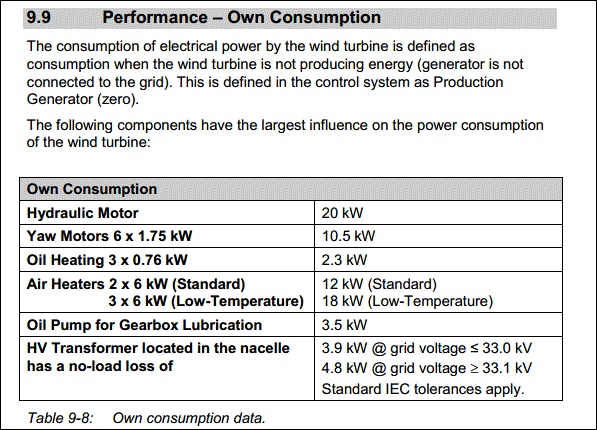
How Much Power Does A Turbine in Vineland Power project use?


Vesta V100–1.8 MW VCUS  (Pg 33 of 51)

Capture

The effects of noise disturbed sleep on children?s health and cognitive development

What about all the Children living in the lease holders homes where the turbines can be placed anywhere within the 550m (already to close) setback??

Conclusion: potential mechanism

unnamedStansfeld at al. (2010) mentioned several mechanisms by which nighttime noise exposure and sleep disturbance could lead to cognitive impairments. Evidence is still lacking but narrowing of the attention focus, impairments of auditory discrimination and speech perception, and communication difficulties in the classroom and learned helplessness were brought forward as plausible candidates. Especially the role of learned helplessness needs more attention. It is not clear yet if and how noise-related behavior in the long term has a negative influence on children’s health and learning. Evidence is increasing that chronic sleep disturbance can increase the risk of obesity and diabetes through the mechanisms of download (4)circadian disorganization and via this pathways could affect the cardiovascular system. Childhood elevated blood pressure is seen as a risk factor for hypertension. The mechanism of non-dipping of diastolic blood pressure might play an important role in this, as indicator of poor restoration during sleep. Finallychildhood noise related sleep disturbance could lead to more serious sleep disturbance and insomnia later on in life. And finally, new notions include the early gene-environment interaction model (Lupien et al. 2009) suggesting that lifespan exposure to stress influences brain structures involved in cognition and mental health and emphasize the importance of developmental sensitive periods. 
Future studies into the health effect of environmental noise exposure in early life should address these potential mechanisms and pay specific attention to the mediating role of sleep related aspects, including noise as well as other environmental exposures such as indoor climate and exposure to sounds and light from electronic devices.

read full paper here

People power in action will win the battle!!

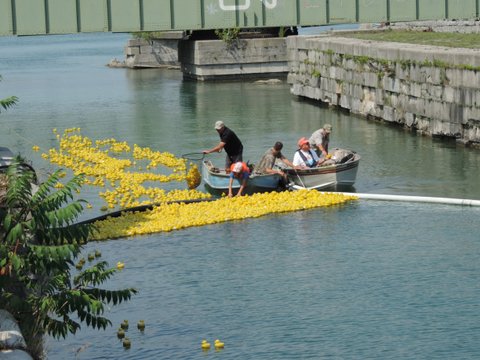
unnamed (24)The final day of Canal Days 2014 in Port Colburn ended with the highly anticipated and famous Rubber Duck Race Down the Welland Canal.

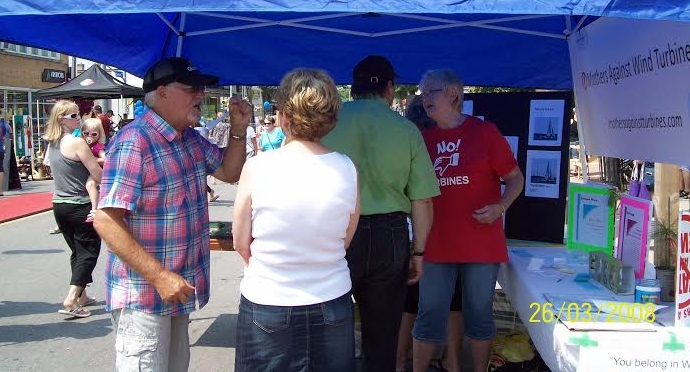
Wainfleet Ratepayers Association,  Mothers Against Wind Turbines Inc., and  West Lincoln Glanbrook Wind Action Group had volunteers  man the information booth  for the complete duration of the four day festival.

unnamed (9)Hundreds of questions asked and answered.

Hundreds of brochures and web links handedunnamed (18) out.

Hundreds of raffle tickets sold to support the unnamed (6)legal fund in the ongoing and very active battle against the wind turbines.

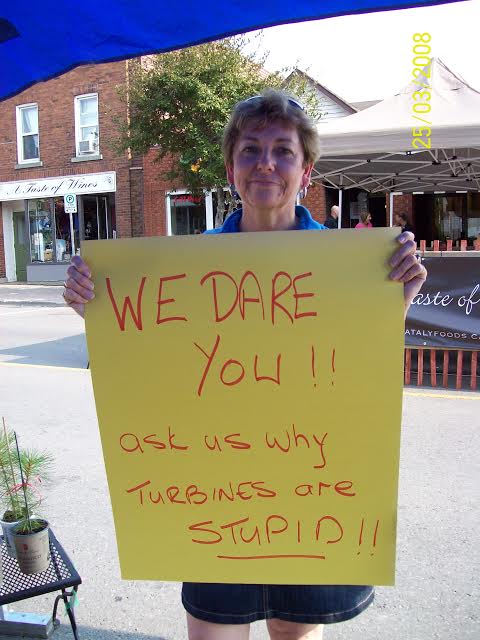
“I dare you to ask me why turbines are unnamed (1)stupid”  was a challenge taken up by many of the Canal Day visitors and a whole lot of educating and advocacy was accomplished by the many volunteers.

Thank you to everyone who contributed.

movie nightNext event up is a dinner and a show, on  August 15th at the Silverdale Hall in West Lincoln.  Come out for some good conversation and  to support the ongoing battle against unneeded and unwanted wind power plant installations in our communities.


People power in action will win the battle!!

This slideshow requires JavaScript.

Rivas, NIcaragua, 29 July 2014 – Secretary-General’s remarks at Camilo Ortega Wind Park

Now this is Scary (UN Twitter Posting August 4th)

Buenos tardes. Mucho gusto. Muchas gracias por su hospitalidad.

image002I am very impressed by what I have seen today. This is a very impressive wind park and I learned a lot about what you are doing to promote sustainable energy.

This project represents almost one quarter of Nicaragua’s capacity to generate wind power. It will reduce greenhouse gas emissions – at least 100,000 tons of CO2 each year.

Your country has vast potential of renewable energy resources – solar, wind, you have very strong, constant wind, and geothermal and hydro. You are quite lucky to have such unlimited resources.

This can provide the modern energy that your people need and the Government needs to promote the Millennium Development Goal to eradicate extreme poverty and promote global health and many other development issues.

Nicaragua understands well that energy is central to implementing the MGDs as well as shape the post-2015 development agenda.

As you know, three years ago, I launched the Sustainable Energy For All initiative.

It has three goals. The first: to provide universal access to electricity to all the people around the world by 2030.

Second, double the energy efficiency rate.

Thirdly, double the renewable energy use in global energy mix.

You have already met the number three target: double the renewable energy. [You are] already at 58 per cent.

By 2028, you will have achieved 97 per cent of renewable energy [in your mix]. That is an extremely excellent goal.

I hope His Excellency President [Daniel] Ortega will participate in the climate change summit meeting on 23 September and state that ambition to the world.

The Sustainable Energy for All initiative is supported by more than 80 countries in the developing world.

We have already received many billions of dollars in commitments and support.

From NGOs to multilateral development banks, we are working together for a common goal.

Modern energy really is the key to changing people’s lives.

It can enhance the quality of life and it can effectively be used to promote human dignity. And it can also contribute to stemming violence.

First of all, clinics and hospitals can be much more effective in saving lives.

When the streets are lit, fully lit during the night, it can reduce violence against women.

Children can study at night.

I heard that when President Ortega became President [in 2007] […] there was electricity rationing for some18 hours a day.

When I was a young boy in Korea, there was no electricity. I had to study with the dim light of a kerosene lamp.

There was a very serious rationing of electricity at that time. After 10 p.m., even for rich people, there was no light. Nobody was able to think about having a refrigerator or televisions.

This electricity, energy, is the golden thread of our lives.

This can really help in addressing climate change.

When we have clean energy, we will use less fossil fuels, which create much, much more greenhouse gas emissions.

So please continue to invest wisely in renewable energy and this wind power so that everybody can live – with the help of energy – a life of dignity.

Muchas gracias.

http://www.un.org/sg/statements/index.asp?nid=7893

Protecting our children from Industrial Wind Power Emissions is our first priority!