Category Archives: fighting big wind.

Meeting Wind Power Head On

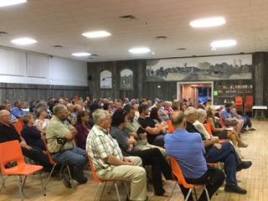
14039963_10154576407713694_5833770950296892270_nThe Concerned Citizens of Wallace and Mapleton are meeting the challenges of wind power development head on and held a community meeting attended by over 200 residents on August 15, 2016.   The following is one of the presentations given that night.


Concerned Citizens Call to Action SS v2


Fighting Back

Tiny the Turbine helps fight back the wind industry propaganda allowed into our schools

Tiny the Turbine is a moral tale that tells the truth about the impacts of industrial wind development in a way children can understand. It has been written by a Highland anti wind campaigner, illustrated by a supporting Cartoonist and published online today.

Tiny the turbineSome time ago it was discovered that not only were multinational wind developers welcomed into our schools, they come bearing gifts and speak to pupils regarding only the ‘benefits’ of wind development.

Children are asked to name turbines and design logos. They are taken to visit wind farms. The message is clear. Build wind farms – or else the planet will suffer and the polar bears and penguins will die!

The other side of the story has never been told as far as we are aware.

There is no hard evidence that building wind farms will do anything to combat climate change. Many things like grid connection (no matter how many miles), foreign parts and workers, pollution caused in China mining and processing necessary rare earth minerals and decommissioning are not included in any CO2 savings calculations, making emission claims a farce.

Not only do wind developers go into schools, they produce child friendly stories about turbines. Tommy the Turbine, Timmy the Turbine, Lofty etc. All designed to put a positive spin on a controversial industry and keep profits flowing from the next generation.

Lyndsey Ward wrote Subsidy Sam, illustrated by Josh, in retaliation to this shameless indoctrination earlier in the year. It was a satirical story and really meant for adults.

Subsidy Sam went global and following requests to write a real children’s story Lyndsey came up with Tiny the Turbine and Josh agreed to illustrate it.

Children should never be exposed to indoctrination by multinational companies with a product to sell with no access to the opposing argument. It is happening again and again. Fast food and fizzy drink giants were allowed into schools years ago – we now have a child obesity epidemic.

Tiny the turbine2This wee story is moral. It smashes the myths of clean and green and environmentally friendly wind energy. Yet it does so in a way that is reasoned and sensible and so obvious to those who know the other side of the industry, and in a way that children will understand.

Importantly it is written and illustrated by people who are not paid by big industries with the deep pockets of the multinationals. People who care passionately for the environment and also that children are not indoctrinated by an industry determined to keep its shareholders happy. It is an honest reflection of what we see is happening – the other side. The side children are never told.

This tale, although written in Scotland, can be told in any country where there is industrial wind development and we hope it gets used around the world and translated into other languages.

thrasherIt comes with a foreword from Sarah Laurie, CEO of the Waubra Foundation in Australia which promotes health research and regulation of environmental noise pollution.

The message in this story to all governments supporting industrial wind is:

Stop access to school children by multinationals which are promoting their wares and are driven by their shareholders and profit margins

Stop allowing communities to be ransacked by wind developers against their will. Give communities a wind veto and the final say on the developments that they are forced to live with.

Stop enriching the already wealthy developers and landowners to the detriment of your own people.

Stop denying the health impacts suffered by humans and by animals.

Stop ignoring pollution concerns regarding drinking water and the environment.

Stop dismissing the deaths of protected birds and bats by turbine blades as numbers are reaching catastrophic proportions across the world.

Speak and act for the people you are paid to serve and not the rich multinationals.

The hands of the wind industry and supporting politicians are stained by the tears of the unwilling communities they have exploited and continue to exploit.

For further details contact:

Lyndsey Ward
subsidy.sam@btinternet.com


Its Official Wind Projects Cancelled

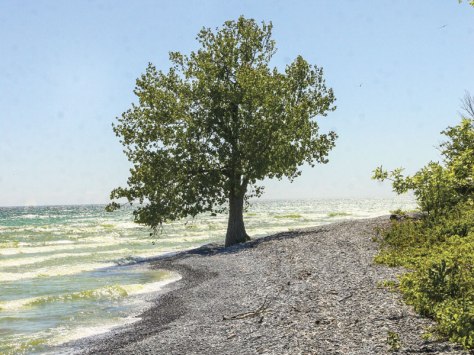
Ontario has officially terminated the Ostrander Point wind project.

Ostrander-Tree

Trout Creek and Clarington projects are also cancelled by IESO.

READ: http://fit.powerauthority.on.ca/program-updates/program-reports

Pierced

Ostrander Point Tribunal drags scrutiny of wind and solar projects out into the open

Ostrander-Tree

Only when time has passed and the memories of the years long struggle begin to fade, will we know that industrial wind turbines have been banished from Ostrander Point for good. But for now, the creatures who occupy or pass through this bit of land on Prince Edward County’s south shore may do so without the threat of bulldozers rolling across the terrain or 50-story machines whirring overhead. Maybe forever.

The Ostrander Point wind project has been stopped. Its appeal period has expired. There remain scenarios in which the project could be revived, but that likelihood is now remote, according to the lawyer acting for the Prince Edward County Field Naturalists (PECFN).

“There is rarely a final chapter written in these types of sagas,” said Eric Gillespie. “It is fair to say, however, that the odds of this going further are extremely low. To the best of our understanding, the Gilead Power permit is revoked. That decision is not being appealed. The file has concluded.”

The volunteers who form PECFN allowed themselves to exhale on Thursday evening—after the developer’s appeal period had expired.

“It is particularly wonderful to finally realize that the battle is over,” said Cheryl Anderson of PECFN.

WHAT IT MEANS
The decision by the Environmental Review Tribunal—written by Heather Gibbs and Robert Wright—fundamentally alters the future for Ostrander Point, and has the potential to disrupt other projects involving land where Blanding’s turtles are known to nest, including White Pines and Amherst Island. But it has the potential to reach much further. Indeed, it has the potential to shake the very foundations of the Green Energy Act (GEA).

In 2009, the provincial government, led by Dalton McGuinty, was unsatisfied with the pace of wind and solar energy development in the province. Deadline after deadline had passed and his targets for renewable energy had gone unmet. A panel of experts had reported a year earlier that the regulatory process— the safeguards that protect human health, the environment and even the electrical grid itself—were causing the delays to wind and solar development across the province.

The GEA set out to remove these hurdles—eliminating safeguards in the Ministry of the Environment, Ministry of Natural Resources and Forestry, Ministry of Energy and the Ontario Energy Board, among others.

Since the GEA was enacted, industrial wind and solar projects have been reviewed and approved behind closed doors in a mostly tightly controlled process. The only nod to public transparency and accountability was a single Environmental Review Tribunal…..

Published Wellington Times July 15, 2016

READ MORE: http://wellingtontimes.ca/developmentApril16/pierced/

A Populist Revolt Against Wind? It’s Happening

“With each oversized, out-of-scale, in-your-face wind project presented, scores of people join the not-so-quiet ‘war on wind’ raging nationwide…. While Big Media and Big Wind are busy forcing the vision they want, communities are taking aggressive action to limit wind’s negative impacts and will ultimately lead to far fewer projects being built.”

Lisa Linowes – June 27, 2016

A journalist recently contacted windaction.org with questions about Colorado’s latest wind project sponsored by utility giant, Xcel Energy. The 600 MW, 300 turbine, $1.04 billion Rush Creek wind ‘farm’, if built, will span 150 square miles of Colorado’s sensitive eastern grasslands. To deliver the energy to market, Xcel must also construct a 90-mile 345 kv transmission line along a 150-foot wide right-of-way. The project is massive by any measure and the largest considered by the state. Yet, according to the reporter, no one local has raised any concerns which explains the call. Even the reporter — a freelancer from New Jersey where just five turbines (9 MW) spin — admitted having no idea wind had issues.

And why would anyone …?

Big media coverage is dominated by feel-good stories of cheap renewables (and now, apparently, cheap storage) overtaking coal and nuclear. The press, prodded by industry mouthpieces, never misses an opportunity to advocate for federal and state subsidies and their sister mandates that spur green ‘investment’ and leave the public believing that a world of all renewables, all the time is almost here. 

Nice vision, but far from real. In fact, with each oversized, out-of-scale, in-your-face wind project presented, scores of people join the not-so-quiet “war on wind” raging nationwide. For proof, just look at a few of the news stories from the last 45 days:

1)    In Indiana, a judge ruled Rush County’s decision to impose larger safety setback distances on the Flat Rock wind facility (180 MW) was reasonable to protect health and preserve property values. The decision is likely to end the project. Another suit pending in Fayette Circuit Court against a NextEra project argues the decommissioning plan violates county regulations. And in Henry County, the Planning Commission denied two applications to erect meteorological towers used for measuring wind speed and direction. The towers are the first step in siting a wind project. Each vote to deny was met with applause and a standing ovation from the public.

2)    Blowback over wind turbines impairing military operations prompted the North Carolina state senate to pass a bill restricting turbine sites. State leaders recognized the importance of protecting the economic benefits derived from hosting military bases, including thousands of jobs. Local benefits delivered by wind pale in comparison. Similar concerns are being raised in New York and Texas, where the Texas legislature is also considering a bill to protect military base missions.

3)    A proposal to erect 2-dozen turbines standing up to 660-feet tall in Cumberland County, Tennessee has outraged residents and caught the attention of Senator Lamar Alexander, Congresswoman Diane Black, State Senator Paul Bailey (R-Sparta) and Representative Cameron Sexton (R-Crossville), all of whom are united in their opposition to the project. Senator Bailey highlighted one of the many failings of the proposal when he wrote “The wind turbine project proposed for Cumberland County would take us in the wrong direction for economic development in the Upper Cumberland. Tourism is over a $17 billion industry in Tennessee and it would be a step backwards to mar our scenic beauty with unsightly turbines.”

4)    Wyoming’s Joint Revenue Committee has asked its staff to draft two bills that would increase taxes on wind, including one that would require wind developers to transfer a portion of the federal wind production tax credit to state coffers. When Converse County commissioner, Jim Willox, insisted the severance tax on oil and gas can’t be compared to a tax on wind since the fossil industry removes (severs) non-renewable products from the ground and are forever lost, State Senator Cale Case snapped back that wind turbines destroyed viewsheds. “With wind, that viewshed is lost forever. It is severed,” he said. Talk of taxing wind has delayed the outlandish 1,000 turbine, 3,000 MW Chokecherry Sierra Madre. [1]

5)    In Vermont, the electorate is inflamed over the visual, environmental and health impacts of the spinning towers. Governor Peter Shumlin has been described as one who “loves wind turbines and hates the people who live next to them.” He is leaving office this year to the delight of many. At least three of the candidates vying for his seat – Bruce Lisman, Peter Galbraith, Brooke Paige  – are openly running on a ‘NO Wind’ platform.

We could go on describing the intense fights now happening in New York, Missouri, Pennsylvania, Wisconsin, Michigan, New Hampshire, Maine, Oklahoma, Ohio, Oregon, Massachusetts … you get the picture. But don’t expect big media to notice. After all, these fights don’t fit the national narrative honed by the wind industry that up-plays the image of turbines operating in concert with man and nature and downplays, or flatly denies the harms. While big media and big wind are busy forcing the vision they want, communities are taking aggressive action to limit wind’s negative impacts and will ultimately lead to far fewer projects being built.

[1] The State of Wyoming is the only state that imposes a wind energy tax which equates to $1 per MWh.


Amherst Island ERT Wraps Up

“The project is putting children’s safety at risk and that is something that I don’t think we, as Ontarians, want to tolerate”

Kingston Heritage Published June 8, 2016   

By Mandy Marciniak

amherst Island haywagon

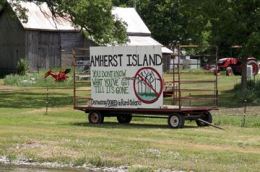
On June 7, members of the Association to Protect Amherst Island (APAI), along with many Island residents, gathered at St. Paul’s Presbyterian Church to hear the final submissions in their appeal against Windlectric Inc.

The submissions were the final part of the more than six month long Environmental Review Tribunal (ERT) that took place regarding the project, and members of APAI were feeling optimistic.

“It has been a long process and we are very proud of what we have accomplished and we are very confident,” said Michele Le Lay, a member of APAI before the final hearing. “We feel we had a fair hearing.”

The final instalment of the tribunal started with a statement from island resident and concerned parent Amy Caughey, who originally spoke to the tribunal in December. Caughey’s main concern is the proposed placement of a concrete batching plant and high-voltage substation directly next to the school on the island.

“It seems like all the industrial activity will be occurring next to the school and I think it is too close,” she said. “Also, the cumulative impacts of this project, especially on the school, have not been assessed. It seems that each component is looked at individually, but it is not looked at as a whole and I think that is a major problem.”

Caughey explained that after six months of hearings she still has numerous unanswered questions about the safety of the project, especially in relation to the school, and she worries that her children and others will be at risk.

“The project is putting children’s safety at risk and that is something that I don’t think we, as Ontarians, want to tolerate,” she said. “We don’t have enough information and if we just go ahead and do this, it is actually our children who become the test to see if the directive is right or wrong and I think that is entirely inappropriate in Canada in 2016.”

READ MORE:   http://www.kingstonregion.com/news-story/6712312-environmental-review-tribunal-wraps-up-on-amherst-island-results-expected-by-end-of-june/;send=false

Tragic Support for Destruction of the Oak Ridges Moriane

WPD Wild Turkey Road

WpdCanada at work on Wild Turkey Rd in the Oak Ridges Moraine.

Re: Letter to the Editor: Landowner has ‘no complaints’ about work being done by wind company in Manvers Twp.

Industrialization of the natural environment is never good or beneficial, despite Mr. McKim’s protestations to the opposite.

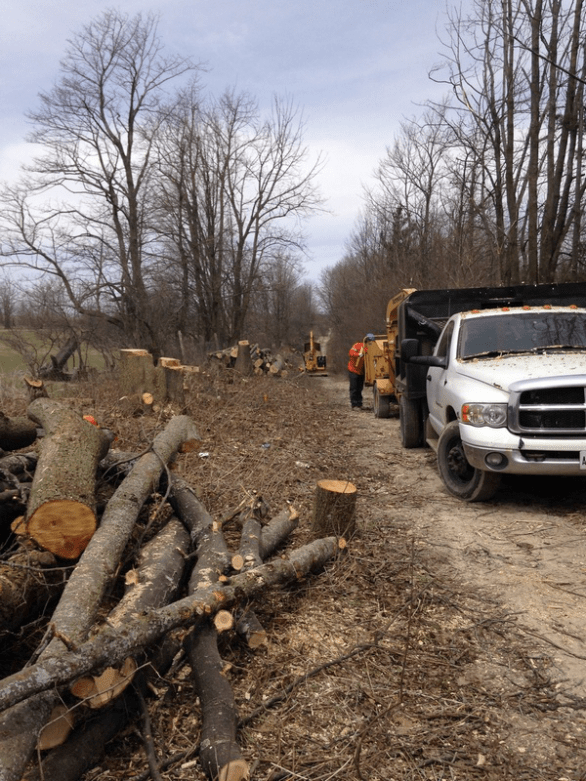
No person truly interested in preserving our natural heritage now and for future generations would support such carnage. Mr. McKim is supporting the start of the plan to clear a one-kilometre stretch along the unopened road allowance known as Wild Turkey Road people used to use as a nature trail.

The trees being cut down are 70 to 90 years in age.

The  wind energy developer has also been granted permission to clear a six-metre wide swath of trees along an additional 1.75 km stretch of another unopened pioneer trail called Gray Road to accommodate the larger than normal requisite hydro poles. Some of those trees along this trail are more than 100 years old. The trees and ground vegetation to be razed not only provide a wildlife movement corridor but also provide habitat for wildlife that use the large pond found bordering this trail and neighbouring wetland.
In addition, the developer will also clear .4 hectares or approximately one acre of a designated significant woodland that supports another wetland.
All this for one five-wind-turbine project, that, if running at full capacity, which only happens 25 to 30 per cent of the time, might provide energy equivalent to the needs of 2,500 homes.

Mr. McKim’s assertion of having no complaints over this destruction and keen support for industrial energy projects on the unique Oak Ridges Moraine has opened the floodgates to large scale destruction of this unique landform.
What a sad legacy.

Jane Zednik

READ AT: http://www.mykawartha.com/opinion-story/6545843-tragic-that-landowner-supports-destruction-of-the-oak-ridges-moraine/

It Worked

vermont residents
If we don’t do it who will?

Vermont prides itself on having citizen legislators, as opposed to professional politicians, while the lobbying in Montpelier for special interests is done by well-funded professional lobbyists.

For the past eight years, our legislators and regulators have been bombarded by renewable-energy lobbyists. The message has been that Vermont must do “everything” and we must “do it now” to save the planet from climate change.

The urgency of the pitch has made it seem as if Vermont alone is responsible for the emissions that cause climate change.

This message has been delivered by the well-paid lobbyists at VPIRG (the Vermont Public Interest Group), REV (Renewable Energy Vermont), KSE Partners (the lobbyists who represent Green Mountain Power and Iberdrola Renewables), and a long list of people who view Vermont as a candy jar for collecting extravagant renewable-energy incentives.

The lobbyists’ circular strategy involves promoting an array of state energy goals that have no basis in our true energy and emissions profile. They then insist to the Legislature that there must be no barriers to erecting inappropriate projects because these same “state goals require it.”

The result is a state energy policy that has produced an avalanche of unintended consequences so appalling that the Selectboards of more than 160 towns signed the Rutland Resolution, which asks the Legislature to take another look at the lack of clear standards for siting renewable energy projects.

In recent days, the Senate and the House unanimously passed slightly different versions of S.230 — a bill “relating to improving the siting of energy projects” — in spite of furious lobbying by the renewable-energy industry.

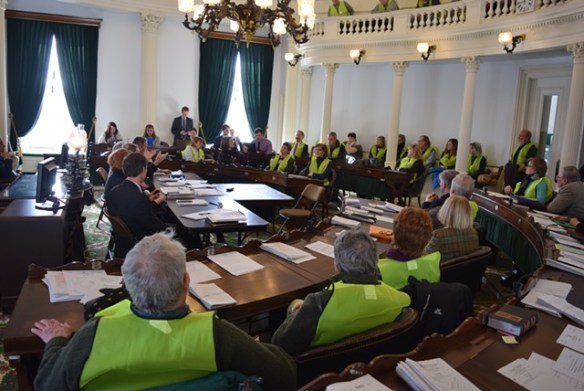
The story of S.230 is highly instructive, because the pros weren’t the only lobbyists in the capital. For weeks, the committee rooms of the Senate and House have been filled to overflowing with unofficial “citizen lobbyists,” identifying themselves by wearing neon green safety vests.

The legislators learned that the Vermonters most opposed to big wind and solar sprawl include those who know the most about the subjects because they deal with the unintended consequences every day and because they have studied the issues.

The legislators heard firsthand the bitter results of a regulatory policy of “any solar, anywhere, anytime.”

They learned about the tragedies in Lowell, Sheffield, and Georgia Mountain of nearby residents driven from their homes, or to distraction, by wind-turbine noise far exceeding what the developer promised.

To prevail on S.230, we, the people lobbied on our own behalf — tirelessly and effectively.

The result is that “we” have been heard.

“We” are the people who live near already existing large wind installations.

“We” include the folks threatened by similar projects in Swanton, Irasburg, Grafton, and Windham who want justification for issuing certificates of public good for utility generation on ridgelines and near settlements.

“We” are the people from towns where solar arrays have been placed in disregard of local policies, preferences, and Town Plans.

“We” are Vermonters who have donned our green vests in solidarity and went to Montpelier and walked the halls and haunted the cafeteria of the Statehouse, just as the big-money lobbyists do.

“We” talked to the legislators.

“We” testified before committees.

And “we” learned a lot.

None of us citizen lobbyists opposes renewable energy. None of us denies the need for Vermonters to do our part in reducing emissions.

But we do oppose allowing those who profit most having total control of what gets built and where. And we oppose squandering our state’s natural resources and heritage on projects that will not help slow climate change.

The lesson is this: in a state with a citizen legislature where big money increasingly influences policy decisions, there is no substitute for well-informed, articulate, and persistent citizen lobbyists to represent our own interests.

If we don’t do it, who will?

READ AT:  http://www.commonsnews.org/site/site05/story.php?articleno=14722&page=1#.VzPnybv2bIU

Catlin residents draft wind farm regulations

A group of Catlin residents have proposed a set of strict regulations for commercial wind turbines in the town.

The Citizen Wind Committee opposes having a wind farm in the area, and has concerns about the effect the turbines – which can measure 400 feet tall or more –  could have on residents’ health and quality of life, as well as property values.

The group brought a 30-page draft to the town’s planning board Tuesday night, and received input from chairman Jim Plate and other board members.

The draft local law, which is posted on the Town of Catlin’s website, townofcatlin.com, limits the size of the turbines and their sound emissions and establishes setbacks.

It calls for wind companies to post bonds to cover any decrease in residents’ property values from having turbines near their land. It would also make the companies liable for medical bills caused by health impacts such as noise exposure and shadow flicker, a strobe-like effect created by spinning turbine blades said to cause seizures and other issues.

The draft law also would protect sensitive wildlife areas, citing the turbines’ impact on bird and bat populations.

It’s a response to plans announced in 2012 by Florida-based NextEra Energy to build a $200 million wind farm with 50 to 75 turbines in the area.

read more: By Derrick Ek ek@the-leader.com Posted Mar. 11, 2015

letter – Subject: Proposed Draft Catlin Wind Law
 Catlin – Local Law Proposed Draft Doc

What is the real cost of an Environmental Review Tribunal?

Mothers Against Wind Turbines Inc has launched both a health appeal and an environmental appeal against the Ministry of the Environment (now the Ministry of the Environment and Climate Change) in the decision by the MOE to approve the Niagara Regional Wind Corporation industrial wind project.

Help tip the scale and donate to the Legal Fund.

The process is an interesting statement on the evolution of justice with respect to the renewable energy initiative, a politically motivated initiative that has been touted as the saviour of the planet through reduced CO2 emissions. The preliminary hearing to determine who can speak and on what topic was held Dec 19, 2014 in the Wellandport hall.

The first thing you notice, beyond the hard chairs and the poor acoustical system, is the abundance of legal council. There are three lawyers on the tribunal panel. They have been assigned by the Ministry of the Attorney General office to preside over this case.  We are informed that the purpose of the hearing is for the tribunal to review the directors decision and consider ONLY whether engaging in the renewable energy project in accordance with the Renewable Energy Approval (REA) will cause serious harm to human health or serious and irreversible harm to plant life, animal life or the natural environment.  So the scope has been limited and concerns about economic impact, democratic rights, anything beyond serious harm to human health and serious and irreversible harm to plant life, animal life or the natural environment are beyond the jurisdiction of this tribunal.  It seems a little backward that the people that live in the community have to prove beyond a shadow of doubt that the engagement in a politically motivated initiative will seriously harm their health and/or their environment. Continue reading What is the real cost of an Environmental Review Tribunal?