All posts by pbiljan

Report on Environmental Review Tribunal Hearing on White Pines Wind Project

December 3

by

Paula Peel, APPEC

On Day 16 of the Environmental Review Tribunal (ERT), APPEC expert witness Kari Gunson testified that the White Pines wind project will cause serious and irreversible harm to Blanding’s turtles on the Prince Edward County south shore, and Dr. Smallwood completed his testimony from Tuesday.

Ms. Gunson has worked as a Road Ecologist for 16 years and has co-authored 13 peer-reviewed published articles.   She was qualified by the Tribunal as a Road Ecologist, with experience evaluating the indirect and direct effects of roads on wildlife and their habitat.

Gunson focused on the large roadless areas around wind turbines T12 to T24 and T26 to T29.  White Pines will increase road density in habitat occupied by the Blanding’s turtle, a threatened species, and the new roads will be used by maintenance vehicles, by landowners to gain access to their property, and by farm machinery.  Continue reading Report on Environmental Review Tribunal Hearing on White Pines Wind Project

Court cancels 30-year federal permits letting wind companies kill eagles

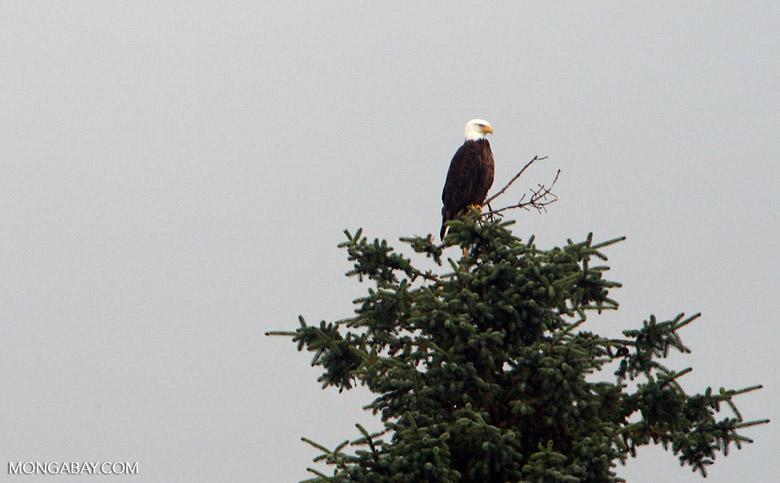
eagle_1_gb4_024bHow do wind energy companies kill protected bald eagles and golden eagles via turbine strikes every year without facing legal repercussions? They have renewable permits issued by the U.S. Fish and Wildlife Service (FWS) that exempt them from laws making it illegal to kill the birds. However, the U.S. District Court of Northern California has ruled that the FWS violated federal law by extending the duration of the so-called “eagle take permit” from five to 30 years without first investigating the impact it would have on eagle populations. The court made the ruling in August after reviewing a lawsuit against the FWS’s parent agency, the Department of Interior (DOI).

After facing extinction in the mid-twentieth century the bald eagle (Haliaeetus leucocephalus) has rebounded to roughly 10,000 breeding pairs in the U.S., according to the FWS. The agency regards golden eagle (Aquila chrysaetos) numbers as stable at around 30,000 individuals nationwide. Both species are protected under the Bald and Golden Eagle Protection Act, as well as two other federal laws.

However, wind turbines often strike and kill eagles. Up to 75 of the birds have been killed annually by a single wind farm, the Altamont Pass Wind Resource Area in central California, but mortalities at other installations are less well monitored. A 2013 paper in the Journal of Raptor Research documented 85 eagle kills at 32 other facilities between 1997 and 2012, but notes that the findings “likely underestimate, perhaps substantially, the number of eagles killed at wind facilities in the United States.”

read more:  Montgaby, 4th December 2015 / Mike DiGirolamo

ONTARIO GROUP FILES FOR JUDICIAL REVIEW OF WYNNE GOVERNMENT WIND FARM APPROVAL PROCESS

Court documents were filed for a Judicial Review of Ontario’s approval of a wind power project in an area where wildlife and heritage features are at risk.

accountabilityPICTON, ONTARIO, CANADA, November 30, 2015 /EINPresswire.com/ — Picton, ON, November 30 2015: CCSAGE Naturally Green (CCSAGE-NG) filed notice in Divisional Court at Ottawa today for a Judicial Review of the Renewable Energy Approval process for the White Pines wind power project in Prince Edward County.

The power project was approved by the Ontario Ministry of the Environment and Climate Change in 2015. Part of that approval included a permit issued by the Minister of Natural Resources and Forests to “kill, harm and harass” endangered or threatened wildlife species. Continue reading ONTARIO GROUP FILES FOR JUDICIAL REVIEW OF WYNNE GOVERNMENT WIND FARM APPROVAL PROCESS

The green blob: who will protect the victims of environmentalism?

69607134-1554-4aa0-b7f9-00a9078faf86The next generation is watching, Barack Obama told the Paris climate conference this week: ‘Our grandchildren, when they look back and see what we did in Paris, they can take pride in what we did.’ And that, surely, is the trouble with the entire climate-change agenda: putting the interests of rich people’s grandchildren ahead of those of poor people today.

Unfair? Not really, when you look at the policies enacted in the name of mitigating climate change. We’ve diverted 40 per cent of America’s maize crop to feeding cars instead of people, thus driving up the price of food worldwide, a move which according to one study killed about 192,000 poor people in 2010 alone, and continues to affect nutrition worldwide. We’ve restricted aid funding for fossil-fuelled power stations in developing countries, leaving many people who would otherwise have had access to electricity mired in darkness and cooking over wood-fires — the biggest environmental cause of ill health, responsible for more than three million deaths every year.

Closer to home, by pushing up energy prices with climate policies, we’ve contributed to the loss of jobs of steelworkers in Redcar and Scunthorpe, and of aluminium workers in Northumberland (where I live and where coal from under my land has supplied the now-closed Lynemouth smelter — whose power station announced this week that it will reopen as a ‘biomass’ plant, that is to say burning wood from American forests, producing more carbon dioxide per unit of energy and at twice the price of coal). We’ve also worsened fuel poverty among the poor and elderly and we’ve damaged air quality in cities. These human costs are not imaginary or theoretical: they are real.

But ends can be used to justify means, and omelettes cannot be made without breaking eggs. We justify the painful impact of policy by saying over and over that it helps to avert a far greater threat that faces ‘our grandchildren’. So exactly how great is that threat?

read more:  http://new.spectator.co.uk/2015/12/the-green-delusion/

Ontarians paid $37 billion extra for electricity from 2006-14, says auditor general Bonnie Lysyk

auditor-general.jpg.size.xxlarge.letterboxOntario’s electricity consumers are being zapped for tens of billions of dollars due to overpriced green energy, poor government planning, and shoddy service from Hydro One, says auditor general Bonnie Lysyk.

In her annual report, she concluded ratepayers forked out $37 billion more than necessary from 2006 to 2014 and will spend an additional $133 billion by 2032 due toglobal adjustment electricity fees on hydro bills.

Energy Minister Bob Chiarelli quickly disagreed, saying the charge was created by the previous Progressive Conservative government to reflect the “true cost” of generating electricity, including conservation measures, and to encourage producers to build power plants in Ontario.

“The word ‘overpaying’ (doesn’t) even enter into the equation,” Chiarelli told reporters Wednesday on the eve of his announcement on refurbishing the province’s aging nuclear reactors.

In 14 value-for-money audits spanning 773 pages, Lysyk also shone a light on problems with Ontario’s 47 children’s aid societies — including dubious executive expenses — community care access centres, and school buses to the bungled SAMS social assistance computer system and the lack of a plan for dealing with contaminated waste.

The report is “a stinging indictment of 12 years of Liberal waste and mismanagement,” said Tory MPP Lisa MacLeod (Nepean-Carleton).

read more: http://www.thestar.com/news/queenspark/2015/12/02/ontario-consumers-likely-paying-billions-extra-for-hydro-one-decisions-auditor-general.html

Office of the Auditor General of Ontario Annual Report 2015    2015AR_en_final

Report on Environmental Review Tribunal Hearing on White Pines Wind Project‏‎ December 1 by Paula Peel, APPEC

On Day 15 three experts testified at the Environmental Review Tribunal (ERT) that the White Pines wind project will cause serious and irreversible harm to birds and bats.  All had concerns with the project location on a migratory path on Lake Ontario’s shoreline.

Dr. Michael Hutchins, Director of the American Bird Conservancy’s Bird Smart Wind Energy Campaign, was qualified as a biologist with specialization in animal behaviour and with expertise in the impact of wind energy projects on birds and bats.  Hutchins told the ERT that one function of the Bird Smart Campaign is to educate decision-makers so turbines are properly sited.   White Pines is in a high-risk location.  The U.S. Fish and Wildlife Service recommends three-mile setbacks from the Great Lakes.

Hutchins cited a recent U.S. study showing significant displacement of breeding grassland birds in mid-western states after turbine construction.  White Pines will displace protected Bobolink, Eastern Meadowlark, and Eastern Whip-poor-will, and the impact could easily result in local extirpation.

Bill Evans has researched the impact of wind projects on birds and bats for 20 years.   Evans was qualified as an expert in avian acoustic monitoring and nocturnal bird migration.  He said that a number of species in Ontario, including the Purple Martin, have been in long-term decline, but Stantec did no surveys of Purple Martins during late summer when large numbers gather to roost.  Evans noted that Purple Martin collision fatalities are increasing at Ontario wind facilities and made up 6.09% of all bird fatalities in 2014, higher than in 2012. Continue reading Report on Environmental Review Tribunal Hearing on White Pines Wind Project‏‎ December 1 by Paula Peel, APPEC

You’re invited: Silverdale Hall: Wed, Dec 2 @7:30 pm: West Lincoln Glanbrook Wind Action Group

Dear Community,
Please mark this Wednesday, December 2nd on your calendar and come to an information meeting.
Here’s our Agenda:
  • Wed, Dec 2;
    • 7:00 pm – Our Annual General Meeting (Open for paid members)
    • 7:30 pm – Public Information Meeting (Open to Anyone, yes, even K. Wynne…)
Why Come?
  • We will not bore you with Powerpoint presentations – this will be an interactive discussion with you, our community.
  • Increase your understanding of the serious issues relating to Wind Power in our community and get the latest updates
  • Ask questions – Start discussions – we want to know what you need us to look into
  • This is a good chance for us to understand what you are thinking and vice-versa
  • OK, we’ll also have some snacks and try not to be very long.
Where?
Silverdale Community Center
4610 Sixteen Rd, Saint Anns, ON L0R 1Y0

It would help us if you would reply to this email to let me know if you will attend.

westlincolnwindactiongroup@gmail.com
Thank you,
Mike Jankowski on behalf of WLGWAG Inc.

Report on Environmental Review Tribunal Hearing on White Pines Wind Project‏‎ November 30

Report on Environmental Review Tribunal Hearing on White Pines Wind Project

November 30

by

Henri Garand, APPEC
 
On Day Fourteen the Environmental Review Tribunal (ERT) of the White Pines wind project heard the testimony of Kathleen Pitt and Dr. Brock Fenton.

Ms. Pitt, summoned by APPEC and qualified by the Tribunal as “a biologist,” has a B.A. in Environmental and Resource Studies and is a manager with the Ministry of Natural Resources and Forests (MNRF).  She was responsible chiefly for assessing the Species-at-Risk report for White Pines, recommending Endangered Species Act (ESA) permits for the bobolink, eastern meadowlark, and whip-poor-will, and deciding not to recommend a permit for the Blanding’s turtle.  She explained that ESA, or “overall benefit,” permits are issued when it is possible to compensate for harm through other activities like research or habitat restoration.  Permits are not issued when avoidance and mitigation measures are considered sufficient. Continue reading Report on Environmental Review Tribunal Hearing on White Pines Wind Project‏‎ November 30

CCSAGE attacks the Green Energy Act head-on

FOR IMMEDIATE RELEASE

JUDICIAL REVIEW OF WIND PROJECT APPROVAL PROCESS

PICTON, ONTARIO.  NOVEMBER 30, 2015.   At the Ottawa Divisional Court, CCSAGE Naturally Green (CCSAGE NG) has filed notice for a Judicial Review of the process by which on July 16ththe Ontario Ministry of Environment and Climate Change issued a Renewable Energy Approval for the White Pines wind energy project of 27, perhaps 29, turbines in Prince Edward County.  As part of this REA approval process, on September 11th, 2015, the Minister of Natural Resources and Forests issued a permit for the project to kill, harm and harass endangered or threatened species at risk.  Citing institutional bias, lack of science-based studies, disallowance of municipal input, and denial of natural justice, CCSAGE NG has prepared affidavit evidence exceeding 1500 pages claiming that the Ontario government’s approval process has violated several constitutional rights of rural citizens and communities as well as international treaties and agreements.

CCSAGE NG is a federally incorporated not-for-profit corporation..  It works with citizens and other groups to ensure that “Green Energy” initiatives of governments and industry are safe and appropriate for the citizens, the wildlife and the natural and heritage environments of Prince Edward County.

CCSAGE NG continues to support other groups appealing two wind energy projects in the County.  However, Ontario’s Green Energy Act permits Environmental Review Tribunal (ERT) appeals only on grounds of serious harm to humans or serious and irreversible harm to animal and/or plant life and to the natural environment.  That Act does not permit ERT appeals on any other grounds such as biased approval processes, denial of natural justice, violation of constitutional rights, harm to local economies, harm to tourism, harm to heritage assets, diminution of property values, or violation of international treaties and agreements.   CCSAGE NG has therefore filed its application for a Judicial Review of this project’s approval process, in an effort to restore equity, accountability and justice.

CCSAGE NG Chair Anne Dumbrille observed that, at an ERT, it is difficult for citizens to get a fair hearing of their grievances against government-approved wind projects because the ERT process is heavily biased in favour of the wind energy developer and the government ministries that approve its projects.  “ERTs are government-appointed tribunals that follow government rules and use taxpayer-funded lawyers to permit destruction of environmentally sensitive areas and to deny natural justice to local citizens who have constitutionally assured rights and freedoms.  Our only recourse is to Canada’s courts, where rules of equitable justice prevail,” she said.

In preparing the Application, CCSAGE NG has had the benefit of considerable research contributed by five students from the Osgoode Hall Law School at York University.

— *** —

For information contact:

Anne Dumbrille (613-476-5363), email annedumbrille@fastrackconsulting.co

Garth Manning (613-399-5109), e-mail gmanning@xplornet.com

https://ccsage.wordpress.com/2015/11/30/ccsage-attacks-the-green-energy-act-head-on/

Niagara Wind Project: The Scars will be deep….

Removing some of the best agricultural lands out of production and as well the project is encroaching on Provincially significant wetlands and woodlands.   20 of the 77 turbines are located in Blanding’s turtles habitat and includes other species at risk.

This slideshow requires JavaScript.