All posts by mum4kids

Water Wells Useless by nearby Turbines

turbines & water

Water wells made useless by nearby turbines

We found the opinion expressed by letter writer Dean de Jong in the July 22 edition of the Sarnia Observer both hurtful and inaccurate.

With research Mr. de Jong would have realized he has misconstrued the situation. There is a problem in Dover Township and a pending problem anywhere in the area where wind turbines are constructed in this manner in this soil and rock composition.

Mr. de Jong did get one thing right; the situation is about water quality. Had the Ministry of Environment and Climate Change listened to the people of Dover and reacted to their complaints, along with writing meaningful precautions into the Renewable Energy Approval for North Kent Wind 1, this situation could be reported differently and there would have been no need to push to an Environmental Tribunal.

The ministry’s approach of “let them eat cake” or in this case providing farmers with livestock “bottled water” is insulting. We’re afraid it shows there is more than one person out of touch with what is at stake here.

Furthermore Mr. de Jong, we assure you the Health Unit would not test this water, as you cannot see through it. It looks rather like chocolate milk but with a lot of grit. Perhaps Mr. de Jong has the time to invent a way to have a shower, do the laundry or run the dishwasher with “bottled water”.

There is no hidden agenda here. Water Wells First has been abundantly clear that it’s not against the wind turbines, or any other type of renewable energy. What Water Wells First is against is having water wells that have been used for generations made useless by wind developers. The blind compliance to renewable energy demonstrated by the performance of the ministry confirms direction from a Toronto-centric ideology and no concept of what goes on in rural Ontario. Not all water comes out a tap fed by a lake, you know.

Perhaps if Mr. de Jong could see past the anti-wind energy neo-Luddites, as he describes them, he might see the countryside where people have sourced clean natural ground water for generations (why would they stay if they couldn’t?) and understand the irony, in that the majority of these folks’ ancestors used wind energy (wind mills) to pump their water for all those generations.

Seismic coupling – no one is making this up! People, especially rural people, have far more to do than fight to protect their wells from the government they pay for.

K.C. Craig Stainton, executive director

Ontario Ground Water Associaton

and Kevin Jakubec, executive director

Water Wells First

Published July 26, 2016 The Observer: http://www.theobserver.ca/2016/07/26/3500-tags-for-not-an-igloo-project

The View from above of Niagara Wind

The visual impacts of the Niagara wind installation have taken over the skylines of West Lincoln, Niagara, and Haldimand in southern Ontario.   Wind projects also include miles and miles of access roads, transmission lines, hydro poles and guardrails.  Even in rural lands they become a dominating industrialization feature of our landscape.

This slideshow requires JavaScript.


International Appeal to WHO

download (4)The battle to protect health, our homes and environment knows no border, as renewable energy projects powered by wind globally continue to generate reports of harm.   The WHO is currently reviewing its  European noise guidelines and will include consideration of noise from wind turbines.  Signatories from around the world are calling for careful review of these standards and are uniting those who are demanding protection and prevention of harm to health.
The international letter has been signed by health professionals, researchers and concerned individuals from around the world including Dr Robert McMurtry and Carmen Krogh of Canada, Dr Sarah Laurie of Australia, Dr Alun Evans of Scotland, and acoustician Jerry Punch of the United States, among many others.  Wind Concerns Ontario has signed on behalf of its membership and has sent in a prior letter of comment to the WHO. http://www.windconcernsontario.ca/wind-concerns-joins-international-signatories-on-letter-to-who/

The campaign has been picked up by the media in the UK such as the article in the Press and Journal published on July 21, 2016   http://www.windsofjustice.org.uk/2016/07/health-campaigners-take-windfarm-battle-global/

LETTER: https://www.scribd.com/document/319161091/Open-Letter-to-Members-of-the-Panel-Developing-the-WHO-Environmental-Noise-Guidelines-for-the-European-Region-1-1


Its Official Wind Projects Cancelled

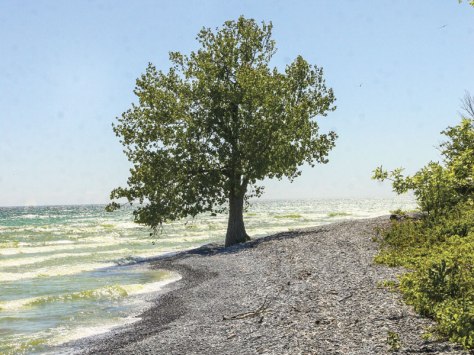
Ontario has officially terminated the Ostrander Point wind project.

Ostrander-Tree

Trout Creek and Clarington projects are also cancelled by IESO.

READ: http://fit.powerauthority.on.ca/program-updates/program-reports

Wind Turbines Killing thousands of birds and bats

By John Miner, The London Free Press

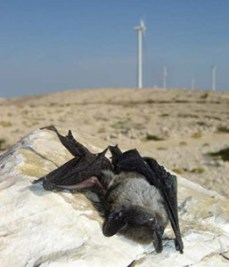
Wind turbines are killing bats, including ones on the endangered species list, at nearly double the rate set as acceptable by the Ontario government, the latest monitoring report indicates.bat-killed-by-wind-turbine-blades

Bats are being killed in Ontario at the rate of 18.5 per turbine, resulting in an estimated 42,656 bat fatalities in Ontario between May 1 and October 31, 2015, according to the report released by Bird Studies Canada, a bird conservation organization.

Ontario’s Ministry of Natural Resources has set 10 bat deaths per turbine as the threshold at which the mortalities are considered significant and warrant action.

The bats being killed by turbines in Ontario include the little brown bat, tri-coloured bat, eastern small footed bat, and northern long-eared bat, all on the endangered species list.

The Birds Studies Canada report draws its information from a database that is a joint initiative of the Canadian Wind Energy Association, Canadian Wildlife Service, Ontario Ministry of Natural Resources and Bird Studies Canada.

Brock Fenton, an expert in the behaviour and ecology of bats and professor in Western University’s department of biology, said the bat deaths are a concern.

Bat populations across North America have been plunging with the emergence of a fungal disease called white nose syndrome.

Birds are taking less of a hit from wind turbines, according to the report, with an estimated 14,144 non-raptors killed by wind turbines and 462 raptor fatalities between May 1 and October 31 in 2015.

The report noted that some wind farms have moved to reduce bat mortalities by cutting their turbine speeds from dawn to dusk in the late summer and early fall.

A spokesperson for the Canadian Wind Energy Association said the association is concerned about reports that are based on limited data that have the effect of boosting estimates.

In response, CanWea is developing its own system that will be released this fall that is designed to improve existing and proposed bat regulations, said Brandy Giannetta, CanWea’s Ontario regional director.

“It aims to achieve this in part by enhancing knowledge of the existing data in order to drive science-based policy decisions and also by providing avoidance, minimization, and mitigation options that we hope operators and regulators alike will find useful in conservation efforts,” Giannetta said in an email.

Wind Concerns Ontario, a coalition of provincial groups opposed to wind farm development, said it is concerned that birds and, significantly, bats are being killed in numbers that were not forecast by either the Ontario government or the wind power developers.

“The population of the Little Brown Bat in particular is now at 5-10 per cent of its historical levels, so, as the Environmental Review Tribunal stated in the White Pines decision in Prince Edward County, even a few deaths will have a serious impact on the species as a whole. And we know for a certainty that bats are killed by wind turbines,” Jane Wilson, president of Wind Concerns Ontario, said.

It is critical to understand that wind power projects shouldn’t be approved without a full and objective assessment of all factors in any given location. The government’s push for wind power has to be balanced with the continuing need to protect the natural environment, Wilson said….

READ MORE:  http://www.lfpress.com/2016/07/20/wind-turbines-killing-tens-of-thousands-of-bats-including-many-on-the-endangered-species-list

Scaring Children isn’t the Answer

Ontario has been paying for TV ads to promote its policies concerning climate change.  One such ad is where media personality David Suzuki lectures to an audience of children that if action isn’t taken we are all doomed. Wind power generation has been held out as part of the renewable energy solution but it is done without regard to the reported harms to health and harm to the environment. Every time this ad is broadcasted adults should stop and consider if the solutions being offered are the right ones for the right problem. We need to protect our children.  Our government should not be in the business of scaring children.


Pierced

Ostrander Point Tribunal drags scrutiny of wind and solar projects out into the open

Ostrander-Tree

Only when time has passed and the memories of the years long struggle begin to fade, will we know that industrial wind turbines have been banished from Ostrander Point for good. But for now, the creatures who occupy or pass through this bit of land on Prince Edward County’s south shore may do so without the threat of bulldozers rolling across the terrain or 50-story machines whirring overhead. Maybe forever.

The Ostrander Point wind project has been stopped. Its appeal period has expired. There remain scenarios in which the project could be revived, but that likelihood is now remote, according to the lawyer acting for the Prince Edward County Field Naturalists (PECFN).

“There is rarely a final chapter written in these types of sagas,” said Eric Gillespie. “It is fair to say, however, that the odds of this going further are extremely low. To the best of our understanding, the Gilead Power permit is revoked. That decision is not being appealed. The file has concluded.”

The volunteers who form PECFN allowed themselves to exhale on Thursday evening—after the developer’s appeal period had expired.

“It is particularly wonderful to finally realize that the battle is over,” said Cheryl Anderson of PECFN.

WHAT IT MEANS
The decision by the Environmental Review Tribunal—written by Heather Gibbs and Robert Wright—fundamentally alters the future for Ostrander Point, and has the potential to disrupt other projects involving land where Blanding’s turtles are known to nest, including White Pines and Amherst Island. But it has the potential to reach much further. Indeed, it has the potential to shake the very foundations of the Green Energy Act (GEA).

In 2009, the provincial government, led by Dalton McGuinty, was unsatisfied with the pace of wind and solar energy development in the province. Deadline after deadline had passed and his targets for renewable energy had gone unmet. A panel of experts had reported a year earlier that the regulatory process— the safeguards that protect human health, the environment and even the electrical grid itself—were causing the delays to wind and solar development across the province.

The GEA set out to remove these hurdles—eliminating safeguards in the Ministry of the Environment, Ministry of Natural Resources and Forestry, Ministry of Energy and the Ontario Energy Board, among others.

Since the GEA was enacted, industrial wind and solar projects have been reviewed and approved behind closed doors in a mostly tightly controlled process. The only nod to public transparency and accountability was a single Environmental Review Tribunal…..

Published Wellington Times July 15, 2016

READ MORE: http://wellingtontimes.ca/developmentApril16/pierced/

Nature Counts. Counting the dead birds & bats due to wind turbines

The Wind Energy Bird & Bat Monitoring Database is a joint initiative of the Canadian Wind Energy Association (CANWEA), Canadian Wildlife Service (CWS, Environment Canada), Bird Studies Canada (BSC) and the Ontario Ministry of Natural Resources (OMNR). The goals of this project are to facilitate improved understanding of the impacts of wind turbines on birds and bats, allow for greater consistency in assessment of wind power impacts across the country, and lead to future improvements in the Environmental Assessment and approval processes. The database is designed to allow individual industry proponents (and individuals or consultants working on their behalf) to enter field data derived from bird and bat population monitoring projects in a confidential environment, while providing the ability to analyse the data and create summaries for the public on the website. Results from such analyses will be used to inform future wind power developments, and to improve the EA and approval processes, particularly by streamlining data collection requirements.

READ MORE:   http://www.bsc-eoc.org/birdmon/wind/main.jsp

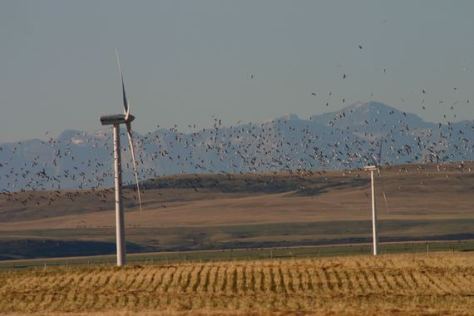
birds and turbines

Health director shouldn’t ignore victims

noise child 2

“Unnecessary noise, then, is the most cruel absence of care which can be inflicted either on sick or well.”

Elizabeth Ebertz.  Published in Fond du lac Reporter on July 8, 2016

This excerpt is from “Chapter IV Noise” of Florence Nightingale’s famous 1898 work: “Notes on Nursing What It Is, and What It Is Not”, which offers many cautions about noise and health that she believed nurses should practice. Her understanding was very progressive. Not until the 1960s did epidemiology demonstrate that long-term exposure to low levels of noise causes significant adverse health effects. Not until the 2000s did epidemiology prove that low sound levels over long periods at night result in significant health effects including cardiovascular impacts. Nurse Nightingale did not wait for that epidemiological evidence when she saw the evidence directly in the sick people she was trying to help.

In contrast, county Health Officer/Director Kimberly Mueller claims to be waiting for scientific evidence that proves adverse health effects are caused by the wind turbines before she will take action to address the reported harmful effects. Is this what Florence Nightingale would have decided?

Mueller needs to take action based on evidence in her own community. Fond du Lac County has seen a long list of people filing complaints about wind turbine noise and the resulting health effects. Ignoring evidence that should be relied upon from direct witnesses, residents who have been pleading before the Board of Health at meeting after meeting, is not the way a health officer should respond.

What more “evidence” is needed to motivate Mueller to act? How many more people must stand before her begging for relief? County health officers should be protecting the community, not defending the wind energy projects.

The board is seeking more studies. Why? The evidence has been before them for years. The people who are ill remain ill as a result of the board’s failure to act on complaints, and the poor advice from the health director.

Denial of evidence from the people who are adversely impacted by the noise, both audible and inaudible infra sound, is not acceptable for public health officials. They have a duty to act to protect public health, yet continue to ignore the evidence brought to them by their residents.

Florence Nightingale taught that a nurse must address the concerns of a person who complains of symptoms that make them sick. By her standards, the medical professionals advising the county should be ashamed.

The recent Health Canada study shows that living within 1.25 miles of a wind energy utility can double risks of adverse health effects like migraines, dizziness and tinnitus. It covered people living near six wind projects in Ontario where the sound limits are not to exceed 40 dBA. This is well below the 50 dBA that the county accepted for wind energy projects. The county decided it would make the rural areas industrial noise zones. It is time they stand up and take ownership of the problems they created.

(Reference: http://nursingplanet.com/Nightingale/noise.html)

READ AT: http://www.fdlreporter.com/story/opinion/2016/07/08/commentary-health-director-shouldnt-ignore-victims/86854604/

WHO Noise Guidelines

who logo

WHO/Europe is currently in the process of developing the WHO Environmental Noise Guidelines for the European Region as a regional update to the WHO Community Noise Guidelines. The Guidelines will include a review of evidence on the health effects of environmental noise to incorporate significant research carried out in the last years.  The health outcomes for which the evidence will be systematically reviewed include: sleep disturbance, annoyance, cognitive impairment, mental health and wellbeing, cardiovascular diseases, hearing impairment and tinnitus and adverse birth outcomes.

The guidelines will assess several environmental noise sources such as aircraft, rail, road, wind turbines and personal electronic devices. The document will also consider specific settings such as residences, hospitals, educational settings and public venues.  In addition, the guidelines will review the evidence on health benefits from noise mitigation and interventions to decrease noise levels.

The process of developing the guidelines is complex, involving the work of top scientists from across the world under the coordination of WHO. The guidelines will focus on the WHO European Region and provide guidance to its Member States that is compatible with the noise indicators used in the European Union (EU) Directive on Environmental Noise.

READ MORE:  http://www.euro.who.int/en/health-topics/environment-and-health/noise/activities/development-of-who-environmental-noise-guidelines-for-the-european-region