All posts by mum4kids

Wind Turbines are not Good Neighbours

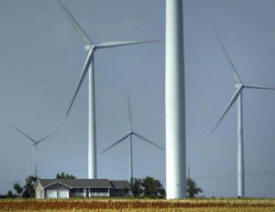
Not what you want in your backyard. Niagara Wind’s  3MW turbines and its cluster of 8 of 77 turbines now crowd the cottages and homes located in the picturesque community of Lowbank in southern Ontario. Lake Erie’s shoreline and its horizon are dominated by towering turbines of multiple wind projects visible from all views. Continued impacts to residents and migrating butterflies, birds and bats await the turning blades with the project’s anticipated start up date of fall 2016.

What side of the fence do you live on?

The discord of wind facilities hits home and personal for those who have had the projects forced onto their  communities.  In southern Ontario the construction frenzy of the Niagara Wind project consisting of 77  3MW wind turbines continues to defy logic and common decency.

The latest in your face example being the installation of the guard rails that were installed along the narrow rural road edges needed to protect the massive transmission poles for the project.

It has been well over a week since the heritage site of the West Lincoln cemetery was trespassed by the installation of the infrastructure associated with the Niagara Wind project which blocks access. No word as to when this will be fixed.  Utter disrespect for those who have loved ones buried there.

No thought has been given to the impacts to the home owners whose front yards are now visually reminiscence of the QEW highway . The guardrails are also creating direct barriers of access for agricultural operations with farm lane entrances narrowed.  Moving large slow moving farm equipment onto the public roads will become even more difficult as the option of moving over to allow oncoming traffic to pass has been removed.

Snow removal in the winter months will also be directly impacted by the endless miles of hydro pole bases and the guardrails.

Industrialization of our rural homes.

(Photos courtesy of  Smithville Turbine Opposition Party)https://www.facebook.com/Smithville.Turbine.Oppositon.Party/

This slideshow requires JavaScript.


Health Investigation moves a step forward

Jane WilsonConversations surrounding the Huron County Board of Health’s investigation into industrial wind turbines (IWT) are ongoing. Most recently Jane Wilson, President of advocacy group Wind Concerns Ontario, gave a presentation to the board on August 4.

In March, the board had posted an announcement on their website about a study they planned to carryout regarding the health impacts of IWTs, and people began to sign up. However several months later, they paused the study. They said they were unsure of the costs of the endeavor and were concerned they didn’t have the resources to ensure the study was done effectively and is actionable. Not long after, the staff member who was to carry out the study was let go.

This caused ripples through the community and was particularly upsetting for individuals who were strongly advocating for this study to happen.

During the board’s June meeting, the board discussed a potential opportunity to partner with the University of Waterloo (UW) for a study. This was again a strong theme at the meeting on August 4, and two professors from UW were present at the meeting.

Wilson explained that Wind Concerns Ontario is a coalition that is concerned about IWTs’ effects on the economy, natural environment and human health. She gave a ten-minute presentation covering a variety of areas including conclusions of other studies and gaps in other studies and various kinds of noise, both audible and inaudible, and how they affect people.

READ ARTICLE:  http://www.seaforthhuronexpositor.com/2016/08/08/president-of-wind-concerns-ontario-appeals-to-huron-county

Investigate wind turbine health effects

“WHO publications are frequently relied upon by the global community. Despite the research challenges and variables associated with IWT, there is sufficient evidence that IWTs have negatively affected the health of some members of the rural population globally. This merits taking a precautionary approach until research has clarified the research challenges and knowledge gaps which have yet to be resolved. “

Carmen Krogh BScPharm (retired)

Aviation and Wind Turbines Don’t Mix

Safety should be paramount no matter what your views are for wind power.  Ontario needs to hear from you about the lives being put at risk with the approval of wind turbines being situated near aviation. It isn’t a matter of “if” lives will be lost it is a matter of when.

copa tilting at wind turbines

COPA (Canadian Owners & Pilot’s Association) spell out their concerns and are urging letters be sent to Ottawa to bring some common sense to this issue, for safety sake.

SAMPLE LETTER:  for wind project proposed next to the Collingwood Regional Airport:

Click to access LetterCOPAmembersCollingwoodStayner.pdf

Make your voice heard! Contact your Parliamentarian and show your support for COPA and general aviation issues locally and nationally.

Dear COPA member,

Your association is asking you to contact your Federal Member of Parliament to request their support against the proliferation of Wind Turbine tower in the vicinity of airports and aerodromes across Ontario and Canada. This is an issue of SAFETY to pilots and the Minister has the authority to intervene.

Go to this link for background, sample letter and your MP contact information:

http://www.copanational.org/files/LetterCOPAmembersCollingwoodStayner.pdf

Cher(ère) membre COPA,

Votre association vous demande de prendre contact avec votre député(e) fédéral(e) afin d’obtenir son appui pour stopper la prolifération des éoliennes autour des aérodromes en Ontario et au Canada. C’est un enjeu de sécurité auprès des pilotes et du public en général, et le ministre possède l’autorité d’intervenir et d’y mettre fin.

Vous trouverez au lien suivant une lettre-type, les instructions pour contacter votre Membre du Parlement et de l’information supplémentaire.

COPA:  http://copanational.org/FeedFeds.cfm

Cemetery Blocked by Guardrails

One of the stated considerations for the Niagara Wind facility’s renewable energy approval (REA) was to take into consideration the negative alterations and visual impacts to heritage sites. The project was to take measures to minimize adverse effects to the view, such as to the local cemetery  located on Port Davidson Road in West Lincoln, Ontario.

“In order to avoid direct impacts on views of the West Lincoln McCaffrey Cemetery (CHR-14), it is recommended that any overhead transmission infrastructure installed along Port Davidson Road in the vicinity of the cemetery be installed along the eastern side of the road”

Click to access Heritage_01_Main-Report.pdf

But someone clearly forgot to consider the impacts of blocking access to the cemetery with newly installed guardrails, now required because of the Niagara wind project’s transmission lines.  This oversight is just one of many and disrespects the community and those who have family members buried in the cemetery.

Rural Ontario “in Crisis”

“If we had 30 kids in Ontario with the measles, we’d have a health crisis. With 60,000 households in Ontario who were disconnected from hydro, that’s a crisis. And in rural Ontario, when that disconnection means you can’t use your well, that’s a public health crisis”

Rural Ontario ‘in crisis’ due to high hydro rates, local United Way head says

By Denis Langlois, Sun Times, Owen Sound

Soaring hydro costs have created a crisis situation in Ontario that is especially concerning in rural areas like Grey-Bruce, says the head of one of the local agencies that is helping people to keep their lights on.hydro meter 1
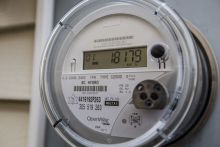
Francesca Dobbyn, executive director of the United Way of Bruce Grey, which has released a report on utility assistance provided to households in the region over the past year, pointed to national news reports that quote the Ontario Energy Board as saying nearly 60,000 residential customers were disconnected in 2015 from hydro services due to non-payment.

That number was confirmed by The Sun Times Friday.

“If we had 30 kids in Ontario with the measles, we’d have a health crisis. With 60,000 households in Ontario who were disconnected from hydro, that’s a crisis. And in rural Ontario, when that disconnection means you can’t use your well, that’s a public health crisis,” she said in an interview.

The local United Way’s report found that from July 1, 2015, to June 30, 2016, the United Way, along with Bruce and Grey counties, Y Housing and the Salvation Army in Wiarton distributed nearly $750,000 to help people with hydro or natural gas arrears or to purchase wood, oil or propane to heat their homes.

That figure rises to more than $1 million, the report says, when factoring in the staff time and resources provided by the agencies.

Dobbyn said while that number alone is startling and points to a “crisis brewing in our region,” it doesn’t include the financial assistance provided to people by other sources, such as churches or other organizations or by family members or friends.

The report says electricity costs have climbed by 100 per cent in the past decade.

Rural residents have been hardest hit, Dobbyn said, because they are charged higher delivery costs by utility companies.

Rural residents, on average, pay almost double the delivery rates compared to households in “urban high density” areas, according to the United Way report.

An average household in a low-density area is charged about $84.46 for delivery, distribution, connection, network and other fees, the report says, while homes in high-density areas pay about $44.50. And that’s without using any energy at all, it says.

Homes that use baseboards for heat pay about $80 a month in hydro rates on top of the delivery fees.

“And that’s before turning on a light or using a microwave or any other source of electricity,” Dobbyn said.

The numbers, she said, show that even while conserving energy in the home, people in rural areas are still facing high monthly hydro bills.

“Our clients, our families are not wasteful. They do everything they can to reduce consumption, they unplug everything and we often advise them to turn breakers off in an effort to reduce their bill,” she said……….

READ ARTICLE: http://www.owensoundsuntimes.com/2016/07/29/rural-ontario-in-crisis-due-to-high-hydro-rates-local-united-way-head-says


None of these raise a red flag?

letters to editorWhen you finish reading these comments and events of the past several months concerning wind turbines, ask yourself, “Don’t any of these issues raise a red flag?” If you feel that most, many or even just some of these raise red flags, then why would the present Almer and Ellington Township Board officials even consider installing 500’ tall wind turbines so close to our homes without more research?
  1. Wind lease owners must sign a confidentiality agreement whereby they can’t be critical of NextEra. Why are they required to sign a gag order? What would you think about a doctor who requires you to sign a “gag” order before surgery?
  2. Almer Twp. Board and planning commission (PC) member, Brian Schriber, commented in last week’s Advertiser, “I resent the claims that residents feel they are not being listened to.” This is very disingenuous and deceitful considering he made a motion at the July 13 PC meeting to ignore long time Board member, Patty Witkovsky, and every other citizen who spoke during 35 minutes of public comment. Schriber made a motion before any PC members had a chance to discuss possible changes to the wind ordinance. He wanted the wind ordinance passed “as is” without any of the additional changes suggested just seconds earlier by residents.
  3. Former township official, Art Graff, read eight items at a PC meeting that township officials removed from the present wind ordinance. This is just one of the lines that was inexplicably eliminated:  “The tower shall not be unreasonably injurious to the safety or market value of nearby properties.” At three Almer Township meetings, PC Chairman Bob Braem said, “I ‘think’ some of those items were put back in the new ordinance.” He “thinks” they were put back in? When asked where they specifically appear in the new ordinance, he didn’t, couldn’t or wouldn’t produce proof.
  4. Mr. Braem also decided to hold a meeting in a snowstorm/blizzard that many residents were not able to attend. He evidently also thought Almer Township residents would be adequately informed of a surprise special PC meeting if he simply had a note posted on the township door 18 hours in advance of the meeting.
  5. Mr. Braem also has not included residents in “discussions” at several PC meetings dominated by NextEra, Spicer (the engineering firm) and the township attorney. Being pro-wind does not give him authority to ignore residents.
  6. Mistake or a lie? NextEra official, Mark Trumbauer, said at an Ellington Township meeting that “55 decibels is not loud. After all, the county allows 65 decibels.” Tuscola County doesn’t have any wind turbine sound specifications.
  7. Mistake or lie? When NextEra was asked at a surprise special PC meeting about the number of turbines and locations, a rep said he could “honestly say he didn’t know”. The very next day NextEra’s map of possible wind turbine locations appeared on an FAA website.
  8. Mistake or lie? In late March, Duane Lockwood (Ellington Township Supervisor) was still saying they would not place turbines south of M-81. In mid-March, NextEra had submitted to the FAA a map showing SEVEN turbines installed south of M-81 (including three on the Supervisor’s land).
  9. Mistake or Lie? Ryan Pumford, another NextEra spokesperson has said on numerous occasions that there have been only three “accidents” involving their wind farms. However, an Ellington Township resident personally viewed two NextEra turbine accidents while on vacation in Colorado and found examples of four other NextEra turbine accidents online.
  10. In one breath, NextEra claims there are very few turbine failures and in the next breath, they say how a design was changed because of problems.
  11. One Gilford Twp. official said the biggest issue they’ve faced has been that NextEra has failed to live up to their financial tax promises.
  12. Several farmers have complained some drain tiles have been crushed and land is severely compacted that takes years to resolve. Some areas have been repaired, but one doesn’t know about the damage until later and then it’s hard to prove the cause of compaction. Have our township officials even discussed soil compaction?
  13. Gilford Twp. officials confirm shadow flicker is an issue, including one Board member who had to make adjustments to her house to cope with the annoyance. Our officials dismiss shadow flicker as insignificant.
  14. NextEra spokesperson, Mark Trumbauer, says, “It is clear a small, vocal group of wind energy opponents intend to create delay at every point…” Almost a dozen area townships have passed moratoriums or referendums. Almost a dozen townships? That is no small group!
  15. Almer Board members, Brian Schriber and Charlie Dennis, say they’ve been bombarded with so many people pressuring officials. Which comment should you believe? Mark Trumbauer’s “small group” comment or the Schriber/Dennis “bombardment” comment?
  16. Citizens are worried about the cost of decommissioning/dismantling turbines (estimated today at $200,000 per turbine) at the end of their life span. Mr. Schriber thinks he can take down a 500’ turbine by himself. Not to be outdone, Charlie Dennis said someone could take down a turbine with a few sticks of dynamite.
  17. Township officials have often ignored the fact that approximately 25% of people are annoyed or highly annoyed by the wind turbines. However, Health Canada and the non-participating land owners who are annoyed by turbines admit turbine noise and vibration may not be sensed unless people are subjected to the turbines for an extended period of time. Visiting a turbine for a few hours, as township officials have done, is a waste of time.
  18. According to research by Ellington resident and engineer, Eric Zbytowski, complaints from people subjected to noise from a turbine drop off significantly if the turbine is more than 2000’ away. Yet, township officials dismiss that research as they have dismissed so many other issues.
  19. NextEra claims that a GE turbine safety manual is not available for distribution. No township official has balked at that claim?
  20. NextEra states “research” proves home property values don’t suffer. Wind energy companies use “research” that examines home values five to ten miles from turbines. Does NextEra use a survey of homes 2000’ away or less from a turbine? Of course not.
  21. Research from the Minnesota Department of Health: a minimum setback distance of 2,640 ft. from the home is necessary to not suffer the health consequences of low frequency noise generated by the turbines. Ellington Twp’s proposed ordinance IS HALF THAT DISTANCE at 1320 ft. Almer Township’s setback from the home is three times the 499 ft turbine height which makes that distance less than 1500 ft.
  22. An incredible comment was made by Ellington Township PC AND Board member, Joddy Ehrenberg at a PC meeting: “The trees block most of the sound from the turbines.” Trees? What trees? Does everyone in the township have trees tall enough and dense enough to block the sound of the turbines? And no one else on the Ellington PC questioned that comment?
  23. Officials’ lack of transparency has been trending for years. There was a totally different conflict of interest issue beginning in 2014 whereby the Almer Township PC Chairman had to resign. In October of 2014, the PC tried to rezone an area “quietly” without properly informing citizens. They ignored the pleas of a packed township hall several times in 2014 over that conflict of interest just as they have ignored the wind turbine conflict of inters today. The officials will deny this – just ask them.
  24. And, lastly, here is an example of Ellington AND Almer Township officials’ lack of openness. They have posted special meeting “notices” on the township door several times over the last few years a little over 18 hours before the meeting. If officials were truly interested in our concerns, they’d give someone a “heads up” call. Their 18 hour notice forces residents to check the door of the hall twice a day, every day, 356 days a year.

If wind turbines were placed safely away from people who haven’t signed wind leases, residents wouldn’t be challenging this project. Many of our township officials have continuously dismissed, discounted, distorted, deflected and denied residents’ concerns for months. These issues listed above certainly raise red flags! You can help change that at the upcoming primary election on August 2nd. This primary election on Tuesday is more important for our townships than the November 4 general election.

Almer/Ellington concerned citizens,

Jan Daniels, Andrew DeGroot, Norma Freville, Bonnie Kata, Wayne Koper, Jeri Koper, Shelby Koper, Dirk Lowry, Kris Lowry, Jim Mewhiney, Joyce Mewhiney, Jane Montei, Jerry Montei, Larry Robinson, Sharon Robinson, Rosemary Segroves, Donna Stephens, Norm Stephens, Eric Zbytowski

Published in Tuscola County Advertiser (USA) July 30, 2016: http://www.tuscolatoday.com/index.php/2016/07/30/none-of-these-raise-a-red-flag/

Setbacks

house surrounded by wind turbines

Robert Bryce has prepared a spreadsheet summarizing activities in the USA relating to municipalities which have stopped industrial wind turbines, required setback provisions or other requirements for wind facilities.

VIEW DOCUMENT:

https://docs.google.com/spreadsheets/d/1f3aXyeXbwvvRGFw87V-l-jC4rMLy6MZHGOh1OBMKe4Y/htmlview?pli=1

Unmanageable

green windWhere does the money go? Global News has presented a series of stories over the past few weeks painting a troubling picture of rural Ontario residents struggling to pay soaring electricity bills. In a particularly telling interview, Ontario’s new Energy Minister, Glenn Thibault, was forced to admit he didn’t know how many residents have had their electricity disconnected because they couldn’t pay— nor was he aware if anyone in his department was keeping track of this information.

Thibault’s suggestion? Residents should conserve electricity. Besides, his government has a new support program designed specifically to help low-income Ontario residents pay their electricity bills. Relief of sorts perhaps, but more along the lines of putting one’s thumb in a dike, rather than addressing the bigger issue.

All it really does is transfer these costs to the taxpayer.

So where is the money going? Many millions, indeed billions, of dollars are being extracted from customers and taxpayers to fund rising electricity costs. Is it paying for research and development into electricity storage so that perhaps one day, intermittent generating sources (i.e. wind and solar) might serve a useful purpose? Is it being used to offset the hardship faced by low income Ontarians? Is it funding Ontario infrastructure development or green transit plans? No, no and no.

Maybe it is funding a network of charging stations across the province, including one planned for the King Street parking lot in Picton? No. Perhaps it is helping to pay the $14,000 subsidy Ontario pays purchasers of electric cars? No.

As it turns out, much of this money is going into the pockets of a few developers, investors, pension funds and corporations. It’s called profit—and a handful of companies are profiting handsomely from your electricity bills.

Scott Luft has been poring over the mounds of data produced by the Independent Electricity System Operator (IESO) and other sources for the past six years. Luft’s research and analysis, compiled on his website coldair.luftonline.net, is an important resource for anyone interested in understanding what has gone so terribly wrong with Ontario’s electricity market. Luft has methodically revealed, and laid bare, the destructive politically driven management of Ontario’s electricity system and shows why residents will be paying for these decisions for decades to come.

According to Luft’s analysis, Ontario electricity customers have subsidized wind and solar energy producers by $6.4 billion over the past decade. Worse, the rate of subsidization is climbing rapidly. We are on track in Ontario to subsidize wind and solar producers by more than $2 billion in 2016 alone.

This is money going directly from consumers into the bank accounts of producers. This doesn’t include the many millions of dollars Ontario spends, or forgoes, each year offloading excess electricity to New York or Michigan from intermittent wind and solar generators it can’t control. Or the amount we pay smelters and mineral processors to spare them the high cost of Ontario electricity.

How did we get here?

Through the 1990s, Ontario dabbled in renewable energy but couldn’t persuade investors and the capital markets to participate with them. They increased incentives and tax breaks but investors stayed on the sidelines.

Dalton McGuinty’s Liberals came to power in 2003 promising to close Ontario’s coal-fired generating facilities and replace this capacity with electricity generated from renewable sources, including wind and solar. While he successfully closed coal-fired plants, it was gas and nuclear-powered generation, not wind and solar, that filled the gap. (Luft’s charting, based on IESO data, illustrates this clearly).

Still, investors remained stubbornly on the sidelines. So McGuinty doubled down and doubled down again. Eventually, he would agree to pay wind and solar producers as much as 25 times the market price for electricity for up to 20 years—if it appeared to be green. That did the trick. Now, long queues form seeking to join the gravy train each time the wicket opens for the province to buy more power.

Despite a decade of rapid and ill-planned expansion of industrial wind and solar facilities across the province, these generators produce a paltry portion of the province’s electricity—at an extraordinarily high cost. They did, however, provide one important advantage for McGuinty and, later, Kathleen Wynne. The massive turbines and acres of solar panels have proved to be helpful political emblems signalling to urban voters their government is green.

It has won this praise at a very high cost. Sadly, it is Ontario’s rural poor who are paying it.

rick@wellingtontimes.ca

READ AT: http://wellingtontimes.ca/unmanageable/