All posts by mum4kids

We have to talk

trade-secrets

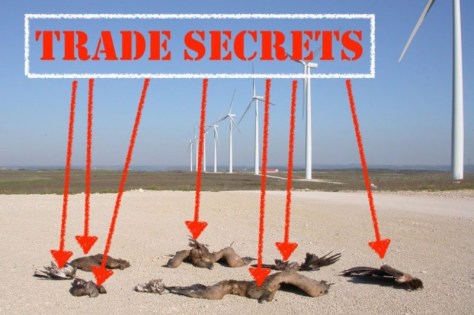
The “estimated” bill came in from the Freedom of Information office. I guess it’s the price of information. Sure isn’t free. It’s $625, but that should get us roughly 28,000 pages of wind turbine bird and bat mortality information from most of the 110 wind projects in Ontario. I still shake my head that this hasn’t been released already, but I suppose the numbers are too damaging for the industry.

If you can help out that would be very much appreciated.

I sent this letter on to the Ontario MPP’s, in hopes they would all pitch in $20, okay $10? How about a twoonie? Anybody want to bet on whether any of them will?? Could be rather telling – who truly stands up for transparency and open government. Who thinks this industry shouldn’t get off scot free for killing Species at Risk on a regular basis.

Esther

Donate Here: http://ontario-wind-resistance.org/2016/10/02/help-fund-foi-request-release-wind-turbine-bird-bat-mortality-data/

Dear Ontario MPP’s,

We have to talk.

It is no longer a matter of guessing what wind turbines ‘might do’ to Ontario’s birds and bats – you know what’s happening. Or, you should know. Wind developers have been filing bird and bat mortality reports with the Ministry of Natural Resources and Forestry for many years now. So, what do those numbers look like? Oh. Right… nobody really knows because they get filed away – far far away – from public scrutiny.

I left Ontario two years ago when wind turbines destroyed our land, and the habitat for all animals, including us. But I did not forget about the destruction that was taking place in my absence. I suppose I was hoping (as I usually do, hope is healthy, but rarely rewarded in Ontario politics) that the MNRF, or the media, or the researchers, or the nature organizations – somebody! – would keep a close eye on the bird and bat kill rates from these machines. I expected this, because I know that when LNG killed 7500 birds in New Brunswick in 2013, the world knew, as they should, and the company was fined $750,000 under the Migratory Birds Convention Act. Other industries have been held accountable for bird kills too – especially if Species at Risk are involved.

Not so for the wind industry in Ontario. Nope, wind developers obliterate an area’s raptor population in several months. If it relates to wind turbines – those deaths don’t even “happen,” it’s all in your imagination.

Frankly I’ve had enough of this. I’ve filed a Freedom of Information request for all the bird and bat mortality reports in Ontario wind projects. Hey, quick question: Do you know how many wind projects are in Ontario? I’ll give you a second to Google it, or look it up in your government files, but I don’t think you’ll find the answer because there doesn’t seem to be a comprehensive list of them anywhere. I tallied over 110 wind projects in Ontario. What are the chances someone is actually overseeing all the dead birds and bats found around the bases at all these wind projects. The MNRF didn’t even know of many of the wind projects I listed for them.

After three years of operation the wind companies don’t have to file these reports anyway, unless they went over their “limit” of kills. That’s a problem, because from the few reports I’ve seen, they go over the limit/threshold all the freakin’ time. In fact this very recent research article says that the average bat kill at an Ontario wind project is 24.5bats/wind turbine.

Back to the guessing game: Just how many bats does the government allow to be killed by a turbine? Answer: 10 bats. So the wind companies are currently killing, on average, over double the number of “permitted bats kills” per turbine!

Um, pardon me, but why the hell hasn’t there been a major uproar over this fact in legislature? Is it perhaps because the government isn’t even reviewing these facts, these data? Is it because a cumulative impact study on bird and bat population hasn’t even been contemplated by this government, ever?

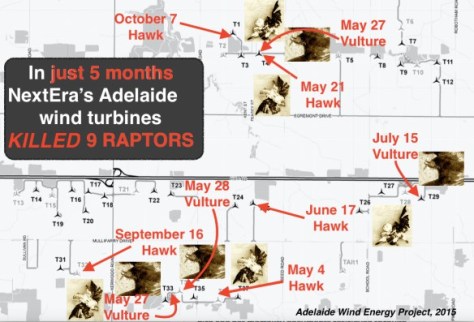
I can tell you that my former home in Adelaide lost nine raptors in just five months last year, from just one of the wind projects there. Five of them were red tailed hawks, the other four were turkey vultures. I doubt there are many, if any, hawks left. This one simple fact saddens and enrages me. But there is more. Swallows are taking a huge hit – purple martins in the Summerhaven project. And the Threatened barn swallow – it’s one of the Top 15 killed in Ontario. What happens when NextEra, or Suncor, or Enbridge kills a Species at Risk? Do they get investigated? Do they get fined? Or do they just get another “permit destroy” like they did for the bald eagle nest in Haldimand County three years ago.

This is how serious Ontario really takes the environment.

If you are saying, “Oh no Esther, you have it all wrong. We are transparent. We are doing everything we can to help the environment,” then I have a simple request for you. Do one of two things, or do both. A) Make it mandatory that bird and bat mortality reports are made public, for free (past and present). B) Donate to cover my Freedom of Information costs. I’m doing the government’s job, so it would be nice to see the government pitch in a few bucks for this lapse in being an “open government”. Even you can have access to all these reports on a simple Google Drive link. It’s not rocket science to make it happen. It just takes a will.

Sincerely,

Esther Wrightman
St. Andrews, NB

PS – Re. the raptors killed in Adelaide, you should know that NextEra’s little 2-page public summary states they killed only 2 raptors. But the full report retrieved through my FOI states 9 — the 7 other carcasses were found outside the meagre 50m from the wind turbine base search area, or during times the carcass collectors weren’t regularly collecting, and for some reason those bodies don’t count. But, hey, they can say they are under the “threshold” of what they are allowed to kill! (Of course they are way the hell over the limit if they actually used the real numbers they found, but then, again, who’s watching?)


adelaide-raptor-2015-kill

Scant disclosure on wind turbine bird mortality

esther-and-daughterDear Editor

I just read “What’s a few chopped up birds” (From The Top of the Pile, Sept. 22) on wind turbines and bird deaths in Alberta and Saskatchewan. Way to go Saskatchewan for actually taking this issue seriously. We’ve never had this happen in Ontario!

I’m from southwestern Ontario, but moved to New Brunswick two years ago when the turbines went up. For six years I fought them, went to tribunal hearings, videotaped the scummy company Nextera destroying an active eagle nest, got sued by the same company because I parodied their logo as NexTerror and organized and attended uncountable protests during that time. If I would have stayed, remained surrounded by turbines, the kids’ school surrounded by turbines, I would have continued, but our health came first and we left the land I was born and raised on.

I’ve since realized the wind companies are killing way more birds and bats than the media or researches know, with impunity. The last report on bird/bat mortality that any wind developer released to the public was in 2012 (Transalta’s Wofle Island), then all of a sudden the whole industry stopped releasing these reports. I couldn’t find them anywhere.

Bird Studies Canada wouldn’t release the documents. They are confidentially working with the wind companies, on a voluntary basis. I asked the wind company Nextera for it. They told me they could give me a two-page summary in a couple months.

Other avenues were also blind alleys calling for freedom of information requests for what should be public documents.

After many months, and a faked ‘appeal’ by the wind company to delay the release, they came. My heart sank and my blood boiled. In six months the two local Nextera projects killed eight red-tailed hawks and 14 vultures. You can imagine what the raptor population will be in that area when the 20-year lifespan of this project is over. We lived on flat, prairie-like farmland, with small woodlots, good raptor habitat. But not now that there are more than 200 wind turbines there.

I decided to file freedom of information requests for all the wind projects in Ontario. There are more than 110 projects. I had to source out and make a comprehensive list and then presented it to the FOI office and the Renewable Energy co-ordinator for the MNRF. You know what the Ministry of Natural Resources and Forestry guy said? “I didn’t even know about half of these projects.” This is the guy in charge of wind turbines and wildlife in the province, and he doesn’t even have a list of the wind projects there? I asked them if they are studying the massive cumulative impacts these projects will be having on the bird and bat populations. His answer was no, not unless there is some secret study going on. So nobody is looking into it. Not a soul. It’s all eyes closed to these massive killers.

They told me it will probably costs me thousands of dollars to retrieve these documents through the FOI. I took a breath and said, “Do it.” I’ll set up a Go Fund Me, or something. These need to be made public. I’ve posted what I have so far on a Google Drive page open to the public. At some point it might be a good idea to do this in Alberta as well. We asked the New Brunswick Ministry of Natural Resources for these documents and they just emailed them to us, free of charge, in two days. We asked the Nova Scotia government and they mailed us the documents, through an FOI request, for $5. But in Ontario “It’ll cost you thousands”. Obviously information they don’t want getting out when they put an enormous price tag on it. /that’s not open government.

Esther Wrightman

St. Andrews, N.B.

Letter Published Battlefords News- Optimist: http://www.newsoptimist.ca/opinion/letters/scant-disclosure-on-wind-turbine-bird-mortality-1.2351436

Bill 13- Have a Say

Bill 13, Ontario Rebate for Electricity Consumers Act, 2016

The Committee intends to hold public hearings in Toronto on Monday, October 3, 2016.

Interested people who wish to be considered to make an oral presentation on Bill 13 should provide their contact name, mailing address, phone number, and email address to the Clerk of the Committee by 3:00 p.m. on Friday, September 30, 2016.

Those who do not wish to make an oral presentation but wish to comment on the Bill may send a written submission to the Clerk of the Committee at the address below by 6:00 p.m. on Monday, October 3, 2016.

An electronic version of the Bill is available on the Legislative Assembly website at: www.ontla.on.ca.

Shafiq Qaadri, MPP, Chair
Christopher Tyrell, Clerk

Room 1405, Whitney Block
Queen’s Park, Toronto, ON  M7A 1A2

Collect calls will be accepted.

Ces renseignements sont disponibles en français sur demande.

SOURCE Standing Committee on Justice Policy

“EXPLANATORY NOTE

The Ontario Rebate for Electricity Consumers Act, 2016authorizes financial assistance for certain Ontario electricity consumers in respect of electricity costs.  Consumers receive the financial assistance by means of an 8 per cent reduction in the amount payable before tax under their electricity accounts for each billing period.  The amount of financial assistance for a billing period is required to be shown on invoices issued to consumers for the billing period.

The Act authorizes the making of regulations to reimburse electricity vendors for amounts credited to consumers’ accounts under the Act. The Act authorizes the making of various other regulations, including to set out other ways for consumers to receive financial assistance, to alter the default rules in the Act for how to calculate the financial assistance and to limit or alter who is entitled to financial assistance.

The Act contains administrative and enforcement provisions, including requirements relating to record keeping by electricity vendors and authorization for inspections and inquiries with respect to amounts of financial assistance provided and reimbursements to electricity vendors.  The Ontario Energy Board Act, 1998 is amended so that provisions of the Ontario Rebate for Electricity Consumers Act, 2016 and regulations made under it will be enforceable by the Ontario Energy Board.

The Act also amends the Ontario Clean Energy Benefit Act, 2010 to authorize the making of regulations under that Act in respect of cut-off dates for financial assistance under that Act.”

READ BILL 13: http://www.ontla.on.ca/web/bills/bills_detail.do?locale=en&Intranet=&BillID=4126

We are all suffering

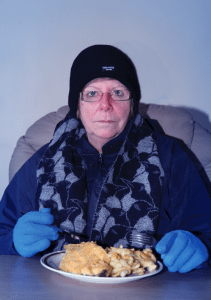
heat-or-eatEnergy Poverty is a direct serious harm to health that has resulted from Ontario’s energy policies. Poverty determines your level of health.  Not being able to pay your hydro bill is an adverse health outcome resulting from the pursuit of renewable energy projects without careful consideration of benefits and costs.  The Green Energy Act and rates paid for renewable energy (wind & solar) generated electricity has fueled the crisis of soaring hydro rates. There is a growing fury among those who can no longer bear such political agendas.  The pressure is building. People are demanding Government serve people, not only the interests of the “green” industries.
 

hamilton-protest
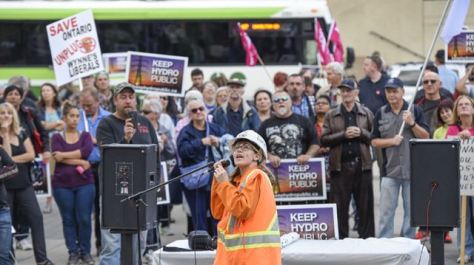
City Hall Protest Targets Skyrocketing Hydro Rates- Hamilton, Ontario

Hamilton Spectator

A rally against oppressive hydro bills attracted at least 100 protesters in front of city hall, and enough supportive horn honking on Main Street to sometimes drown-out speakers assailing Premier Kathleen Wynne’s government.

Most notable were those mobilized enough by the issue to get downtown by 5 p.m. and who have never publicly protested anything before.

Home electricity bills have skyrocketed in the last five years: off-peak prices have increased 47 per cent, and on-peak prices have increased 67 per cent.

That’s why Lori Balkom took part in her first protest, holding a sign standing close enough to the road to feel the breeze from cars driving by honking.

“My last bill was $850,” she said. “Last summer it was $500 … There are people out there who can’t afford food because of (their hydro bills). It’s not right.”

Her sisters Debbie Leblanc and Patti Glenn joined her. Leblanc lives in a building for seniors, and said at least one woman couldn’t afford to turn on air conditioning this summer and had to hang out in a mall instead.

Jeff Coe happened upon the protest while out for a walk and was swept up in it and signed a petition.

“I’m all for conservation, I conserve my kilowatt hours, but the bill keeps going up,” he said. “So that’s why I’m here, too.”

The focus of the rally was Wynne: signs called on her to resign, and labelled her government “corrupt or stupid.” The most popular read: “Keep hydro public,” a reference to calls for Wynne to reverse the privatization of Hydro One, the province’s electricity transmission monopoly.

Politicians from the provincial Progressive Conservatives and NDP spoke, but the rally’s organizer, Sarah Warry-Poljanski, was the focal point, dressed in work boots, bright orange hydro worker-style coveralls, and white hard hat.

“With the cost of hydro we are all suffering … seniors and pensioners, people working two or more jobs just to get by,” she shouted into the microphone. “This is unacceptable … The (government) needs to stop serving themselves, and serving us.”

READ ARTICLE: http://www.thespec.com/news-story/6884575-city-hall-protest-targets-skyrocketing-hydro-bills-in-hamilton/


Never Too Late to Do Right

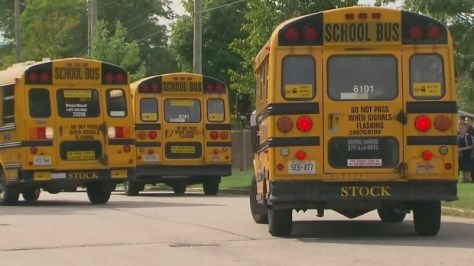
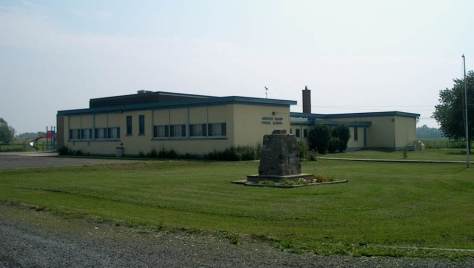
school-busNowhere else in Ontario would a temporary cement plant be permitted by a public school. Please ask Minister Murray (minister.moe@ontario.ca) and Premier Wynne (premier@ontario.ca) to revoke the Renewable Energy Approval for turbines on Amherst Island.
August 2016 letter to Minister Murray

Dear Minister Murray,

I am the mother of two daughters (ages 7 and 10) who attend Amherst Island Public School. I was a Participant in the Environmental Review Tribunal (ERT) regarding the above issue.

The panel dismissed my concerns regarding the siting of the cement batch plant, and my belief that the safety of children in their school environment will be compromised.I am formally requesting that you reverse the ERT decision based on my belief that the placement of the concrete batching plant and all associated construction activity for this project directly adjacent to the school will result in harm to children.

My appeal to you is based on the following three points:

1. The cumulative impacts on children of all the construction activities that this project introduces have not been adequately considered, in particular the impacts to Amherst Island Public School.- The evidence presented by the Approval Holder at the ERT broke down the project into detailed, individual activities, whose negative impacts are deemed to be negligible.But the ERT omitted to consider any examination of collective impacts to children.- Because each activity was looked at in isolation and not with an integrated approach, the potential harm of the project’s cumulative impacts has been overlooked.

It remains my opinion that the Director of Environmental Approvals did not adequately consider the cumulative nature of the concrete batch plant and activities and the impacts to the health and safety of students. Given that the concrete batching plant and associated construction for this project will occur less than 1 km from our elementary school, it actually appears that the single group who stands to experience the most negative effects from this project will likely be the children attending Amherst Island Public School.

2. It is unclear who is responsible for safety associated with this project.

It is still unclear who is responsible for safety and oversight in relation to the school environment. During the ERT, I learned that there would be extensive construction traffic from this project passing by our school, in addition to a concrete batching plant in proximity to the school that would not be allowed by our municipality if not for the Green Energy Act.

3. The “Burden of Proof” required by the ERT can only be accomplished by exposing children to unacceptable risk.

The UN Convention on the Rights of Children is clear: Governments have a responsibility to protect children. The best interest of the child shall be a primary consideration in government decisions.

I believe that by approving the project, the Director has authorized the Developer to introduce plausible harm to children.- The ERT found that during my submissions, I had not met “the test” of serious harm to human health. In the case of Amherst Island, to provide undeniable “proof” that the health of children will be impacted by the project would mean allowing the project to move forward as approved, and then assessing outcomes to children after months of exposure.

In Canada, in 2016, we do not permit such trials on children. However, that is threshold of the “legal test” that must be attained in order to successfully defend my children.

We must be reasonable, and consider the Precautionary Principle, which states that when risk of harm is scientifically plausible, actions should be taken to avoid or diminish the harm, and these actions are interventions that are undertaken before harm occurs.

Amherst Island is close to 16 Km long. Why did the Director not ask the Approval Holder to find a different location for the cement plant? Why weren’t these concerns noted in the ERT decision?

Minister Murray, if this project is allowed to move forward as approved, without adequate assessment of the cumulative impacts to the Amherst Island school environment, then our children become the test to see if the decisions of the Director were right or were wrong.

All children deserve better. In order to support the health, safety and welfare of children attending a public school in Ontario, I would respectfully request that you reverse the ERT decision in relation to the placement of the concrete batch plant for this project, and amend the conditions related to the concrete batch plant.

In the words of Dalton McGuinty “It’s never too late to do the right thing”.

amherst-island-public-schoolAmherst Island Public School. No place for a cement mixing plant.
Ontario municipalities ‘ecstatic’ future green energy contracts are on hold

wind-turbine-cbc

By Kate Porter, CBC News Posted: Sep 28, 2016

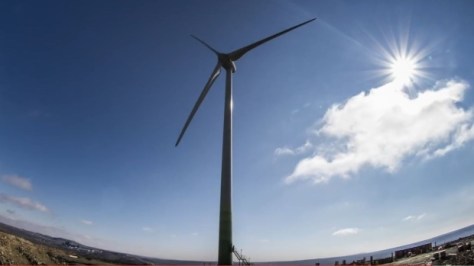
Municipalities across Ontario are cheering the government’s decision to suspend its competition for 1,000 megawatts’ worth of big, new renewable energy projects.

But one industry association representing companies that were preparing to try to snag a contract is shocked at the sudden shift in the winds at Queen’s Park.

Ontario’s energy minister  said Tuesday there simply isn’t the demand for power to go ahead with its second round of procurement.

Instead, it can save $3.8 billion in costs related to the electricity system and save residents $2.45 a month on their electricity bills, Thibeault said.

Mayors rejoice

In the rural township of North Frontenac, Mayor Ron Higgins’s phone was ringing off the hook after the surprise announcement.

His township’s council was the first to pass a motion earlier this year demanding that any new project receive municipal approval in order to get the province’s green light.

A one-time wind farm proposed for an area along the highway to Bon Echo Provincial Park had caused his residents much angst in recent years, said Higgins.

After North Frontenac passed its resolution motion in March, more than 100 other municipalities followed with resolutions of their own, and pressure mounted this summer at a meeting of Ontario municipalities.

Still, Higgins only expected to have more input in the next request for proposals.

“But it caught me off guard. I wasn’t expecting them to cancel it outright at this point,” said Higgins.

“I’m thrilled.”

Wind association ‘shocked’ by decision

But not everyone was thrilled.

“We were extremely disappointed and shocked by the decision,” said Robert Hornung, president of the Canadian Wind Energy Association, which represents project developers, wind turbine owners, manufacturers and others in the industry.

READ MORE: http://www.cbc.ca/news/canada/ottawa/green-energy-contracts-reaction-1.3781378

Ontario Suspends Large Renewable Procurement

NEWS
Ministry of Energy

 Ontario Suspends Large Renewable Energy Procurement

Decision Will Reduce Electricity Costs for Consumers

September 27, 2016 9:00 A.M.

Ontario will immediately suspend the second round of its Large Renewable Procurement (LRP II) process and the Energy-from-Waste Standard Offer Program, halting procurement of over 1,000 megawatts (MW) of solar, wind, hydroelectric, bioenergy and energy from waste projects.

This decision is expected to save up to $3.8 billion in electricity system costs relative to Ontario’s 2013 Long-Term Energy Plan (LTEP) forecast. This would save the typical residential electricity consumer an average of approximately $2.45 per month on their electricity bill, relative to previous forecasts. No additional greenhouse gas emissions are being added to the electricity grid.

On September 1, 2016, the Independent Electricity System Operator (IESO) provided the Minister of Energy with the Ontario Planning Outlook, an independent report analyzing a variety of planning scenarios for the future of Ontario’s energy system. The IESO has advised that Ontario will benefit from a robust supply of electricity over the coming decade to meet projected demand.

Informed by the Ontario Planning Outlook, consultations and engagements will begin this fall with consumers, businesses, energy stakeholders and Indigenous partners regarding the development of a new Long-Term Energy Plan, which is scheduled to be released in 2017. As part of this plan, Ontario remains committed to an affordable, clean and reliable electricity system, including renewables.

Ontario has established itself as a North American leader in clean energy development, attracting billions of dollars in private sector investment and generating over 42,000 jobs in the clean technology sector. The province has about 18,000 MW of wind, solar, bioenergy and hydroelectric energy contracted or online and the electricity supply is now over 90 per cent emissions-free.

Responsible management of Ontario’s electricity system is part of the government’s economic plan to build Ontario up and deliver on its number-one priority to grow the economy and create jobs. The four-part plan includes helping more people get and create the jobs of the future by expanding access to high-quality college and university education. The plan is making the largest investment in hospitals, schools, roads, bridges and transit in Ontario’s history and is investing in a low-carbon economy driven by innovative, high-growth, export-oriented businesses. The plan is also helping working Ontarians achieve a more secure retirement.

QUOTES

” Over the course of the last decade, Ontario has rebuilt our electricity system and secured a strong supply of clean power. Our decision to suspend these procurements is not one we take lightly. This decision will both maintain system reliability and save up to $3.8 billion in electricity system costs relative to the 2013 LTEP forecast. The typical residential electricity consumer would save an average of approximately $2.45 per month on their electricity bill, relative to previous forecasts. As we prepare for a renewed LTEP, we will continue to plan for our future and ensure Ontario benefits from clean, reliable and affordable power for decades to come.” – Glenn Thibeault Minister of Energy

QUICK FACTS

  • Ontario’s new LTEP will be guided by a number of strategic themes including greenhouse gas reductions, innovation, grid modernization, conservation and energy efficiency, renewable energy, distributed energy and continued focus on energy affordability for homes and businesses.
  • At the end of 2015, Ontario’s installed wind capacity represented almost 40 per cent of all installed wind capacity in Canada.
  • Ontario is home to more than 99 per cent of all installed solar photovoltaic capacity in Canada.
  • Ontario successfully eliminated coal-fired electricity generation in 2014, the single largest greenhouse gas emissions reduction action in North America.

LEARN MORE

Katrina Xavier Minister’s Office Katrina.xavier@ontario.ca 416-325-2690

Aslan Hart Communications Branch aslan.hart@ontario.ca 416-326-5452


Available Online

Disponible en Français


Witness Tampering Allegations made for Hearing of Wind Turbine Safety Hazard for Aviation

TORONTO – Ontario’s Liberal government denies Opposition charges that it interfered with the witness list for a hearing into a plan to install at least six, 152-metre-high wind turbines near the Collingwood airport.

Progressive Conservative house leader Jim Wilson says the province decided at the last minute to call a witness from NAVCanada instead of an expert from Transport Canada at an Environmental Review Tribunal hearing.

NAVCanada is a private corporation that owns and operates the country’s civil air navigation service, while Transport Canada is the federal government department responsible for transportation policies and programs.

Wilson says the witnesses were changed because Transport Canada has concerns about putting industrial wind turbines between the Collingwood Regional Airport and the Stayner aerodrome.

He says the Ontario government refuses to acknowledge that putting giant turbines so close to the small airports pose a hazard to aircraft operations.

But Environment Minister Glen Murray says it would be against the law for him to play any role in determining witnesses or influencing the environmental tribunal.

READ MORE:  http://www.winnipegfreepress.com/arts-and-life/life/greenpage/liberal-deny-tampering-with-witnesses-at-hearing-into-wind-turbines-near-airport-394837381.html

Amherst Island Project- High Risk to Public Safety

Amherst Island Wind Project – High Risk to Public Safety
(Marine Logistics and Hazardous Materials)

Over 1400 barge trips across the Amherst Island ferry path will be needed to transport all turbine parts, heavy haul trucks, cranes, a cement batching plant, materials, fuel, fuel trucks, and supplies from the mainland to Amherst Island. The potential for collision is exacerbated by the plan to undertake all construction from September to March.

Two industrial docks, one on the mainland and one in Kerr Bay on the Island are proposed. A 4.6 km transmission cable laid by a specialized ship will follow the barge path and similarly intersect with the ferry route. This constant intersection of barges and ferry poses a multitude of risks for residents of the Island, all those using the ferry, and hundreds of recreational boaters.

Hazardous materials transported by barge include dynamite, fuel trucks, diesel, gasoline, transmission and hydraulic fluids, anti-freeze, motor oil, cementitious materials, nacelles containing oil, turbine parts composed of over thirty different minerals, 300 heavy haul trucks and several cranes. Every barge trip will intersect with the ferry path to Amherst Island. Two barges will be used for transport: a 300-foot-long component barge and a 150-foot civil barge. A marine accident involving hazardous materials in the channel is an unacceptable risk.

Loyalist Township documented their concerns with the proposed routes of the barge traffic and the submarine cable used to connect the transmission line to the mainland. Both routes cut across the ferry path. The Frontenac II ferry crosses the North Channel every 30 minutes from 6:00 am until 2:00 am between Millhaven and Stella and has right-of-way over all other marine traffic.

It is impossible to exaggerate the importance of this right of the ferry to pass freely on its scheduled route: it is literally a lifeline for Island residents. An island offers no alternative routes for residents, commuters, suppliers, and most significantly, emergency vehicles. Most regular users of the ferry have encountered the situation in which the ferry, in mid crossing, makes a sudden course reversal, returning to the mainland to pick up an ambulance. Maneuverability and speed are essential, factors which would obviously be impeded by the presence of constant barge traffic crossing the ferry path.

The barge traffic will also pose serious navigational hazards for the hundreds of recreational boaters in the waters north of the Island and impede access to several well-known safe anchorages on the Island’s north shore.

The daily traffic from tugs with barges crossing the ferry route and entering Kerr Bay will create an unacceptable hazard in violation of the Navigable Waters Act. The ferry and the hundreds of other mariners in the waters off Amherst Island would have their right to safety threatened and, particularly for the recreational boaters, their access to safe anchorage or moorings impeded by the heavy volume of barge traffic.

This hazardous situation is exacerbated by the fact that the barge traffic, unlike the scheduled ferry crossings, would be constant but irregular, increasing the risk of a marine collision.

Windlectric has not provided the Marine Safety and Logistics Plan required in the MOECC Decision on Instrument for this project nor has it produced an Emergency Response and Communications Plan acceptable to Loyalist Township.

Our entire community is at risk.

Please ask Minister of the Environment Glen Murray (minister.moe@ontario.ca) to revoke approval of the Amherst Island Wind Project.

Protect Amherst Island: http://www.protectamherstisland.com/

Global News September 26, 2016:

http://globalnews.ca/video/2965085/amherst-island-residents-want-renewable-energy-development-rethink

Wind industry’s global attitude: blame the victims

annette%20smith-3_web

RE: “Defending wind power, turbines” [Letters, Sep. 14]:

Few Vermonters will defend wind turbines, so the national organization comes to the rescue. Go look at the American Wind Energy Association’s members: mostly large multinational corporations heavily invested in fossil fuel and nuclear.

The industry’s global attitude of blaming the victims is offensive in the extreme. Abuse people once by making them sick and unable to sleep; abuse them again by telling everyone it’s all in their heads. Same story everywhere.

At a Sept. 19 ribbon cutting in Searsburg, Governor Shumlin celebrated making people in the region sick and unable to sleep. He wants more Vermonters to suffer.

Annette Smith

Published on  September 14, 2016

READ AT:  http://www.commonsnews.org/site/site05/story.php?articleno=15609&page=1#.V-ienCErLIV