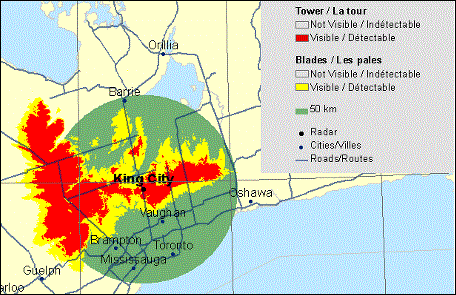
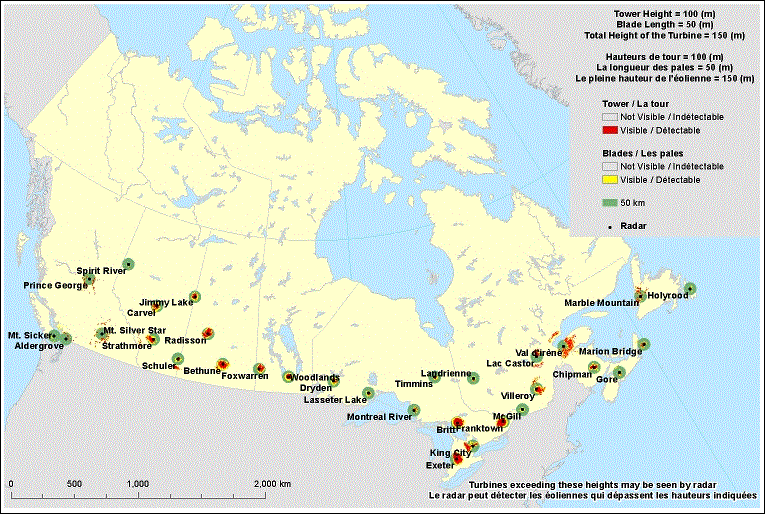
The radar site locations are marked with a black dot. A green circle shows a 50 kilometre radius around the radar. Inside this 50 kilometre ring, potential interference with the radar may exist and direct consultation is strongly suggested. Major roads and cities are indicated in dark blue.
The colour display surrounding the radar(s) represents whether wind turbine blades could be seen by the respective radar (in yellow) and if the wind turbine towers can be seen (in red). The visibility maps have been created for turbine models with turbine tower heights of 100 meters and blade lengths of 50 meters (for a total blade height of 150 meters). If any part of a turbine is visible to a weather radar, interference is expected, but if the turbine tower is visible (in red) more severe impacts may occur. Any region not covered by the colour display indicates that a wind turbine with a total height of 150 meters should not be visible to the radar. However, a turbine with a blade height greater than 150 meters may be seen and further analysis is necessary.
The landscape of Lake Superior has visually unmatched vistas and unbelievably gorgeous landscapes. The Group of Seven spent many years trying to capture the soul of its glorious majesty and its splendors are recorded on countless canvasses. However, nothing they painted can ever match the reality of its wonder. Now it is a prime location for industrial wind installations.
It’s astounding to read these days how pleased with themselves liberals are that the Wynne Ont gov’t is remaining steadfast in their refusal to amend the Green Energy Act in any meaningful way. It’s as easy as water off a ducks back for these progressives to delight in calling opponents to Industrial Wind Turbines as NIMBY’s and having democracy essentially waived to accomplish the policy goals backed by the GEA.
I only have this to say;
I want all these cheering Liberals to consider this;
Take your worst nightmare of a conservative leader. An amalgam of the very worst of Harper. Harris, throw in a little Ralph Klein and some Tea Party Timmy Hudak. I can sense your blood pressure rising as I write this. Oh the horror.
In the Legislature, a new bill is to be introduced called the “Nuclear Waste Recovery Act”
The voices of those from around the world who have spoke up are finally starting to be heard over the noise of the Industrial Wind Turbines. It truly is sad that a precautionary approach was not taken before exposing so many to Turbines. When will it be up to the Government to PROVE to US that IWT’s do not have a “Direct Casual Link to Adverse Health Effects on People” before being allowed to put up more in populated areas? Will it take another 10 years of suffering?
[Noise from modern wind turbines is not known to cause Hearing Loss, but the wind turbines may have adverse health effects on humans and my become an important community noise concern]
10 year Guinea Pig!!
[ Start with some “sleep deprivation” then add “cardiac arrhythmias, stress, hypertension and headaches, give that a stir and you have “Vibroacoustic Disease” or VAD. Which is occuring in persons who have been exposed to high level infra and low-frequency noise. (ILFN) for periods of “10 YEARS”!!! or MORE!
It is believed to be a systemic pathology characterized by DIRECT TISSUE DAMAGE to a variety of BODILY ORGANS and may involve ABNORMAL “Proliferation of Extracellular Matrices”]
[The energy generated by large wind turbines can be especially disturbing to the “vestibular systems” of some people, as well as cause other troubling sensations in the head chest or other parts of the body.]
[ Most relevant research has been conducted in Europe by “wind turbine manufacturers who typically don’t share with public.]
[…reports of the distressing effects on people living near utility scale wind turbines in various parts of the world are becoming common.]
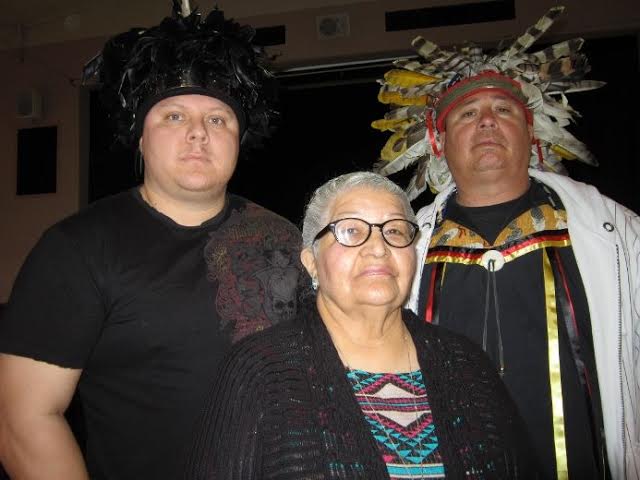
Bill Monture and Lester Green represented the interests of the Men’s Fire Council, appealing Next Era’s Summerhaven and Samsung Pattern Energy’s Grand Renewable Energy at the ERT (dubbed Monture 1 & 2) Attached below are the decisions.
SIX NATIONS – The main disconnect between western style corporations and most Indigenous societies is that one deals with governments put in place to act on behalf of their people, while most traditional indigenous societies work alongside with “the people”.
This is a paradigm one group of Six Nations residents hope to revive.
Bill Monture, a well-known local activist and traditionalist, built a meeting place on his Chiefswood Road property as a neutral space and has begun a process by which he hopes to find the future for Six Nations in the past.
Recently, he hosted a meeting at the converted barn, which was attended by a room full of unlikely participants, including Mark Clearwater and Randy Reed representing the provincial government, Haldimand County Mayor Ken Hewitt, and about 30 rank-and-file Six Nations citizens to openly and frankly discuss matters of interest to Six Nations as a people and the future of co-existence of the traditional wisdom of the ancestors and the reality of the 21st century, and to do so without the presence of the media.
He and the group known to the Six Nations community as the “Men’s Fire” are trying to refocus the attention of all parties currently vying for the power to speak on behalf of the people of Six Nations, and at the same time, educate settler governments and corporations on how to rightly deal with Six Nations.
I recently read an entry on Wayne Gulden’s Wind Farm Realities website reviewing some figures for the Vestas V82 – 1.65MW capacity industrial wind turbine. The statement that stuck with me was:
… when the wind doesn’t get above 3.5 m/s – typically there’s a MINUS 50kw of production. This is power that must be supplied from the grid just to keep the turbine in business. And 50kw seems to be what the turbine uses to stay alive in good weather. In the winter it gets slightly higher – the highest negative numbers were in the 80 kw range.
I decided to investigate the performance of an industrial wind turbine project in Ontario comprised of 110 of the Vestas V82 turbines; Enbridge’s Underwood turbines in Bruce County.
110 turbines potentially each drawing 50kW means that at times when all Enbridge’s turbines are still, the draw would be ~5.5MW. In the parlance of the Ministry of Energy, and the renewables lobby, a draw of 5.5 MW is enough to prevent power being provided to over 4000 homes.
In Ontario, we know that wind is least productive in July – so the topic of how much “parasitic” load is present when turbines are unproductive is particularly relevant here.
The turbines’ manufacturer, Vestas, produced a Life cycle assessment of the V82-1.65 MW (the LCA) showing “energy balance” is achieved in 7.2 months of production. The “energy balance” is how long the turbine will take to generate the amount of energy consumed in production and disposal.
Premier Wynne, Please tell Rural Ontario AGAIN how its Residents have a say in Turbine Projects.
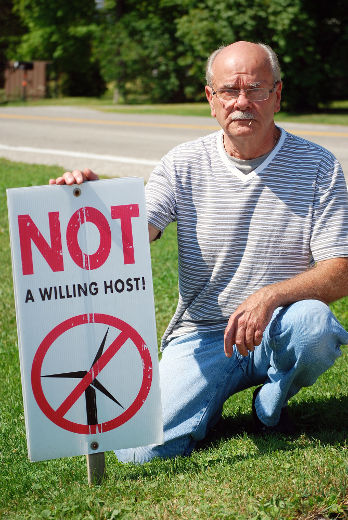
Apparently the Wynne government didn’t hear Norfolk council last year when it declared itself “an unwilling host” for future wind farm development.
Apparently the Wynne government didn’t hear Norfolk council last year when it declared itself “an unwilling host” for future wind farm development.
Wednesday, the Ministry of the Environment gave the green light for a 10-megawatt turbine development in Port Ryerse. The project was initiated several years ago by UDI Renewables of Nanticoke and later sold to green energy giant Boralex.
The approval comes as a surprise to residents of Port Ryerse who oppose the project and members of Norfolk council who declared the county an unwilling host.
Soon after she took over from disgraced premier Dalton McGuinty, Kathleen Wynne promised modifications to the Green Energy Act that would give municipalities a greater say in the placement of renewable power projects. Responding to the concerns of their taxpayers, dozens of Ontario municipalities declared themselves unwilling hosts for green energy development.
Some municipal politicians at the time – Norfolk Mayor Dennis Travale among them – expressed skepticism about the weight of this new-found input. It would seem this skepticism has been borne out.
“This is just another example of local politicians thinking they have control where they don’t,” Port Dover Coun. John Wells – Port Ryerse’s representative on council – said Thursday. “Someone somewhere else has made this decision for us. It’s annoying.”
Property owners in Port Ryerse have banded together to fight the intrusion. They argue that industrial-scale wind turbines belong in an industrial setting. They worry the Boralex project will hurt property values while diminishing their quality of life.
As well, some residents worry that long-term exposure to wind turbines has consequences for human health that medical authorities don’t yet understand.
Nearly two years ago, a dozen Port Ryerse residents launched a civil suit against the turbines’ sponsors and the neighbours who made their land available. That suit remains on the books. One of the plaintiffs if Port Ryerse resident Larry Hoyt.
“It looks like a done deal,” Hoyt said Thursday. “I’ve been to two environmental review tribunals where they’ve had some really good evidence presented against turbines and nobody is listening. This is not about saving the environment for our kids. This is about money. It’s like beating your head against a brick wall.”
In granting its approval, the MOE has imposed a number of conditions on the Port Ryerse project.
These include complying with MOE noise limitations at all times, carrying out an acoustic audit, preparing a site rehabilitation plan, preparing a response plan for emergency services, creating a community liaison committee to address residents’ concerns, and notifying the MOE of any complaints received during construction and operation.
“The Ministry of Energy has made changes to its procurement
process for contracts for renewable energy projects,” Kate Jordan, a spokesperson for the MOE, said Thursday. “This new procurement process is intended to give municipalities a stronger voice in the planning and siting of renewable projects.”
Jordan added there are no new or unprocessed applications on the books for additional wind power projects in Norfolk County.
“You may think wind turbines are good but when you have 50 by your home…you can’t sleep in your own room and you try to sleep but you can’t because of the wind turbines (noise). I had to move into a mobile home because my mom, dad and brother plus me couldn’t sleep.”
What do you think?
Phil Hartke predicts that in 10 years, the public will see advertisements from law firms offering representation for people to receive compensation for ill health effects from wind turbines.
The past president of the Illinois Farm Bureau in Effingham County spoke at the Rural Coonhunters Club in rural Greenwich to a group opposed to the construction of wind turbines in the area.
Hartke spoke to more than 100 people over two days at an event hosted by Greenwich Neighbors United.
The global wind energy development company Windlab’s has applied to construct a windpark that would cover about 4,650 acres of privately leased land. It would include 25 wind turbines with a total generating capacity of up to 60 megawatts of electricity.
Final decision on the project’s status rests with the Ohio Power Siting Board, a separate entity within the Public Utilities Commission of Ohio.
The board’s next meeting is Aug. 25, and the matter may come up for a vote.
While Hartke wouldn’t be affected by the project, he spoke about his and his family’s own experience with wind turbines.
A 495-foot tall, 1.6 mW turbine sits 1,665 feet away from his home.
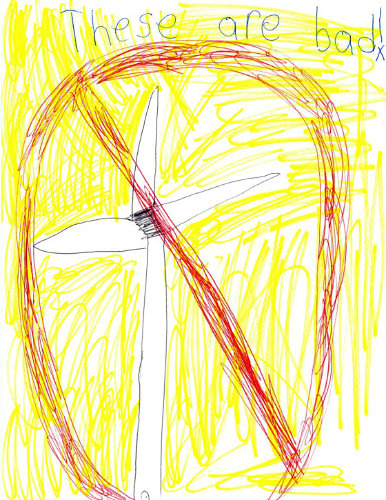
He handed out a packet, which includes a drawing and paragraph his daughter, Sophia, 7, wrote during school.
“You may think wind turbines are good but when you have 50 by your home…you can’t sleep in your own room and you try to sleep but you can’t because of the wind turbines (noise). I had to move into a mobile home because my mom, dad and brother plus me couldn’t sleep.”
Said her father: “Our enjoyment of the backyard, garden, outbuildings, treehouse and creekbed has been taken away and replaced with nausea, headaches, irritability and stress.”
Hartke compared the noise to a diesel truck parked outside one’s bedroom, with the sound increasing as each blade rotating.
“I don’t think kids should have to put earmuffs on to sleep,” Hartke said.

Pearson International (Toronto) seems to be surrounded by turbines.
 The radar site locations are marked with a black dot. A green circle shows a 50 kilometre radius around the radar. Inside this 50 kilometre ring, potential interference with the radar may exist and direct consultation is strongly suggested. Major roads and cities are indicated in dark blue.



 e Hearing Loss, but the wind turbines may have adverse health effects on humans and my become an important community noise concern]





 Mothers Against Wind Turbines Inc.