Category Archives: Uncategorized

White Pines Wind Project Remedy Hearing Motions

owl-apaiIt is unfair to say the least that APPEC was given six months to prepare and make its case while wpd has been given an excessive amount of time to do this  at the remedy hearing, and that APPEC is in the position of having to foot the bill in order to protect Ontario’s at-risk species.”

appec's avatarAlliance to Protect Prince Edward County

On October 5 the Tribunal suspended the remedy hearing schedule in order to adjudicate a number of motions from APPEC.   The Tribunal’s rulings on the motions could be days, weeks or even a month-plus away.

1. Referral to the Director
This motion is for an Order of the Tribunal to remit the REA (Renewable Energy Approval) for the White Pines wind project back to the Director of the Ministry of the Environment and Climate Change (MOECC) for reconsideration in light of the amendments proposed by wpd.  A large number of significant amendments to the Project have been proposed.  As a result this Project can no longer be said to be the Project “as approved” by the Director.

2. Striking Respondents’ Evidence
Affidavits from witnesses for wpd and the MOECC raise issues that as a matter of law could only be properly raised at the main hearing.  In effect both wpd…

View original post 551 more words

Esther Wrightman: Get mad! Stay mad! Make history!

stopthesethings's avatarSTOP THESE THINGS

A while back we covered Esther Wrightman, suggesting that this fine young Canadian gives “courage” a new name.

True to form, Esther’s at it again, telling Ontario’s farmers and families to “Get mad! Stay mad! Make history!”

Here’s an extract of her cracking little speech to the “Unwilling Hosts” Rally in Ontario on 19 October 2013.

“Unwilling Hosts” Rally Speech
Esther Wrightman

Let us be clear about why we are here today. This is a demonstration of “We, The People” versus “We, The Corporations”! I have, of course, borrowed the phrase from the American Declaration of Independence.

This is an in-your-face demonstration of “We, The People” versus the wind energy companies that are strangling rural Ontario — strangling us with the approval and encouragement of our government!

I want to say “Thank you, rural Ontario — you good people who are the backbone of this distinguished province that just…

View original post 565 more words

Unravelling of Species at Risk Protections

More bad news for our species at risk as the Court upholds changes to endangered species leaving vulnerable populations and habitats without legal protections.  Note most industrial development such as wind generation facilities is now allowed by exemptions via the Species at Risk Act.

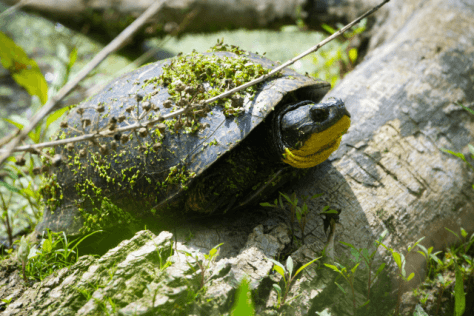
blandings-on-forest-floor

Court upholds changes to endangered species rules

Ottawa Community News,
Liam Casey,
Canadian Press,
October 12 2016TORONTO — Ontario’s highest court has dismissed a challenge to the province’s endangered species regulations, a decision environmental groups say will leave many species without legal protection.The Court of Appeal for Ontario upheld a lower court decision that found the Ministry of Natural Resources and Forestry was within its rights to grant exemptions to industries such as forestry, oil and gas and mining under changes made in 2013 to the Endangered Species Act.The regulations provide 19 exemptions from the act. One exemption, for example, allows someone to kill or hurt caribou or damage or destroy the animal’s habitat if that person is conducting forest operations, provided the person has an approved management plan.”It’s a terrible day for endangered species in Ontario,” said Caroline Schultz, the executive director of Ontario Nature, one of two environmental advocacy groups behind the appeal.

“It means that the Endangered Species Act doesn’t do what it professes to do.”

 Ontario Nature and Wildlands League argued that in granting the exemptions, the Natural Resources Minister “failed to consider the potential impact of the regulation on each individual species.”

The not-for-profit environmental groups also argued the lower court erred in finding that the exemptions were consistent with the purpose of the act, which they said was “to protect and enhance the recovery” of species at risk and not “to balance such interests with economic interests.”

The appellate court disagreed with both arguments, saying the minister had properly considered the effects of the regulation on each species and that the law was meant to protect biological diversity while also considering social, economic and cultural concerns.

It agreed with the government that “the effect of the proposed regulation is not likely to jeopardize the survival of the affected endangered or threatened species in Ontario or to have any other significant adverse effects on these species at risk.”

A Wildlands League spokeswoman said she was “gutted” by the decision. “No endangered or threatened species in Ontario right now has legal protections not to have their habitat destroyed or the legal right to not be killed,” said Anna Baggio, director of conservation planning with Wildlands League.

The ministry, meanwhile, said it was pleased with the decision and would be assessing its next steps in light of the ruling.

A ministry spokesperson said the regulatory changes “simplified the rules for landowners, municipalities and businesses while continuing to protect endangered and threatened species.”

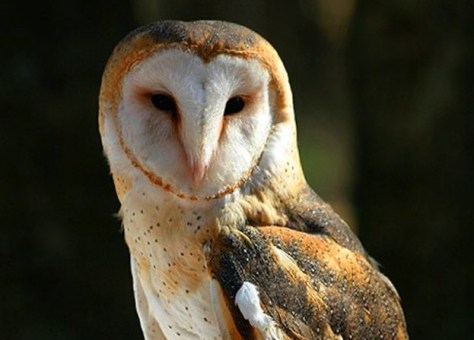
barn-owl-ontario-govt-e1415311482334

Impact of Wind Turbines on Well Water

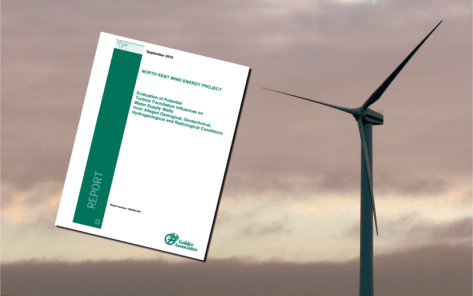
golder-report

The Golder report has been released but fails to provide any insight into why there are reports of water wells adversely impacted after wind turbines were installed for other projects. The paper insists ground vibrations will have insignificant impacts to water wells. Real life experience demonstrates a different and negative outcome with water being contaminated by excessive sedimentation. Desk top study vs actual reported changes to wells on the same aquifer of the proposed project. It would be fantastic if harm is not proven. Don’t bet the farm on that one.

READ ARTICLE HERE:  http://sydenhamcurrent.ca/2016/10/13/full-golder-report-obtained/

Golder Report:


Remedy Hearing Cross-examination of wpd witnesses

appec's avatarAlliance to Protect Prince Edward County

Report on Remedy Hearing for White Pines wind project
Cross-examination of wpd witnesses on September 29, 2016 
by Paula Peel

Shawn Taylor
APPEC legal counsel Eric Gillespie questioned Mr. Taylor on a series of exhibits from the Amherst Island ERT, where Mr. Taylor recently testified for the wind developer.  Mr. Gillespie’s questions were repeatedly blocked by wpd’s legal counsel, Mr. Duffy who indicated that wpd would object to any document that Mr. Gillespie referred to from the Amherst Island ERT.  Mr. Duffy also directed their witness, Mr. Taylor, to not respond to any questions relating to Amherst Island, even the simple question whether one of the issues that came up at those hearing was the location of Blanding’s turtles on the island.  The transcript shows twelve refusals by wpd during Mr. Gillespie’s cross-examination of Mr. Taylor.  Mr. Gillespie noted that there was no mechanism for dealing with refusals and…

View original post 495 more words

Wind Turbine Signals Hinder Radar

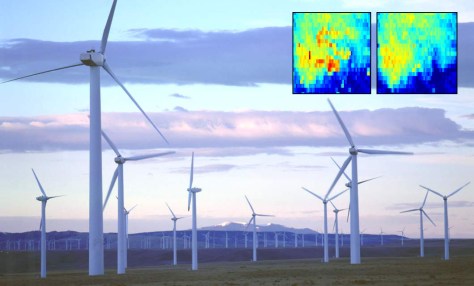
radar-clutter“Radar technology is built for detecting any moving object hence the spinning turbine blades often create interference, thereby degrading the available signal. The wind turbines often reflect signals back to the radar system, thus leaving a blank spot.”
READ ARTICLE ABOUT INCREASING MARKET FOR RADAR INSTALLATIONS: http://ein.iconnect007.com/index.php/article/100400/increasing-terrorism-worldwide-compelling-nations-to-install-advanced-military-radar-systems/100403


Canadian Airports Get Turbine Relief

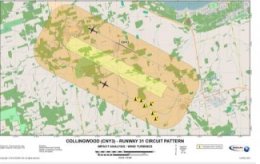
collingwood-clearview-mapBy Russ Niles | October 9, 2016

The Canadian Owners and Pilots Association (COPA) has announced a major decision that may help ensure that Canadian airport operations are not hampered by wind farms. It had a little help from some bats, too. Ontario’s Environmental Review Tribunal has ruled that a proposed wind farm would potentially “harm human health” by creating obstacle hazards in the pattern for Collingwood Regional Airport in southern Ontario and Stayner aerodrome, a privately operated airstrip a few miles away. “This is precedent-setting,” said COPA President Bernard Gervais. COPA spent more than $175,000 fighting a plan to build eight 500-foot wind turbines within two miles of the airports. Local municipalities and private individuals also fought the proposal. The turbines were planned for the downwind of the main runway at Collingwood, the major regional airport in that area of Ontario, and would have also caused conflicts for Stayner, which is a privately owned “aerodrome” operated by an aviation business but open to the public.

The tribunal decision was literally the last resort for opponents to the project, which was approved by the Ontario government under its Green Energy Act legislation last February. The Green Energy Act essentially invalidates any land use, property value or nuisance claims by local governments or individuals in its approval of alternatives to fossil-fuel energy. Approvals can only be overturned on environmental grounds and threats to human health are among those concerns. The opponents hung their case on the fact that colliding with a wind turbine on downwind would indeed be harmful to human health and the tribunal agreed. The Ontario government and the company proposing the project, wpd Fairview Wind Incorporated, argued the windmills could be accommodated by adding a right-hand pattern at Collingwood but the tribunal agreed that right-hand patterns are less safe than standard patterns and the alternative wasn’t reasonable. Transport Canada, which could have rejected the project before anyone spent any money opposing it, instead took a hands-off approach but suggested there would be limitations on the airports’ operations if the windmills were permitted. But it’s not just airplanes that are in danger of running into the turbines. The tribunal also found that the little brown myotis, an endangered species of bat, could bash into the big blades and diminish their numbers even further.

READ AT: http://www.avweb.com/avwebflash/news/Canadian-Airports-Get-Windmill-Relief-227088-1.html

WE WON! Clearview appellants successful

“[5] For the reasons that follow, the Tribunal finds that the Appellants have satisfied the health and environment tests under s. 145.2.1(2)(a) and (b) of the EPA and further adjourns this hearing under O. Reg. 359/09, s. 59(2)1.ii to determine the next steps in this proceeding. “

Remedy hearing is the anticipated next step.  Read the decision here:


We have to talk

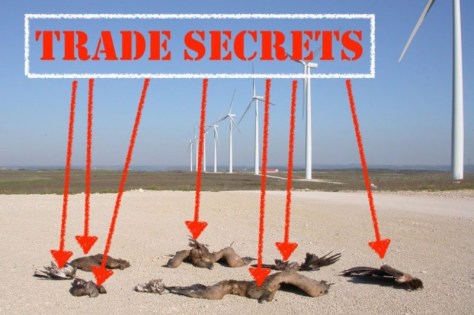
trade-secrets

The “estimated” bill came in from the Freedom of Information office. I guess it’s the price of information. Sure isn’t free. It’s $625, but that should get us roughly 28,000 pages of wind turbine bird and bat mortality information from most of the 110 wind projects in Ontario. I still shake my head that this hasn’t been released already, but I suppose the numbers are too damaging for the industry.

If you can help out that would be very much appreciated.

I sent this letter on to the Ontario MPP’s, in hopes they would all pitch in $20, okay $10? How about a twoonie? Anybody want to bet on whether any of them will?? Could be rather telling – who truly stands up for transparency and open government. Who thinks this industry shouldn’t get off scot free for killing Species at Risk on a regular basis.

Esther

Donate Here: http://ontario-wind-resistance.org/2016/10/02/help-fund-foi-request-release-wind-turbine-bird-bat-mortality-data/

Dear Ontario MPP’s,

We have to talk.

It is no longer a matter of guessing what wind turbines ‘might do’ to Ontario’s birds and bats – you know what’s happening. Or, you should know. Wind developers have been filing bird and bat mortality reports with the Ministry of Natural Resources and Forestry for many years now. So, what do those numbers look like? Oh. Right… nobody really knows because they get filed away – far far away – from public scrutiny.

I left Ontario two years ago when wind turbines destroyed our land, and the habitat for all animals, including us. But I did not forget about the destruction that was taking place in my absence. I suppose I was hoping (as I usually do, hope is healthy, but rarely rewarded in Ontario politics) that the MNRF, or the media, or the researchers, or the nature organizations – somebody! – would keep a close eye on the bird and bat kill rates from these machines. I expected this, because I know that when LNG killed 7500 birds in New Brunswick in 2013, the world knew, as they should, and the company was fined $750,000 under the Migratory Birds Convention Act. Other industries have been held accountable for bird kills too – especially if Species at Risk are involved.

Not so for the wind industry in Ontario. Nope, wind developers obliterate an area’s raptor population in several months. If it relates to wind turbines – those deaths don’t even “happen,” it’s all in your imagination.

Frankly I’ve had enough of this. I’ve filed a Freedom of Information request for all the bird and bat mortality reports in Ontario wind projects. Hey, quick question: Do you know how many wind projects are in Ontario? I’ll give you a second to Google it, or look it up in your government files, but I don’t think you’ll find the answer because there doesn’t seem to be a comprehensive list of them anywhere. I tallied over 110 wind projects in Ontario. What are the chances someone is actually overseeing all the dead birds and bats found around the bases at all these wind projects. The MNRF didn’t even know of many of the wind projects I listed for them.

After three years of operation the wind companies don’t have to file these reports anyway, unless they went over their “limit” of kills. That’s a problem, because from the few reports I’ve seen, they go over the limit/threshold all the freakin’ time. In fact this very recent research article says that the average bat kill at an Ontario wind project is 24.5bats/wind turbine.

Back to the guessing game: Just how many bats does the government allow to be killed by a turbine? Answer: 10 bats. So the wind companies are currently killing, on average, over double the number of “permitted bats kills” per turbine!

Um, pardon me, but why the hell hasn’t there been a major uproar over this fact in legislature? Is it perhaps because the government isn’t even reviewing these facts, these data? Is it because a cumulative impact study on bird and bat population hasn’t even been contemplated by this government, ever?

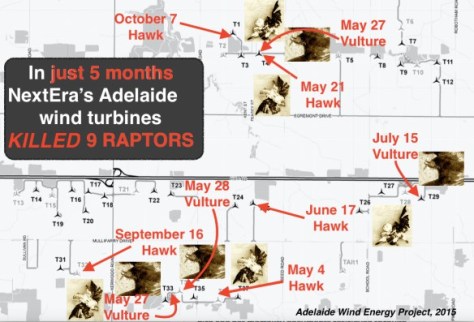
I can tell you that my former home in Adelaide lost nine raptors in just five months last year, from just one of the wind projects there. Five of them were red tailed hawks, the other four were turkey vultures. I doubt there are many, if any, hawks left. This one simple fact saddens and enrages me. But there is more. Swallows are taking a huge hit – purple martins in the Summerhaven project. And the Threatened barn swallow – it’s one of the Top 15 killed in Ontario. What happens when NextEra, or Suncor, or Enbridge kills a Species at Risk? Do they get investigated? Do they get fined? Or do they just get another “permit destroy” like they did for the bald eagle nest in Haldimand County three years ago.

This is how serious Ontario really takes the environment.

If you are saying, “Oh no Esther, you have it all wrong. We are transparent. We are doing everything we can to help the environment,” then I have a simple request for you. Do one of two things, or do both. A) Make it mandatory that bird and bat mortality reports are made public, for free (past and present). B) Donate to cover my Freedom of Information costs. I’m doing the government’s job, so it would be nice to see the government pitch in a few bucks for this lapse in being an “open government”. Even you can have access to all these reports on a simple Google Drive link. It’s not rocket science to make it happen. It just takes a will.

Sincerely,

Esther Wrightman
St. Andrews, NB

PS – Re. the raptors killed in Adelaide, you should know that NextEra’s little 2-page public summary states they killed only 2 raptors. But the full report retrieved through my FOI states 9 — the 7 other carcasses were found outside the meagre 50m from the wind turbine base search area, or during times the carcass collectors weren’t regularly collecting, and for some reason those bodies don’t count. But, hey, they can say they are under the “threshold” of what they are allowed to kill! (Of course they are way the hell over the limit if they actually used the real numbers they found, but then, again, who’s watching?)

adelaide-raptor-2015-kill

Who Owns the Wind?

dscn1776

You can’t eat money.

Credit:  Emmetsburg News | September 20, 2016 & September 22, 2016 | www.emmetsburgnews.com | emmetsburgnews.com

“So, how much dough will I make on this wind farm deal?” That question remains utmost in the minds of farmers interested in squeezing every drop of income from their operation. As a native Iowa farm boy, I understand “the bottom line is the bottom line.”

Drought, hail storms, and low commodity prices sometimes made profit margins tight on our 160 acres. But growing up on that farm also taught me priceless values that sustained our family farming operation through thick and thin. A strong work ethic, resilient attitude, spirit of fair play, watching out for your neighbor, caring for the wildlife that shares our land, and being a good steward of the soil shaped this rural legacy of values passed on to me from my ancestors to whom I am forever indebted. Wind farms threaten this legacy.

At first glance, it seems like a good deal. A “windfall” of cash. “Free money” for the taking. A winning night at Vegas! After all, the wind is “free” isn’t it? Well not exactly. I recall wise farmers in our community who lived by the credo, “Free money never comes without strings attached.” And those “strings” are front and center of the wind farm debate, driving to the more important question, “Who owns the wind?”

Winning over the farmers

Wind farm corporations know this and work hard to incentivize farmers with promises of “free money,” avoiding the “Who owns the wind” question until it’s time to sign the contract. In the words of a fellow Iowan and respected writer, “They act as though eminent domain extends to the sky.” They control the script. They control the outcome. They control the strings. That’s why the “promise” of free money dominates the debate, overshadowing other urgent concerns. Who owns the soundscape we all listen to? Who owns the horizon we peer into day and night? Who owns the wildlife that depend on unobstructed flyways and migratory routes of our beautiful Iowa skies?

Wind farm planners minimize these concerns, seeking to control the debate with promises of quick and easy money-another source of “low-hanging” tax revenue for the county and a way of reducing our dependence on foreign oil. What happens when this “free money” wins out over responsible stewardship of wind, land and wildlife?

Delivering on the promise

Unfortunately, wind power can’t deliver on its promises. Carbon footprints remain unchanged because wind power is too unreliable to permanently replace existing power generating sources. Denmark is the latest nation to scrap plans for building more wind farms. The Danish government says wind power has become too expensive. (Matzen, Erik and Boyle, Jon; “Danish Government Says Wind Power Became Too Expensive.” Reuters Daily Mail Wires 13 May 2016 at dailymail.co.uk/wires/reuters /article-3589130/Danish-government-says-wind-power-too-expensive.html #ixzz4BHeWSohs)

Sprawling wind farms indelibly scar the rural landscape with giant towers that cast moving shadows during the day and a sea of blinking red lights at night. Residents living near wind farms report chronic health problems and we see mounting evidence wind farms kill our most treasured bird species (Cohen, Bonner R. “Minnesota Wind Farm Seeks Permit to Kill Bald Eagles.” Heartlander Magazine March 8, 2013 at news.heartland.org/newspaper-article/2013/03/08/minnesota-wind-farm-seeks-permit-kill-bald-eagles)

This is an enormous price to pay for economic gain enjoyed by only a handful of farmers, while their neighbors are doomed to live in the shadow of these hulking, blinking skyscrapers literally “scraping” the beautiful Iowa horizon with turning blades, hundreds of feet long. That “free money” carries a huge price tag.

Despite these undesirable consequences, some farmers “bend with the wind” toward the foreign wind farm corporations, enticed by their offers. The promise of “free money” becomes irresistible. And when we give in, we have just answered the question, “Who Owns the Wind?” They do. Until that point in time, no individual owned the wind. Wind was a shared resource that benefited all. No one could claim an exclusive right to it. But now the wind farm corporation has us “all turbined up.” They own the wind.

Tragically, they own more than the wind. They own the farmer who has surrendered control of the land. They own the “future” of that land destined to become a gravel road, tons of buried concrete, and towering steel monstrosities held together by nothing more than a “promise” to pay. The farmer has abdicated total control of that piece of land with no reasonable recourse to reclaim it, if and when the “promise” is broken.

The wind farm companies did it without Firing a shot. They took control. They expropriated our shared resource that benefited all. Most of us get nothing but a landscape littered with moving, blinking, noisy machines. Gone is our wildlife, gone our rural quiet, gone our peaceful evenings sitting on the deck, gone our unrestricted views of red/orange Iowa sunsets. Gone is our spectacular, unimpeded view of the Milky Way, and our community spirit of solidarity built by generations of farm families; while city dwellers thousands of miles away get cheap electricity without sacri?cing anything.

Giving up our freedom

But this isn’t just about giving in to a foreign occupation that has decimated our land, wildlife, skies, horizons and our rural way of life. Perhaps most importantgone is the freedom that comes with full ownership of the land. Gone is the legacy of unencumbered land handed down to us from our ancestors. Gone is the promise of passing this unencumbered land to our children and grandchildren, free and clear. For we now share air space with foreign entities unconcerned with preserving our way of life, which we have just traded for tons of steel, concrete, asphalt, and gravel covering our rich Iowa dirt.

This is a tragic irony

“So, how much dough am I going to make on this wind farm deal?” Ironically, our life is diminished in proportion to the lease payment. The greater the payment, the more restricted and smaller our life becomes. The greater the payment, the more power we have ceded to these invaders. The irony of all this centers on power. The farmer loses power, loses the ability to shape the destiny of their farm-to a wind farm corporation. The farmer gives away the power of ownership of land, their birthright.

How much is that power worth, the power the farmer just gave away? Can we put a price on it? Is getting “all turbines up” worth it when we abdicate our responsibility to protect a family birthright: the land? Do we really want to give that away? Who owns the wind? Now, they do. And the land. And the farmer. And the close-knit community that raised me. Our tragic loss is their “wind-fall” gain. Their Vegas win.

Is this the legacy we farmers want to pass on to the next generation? How much is that “promise” piece of paper called a lease really worth? Our land? Our wildlife? Our dignity? Our legacy? Now, all of this is “gone with the wind.”

(signed) Wayne R. Knutson, Jr.

former Palo Alto County resident, from San Antonio, TX

Knutson, raised on the family farm in NW Iowa, is a Colonel in the U.S. Air Force. His mother lives on the farm and is involved in managing the operation. His commentary was first published in Wallaces Farmer, August 2016.