Category Archives: Animals and turbines

Loretta Sheild’s Testimony at the NRWC Environmental Appeal – Wainfleet

MAWT Inc. would like to thank Loretta for all the hard work she has put into this fight.  She truly is an advocate and a voice for the natural beauty, ecosystems and wildlife of West Lincoln and area that is being threatened by the NRWC Project.  She has most definitely done her homework and if there was anyone in that room today that was an “expert” on the topic it was her, regardless of what the proponents lawyers say.  🙂  

Hi everyone,

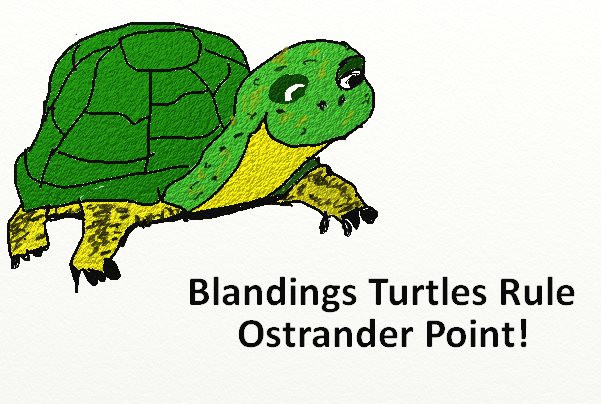
I testified at the ERT today in Wainfleet.  My presentation is attached if you are interested in the details.  There are 4 sub issues.  These include concerns for migratory butterfly stopover areas, encroachment on provincially significant wetlands, inadequate mitigation measures for woodlands and red mulberry.  There are so many other issues. For example, there is no evidence to show that winter raptor transects were conducted within the interior of the woodlands.  62 permits are required by the Niagara Peninsula Conservation Authority.  These are still pending.   There are 20 industrial wind turbines proposed in Blanding’s turtle habitat in Lowbanks, all on private property.  There are many properties within this habitat where ‘alternative investigations – ie roadside surveys” were allowed.  The MNR is allowing this to proceed. If anyone would like more information, please feel free to contact me.

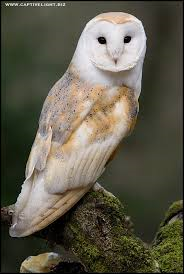
I want to thank you all for helping me learn about the many birds and raptors during the past few years.  If there is a silver lining here, it is the wonderful people I have met, and the greater appreciation I have for the beautiful world we live in.
Have a wonderful week everyone!
Loretta Shield’s

St. Anns – 24 turbines less than 5 km surrounding Atkins Pony Rides

468563_356701661043095_1185570960_oBelow is the submission made by Sue and Leon Atkins, which received applause by the more than 100 local residents who attended the Preliminary Hearing of the ERT appeal for the NRWC project in West Lincoln which was held in Wellandport Dec 19/2014.

The Atkins who own and run Atkins pony rides were granted presenter status.

Sue Atkins Quoted a notice she look a picture of while attending one of the NRWC community information presentations held in our area a while back.

“NRWC QUOTE:  If there are MORE than 5 turbines within 3 km of a noise receptor or if any turbines have a sound power level greater than 102 decibels,greater set back distances must be met and or noise studies must be completed.”

Then she asked. “Has anyone completed these noise studies? Has anyone meet these set back distances?”  Her response was “NO!”   There could also be heard murmurs of “NO” through out the audience in response to her questions as well.

As she points out below, 7 turbines are within 2 km of their farm.  10 are within 3 km and 24 within 5 km.   Sue Atkins is well within her right to question how this is possible in light of the NRWC PUBLIC notice reassuring residents that what is about to happen to them wouldn’t happen to anyone.   

Thank you to the Atkins for standing up and fighting !!  If you want to help the Atkins then helpMothers Against Wind Turbines Inc.. and donate to their Legal fund so we can keep this fight going for as long as we can!!  These are real members of our community, your community, coming forward and fighting!  Fighting not only for their livelihoods, their health, their home but fighting for everyone who potentially will be negatively affected by the NRWC project.

Human and animal alike…continue

to read Sue Atkins submission. 

Continue reading St. Anns – 24 turbines less than 5 km surrounding Atkins Pony Rides

Barn owl halts turbine project | Simcoe Reformer

barn owl

By Daniel R. Pearce

The barn owl has done what no anti-wind turbine protester in Port Ryerse has been able to do to date: halt construction of a green energy project in their village.

A woman walking her dog this summer spotted one of the birds — they are on the endangered species list in Ontario — flying into a barn.

An investigation ensued, photographs of the owl perched on a woodpile were taken, and the sighting was confirmed. The evidence was then presented to an environmental review tribunal hearing, which last week slapped a five-month moratorium on the project.

Boralex, the company that wants to construct a four-turbine 10-megawatt wind farm next to Lake Erie, must now apply to the Ontario government for what’s known as an “overall benefit permit” if it wants to continue with the project.

It must submit an amended plan showing how the wind farm will avoid having a negative impact on the owls and that it has explored alternative sites. It must also show it will do something to help the birds, such as creating new habitat.

The tribunal hearing has been adjourned until March 31.

The Port Ryerse case is the first time a project in Ontario has been ordered back to the drawing board due to the presence of barn owls.

As a result, “there are a number of unknowns right now that will take some work and some time to bring to a conclusion,” Sylvia Davis, legal counsel for the Ontario Ministry of the Environment and Climate Change, wrote in an email to the parties to the hearing.

The barn owl is so rare there have only been four confirmed nesting sites in the province in the past decade and maybe a dozen or more confirmed sightings, said Bernie Solymar, a member of the Ontario Barn Owl Recovery Team who happens to live in Port Ryerse.

Read rest of article here.

And this related article as well.                                                          Barn owl killed by wind turbine-they said such a thing could not happen.

‘Windfarm cover-up over golden eagle deaths’ – claim campaigners

Environmentalists and anti-windfarm campaigners suspect a cover-up over the number of golden eagles killed by wind turbines.

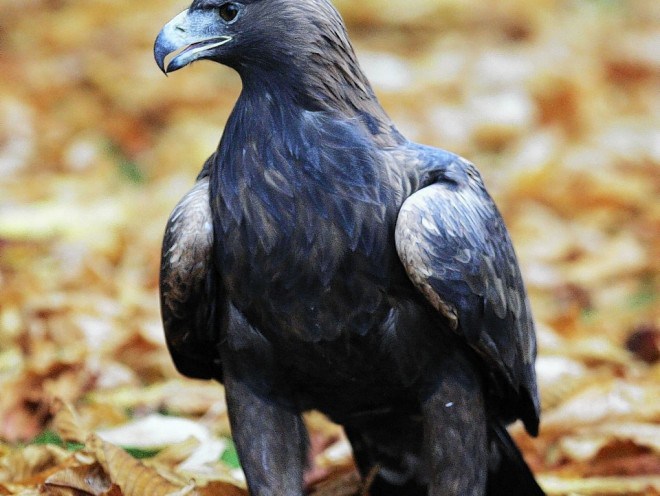
golden-eagle-660x496They believe a decision to put back a census of bird numbers by two years is an attempt to hide the facts from the public.

Scottish Natural Heritage said there was nothing sinister about the move, and there were practical and official reasons for extending the 10-year gap between censuses from 2003 to 2015.

Scotland Against Spin chairman, Graham Lang, said: “If the news is bad, bury it – which is why the census will not report until next year.”

Anti-windfarm campaigner Lyndsey Ward, from Kiltarlity, said protecting the population of the iconic golden eagles must be of “paramount importance”.

“Perhaps officials don’t want to know, or the public to know, what is really happening to the eagle population in Scotland so they can allow this turbine tsunami to continue unabated,” she said.

The RSPB said that while the population of golden eagles had been “static” for years, the cause was not windfarms but “ongoing illegal persecution”.

A Scottish Natural Heritage spokeswoman said that under a periodic review of the rolling programme of species surveys carried out by the Joint Nature Conservation Committee it was decided to move to a 12-year cycle.

This was partly to make sure that the rolling programme was affordable and to fit in with EU Bird Directive requirements for six and 12-year monitoring.

The spokeswoman added interim data suggested no decline in eagle numbers meant the census could be moved to a 12-year cycle, unlike hen harriers and capercaillie which were prioritised on a six-year cycle.

The claim of a cover-up followed last week’s revelation that wind turbines have killed more birds of prey this year than poisoning and shooting combined.

Mark Duchamp, chairman of the World Council for Nature and president of Save the Eagles International, said there was no reason to delay the survey into golden eagle numbers.

“The reason in my opinion, they have something to hide,” he said.

“They don’t want to show the population of golden eagles in Scotland has fallen quite substantially since the windfarms were built.”

Anti-windfarm campaigners shared the concerns of Spain-based Mr Duchamp.

The Press and Journal, By Tim Pauling, Nov 3 2014

Green energy vs. the protection of endangered species.

Appellants from Port Ryerse opposing the Boralex project

Because of the barn owls the MOE has asked for an additional adjournment of 5 months until March 31st 2015. 

However, Boralex has requested an” Overall benefit permit”  for the Owl predicament.

  • This means they have requested to be able to disturb the owls nesting habitat 
  • They can also get a permit if killing the birds will improve the economy of Ontario.

THIS will be THE FIRST ever benefit permit in Ontario given ( or not) for barn owls . Please read :

Dear Ms. Pietrzyk and counsel

In preparation for tomorrow’s teleconference, MOECC has been in communication with MNRF and proponent’s counsel regarding the ongoing process under the Endangered Species Act.

We understand from MNRF that staff at MNRF have reviewed the information submitted by the proponent on the recent confirmed siting of a Barn Owl. MNRF Aylmer District staff have advised the proponent that:

  1. Based on the information provided, MNRF can confirm that the proponent will require an overall benefit permit under section 10 (habitat) and section 9 (harm or harass a species) under the Endangered Species Act; and
  2. The proponent will now be required to move forward on submitting an Avoidance Alternatives Form and an application for the Overall Benefit Permit.

MNRF has also informed MOECC that this will be the first Barn Owl Overall Benefit permit developed in the Province and there are a number of unknowns right now that will take some work and some time to bring to conclusion – including some identification work through the Royal Ontario Museum.

In light of MNRF’s position on the ESA permit, the Director requests a further 5 month adjournment, with the caveat that:

(a) the Director agrees to immediately inform the Tribunal and other parties if the permit is issued prior to the end of the five month period; and
(b) a teleconference is arranged 4 ½ months into the adjournment to provide the Tribunal and other parties with an update (should the permit still not be issued at that point).
Please read the benefit permit requirements at:  http://www.ontario.ca/environment-and-energy/endangered-species-act-overall-benefit-permits

Because the owl is also protected at the Federal level a letters should go to the ministers at both Federal and Provincial levels.   This is a significant permit being developed, please write your own letters to:

The Honourable Leona Aglukkaq
Minister of the Environment

Minister@ec.gc.ca 

Points would be:

  • the first sighting in 5 years.
  • benefit will not be to the owls nor to Ontario
  • this a federally protected species so therefore the Federal Minister needs to get involved.
  • describe the small land area and how the owls feel safe here.
  • any construction activity will  destroy not only where they are nesting but also the roadside ditches where they are finding their food.
  • how it is in close proximity to a conservation area which gives protection.
  • the proponents own staff and the Provincial MNRF concurred eagles would not nest here and two months later we had eagles nesting.
  • they didn’t get that right- how can we trust them to get this very significant permit – the first one ever to be asked for 
  • ask that the Federal minister over see this permit development.

Please come out to this presentation:


CaptureA Special Presentation
AT RISK IN PT. RYERSE!

Learn how to identify species-at-risk
and how you can help protect them.


Speakers:
James Cowan, Canadian Raptor Conservancy and
Bernie Solymár, EarthTramper Consulting Inc.

Pt. Ryerse Memorial Church
Thursday, November 6th
at 7 P.M.
Meet a live Barn Owl and Bald Eagle!

A small donation will help defray the cost of the room rental.

Printable PDF: A Special Presentation AT RISK IN PT. RYERSE! FLYER

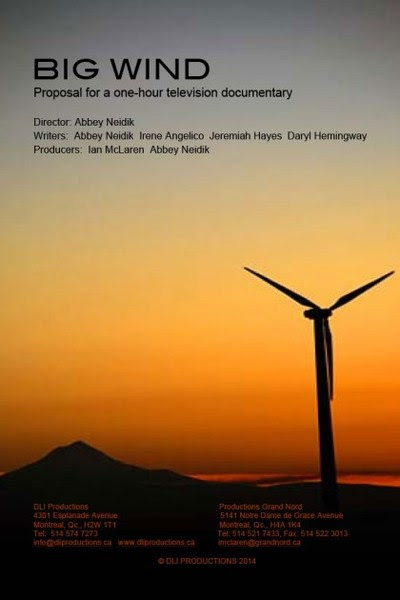
Big Wind – Proposal for a one hour television documentary

DOCUMENTARY
BIG WIND  By Rico Michel


http://www.dliproductions.ca/films/big-wind/
Margaret Welcome to the wacky world of green power, where misguided governments have sparked a massive corporate feeding frenzy (at taxpayers’ expense) to achieve little or nothing of any social benefit. — Margaret Wente, Globe & Mail

unnamed (2)It has taken decades for us all to understand the pressing urgency of protecting the Earth’s environment by finding alternatives to fossil fuels. At last, the development of a green energy industry is presenting the opportunity to heal the environment… along with the opportunity to exploit it further. For politicians, going green provides a convincing election platform. For business, it offers the chance to make hundreds of billions of dollars. Green energy is the future and those who get in there first will benefit greatly. But not only honest players are championing this new industry. And nowhere is this more evident than in the massive development of industrial wind power.

Big Wind is a surprising and compelling documentary about the unprecedented rush to develop industrial wind turbines and how this is transforming the landscape in Canada and the world. The film investigates why governments are spending billions on wind power without first conducting health and environmental studies, why corporations are grabbing up precious farmland to put up hundreds of thousands of enormous industrial wind turbines, why people living near the turbines are falling ill, losing their animals and their farms, and whether these new “green” wind turbines are actually helping our environmental aims.

The rush to go green is pitting corporations against residents, government against citizens, neighbour against neighbour. Through the process the people are being stripped of their due democratic process.

Big Wind is a story of unethical political systems, corporate greed, and ordinary citizens who have had enough and are standing up to big government and big business. They are part of a growing revolution in rural communities in Southern Ontario and around the globe– people fighting to defend their homes, their way of life and the environment against Big Wind. It is a battle that will profoundly impact the green movement, as well as the well being of citizens in Canada and citizens worldwide for years to come.

Preview Link Here

Keep A Look Out for Barn Owls Around Wind Turbine Project Sites.

If you spot Barn Owls in West Lincoln, Let Us Know!  Snap Pictures or collect feathers if you find them.

Endangered Barn Owl May Delay Port Ryerse Wind Farm

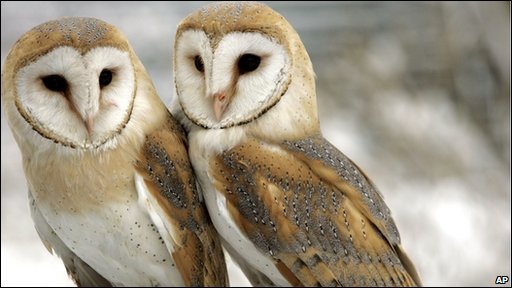
_47379578_barn_pwls_apThe sighting of a barn owl may seriously delay construction of the Port Ryerse Wind Farm.

The Ministry of Natural Resources and Forestry has confirmed that at least one of the endangered birds was spotted in the Port Ryerse area this summer.

Wind farm developer Boralex last week agreed to delay construction of the four-turbine project for one month while the ministry investigates further.

If the barn owl merely stopped over in Port Ryerse on a flight to its home elsewhere, the wind farm project won’t be affected. But if the owl took up residence with a mate, the province might order a one-year moratorium on construction within one kilometre of the owls’ home.

Further owl sightings could lead to a five-year moratorium. Barn owls are an endangered species in Ontario. The province had only four pairs in the early 1980s.

This summer’s sighting in Port Ryerse was the first in Ontario in about five years. Residents took photos and retrieved feathers to document the owl. Some villagers say they saw two owls and heard the owls talking at night.

read more Port Dover Maple Leaf, October 15 2014

“Absolute Corruption”

ENVIRONMENTAL RESEARCHER: WIND INDUSTRY RIDDLED WITH ‘ABSOLUTE CORRUPTION’

Written by James Delingpole, breitbart.com

A Mexican ecologist has blown the whistle on the corruption, lies and incompetence of the wind industry – and on the massive environmental damage it causes in the name of saving the planet. wind turbines

Patricia Mora, a research professor in coastal ecology and fisheries science at the National Institute of Technology in Mexico, has been studying the impact of wind turbines in the Tehuantepec Isthmus in southern Mexico, an environmentally sensitive region which has the highest concentration of wind farms in Latin America.

When a project is installed, the first step is to “dismantle” the area, a process through which all surrounding vegetation is eliminated. This means the destruction of plants and sessilities – organisms that do not have stems or supporting mechanisms – and the slow displacement over time of reptiles, mammals, birds, amphibians, insects, arachnids, fungi, etc. Generally we perceive the macro scale only, that is to say, the large animals, without considering the small and even microscopic organisms…

….After the construction is finalized, the indirect impact continues in the sense that ecosystems are altered and fragmented. As a result, there is a larger probability of their disappearance, due to changes in the climate and the use of soil.

The turbines, she says in an interview with Truthout, have had a disastrous effect on local flora and fauna.          Read more.

Ostrander Point unveils a Pleasant Surprise over the Weekend!

Press Release – August 12, 2014 – PECFN’s first Bio Blitz a resounding success

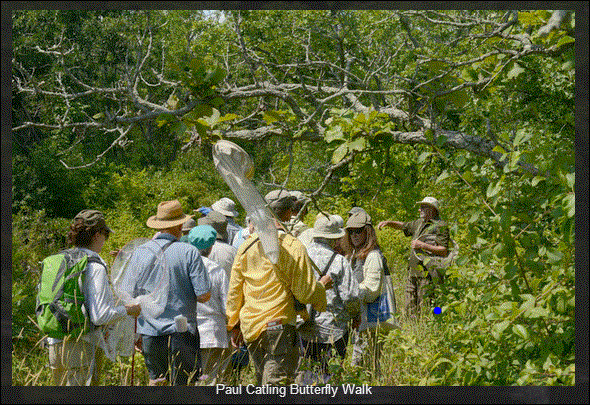
buterfly walkPicton:  Ostrander Point was swarming with nature lovers on the weekend.  Over sixty individuals helped PECFN collect information about animals, birds, plants, insects, amphibians and reptiles on the Crown Land Block.  Tanya Pulfer Ontario Nature’s Reptile and Amphibian Atlas coordinator joined Dr. Paul Catling, alvar specialist, Ted Cheskey Manager of Avian Conservation at Nature Canada and local renowned naturalist Terry Sprague to lead participants on hikes throughout Ostrander Point enumerating everything they saw. Expert witness evidence at the ERT hearing in winter/spring 2013 convinced the panel that a proposed nine turbine wind power project should not be built at Ostrander Point.  However, after an appeal by the Ministry of the Environment and Gilead Power, the Divisional court overturned that decision. Now PECFN is back at court, this time at the Court of Appeal challenging the Divisional Court decision.

CaptureWhile the Blanding’s turtles were well concealed in cool mud, Monarch and Giant Swallowtail butterflies were making good use of the wild flower meadows.  Several Monarch caterpillars were found on the plentiful milkweed.  An exciting new discovery for Ostrander Point was the Harvester Butterfly, the caterpillars of which feed only on a particular group of plant lice, which in turn feed only on a few kinds of woody shrubs in swamps. It is our only carnivorous butterfly. This remarkable, rare and local insect is not only new for Ostrander Point; it is also the first and only record for PEC, again establishing the biodiversity value of Ostrander.  Also documented was the rare Appalachian Brown Butterfly also an inhabitant of swamps.

Later under the full moon, five Whip-poor-wills were heard and spotted feasting on the wing probably eating the Dobson flies which were recorded as occurring in the bur oak savannah and acknowledged as a major food source for these birds. During the day, several Black -billed Cuckoos were heard calling, one of which reacted to a call lure by dive -bombing Terry Sprague!

Long Run Imports on County Rd 13 was established as base camp for registration, information, schedules, water and food.  The main site camp was on Ostrander Point Rd. allowing participants to explore into the alvar, meadow, forest and wetland areas. Helmer Rd was also used for morning bird walks.

Now the work of tallying the results begins but everyone agreed that this was a successful weekend and valuable data was gathered. The data will allow us to answer some of the questions about Ostrander Point that have been left unanswered by the studies done by the Ministry of Natural Resources and Gilead Power.  It will be added to the County’s Natural Heritage System data base and help to inform the Official Plan Review on the environment of the South Shore.

Information: Cheryl Anderson 613-471-1096 cherylanderson23@sympatico.ca

Myrna Wood 613-476-1506 myrna@kos.net

via: Save Ostrander Point

Public invited to help inventory the biologically significant Ostrander Point.

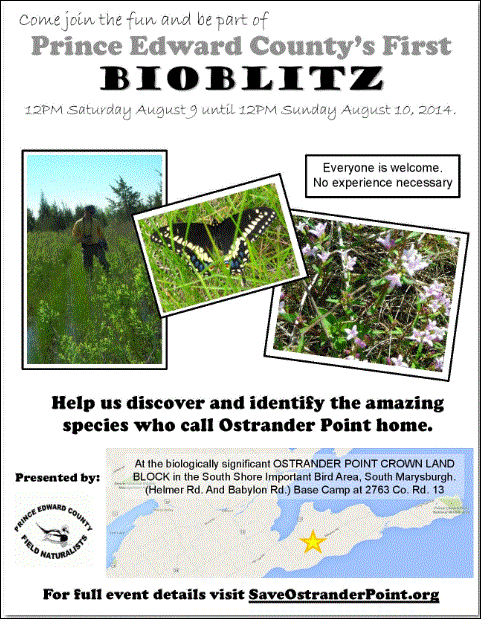
Participate in PECFN’s BioBlitz at Ostrander Point, August 9-10, 2014

FOR IMMEDIATE RELEASE

Public invited to help inventory the biologically significant Ostrander Point.

CapturePrince Edward County (July 30, 2014) – The Prince Edward County Field Naturalists are hosting the county’s first ever BioBlitz at Ostrander Point. The event runs over a 24 hour period from noon on Saturday August 9 to noon on Sunday August 10, 2014 and includes guided tours for the public focussing on how to identify a variety of species from plants to birds, insects and amphibians and reptiles.

Ostrander Point is located within the South Shore Important Bird Area, a site recognized globally for its importance to birds and biodiversity.

“Much of the biodiversity of the South Shore Important Bird Area has not been identified” notes Myrna Wood of the Prince Edward County Field Naturalists Club. Wood continues “Ostrander Point was the subject of an Environmental Review Tribunal hearing during which it became clear that we still have a lot to discover about the flora and fauna of the site. We hope this BioBlitz will help us uncover mysteries of who is living here as well as introduce the public to this unique site. Ostrander Point really is a gem that we have in the County, and it needs to be better understood.”

unnamedWood and other naturalist experts [see list below] are aiming to identify as many species as possible at this unique site in a 24 hour period. The Ostrander Point BioBlitz is being held with the support of the Prince Edward Point Bird Observatory and Nature Canada.

For more information including a full schedule of events and directions to the site, members of the public are encouraged to visit http://www.saveostranderpoint.org .

– 30 –

Media Contacts
Myrna Wood, Prince Edward County Field Naturalists myrna@kos.net 613-476-1506
Cheryl Anderson, cherylanderson23@sympatico.ca 613-471-1096
Sheila Kuja, sanda.kuja@bell.net 613-399-3018

Confirmed experts / leaders:
Paul Catling (Agriculture and Agri-Food Canada, ERT expert witness) –alvar plants.
Ted Cheskey (Nature Canada, ERT expert witness) — insectivore birds.
Don Davis (ERT expert witness),  Myrna Wood (PECFN) – monarch butterflies.
Henri Goulet (Agriculture and Agri-Food Canada) – insects and habitat.
Kurt Hennige (Kingston Field Naturalists ) – insects.
Megan McIntosh (Nature Canada) – purple martin roosting site search.
Tanya Pulfer (Ontario Nature Amphibian and Reptile Atlas ) – amphibians and reptiles.
Terry Sprague (Nature Stuff) – local birds.

CCSAGE Naturally Green, July 31 2014