Hydro One is offering clothesline kits and coupons. This is not a joke folks- Seriously.

Your dryer uses the most energy out of all your appliances. See how air-drying can help: http://ow.ly/mbbU302V3uJ #saveONenergy
Hydro One is offering clothesline kits and coupons. This is not a joke folks- Seriously.

Your dryer uses the most energy out of all your appliances. See how air-drying can help: http://ow.ly/mbbU302V3uJ #saveONenergy

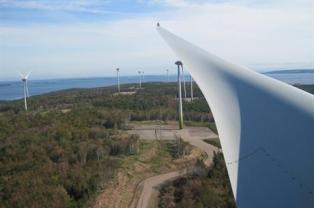
August 17, 2016 in Nova Scotia an Enercon turbine collapsed. The technician working in the turbine was able to exit the turbine safely.
Source: http://www.windpowermonthly.com/article/1406395/enercon-investigating-turbine-incident-Canada
“Enercon has launched an investigation into the collapse of a turbine at the 23.3MW Point Tupper wind farm located close to Port Hawkesbury in Nova Scotia, Canada.
The German turbine manufacturer said the incident, which occurred during a component exchange last Wednesday, triggered an evacuation alarm before the turbine collapsed and that nobody was injured.
The wind farm was developed by a joint venture between Canada’s Renewable Energy Services, which is the controlling shareholder, and Nova Scotia Power.
It uses Enercon E-82 and Enercon E-48 turbines, although Enercon did not specify which model was involved in the collapse.
“With close to 1000 wind turbines installed in Canada over the course of the last 15 years, this is the first time that such an event has occurred,” Enercon said in a statement.
A technical team is probing the incident, which did not occur during regular operations and is “undoubtedly an isolated one”, Enercon said…”
READ MORE: http://renews.biz/103859/enercon-probes-canadian-collapse/#.V7srAMS-P6U.twitter
A dramatic multiple turbine collapse event involving 8 Enercon turbines occurred in Brazil during an extreme weather event in 2014.
The issue of turbine failures,setbacks to homes and safety was heard at the tribunal appeal hearing challenging the renewable energy approval granted for the Niagara Wind project. The community was assured by their experts that catastrophic turbine failures and component liberation are rare events and the setbacks in the project are adequate.
The chart below is taken from the closing written reply of Mothers Against Wind Turbines and gives the reader an idea of how close the 3MW Enercon 101 turbines of 124m in height are placed to homes in the Niagara Wind project.
Ontario’s 550 metre setback and noise limits are waived if you agree to host a turbine on your land. Something to ponder in light of the recent “isolated” event.
155. Participating receptors predicted noise exposure levels as extracted from the Niagara Region Wind Farm Noise Assessment Report, September 30, 2014 often exceed the 40 dBA worst case sound power level thresholds detailed in the chart below:
“P” stands for participating
|
Receptor Number |
Sound Limit in dBA |
Distance to Closet Turbine |
Closet Turbine |
Page of Noise Assessment Report |
| P1191 | 40.6 | 529 m | T75 | Pg.40 of 291 |
| P1235 | 41.3 | 451m | T75 | 40 |
| P1562 | 41.5 | 370m | T36 | 40 |
| P1610 | 42.7 | 429m | T36 | 40 |
| P1666 | 46 | 253m | T65 | 40 |
| P1688 | 40.6 | 612m | T01 | 40 |
| P1703 | 41.7 | 488m | T65 | 40 |
| P1711 | 40.3 | 702m | T01 | 40 |
| P1765 | 41.4 | 590m | T76 | 40 |
| P1846 | 41 | 629m | T76 | 40 |
| P1848 | 41.5 | 427m | T55 | 40 |
| P1872 | 41 | 593m | T76 | 40 |
| P191 | 43.4 | 336m | T88 | 40 |
| P1981 | 40.2 | 671m | T76 | 40 |
| P2293 | 40.2 | 573m | T31 | 40 |
| P2529 | 40.5 | 446m | T56 | 40 |
| P2548 | 40.9 | 632m | T33 | 40 |
| P2550 | 40.9 | 693m | T34 | 40 |
| P2579 | 43.8 | 380m | T33 | 40 |
| P2590 | 45.4 | 280m | T35 | 40 |
| P2614 | 41.4 | 693m | T02 | 40 |
| P2636 | 40.6 | 506m | T35 | 40 |
| P2640 | 41.1 | 510m | T23 | 40 |
| P3160 | 40.4 | 564m | T18 | 40 |
| P3171 | 40.3 | 574m | T60 | 40 |
| P3893 | 41.7 | 425m | T24 | 41 |
| P3897 | 42.1 | 398m | T04 | 41 |
| P411 | 40.4 | 563m | T51 | 41 |
| P439 | 40.3 | 546m | T39 | 41 |
| P580 | 40.1 | 537m | T90 | 41 |
| P595 | 44.7 | 299m | T94 | 41 |
| P689 | 44 | 289m | T07 | 41 |
Tiny the Turbine is a moral tale that tells the truth about the impacts of industrial wind development in a way children can understand. It has been written by a Highland anti wind campaigner, illustrated by a supporting Cartoonist and published online today.
Some time ago it was discovered that not only were multinational wind developers welcomed into our schools, they come bearing gifts and speak to pupils regarding only the ‘benefits’ of wind development.
Children are asked to name turbines and design logos. They are taken to visit wind farms. The message is clear. Build wind farms – or else the planet will suffer and the polar bears and penguins will die!
The other side of the story has never been told as far as we are aware.
There is no hard evidence that building wind farms will do anything to combat climate change. Many things like grid connection (no matter how many miles), foreign parts and workers, pollution caused in China mining and processing necessary rare earth minerals and decommissioning are not included in any CO2 savings calculations, making emission claims a farce.
Not only do wind developers go into schools, they produce child friendly stories about turbines. Tommy the Turbine, Timmy the Turbine, Lofty etc. All designed to put a positive spin on a controversial industry and keep profits flowing from the next generation.
Lyndsey Ward wrote Subsidy Sam, illustrated by Josh, in retaliation to this shameless indoctrination earlier in the year. It was a satirical story and really meant for adults.
Subsidy Sam went global and following requests to write a real children’s story Lyndsey came up with Tiny the Turbine and Josh agreed to illustrate it.
Children should never be exposed to indoctrination by multinational companies with a product to sell with no access to the opposing argument. It is happening again and again. Fast food and fizzy drink giants were allowed into schools years ago – we now have a child obesity epidemic.
This wee story is moral. It smashes the myths of clean and green and environmentally friendly wind energy. Yet it does so in a way that is reasoned and sensible and so obvious to those who know the other side of the industry, and in a way that children will understand.
Importantly it is written and illustrated by people who are not paid by big industries with the deep pockets of the multinationals. People who care passionately for the environment and also that children are not indoctrinated by an industry determined to keep its shareholders happy. It is an honest reflection of what we see is happening – the other side. The side children are never told.
This tale, although written in Scotland, can be told in any country where there is industrial wind development and we hope it gets used around the world and translated into other languages.
It comes with a foreword from Sarah Laurie, CEO of the Waubra Foundation in Australia which promotes health research and regulation of environmental noise pollution.
The message in this story to all governments supporting industrial wind is:
Stop access to school children by multinationals which are promoting their wares and are driven by their shareholders and profit margins
Stop allowing communities to be ransacked by wind developers against their will. Give communities a wind veto and the final say on the developments that they are forced to live with.
Stop enriching the already wealthy developers and landowners to the detriment of your own people.
Stop denying the health impacts suffered by humans and by animals.
Stop ignoring pollution concerns regarding drinking water and the environment.
Stop dismissing the deaths of protected birds and bats by turbine blades as numbers are reaching catastrophic proportions across the world.
Speak and act for the people you are paid to serve and not the rich multinationals.
The hands of the wind industry and supporting politicians are stained by the tears of the unwilling communities they have exploited and continue to exploit.
For further details contact:
Lyndsey Ward
subsidy.sam@btinternet.com
“After the plane struck the wire, the cable wrapped around power lines, prompting Xcel to temporarily shut off power to the wind turbines. While crews repair the damage, federal investigators will work to piece together what led up to the crash that claimed the life of a veteran pilot, once honored by the FAA for his safe flying record.”

Near Ruthton, MN USA
A crop-spraying job ended in tragedy amid wind turbine country in southwest Minnesota.
The plane nose-dived into a soybean field west of Ruthton Friday morning after striking a cable. Investigators say the pilot, 68-year-old James Arnt of Worthington, died instantly.
A bent electrical tower high above this bean field is a telltale sign of tragedy in southwest Minnesota.
READ MORE: http://www.keloland.com/news/article/news/pilot-killed-while-spraying-crops-in-southwest-Minnesota
Our thoughts and prayers are with the pilot’s family and friends.
West Lincoln, Ontario. Niagara Wind Project
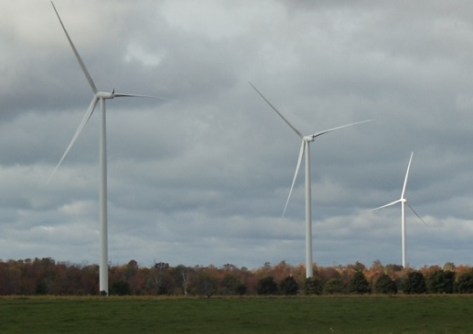
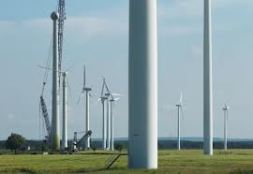
The “greening” of the community with 77 Industrial 3MW Wind Turbines and associated infrastructure. This is what clean energy really looks like.
Project Details: http://www.nrwf.ca/

In the run up to the Association of Municipalities of Ontario 2016 Conference this week in Windsor, mayors and municipal councillors from across Ontario, together with representatives from the Independent Electrical Systems Operator (IESO), attended a symposium on wind turbine development in the province.
They are calling on the Ontario Liberal government for a moratorium on the procurement of new renewable energy infrastructure, including solar.
Prince Edward County Mayor Robert Quaiff was the symposium’s moderator.
“For the past few years, municipalities from across the province have repeatedly raised their concerns over the procurement process of Industrial Wind Turbines (IWT) to the provincial liberal government. To date, the government has taken no actions to resolve these concerns,” said Quaiff. “As moderator, I witnessed the level of anger and frustration that other municipal representatives are feeling because of this issue. The message from the symposium was crystal clear: municipalities have had enough. Participants left with a unified sense of purpose and we are demanding immediate action from the provincial government.”
Quaiff said that while the provincial government has been unwilling to budge, in contrast, IESO representatives were responsive and amenable at the symposium, expressing interest in working with municipalities to find a middle ground. The problem, said Quaiff, is the IESO’s hands are tied by ministerial directives.
“A main area of contention is that municipalities would like to have a veto on proposed IWT projects in their jurisdictions, but the provincial government opposes this idea.”
Currently, 83 municipalities in Ontario have made it clear that they want municipal support to be mandatory for IWT projects to move forward.
“As a result, municipalities are asking the provincial government to impose a moratorium on the procurement of new renewable energy infrastructure until a compromise can be reached,” said Quaiff.
“This would allow municipalities and the Liberal government to sit down and collaborate on a process that is acceptable to all involved. A moratorium would allow time for consultation on the issues that are most pressing to municipalities, including: community vibrancy allocations, community and stakeholder engagement processes, wind turbine placement, compensation for lost property value and the availability of funding for municipalities to manage implementation.
“Without a moratorium, we are headed toward increased conflict between municipalities and the provincial government and an even greater risk of litigation going forward.”
Published Countylive August 18, 2016
READ AT: http://www.countylive.ca/
Audiologist’s are among allied health care providers that are seeing increasing numbers of patients seeking assessment for a range of symptoms that can include migraines, vertigo, tinnitus,and sleep deprivation in response to exposure of wind turbine sound. The following article while slanted in favour of wind energy also demonstrates the widening cracks in the veneer of the wind industry’s posturing that all is well for the health of those who live near the turbines.

Articles about Visceral Vibratory Vestibular Disturbance (WVD), Vibroacoustic Disease, and Wind Turbine Syndrome are appearing in books, newspapers, and on websites with increasing frequency. While the effects of intense noise in the range that we can hear are becoming more widely recognized and publicized, physicians and researchers are now concerned that infrasound – sounds that are in the frequency range too low for the human ear to hear – are the cause of these symptoms. They theorize that the low-frequency sounds and vibrations emitted by wind turbines may interfere with the ear’s vestibular system, which controls our sense of balance, or may affect heart and lung tissues.
By Andrea Graham
Audiologist, M.Sc. (C) Reg. CASLPO
Heritage Hearing Care
READ ARTICLE: http://www.lifestylehearing.ca/2013/02/great-windmill/

The Therrien family were forced to abandon their home after the wind turbines went up and now the property is set to become a test centre for noise monitoring by Energize Vermont.
Media has picked up the tragic tale of the family who have had to flee at great cost to their health and resulting financial hardship. The former home will now be a laboratory and classroom of the impacts of wind turbine sound on human health.
The Association to Protect Amherst Island has requested the federal Minister of Environment and Climate Change, the Honourable Catherine McKenna to require an environmental assessment of the cumulative impact of wind turbine projects on the northeast part of Lake Ontario on the Atlantic migratory flyway and to ensure compliance with the Migratory Bird Treaty Act.
http://www.protectamherstisland.ca/minister-requested-require-environmental-assessment/
The Mayor of Prince Edward County is going to this week’s conference of the Association of Municipalities of Ontario with a focus that won’t be surprising to those who follow the goings on in The County.
Robert Quaiff says a group of communities, including Prince Edward County, will again be telling the
provincial government that regulations must change with regards to big industrial wind turbines.
READ AT: http://www.quintenews.com/2016/08/dont-shove-turbines-throats/123657/