APAI ERT Day 2 December 8, 2015

ERT Day 2

Note: The ERT continues on Wednesday Dec 9 at 10:00 am at St. John’s Hall in Bath. APAI attendance is hugely important as the next two hearing days …will be in Toronto on Dec 10 and 11. The Tribunal will deliver its decision this morning on the motion described below.

Location: Toronto

Tribunal: Mr. Robert Wright & Mr. Justin Duncan

Lawyers

Appellant: Eric Gillespie, EKG, LLP
Approval Holder: John Laskin and John Terry, Torys LLP
MOECC: Andrea Huckins

The Tribunal heard the Approval Holder’s motion
1) To exclude the reply witness statements of Les Stanfield, Daryl Cowell, Kari Gunson, Roy Nagle, Shawn Smallwood, Carl Phillips and much of the reply witness statements of Christina Davy;
2) To order that the two reply witness statements of Dr. Carl Phillips be excluded;
3) To order that much of the reply witness statement of Dr. Christina Davy be excluded; and
4) That further and other relief as this Approval Holder requests and the Tribunal permits.

Mr. Laskin and Mr. Tory, argued that APAI by providing new witnesses had withheld the bulk of its case. First, by refusing to provide witness statements on the date it was required to do so, and second, by confirming that it would be calling two only witnesses while actually holding back the bulk of the case and third, by filling that case for the first time “dressed up” as reply with one day to go before the originally scheduled hearing start date. He added that APAI had quadrupled the number of expert witnesses and was trying to drop a new case on the Approval Holder. They submitted that with APAI’s last minute “manoeuvre”, it was seeking to file the bulk of the expert statements and that it was a clear case of case-splitting and it was a conduct that the Tribunal should not tolerate.

They referred to decisions from other cases from different courts to support the motion and advised that allowing such a transparent “gaming” of the system would make a mockery of the Tribunal’s process and fundamentally undermine the integrity and fairness of this proceeding.

Mr. Laskin used details of each of the new witness statements to conclude that none of the new witnesses could fairly be characterized as reply witnesses. As for Dr. Phillip’s and Dr. Davy’s replies, he insisted that there was nothing that had not already been “pre-rebutted”in the initial witness statement.

He concluded by qualifying this as being improper, intended to create surprise and confusion and that if successful, it would severely prejudice the responding parties and fundamentally compromise the fairness of this proceeding.

Mr. Gillespie, representing APAI requested that the motion to exclude of the Approval Holder be dismissed. He explained the sequence of events since Sept 8, 2015, when APAI filed its Notice of Appeal including the change in counsel and told the Tribunal that if this evidence was not permitted in this circumstance, it was clear that APAI would not be able to present its case.

He reminded the Tribunal that after APAI filed its two witness statements– one from a health witness, Dr. Carl Phillips (a PhD with health policy expertise) and the other from an environmental witness, Dr. Christina Davy (a bats and Blanding’s Turtle expert) on October 26, 2015,the Approval Holder filed ten (10) witness statements responding to the APAI’s case. These statements responded not only to the issues raised by APAI in the witness statements of Dr. Phillips and Dr.Davy, but to the statements of the participants and presenters.

Mr. Gillespie pointed out that among the 10 witnesses called, 9 witnesses are experts. Three experts, Andrew Taylor, Caleb Hasler and Ronald Brooks addressing the Blanding’s Turtle issue; three experts, Andrew Taylor, Eric Bollinger, Paul Kerlinger, addressing the bird issues raised in the Witness Statements of Thomas Beaubiah and William R Evans; two experts, Andrew Taylor and Scott Reynolds, addressing the bats issue.

He emphasized that the extensive material covered by the Approval Holder’s witnesses in response to the Appellant’s case warranted a similarly detailed and thorough Reply from the Appellant in order to adequately meet the onus of the will cause test under section 142.1 of the Environmental Protection Act, R.S.O. 1990, c. E.19.

He added that a narrow reply would preclude the APAI from making its full case that the Approval Holder has the right to reply and in such an instance where there is extensive material to reply to, it was appropriate to call new witnesses.

Mr. Gillespie emphasized that if the motion is accepted, The Tribunal will not have the best nor the most accurate evidence before it. He added that this would not be in the best interests of a fair hearing or in the public interest.

He explained that each of the witnesses directly assesses the evidence of the Approval Holder’s witnesses. Their responses directly reply to these witnesses. He refuted that this was not “bolstering” or “case splitting” and argued that it was the primary purpose of reply witness statements. As set out in their expertise and witness statements, each of the witnesses is also differently trained, differently qualified, and has extensive but very different experience. He assured the Tribunal that ach brought their own expertise and perspective to their assessment.

Mr. Gillespie reminded the Tribunal that in response to the Appellant’s case, the Approval Holder ha called nine (9) expert witnesses. Three of the experts, Andrew Taylor, Caleb Hasler and Ronald Brooks all address the issue of serious and irreversible harm to the Blanding’s Turtle. The chart appended to the Response to the Notice of Motion clearly outlines areas of overlapping evidence between the witnesses. Three witnesses, Andrew Taylor, Eric Bollinger and Paul Kerlinger address bobolinks, their habitats, risk to mortality, risk of displacement, habitat fragmentation, compensation habitat and mitigation measures to varying degrees. While both witnesses Andrew Taylor and Scott Reynolds address bat habitat, risk to mortality and mitigation measures to varying degrees.

He concluded by emphasizing that this extensive overlap of evidence between the expert witnesses creates an unfair and prejudicial situation for APAI. Not only does the extent of overlapping evidence ultimately protract a short hearing, it also created a situation where the Approval Holder has been given the opportunity to repeatedly bolster their own case, while attempting to stop the Appellant from responding or replying to an appeal in which the Appellant bears the onus of meeting the statutory test.

The ruling on the motion was deferred to Wednesday, Dec 9.

Tribunal continues on Wednesday Dec 9 at 10:00 am at the St John’s Hall in the Village of Bath
 

Day 19: Report on ERT on White Pines Wind Project

Report on Environmental Review Tribunal Hearing on White Pines Wind Project

December 8

by

Henri Garand, APPEC


On Day 19 the Environmental Review Tribunal (ERT) of the White Pines wind project heard the testimony of Dr. Robert McCunney, an expert witness for developer WPD.

Robert McCunney, MD, has a Boston clinical practice and is a research scientist at the Massachusetts Institute of Technology.   Funded by the Canadian and American Wind Energy Associations, he headed teams in both 2009 and 2014 that produced status reports such as the recent “Wind Turbines and Health: A Critical Review of the Scientific Literature.”   Though not licensed to practice medicine in Ontario, Dr. McCunney has testified on behalf of the wind industry at other ERT hearings.

The Tribunal qualified Dr. McCunney as “a medical doctor specializing in occupational and environmental medicine, with the particular implications of noise exposure.”

WPD counsel James Wilson asked Dr. McCunney to comment on wind turbine sounds.  He said that noise is characterized by loudness and pitch, low frequency is associated with vibrations, and infrasound is inaudible below 107 db(A).  The last feature also occurs in the natural environment (e.g., wind and waves) and in actions of the human body such as breathing.  Turbine infrasound cannot be distinguished beyond 300m.

Dr. McCunney’s 2014 literature review, based on 162 published papers, concluded that “(1) infrasound sound near wind turbines does not exceed audibility thresholds, (2) epidemiological studies have shown associations between living near wind turbines and annoyance, (3) infrasound and low-frequency sound do not present unique health risks, and (4) annoyance seems more strongly related to individual characteristics than noise from turbines.”   Nothing Dr. McCunney has read since publication changes his opinions.

In cross-examination, APPEC counsel Eric Gillespie established that Dr. McCunney has never treated anyone complaining of turbine-related symptoms or conducted any original field research. Though he lives near a wind turbine, his home is 1500m away.

Mr. Gillespie asked Dr. McCunney to confirm the findings in several studies cited in his literature review that turbine sounds annoyed 7-18 percent of nearby residents.  But Dr. McCunney said this is similar to other environmental noise.  Moreover, he does not accept the concept of “wind turbine syndrome,” in which a number of symptoms are associated with wind turbines and disappear in their absence.

Dr. McCunny was then asked to consider the 2015 Australian Senate inquiry, which received almost 500 worldwide submissions on wind turbine noise.  He said he had not read it, but he was critical of its reliance on a range of unverified reports rather strictly published studies.  He did accept, however, the finding that the “distinction between direct and indirect effects is not helpful.”

Finally, Mr. Gillespie asked at what distance from turbines complaints would cease.  Dr. McCunney expressed confidence in Ontario’s 550m minimum setbacks.

In re-examination WPD’s Wilson asked about sleep anxiety and deprivation, which can lead to serious medical conditions.  Dr. McCunney said no study shows a causal relation between these symptoms and wind turbines.   His 2014 literature review identifies “longitudinal assessments of health pre- and post-installation” and “enhanced measurement techniques to evaluate annoyance”—but not sleep problems—among “further areas of Inquiry.”

All problems start after the installation of Industrial Wind Turbines.

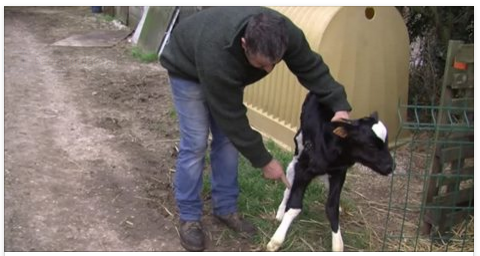
French Farmer Sues Wind Farm Over Stressed Cows

Published December 10, 2015

CaptureFrance, host of the U.N. climate conference, prides itself on being one of the world’s top innovators in wind energy technology, and wind turbines have become a symbol of the country’s commitment to clean energy. But the French government is coming under fire from farmers and others who say the proximity of some of the turbines is hurting wildlife and cattle. VOA Europe Correspondent Luis Ramirez went to a dairy farm in the northern Picardy region to get one farmer’s story

FOLLOW LINK TO LISTEN TO THE FARMER EXPLAIN WHAT HAS HAPPENED TO HIS ANIMALS AND LIFE.

Niagara Region Wind Farm…previously know as NRWC makes more changes to previously approved plans…..

NOTICE OF PROPOSED CHANGE TO A RENEWABLE ENERGY PROJECT

http://www.nrwf.ca/notices/

Good Afternoon,

As you may be aware the Niagara Region Wind Corporation was issued a Renewable Energy Approval (REA) on November 6, 2015, in respect of the Niagara Region Wind Farm project (the “Project”).  An amendment to the existing approval for an administrative change to the Project was issued by the Ministry of Environment and Climate Change (MOECC) on November 23, 2015; to acknowledge the change in ownership of the Project from ‘Niagara Region Wind Corporation’ to ‘FWRN LP’, as FWRN LP has purchased the Project.

On behalf of FWRN LP, please see the attached Notice of Proposed Change to a Renewable Energy Project, for the Niagara Region Wind Farm.  FRWN LP is proposing to make changes to the Project and an application has been made to MOECC to modify the terms and conditions of the Project REA. Continue reading Niagara Region Wind Farm…previously know as NRWC makes more changes to previously approved plans…..

Take a tour of newly industrialized West Lincoln

Dec. 10/15

Dear Editor:

8c0c0554-b1cf-4cac-a1f6-9ab51c25619eI invite you, and your readers in Niagara Region to take a drive through West Lincoln township and view the INDUSTRIAL wind turbines that are being installed there.  You will be awed by the size of these turbines, so much so, that you will never again call them “windmills”.

You do not need  a map:  just start at the Transmission Station just past Wellandport and follow the  orange stakes down Canborough, Port Davidson Road, Sixteen and Tober Road, Road 6, Twenty hwy, Road. 5 , Young Street, Walker Road, and Mountain View Road.  (The stakes can always be found opposite existing transmission lines).  These stakes are placed in the road allowance to mark  the location at which  the transmission poles will be placed.

You will also notice, on Canborough,  Port Davidson, Tober and many of the side roads, the construction of the connector lines, which are to be buried and  eventually,  bring the raw power from the turbines to the transformer station where they will be transformed into 230mw of power which will travel on the 115kw lines down the transmission lines.  Realize that all 77 turbines  will be connected by connector  lines. There will be miles of these lines criss-crossing along most of the county roads in  the township.  Plan your trip to include  Vaughn Road  to get a really good taste of the mess that the residents of these roads have to put up with, on a daily basis, knowing that the process will take until August 2016 at the earliest.

Notice I did not tell you where to find the turbines.  You will not be able to miss them.  From kms 47137cd8-49b8-40fa-bcfd-620cb285d213away you will see the activity.  If you want to see construction, visit Gee Road where the turbines are located close enough to the road for you to get a good look at what is happening at each and every turbine construction site. The security people can not prevent you from taking a good look from these two sites.

This past week a brand new interest has been added.  Drive  the proposed transmission line from the proposed Transformer station on Canbourgh and you will see bright green  florescent ribbons on just about every tree on the opposite side of  existing transmission lines.

Each and every tree that is marked is slated for demolition for  building of the transmission line.

The irony of it will almost make you laugh:  trees are natures best defense against climate change.  Trees produce CO2 which is Natures air purifier, and hundreds and hundreds of trees are being removed for a transmission line  which will produce Radon emissions and  stray voltage, as well.

Trees create an ecosystem to provide habitat and food for birds and other animals. Trees absorb carbon dioxide and potentially harmful gasses, such as sulfur dioxide, carbon monoxide from the air and release oxygen. One large tree can supply a days supply of oxygen for four people.

Our trees, and the health of our community is being sacrificed for Industrial Wind Turbines which are not efficient, not green, not economically feasible or affordable, not nature friendly and riffed with controversy.

After you have taken your drive in the (newly industrialized) countryside, can you still say that it is worth the sacrifice of rural Ontario for the “common good”. Does this Industrialization of rural Ontario  make any sense to you?  Please contact your municipal officials and the MOECC and express your opinions and concerns to them.


The High Church of Global Warming

U.S. Secretary of State John Kerry, right, walks with advisors at the Paris climate conference.As this edition of the Post hits the stands, the great Conclave of Catastrophists in Paris will have concluded. The last goose will gladly have surrendered its swollen liver — foie gras does not come without exertion — to the last epicure environmentalist. We have been told that the French did not stint on lending all the arts of its fabled cuisine to assist the Great Deliberators. State dinners took on something of the largesse and abundance last recorded by Gibbon in his descriptions of the Emperor Heliogabalus, who is reputed to have served up the tongues of hummingbirds, peacock brains and mice sauteed in honey, to the jaded appetites of his decadent court.

The reference here to far earlier times is not accidental or flip. Just as in the early centuries of Christianity, when the patristic Fathers struggled with various heresies and sought to stabilize the dogmas of the then-nascent Faith, held their great Councils to parse the finer points of esoteric doctrine, the Parisian analogue gave itself over to even more subtle ruminations: whether, for example, it was best to “commit” to ensuring the planet’s temperature doesn’t rise more than 1.5 degrees by the year 2100, or whether it was best merely to hold the thermometer to a more expansive two degrees.

How much mental energy must have been expanded over that winsome 0.5 degrees, 80 years down the road? The subtleties involved, the logical intricacies deployed, would have outpaced Aquinas and sent poor Augustine to bed early with a migraine. However, the modern monks of the High Church of Global Warming have resources that the early philosophers and theologians could not even dream of — they have computer models that dance in the direction wished of them.

And when what they deliciously refer to as the “settled science” does not serve their needs, they have always about them the ancient texts of Earth in the Balance by Reverend Al Gore, or the early press releases of the Dun Scotus of Global Warming, Cardinal Emeritus George Monbiot.

And where the scholiasts of old, wrestling with imperfect transcriptions and dubious translations of Holy Scripture had only prayer to guide them on the knotty questions of global warming — such as how many polar bears can dance on the edge of an ice floe — the priests of Climatology can always consult the Oracles of Greenpeace and the Sierra Club; or when in deeper need — say on the relationship between the decline of the coral reefs and bovine flatulence — refer to the obiter dicta of Bishops Tutu or Suzuki, on which matters such authorities speak with a Truth beside which that of Scripture is a mere contrail.

read more: National Post, Rex Murphy, Dec 11 2015

Day 18: Report on ERT on White Pines Wind Project

Report on Environmental Review Tribunal Hearing on White Pines Wind Project

December 7

by

Paula Peel, APPEC 
On Day 18 of the Environmental Review Tribunal (ERT), APPEC expert witness Dr. Daryl Cowell testified that there is substantial evidence of karst in the White Pines study area and that serious and irreversible impacts will occur if this project proceeds.   WPD witness Ronald Donaldson and Ministry of the Environment and Climate Change (MOECC) witness Mark Phillips disputed this.

Dr. Cowell told the ERT that he has appeared as a karst expert witness before eight Ontario Municipal Board hearings, done work for municipalities across Ontario, and authored or co-authored hundreds of technical documents, including peer-reviewed papers.  He has spent 40 years studying karst, with the past 20 years focused on hazard assessment.  Dr. Cowell was qualified as a professional geoscientist with expertise in karst. Continue reading Day 18: Report on ERT on White Pines Wind Project

Construction of more Industrial Wind Turbines will Increase CO2 emissions

Mr. Chiarelli and Ms. Wynne:

When the GEA was introduced in 2009, the intent was to reduce CO2 emissions as well as to create jobs in the renewable energies sector.

Figure 20 of the long term energy plan from 2013 states that over the next 10 years, CO2 emissions will increase.  A different document published by the PEO states that construction of more industrial wind turbines will increase CO2 emissions because of the gas backup that is required for the unreliable wind power.  Here are two documents (one of them is your own government document) stating the CO2emissions will increase.  Both documents are attached.

There have been recent closures of turbine tower manufacturing plants and turbine blade manufacturing plants across Ontario resulting in job losses in the industrial wind turbine sector.  There has been a net loss of manufacturing jobs in Ontario since the GEA was passed.  This was to be expected as the auditor general predicted job losses will increase because of renewable energies. This prediction is in the auditor general’s report of 2011.

The question needs to be asked – Since wind turbines increase CO2 emissions and decreases jobs, why is the Ontario government continuing down the path of renewables and specifically industrial wind turbines?  The electricity bills of the ratepayers continue to increase and this can be directly attributed to the rates and subsidies paid to the wind companies.  Some hydro rates have increased to the point that customers can no longer afford to have electricity delivered to their homes.  The recent auditor general’s report states that Ontario ratepayers have paid $37 billion extra for electricity from 2006 – 2014.  This is appalling!  When is the Ontario government going to realize that Industrial Wind Turbines are bad for the economy, bad for the environment, and bad for job creation?

Please respond to this concern.

Lois Johnson

Achieving Balance – Ontario’s Long-Term Energy Plan

2015_Presentation_Elec_Dilem_Page_15

Bill Gates sceptical of solar, wind power

Says unless clean energy is made cheaper, countries like India will be in an ‘impossible’ situation.

“I can’t comment on climate justice. I don’t know what the definition of that is,” says former Microsoft CEO Bill Gates.

Lauding India for doubling its funding for research and development of climate change technology, the former Microsoft CEO and co-founder of the world’s biggest charitable foundation, Bill Gates, says technological innovation is the only way to fight climate change. “If we are going to make the cost of clean energy as inexpensive as hydrocarbons, or coal energy today, which will need innovations. That will mean you won’t have to think about this huge trade-off between ‘Should I be clean’ or ‘Should I electrify’?” he told The Hindu in an exclusive interview.

Mr. Gates was in Paris for the COP21 summit, where he launched a multi-billion dollar 20-nation ‘Breakthrough Energy Coalition,’ and has met Prime Minister Narendra Modi twice this week, both in Paris and in Delhi on Friday.

Backing India’s stand on ‘climate justice’ or the need for the developing world to be financed for cutting emissions, Mr. Gates said that unless clean energy was made cheaper, it put countries like India in an “impossible” situation. “I can’t comment on climate justice, I don’t know what the definition of that is. I think while the premium cost of clean energy is very high, you force an almost impossible trade-off between two very important goals. My belief is that if you increase the R&D that will lower the price of energy,” he said.

read more: The Hindu, Dec 5 2015

Day 17 of the White Pines ERT

Report on the ERT Hearing on the White Pines Wind Project – Dec. 4, 2015

By Henri Garand, APPEC

On Day 17 the Environmental Review Tribunal (ERT) of the White Pines wind project heard the testimony of WPD witnesses Shawn Taylor and Dr. Paul Kerlinger.

Mr. Taylor was qualified by the Tribunal as “an ecological restoration and construction mitigation specialist.”  However, he testified at length about Blanding’s turtles because of his participation in a four-year study involving a Kanata road extension into their habitat.

After classifying the roads (paved, gravel, and access) required for White Pines, Taylor spoke about the risks from higher traffic, but he said these are minimal due to the “block-out period” on construction between April 15 and October 15, and the later infrequent maintenance visits.  Mitigations such as staff training and 15km speed limits will protect turtles. Continue reading Day 17 of the White Pines ERT