Measuring Wind Turbine Coherent Infrasound

  • John Vanderkooy1 and Richard Mann2
  • Department of Physics and Astronomy1 , Department of Computer Science2
  • University of Waterloo, Waterloo, ON, Canada, N2L 3G1
  • jv@uwaterloo.ca,
  • mannr@uwaterloo.ca
  • Date posted: 2 October, 2014

Abstract

To extract the optimum coherent infrasound signal from a wind turbine whose rotation is not precisely periodic, we use an optical telescope fitted with a photodetector to obtain reference blade passage periods, recording these together with the microphone infrasound signal. Signal processing of the quasi-periodic microphone signal is then used to obtain periodic data, which are analyzed by an appropriate length DFT to extract optimum values for the fundamental and harmonics of the coherent signal. The general procedure is similar to order domain analysis for rotating machines and is thoroughly explained and illustrated with measurements and analysis from a number of different wind farms. If several turbines are measured by a single microphone with blade passage periods obtained from several separate reference tracks, it may be possible to retrieve separate useful coherent signals from multiple turbines by appropriate processing.

read entire paper : coherent_wt_measurement_0

Annoyance is an adverse health effect

To:
Malcolm S. Lock, MD., M.P.H.
(A) Medical Officer of Health
Haldimand-Norfolk Health Unit
malcolm.lock@hnhu.org
Copy:
Haldimand-Norfolk Board of Health
c/o Chair, Mr. Charlie Luke
Charlie.Luke@norfolkcounty.ca
Ms Stephana Johnston
Ontario, Canada
stephjohnston519@gmail.com
February 25, 2015
Dear Dr. Lock,

Re: Response to your November 20, 2014 letter to Ms Johnston

Ms Johnston has asked that I respond to your letter of November 20, 2014. She requests that a copy of this letter be provided to the Chair and the Members of the Board of Health.

Personal disclosure: I declare no potential conflicts of interest and have received no financial support with respect to the research and authorship of this commentary.

This letter is public and may be shared.

I met Ms Johnston for the first time on April 22, 2009, during the Standing Committee on General Government, Green Energy and Economy Act, 2009 hearings. I have been in touch with Ms Johnston since that time and am aware of her circumstances. In my opinion since early 2009 Ms Johnston has explored every avenue available to her, including contacting your office, to find a remedy to her circumstances which are associated with the operation of
the wind projects in her vicinity.

There is sufficient evidence that some, including Ms Johnston are negatively affected by industrial wind energy facilities. Examples of reported adverse health effects include chronic and high annoyance, chronic sleep disturbance, stress-related health impacts and reduced quality of life.1,2,3,4,5,6,7,8,9,10,11, 12 In some cases families reporting adverse health effects  have abandoned their homes, been billeted away from their homes or hired legal counsel to successfully reach a financial agreement with the wind energy developer.13

Peer reviewed and published references, testimony under oath, and/or disclosure evidence and/or witness statements, authoritative documents and other references such as those briefly
summarized in this letter have acknowledged adverse health effects.

A brief bio and summary of the peer reviewed articles and conference papers for which I am an author / co-author is provided at the end of this letter.

Assurances of Health Protection

In a communication dated pre-Green Energy and Economy Act (GEA 2009), the former Minister of Environment of Ontario, John Gerretsen states the MOE is committed to siting and operation of facilities in a manner that is protective of human health and that it is an offence to violate a condition set out in a CofA (Certificate of Approval): [excerpt] Continue reading Annoyance is an adverse health effect

Ireland – Report on the Committee’s Inquiry into Wind Energy

read entire report here : http://www.niassembly.gov.uk/assembly-business/committees/environment/reports/report-on-the-committees-inquiry-into-wind-energy/

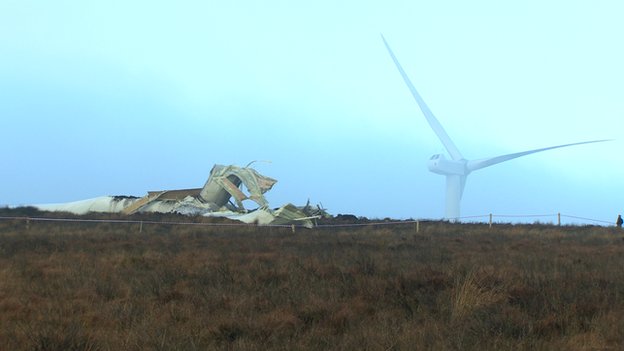
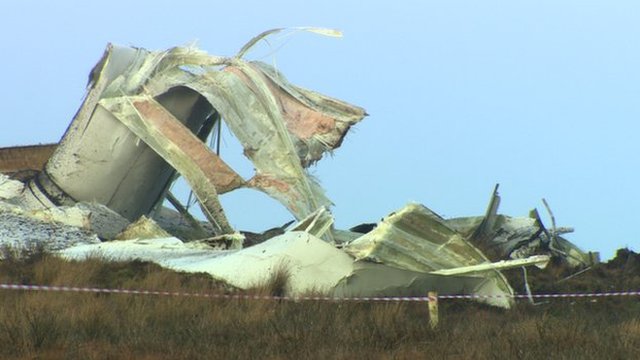
_80038799_windturbine1“34.During the course of the inquiry the Committee has been assured by the wind industry that turbines are a safe form of technology, with instances of physical damage caused by turbines occurring only rarely. Committee members saw at first hand the level of computer-controlled monitoring relating to a wind farm which allows for remote monitoring of the operation of the machinery. However, a recent incident in West Tyrone when a wind turbine collapsed, scattering debris across the surrounding area, has given the Committee cause for concern. The Committee therefore recommends that the _80041623_windturbine2investigation of the incident should be concluded as swiftly as possible, both by the owners of the wind development and the Health and Safety Executive for Northern Ireland, and that any lessons learned should be implemented as soon as possible.”

Sick Building Syndrome: Acoustic Aspects

Tyrrell Burt Division of Heating and Ventilation, Department of Energy Technology, Royal Institute of Technology, Stockholm, Sweden  

Abstract Low-frequency noise, centred around a frequency of about 7 Hz, was found to occur in several office rooms investigated. Symptoms resulting from exposure to infrasound can include fatigue, headache, nausea, concentration difficulties, disorientation, seasickness, digestive disorders, cough, vision problems and dizziness, that is, symptoms typical of the sick building syndrome. Many of the occupants exhibited such symptoms. It is shown that the low-frequency component of ventilation noise is often being amplified in the tightly sealed rooms. Repeated or long-term exposure to such amplified infrasound may be triggering an allergic-type response in individuals.

read entire paper here: Indoor and Built Environment-1996-Burt-44-59


Cost awards now an issue for ontario families fighting wind companies

 Help Support SWEAR move forward in their legal action

Ontario families fighting massive legal bill from wind-farm companies

A demand that four Ontario families pay hundreds of thousands of dollars in legal costs to billion-dollar companies is a thinly disguised warning to anyone pondering a challenge to industrial wind farms in Ontario, the families say.

drennan2In asking the courts to set the legal bill aside, the citizens say the award would cripple them financially and undermine access to justice, even in important public-interest cases.

Court documents show the companies – K2 Wind, Armow, and St. Columban – are seeking $340,000 in costs from the Drennans, Ryans, Dixons and Kroeplins, who lost their bid to scuttle three wind-farm projects.

The families, who worry wind turbines near their homes could harm their health, had challenged the constitutionality of Ontario’s approvals process before Divisional Court. They are now hoping the province’s top court will hear the case, potentially adding more litigation costs.

Shawn Drennan said his $240,000 bill was excessive given that he was only looking to protect his rights. Continue reading Cost awards now an issue for ontario families fighting wind companies

MORE turbines for Middlesex & Lambton by NextEra! (edited title)

We “edited the title” so that we can remain neutral and non- partisan.

1NextEra

February 23, 2015

Mayor and Members of Council c/o Fran Urbshott, Administrator / Clerk 2340 Egremont Drive, RR#5 STRATHROY, ON N7G 3H6 Dear Mayor and Members of Council Congratulations on your 2015 election (or re-election) to the council for the Township of AdelaideMetcalfe. Your successful election campaigns are to be commended.

We want to take this opportunity to introduce you to NextEra Canada Development and Acquisitions, Inc, a wholly-owned subsidiary of NextEra Energy Resources, LLC and provide you with information, more generally, about our wind energy projects. We are currently exploring development of a wind energy project in your municipality called the Hardy Creek Wind Energy Centre.

Wind energy is one of the fastest growing forms of energy generation on the planet with approximately 4% of installed electricity generation capacity by the end of 2014 and it is growing rapidly. Here in Canada, we are setting records for new installations every year, and now also provide nearly 4% of our electricity generation capacity from wind energy. Ontario is leading the way with currently 7% of its capacity corning from wind energy. This has not only provided the Province with clean, renewable source of energy for decades to come, but has allowed us to eliminate coal as a form of energy generation, a form with serious health and environmental concerns. It is estimated that the elimination of coal generation in Ontario will save approximately $3 billion a year in healthcare costs. Equally as important, it has resulted in billions of dollars in investment, manufacturing and construction jobs, and significant economic contributions to local landowners, First Nations, and municipalities. Continue reading MORE turbines for Middlesex & Lambton by NextEra! (edited title)

Rural Communities under attack from the State

Neil van Dokkum's avatarThe Law is my Oyster

RTSI received a letter from a member of the Ratheniska community which is battling An Bord Pleanala, the Department of Communications, Energy and Natural Resources, and EirGrid in their plan to build a massive substation which is intended to be the connecting hub for the plague of wind farms that are planned for the area.

The contents of the letter are heartrending. In addition, as a lawyer I find the contents deeply disturbing as it shows how far this Government and its lackeys are prepared to go to impose their will on rural communities fighting the madness that is Grid25.

Laws are useless if they are not properly interpreted by the courts and properly enforced by the civil authorities. It is clear that in the headlong rush to build Grid 25 and the associated industrial wind farms, any semblance of respect for the rule of law has long fallen by…

View original post 2,685 more words

The Dirty Dozen – 12 costly mistakes made by the provincial government in the last 10 years

The mandate of any politically elected government is to serve and protect all the people in their jurisdiction. One of the key requirements is wise use and investment of the funds, so financial competence is necessary for good stewardship. With this in mind, I thought I would look for 12 of the most costly financial decisions/mistakes over the last 10 years. Since the Ontario Provincial Liberals have been the only party in power in the last 10 years, they can be held accountable for the outcome of these decisions.

#1 Provincial Debt – Ministry of Finance – $143.35 billion increase since 2003
The projected budget for Ontario for 2014-15 is $127.6 billion in expenses with $117 billion in revenue so with deficit financing the government will add $10.6 billion to the Ontario provincial debt. This is in addition to the existing $276 billion provincial deficit, approximately $20,500 per person.

Ontario’s net debt – the difference between total liabilities and total financial assets – has more than doubled under the Liberal leadership. In 2002 -2003 the net debt was $132.65 billion but has increased to $276 billion by 2014, so the Liberal government has added $143.35 billion to the provincial debt

The negative consequences of a large debt load include debt-servicing costs which divert funding away from other government programs; a greater vulnerability to any interest-rate increases; and a potential credit-rating downgrade which could make it more expensive to borrow. Our children and grandchildren will pay more taxes and have fewer options because of this increasing debt load.
#2. Feed in Tariff (FIT) subsidy paid to multinational industrial wind energy corporations – Ministry of Energy – $1.6 billion per year for FIT contracts for wind energy plus $2 billion per year for discounted surplus hydro, so over the 20 year contracts $72 billion

The Renewable Energy Initiative as structured by Energy Minister George Smitherman will cost the rate payers of this province $1.6 BILLION per year in Feed in Tariff (FIT) contracts for wind energy for the next 20 years. We have the highest electricity rates in North America – a fact that is driving commerce and industry out of this province. Continue reading The Dirty Dozen – 12 costly mistakes made by the provincial government in the last 10 years

Protecting our children from Industrial Wind Power Emissions is our first priority!