Category Archives: Ontario Wind

Repeal The Green Energy Act

dscn1455
Hydro Grid located outside the shuttered Nanticoke Coal Generation Plant


“Ontario’s legislature must repeal Green Energy and Green Economy Act, legislation that drove unprecedented politicization of power sector decision making and needlessly harms ratepayers.”  Tom Adams Energy Expert

Ontario’s electricity bills are rising and Global News asked a panel of experts to weigh how they would make things better. The responses focused on the influence of renewable generation and cost impacts to those who foot the bills.  Parker Gallant, Jane Wilson of WCO, Mark Winfield, and Tom Adams provided insights into the causes of the current deepening consumer crisis.  Energy poverty which is forcing the heart wrenching decision whether to eat or try to pay the electricity bill.

Ontario electricity rates: Experts explain how they would make power cheaper

Public Meeting in Smithville

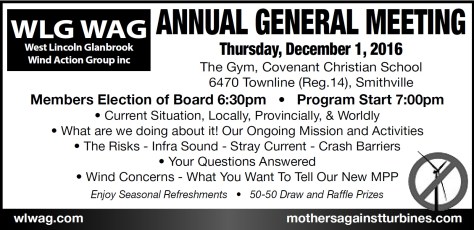
wlgwag-agm-2016Dear friends,

We will have our Annual General Meeting (6:30) followed by a Public information meeting and all are welcome to attend. We will have our newly elected MPP present and good news for our community.   WLGWAG

When? Thurs day, Dec 1 @ 7PM

WhereCovenant Christian School

6470 Regional Rd #14, P.O. Box 924  Smithville, ON  L0R

Wind Industry in trouble in Niagara Region and beyond

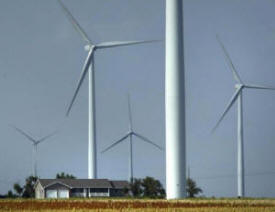
house surrounded by wind turbinesI’m seriously worried that our region will miss out on a significant economic opportunity if the Ontario government doesn’t stick to its renewable energy targets.” – Tom Rankin, CEO, Rankin Construction, Niagara, Ontario”

All together now let’s raise a glass of cheer and send them all packing!  The Harm the wind industry has inflicted fails to generate any sympathy over their current wails of woes.  Niagara Wind came online in October 2016 and already MOECC is being called out to measure noise emissions and  multiple complaints  demanding investigation, representing a new wave of families and individuals who are finding their health adversely impacted by wind turbines. Yet project operators and industry continue to turn a deaf ear, heckle and belittle impacted residents and no meaningful action taken to relieve suffering of wind power’s making.

Turbines continued to be allowed to kill wildlife and fragment sensitive environmental habitats with the protections of legislated government statutes. Yet its is expected the ratepayers paying for this sorry state of affairs are expected to be worried about the wind industry’s economic well- being?   Sorry no go.   If wind power wants to survive as a viable renewable and be “sustainable” it is beyond time to clean up the mess and deal with the realities of your spinning Industrial turbine generators.

Responding to the rising heat of political wildfire,  wind proponents in the Niagara region have banded together and created yet another lobby group. The following commentary beats false tones on the PR drum extolling claimed wind power virtues and benefits.  READ AT: https://niagaraatlarge.com/2016/11/17/niagara-ontario-employers-fight-to-protect-jobs-and-a-clean-affordable-energy-supply/

Niagara, Ontario Employers Fight to Protect Jobs and a Clean, Affordable Energy Supply

I’m seriously worried that our region will miss out on a significant economic opportunity if the Ontario government doesn’t stick to its renewable energy targets.” – Tom Rankin, CEO, Rankin Construction, Niagara, Ontario

Rankin Construction, Pumpcrete Join Province-Wide Coalition to Promote Renewable Energy and Protect Jobs in our Region

A Call-Out to the Ontario government from the Renewable Energy Alliance of Ontario

Posted November 17th, 2016 on Niagara At Large

St. Catharines/Niagara, Ontario – Local business leaders Tom Rankin and Ken Williams called on the Ontario government (this November 16th_ to protect local jobs by ensuring that renewable energy remains a vital part of Ontario’s Long-Term Energy Plan.renewable-energy

Rankin, CEO of Rankin Construction on Martindale Road, and Williams, President of Pumpcrete on Progress Street, will be representing the newly formed Renewable Energy Alliance of Ontario (REAO) at Ministry of Energy led consultations tonight at the Holiday Inn on Ontario Street in St. Catharines.

Together, Rankin Construction and Pumpcrete employ over 700 hundred people in the St. Catharines and Niagara Falls region.

Rankin and Williams will be making the following points to government officials:

1) Renewable energy helps to stabilize long-term energy costs.

2) Ontarians support renewable energy by wide margins, and are in favour of increased investment in renewable energy technologies.

3) Investment in renewable energy technology has resulted in the creation good paying jobs in the Niagara region. Since 2012, renewable energy has created over 1000 jobs in the region, and increased the regions employment capacity by a minimum of three hundred thousand working hours. This new work has a positive economic impact for the province and the municipalities that host renewable energy sites.

4) As Ontario moves toward the implementation of the Climate Change Action Plan, there is a projected increase in demand for energy and Ontario will need to meet this increase in a cost effective and carbon neutral way.

5) Ontario must stick to the target of 50 per cent renewables by 2025 if it is to maintain its place as a world leader in renewable energy in the face of stiff international competition from China and India.

6) Renewable energy is now as cost effective as other sources of energy. It is not the reason Ontarians have been facing higher hydro rates.

Quotes:

Rankin construction has been located in St. Catharines since 1978 and I’m seriously worried that our region will miss out on a significant economic opportunity if the Ontario government doesn’t stick to its renewable energy targets.  Ontarians need clean and affordable energy and the people of St. Catharines need more well-paying jobs. Renewable energy needs to be at the core of the provincial Long-Term Energy Plan.”Tom Rankin – CEO, Rankin Construction

“Renewable energy like wind is now equal in cost to traditional energy sources.  India and China are investing billions of dollars into renewable energy industries. We can’t afford to lose any more ground.”Ken Williams – President, Pumpcrete

Renewable Energy Alliance of Ontario:

The Renewable Energy Alliance of Ontario is a broad coalition of employers, labour and industry groups dedicated to working with the Ontario government to ensure renewable energy continues to play a vital role in Ontario’s energy mix.  At present membership includes the following organizations:

  • The International Union of Operating Engineers
  • The Laborers’ International Union of North America
  • The Ontario Crane Rental Association
  • The Canadian Wind Energy Association
  • The Aboriginal Apprenticeship Board of Ontario
  • Rankin Construction
  • Pumpcrete
  • Surespan Wind Energy


Green Energy Act No real fixes Ahead

wrong-way“Premier Wynne’s “mistake” will continue to drive up our bills for some time. If she pays any attention to the dreamy musings of Environmental Defence and their ilk in the drive for 100% renewables, those heart-wrenching stories will become a daily occurrence.”

November 25, 2016;  Parker Gallant Energy Perspectives  

A recent press release from Environmental Defence announced the launch of yet another effort to “green” Ontario via an organization formed by the usual cadre of environmental non-government organizations (ENGO).

This one, the 100% RE or Renewable Energy, pushes the insanity of suggesting Ontario’s “next energy plan should empower citizens and communities to join the global movement toward 100 per cent renewable energy.” It suggests Ontario “should follow the lead of communities, such as Oxford County, that are transitioning to clean and healthy 100 per cent renewable energy”.

It is apparent that the people at Environmental Defence — the same ENGO that was a participant in the creation of the Green Energy Act — somehow believe they are superior energy planners than those with qualifications. Beyond Environmental Defence, the 100%RE group includes the usual suspects such as the David Suzuki Foundation, Pembina, Greenpeace, the Ontario Clean Air Alliance, Physicians for the Environment, the Registered Nurses Association of Ontario and several lesser known names, including the Toronto Environmental Alliance and TREC. The latter were responsible for the Toronto Exhibition Place wind turbine used by countless Ontario Liberals as a photo-op but which generates almost no usable power and whose control now rests in the hands of Toronto Hydro. TREC have placed a plaque at the base of the turbine with the names of the people who invested in the turbine and have no hope of ever seeing a return on their money.  One of the names on the plaque is Dianne Saxe, the current Environmental Commissioner.  (It appears supporting industrial-scale wind turbines that kill birds and bats did not deter the Ontario Liberal government from appointing Ms. Saxe as commissioner of the environment.)

Now, with Premier Wynne’s recent mea culpa at the Ontario Liberal Party convention when she referred to Ontario citizens having to choose between heating their house or buying food, one has to wonder:  exactly why did it take her so long to admit to her mistake?  Maybe it’s because the Ontario media has recently noted rising electricity bills are causing energy poverty; the hard-luck stories in print and on TV are often heart-wrenching.  Those stories, and the relentless arrival of the monthly hydro bill, has had a lot to do with recent polling results showing that 67% disapprove of the job Premier Wynne is doing.

One of the obvious “mistakes” Premier Wynne made was not paying attention. When she was confronted by communities back in August 2013 declaring themselves “unwilling hosts” to industrial wind turbine developments, her response, as reported in the Ottawa Citizen, was to shrug it off: “Wynne has asked the Ontario Sustainable Energy Association to raise awareness in communities slated for the turbine projects about the benefits of hosting, including the financial gains that can come from being power generators in a cash-strapped economy.”

Was she so naive that she didn’t realize those “financial gains” would come from the pockets of average households, and that OSEA claimed responsibility for developing the Green Energy Act that had a role in rising electricity bills?

Her announcement on the repeal of the 8% provincial portion of the HST is at best comparable to sticking her finger in a dike to stop the flood.  It has apparently slipped her mind she was part of the team that placed the tax on our energy bills, while simultaneously blessing a 10% rebate known as the Ontario Clean Energy Benefit.

The net gain to households from those actions was a 2% reduction, at the same time as the Ontario Energy Board was approving rate increases for both the electricity and distribution lines on our bills that were multiples of the 2% net gain from the Liberal government actions.

The upcoming plan to add a “cap and trade” tax to households will quickly negate the latest 8% reduction.  On top of the new tax, Ontario Power Generation, which generates about 60% of the power we consume in the province, has submitted a rate application to the OEB that could add $63 to the average bill.

Premier Wynne’s “mistake” will continue to drive up our bills for some time. If she pays any attention to the dreamy musings of Environmental Defence and their ilk in the drive for 100% renewables, those heart-wrenching stories will become a daily occurrence.

Creating the Green Energy Act based on faulty ideology, and with no comprehensive cost-benefit analysis in place was a big mistake — one that remains fundamentally not corrected.

READ AT: https://parkergallantenergyperspectivesblog.wordpress.com/2016/11/25/premier-wynnes-mistake-no-real-fixes-ahead/

Industrial Wind Turbines: Why the Battle is Worth the Fight

1297643875683_ORIGINAL (1)Mothers Against Wind Turbines Inc. has launched an Environmental Review Tribunal (ERT) against the Ministry of Environment and Climate Change (MOE) and the Niagara Region Wind Corporation (NRWC).   The NRWC has been granted approval by the Ministry of the Environment to construct 77 industrial wind turbines in West Lincoln, Wainfleet and Haldimand County.   These IWT’s are the largest turbines to be placed on land in North America with the smallest set back. They will generate more empty homes, hospital expenses and higher electricity bills.

Many in the reading audience may be bored with this news, or resigned to the results when little people battle huge corporations or the government, but this battle is worth fighting because more and more red flags are going up on the field. Continue reading Industrial Wind Turbines: Why the Battle is Worth the Fight

The Negative Health Impact of Noise from Industrial Wind Turbines: The Evidence

Today’s post, the second of three installments, reviews the major research findings linking low-frequency noise and infrasound from industrial wind turbines with effects on health and quality of life.[1]  

By Jerry Punch, PhD, and Richard James, INCE, BME

jerry punch

Evidence that industrial wind turbines (IWTs) negatively impact human health is vast and growing. Although that evidence acknowledges that the exact exposures needed to impact health and the percentage of the affected population are still unknown, there is indisputable evidence that adverse health effects (AHEs) occur for a nontrivial percentage of exposed populations. Here, we give an overview of that evidence.[2]

Wind turbine noise is not known to cause hearing loss. Interestingly, though, individuals who have hearing disorders may be more susceptible than persons with normal hearing to AHEs from wind turbine noise, and people who are deaf can suffer the same ill effects as those who have normal hearing when exposed to wind turbine noise. The latter finding supports the view that infrasound, not just the audible whooshing, low-frequency noise emitted from wind turbines, is the cause of many of the health complaints.

Richard James

The anecdotal evidence, documented on internet blogs, innewspaper articles, in expert testimony in legal proceedings, and recently in the documentary movies Windfall and Wind Rush, is compelling and illustrative of the similarity in symptoms. These adverse symptoms appear when people are exposed to operating wind turbines, and disappear when the turbines stop operating. These observations resemble single-subject research experiments, in which individuals serve as their own controls while being subjected to alternating conditions or treatments. Dr. Carl Phillips, noted epidemiologist, describes the use of adverse event reporting as a first step in establishing the existence, prevalence, and spread of a variety of health conditions, as well as adverse reactions to such agents as medications and environmental pollutants.

Reports that many families abandon their homes after IWTs begin operation make the anecdotal evidence particularly compelling.

Studies conducted in Denmark, the Netherlands, Germany, and Sweden, where residents have many decades of experience with IWTs, collectively indicate thatwind turbine noise differs from and is more annoying than other sources of noise, including community, transportation, and industrial sources.

Continue reading The Negative Health Impact of Noise from Industrial Wind Turbines: The Evidence

Barn owl halts turbine project | Simcoe Reformer

barn owl

By Daniel R. Pearce

The barn owl has done what no anti-wind turbine protester in Port Ryerse has been able to do to date: halt construction of a green energy project in their village.

A woman walking her dog this summer spotted one of the birds — they are on the endangered species list in Ontario — flying into a barn.

An investigation ensued, photographs of the owl perched on a woodpile were taken, and the sighting was confirmed. The evidence was then presented to an environmental review tribunal hearing, which last week slapped a five-month moratorium on the project.

Boralex, the company that wants to construct a four-turbine 10-megawatt wind farm next to Lake Erie, must now apply to the Ontario government for what’s known as an “overall benefit permit” if it wants to continue with the project.

It must submit an amended plan showing how the wind farm will avoid having a negative impact on the owls and that it has explored alternative sites. It must also show it will do something to help the birds, such as creating new habitat.

The tribunal hearing has been adjourned until March 31.

The Port Ryerse case is the first time a project in Ontario has been ordered back to the drawing board due to the presence of barn owls.

As a result, “there are a number of unknowns right now that will take some work and some time to bring to a conclusion,” Sylvia Davis, legal counsel for the Ontario Ministry of the Environment and Climate Change, wrote in an email to the parties to the hearing.

The barn owl is so rare there have only been four confirmed nesting sites in the province in the past decade and maybe a dozen or more confirmed sightings, said Bernie Solymar, a member of the Ontario Barn Owl Recovery Team who happens to live in Port Ryerse.

Read rest of article here.

And this related article as well.                                                          Barn owl killed by wind turbine-they said such a thing could not happen.

How green energy is fleecing Ontario electricity consumers

Adding renewable generating capacity triggers changes throughout the system that multiply costs for consumers

Ontario’s green energy transformation – initiated a decade ago under then-Premier Dalton McGuinty – is now hitting consumers. The Nov 1 increase for households is the next twist of that screw. As Ontario consumers know all too well, the province has gone from having affordable electricity to having some of the highest and fastest-increasing rates in Canada.

But complex financial structures and a lack of official disclosure around large embedded costs have let supporters of the green energy act deny that green power is responsible for the price hikes. Green industry advocates, including the consulting firm Power Advisory and advocacy group Environmental Defense, have added up the direct payments to new renewable generators, and concluded that since those costs are relatively small, the impact of renewables on the total cost of power is likewise small. Continue reading How green energy is fleecing Ontario electricity consumers

Turbine opponents prepare for next fight

Mothers Against Wind Turbines looks to raise $100,000

Bryan Jongblood looks at a map to determine his receptor number. Mothers Against Wind Turbines held an information meeting last week as it prepares to launch a legal battle against the Niagara Region Wind Corp. project that is before the province.

Approval of a 77-turbine project from the province could come any day and a group of residents opposed to its existence is doing anything but silently waiting.


Mothers Against Wind Turbines Inc (MAWT) is bracing for a fight, much like their comrades in the West Lincoln Glanbrook Wind Action Group have been. While the latter group is awaiting a decision from the Environmental Review Tribunal (ERT) the newer group is gathering information and raising funds to mount its own fight against a much larger project.

Niagara Region Wind Corporation (NRWC) submitted its renewable energy approval application 10 months ago and residents have been preparing for its approval ever since. Should it be approved, 77 turbines will rise on the rural landscape of West Lincoln, Wainfleet and Haldimand. Forty-four of them are slated for the community of West Lincoln, with the majority in the Wellandport and St. Anns areas.

Last week MAWT (Inc)  invited members of the public to an information session at Covenant Christian School in Smithville where they provided an update on both the NRWC and IPC Energy projects and asked for support.

“A Charter challenge is going to cost hundreds of thousands of dollars,” said Deb Murphy, co-chair of WLGWAG and a new paralegal who represented Anne Fairfield at her ERT hearing last month. “The average person, the average group can’t even begin to think about that.”

The issue with taking wind proponents to court, said Murphy, is the process. While an environmental review tribunal can only rule on whether or not a project will impact health — human, animal or environmental — it is the first step in a lengthy process to fight the projects she said. This is the case with WLGWAG’s appeal which was launched by Fairfield after the project was approved and again when the province approved an amendment to the project after it was discovered that four of the five turbines were placed too close to neighbouring properties then regulations allow. The tribunal could not rule on the process, explained Murphy, only on whether or not the amended application would harm health.

“You can’t skip it. You have to go to the ERT and lose that then appeal,” said Murphy, noting it cost WLGWAG $4,000 in copying alone to prepare for the hearing. “It sucks. Thirty one of 32 ERTs lose.”

While the ERT was costly in paper, the next step, divisional court, will cost even more warned Murphy who noted paralegals can’t represent the group in the next stage meaning to have a fighting chance a lawyer is required. Murphy also warned that timelines will be tight as the group will have only 15 days from the time the project is approved to launch its appeal.

Luckily for both groups they have been granted intervenor status in a constitutional challenge launched by three groups fighting turbines in Goderich, St. Columbian and Kincardine. A total of 15 groups in Ontario similar to MAWT (Inc.) and WLGWAG are also included as intervenors on the case which will head to court in November.

It cost each group about $6,000 to participate, said Murphy, who expects wind proponents to challenge any victory granted to groups like MAWT (Inc).

“If we win, you know the wind companies will fight it,” she said. “It could take a long time.”

To raise funds for legal fees MAWT(Inc) is selling tree seedlings, T-shirts and lawn signs. The group also hosts garage sales and is always taking donations of gently used items. The group has a goal of raising $100,000 to cover legal costs each step of the way.

The group is also looking for volunteers to help with fundraising, research and writing and seeks the advice of experts in various fields from legal to technical.

“If we don’t have legal counsel it will be tough for us,” said Lois Johnson, MAWT (Inc) member. “The time to donate is now.

“MAWT(Inc.) will launch an ERT.  MAWT (Inc.)will launch a judicial review and MAWT (Inc.) has joined the constitutional challenge,” Johnson added.

The group is also asking that anyone living within 2.5 kilometres of the NRWC project area determine their receptor number — which is based on the distance between the turbine and home. Those numbers will help the group prepare evidence in relation to noise disturbance from the turbines should they be erected.

“If you’re on the list, we need to talk to you,” Johnson said.

For more information on the group or to donate visit mothersagainstturbines.com

or follow this link for more information on how to donate:  Mothers Against Wind Turbines Inc. Promise to YOU!