Category Archives: Uncategorized

Kathleen Wynne has it backwards. ‘Doing nothing’ would have saved Ontario billions in electricity boondoggles

Ontario premiers have a weak spot for pithy little slogans they can use to brush away troublesome matters.

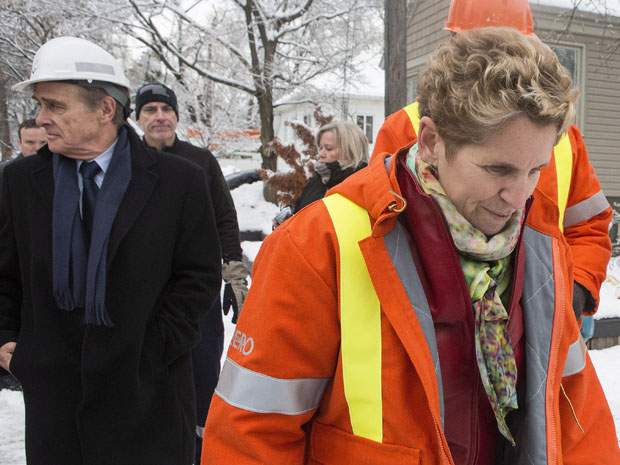
kathleen-wynnne“There’s never a wrong time to do the right thing,” Dalton McGuinty loved to say whenever stuck for an explanation for some horrific mistake. Why did his government spend $1.2 billion to not build two power plants after repeatedly insisting the projects would go ahead come hell or high water? Well, “there’s never the wrong time to do the right thing.” Smile. Next question.

His successor, Kathleen Wynne, has adopted a catchphrase of her own. “The cost of doing nothing is much, much higher than the cost of going forward ,” she’ll say when confronted with questions about some expenditure that has heads exploding across the province.

She deployed it Wednesday while seeking to justify the new tax on Ontarians that will accompany her cap and trade plan. Gasoline prices are expected to rise 4.3 cents a litre, while natural gas bills will increase about $5 a month.

Just in case the increases annoy Ontarians, Wynne came prepared: “The cost of doing nothing is much, much higher than the cost of going forward and reducing greenhouse-gas emissions,” she declared.

http://news.nationalpost.com/full-comment/kathleen-wynne-has-it-backwards-doing-nothing-would-have-saved-ontario-billions-in-electricity-boondoggles

The fuel of the future

WHICH source of renewable energy is most important to the European Union? Solar power, perhaps? (Europe has three-quarters of the world’s total installed capacity of solar photovoltaic energy.) Or wind? (Germany trebled its wind-power capacity in the past decade.) The answer is neither. By far the largest so-called renewable fuel used in Europe is wood.

20130406_WBP001_0In its various forms, from sticks to pellets to sawdust, wood (or to use its fashionable name, biomass) accounts for about half of Europe’s renewable-energy consumption. In some countries, such as Poland and Finland, wood meets more than 80% of renewable-energy demand. Even in Germany, home of the Energiewende (energy transformation) which has poured huge subsidies into wind and solar power, 38% of non-fossil fuel consumption comes from the stuff. After years in which European governments have boasted about their high-tech, low-carbon energy revolution, the main beneficiary seems to be the favoured fuel of pre-industrial societies.

The idea that wood is low in carbon sounds bizarre. But the original argument for including it in the EU’s list of renewable-energy supplies was respectable. If wood used in a power station comes from properly managed forests, then the carbon that billows out of the chimney can be offset by the carbon that is captured and stored in newly planted trees. Wood can be carbon-neutral. Whether it actually turns out to be is a different matter. But once the decision had been taken to call it a renewable, its usage soared.

read more: Environmental lunacy in Europe Apr 6th 2013 | From the print edition

Thunder Bay power plant fires up on biomass
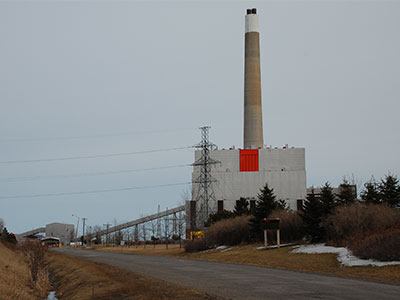
Thunder-Bay-Generating-Station_CroppedOntario Power Generation (OPG) announced Feb. 8 that its former coal-burning Thunder Bay Generating Station is officially fuelled on “advanced biomass.”

The fuel, also known as a black wood pellet, has similar handling and storage characteristics to coal. It’s made from lumber mill sawdust and is imported from Norway.

The OPG release said it contains 75 less nitrogen oxide than coal emissions and virtually no sulphur dioxide.

The cost of the conversion was $5 million.

Provincial Energy Minister Bob Chiarelli said this new fuel technology makes Ontario “a leader” in building clean energy systems.

read more: Northern Ontario Business, Published on: 2/12/2015 By: Northern Ontario Business staff

UK power stations are burning wood from US forests—to meet renewables targets

Trucking wood pellets to a port and transporting them by ship isn’t a deal-breaker.

9600652955_e631da6d38_k-640x373Last year, 6 million tonnes of “wood pellets” harvested from forests in Louisiana, Georgia, Florida, Alabama and Virginia were shipped across the Atlantic, to be burnt in renewable “biomass” power plants. This was almost double the 2013 figure—the US “wood pellet” industry is booming.

Demand is largely driven by European countries wanting to meet targets set out in the EU’sRenewable Energy Directive. Half of the pellets exported from the US were used to generate electricity in Britain’s massive Drax power station, which is slowly converting from coal to biomass in order to reduce carbon emissions and claim valuable “Renewable Obligation certificates” for green electricity. So can it really be sustainable to transport wood halfway round the world to burn in a power station?

Many environmentalists don’t think so. A consortium of NGOs recently argued that the EU should exclude wood from its renewable energy targets. They claim the industry is felling large areas ofhardwood wetland forests across the south-eastern US, causing a loss of biodiversity and a net increase in carbon emissions. Even when the forest regrows it does not store as much carbon in biomass and soils as the original—and it’s certainly not as good for wildlife.

read more: by David Styles – Feb 23, 2016, Ars Technica UK


GROUNDBREAKING INFRASOUND STUDY RESULTS UNVEILED

Engineer questions government wind turbine sound testing methods

24/02/2016, 03:11

By Barb McKay

An acoustics engineer is questioning the Ontario government’s methods for setting baseline sound limits for wind turbines after field testing was recently conducted in Kincardine.

Todd Busch, project manager for Swallow Acoustic Consultants Ltd., was in front of the Municipality of Kincardine council during its meeting last Wednesday to go over data from a study conducted within the boundaries of the Armow Wind Project last fall. Swallow was contracted by the municipality to study baseline acoustic and infrasound levels prior to the 92-turbine, 180-megawatt project becoming operational.

Engineers conducted interior and exterior sound testing at five homes within the project area between Oct. 30 and Nov. 14, 2015, using special microphones designed specifically to record infrasound (sound not picked up by the human ear). The sound measurements account for sound levels from wind in exterior testing.

Busch said when a noise impact study was conducted with audible sound testing for Armow Wind in 2013, engineers who did the study declared that the project would comply with Ontario Ministry of the Environment noise limits for industrial wind turbines. He said the study was done using an average wind speed at a particularly quiet site and a measurement of seven decibels was added to factor in sound levels at a higher wind speed. In the noise impact assessment summary, Busch said sound levels were calculated at between 37 and 39.8 decibels. The noise level limit set by the province is 40 decibels. Infrasound levels were not tested.

read more: http://www.independent.on.ca/site/?q=node/5732

Big Wind the documentary is on TVO Wednesday February 24, 2016 at 9pm and midnight

http://tvo.org/video/documentaries/big-wind

Air Date: Sep 20, 2015

Length: 57:48

Available Until:

Mar 25, 2021

About this Video

“Big Wind” explores the conflict over the controversial development of industrial wind turbines in Ontario. It is a divisive issue that at times pits neighbour against neighbour, residents against corporations, and the people against their government.


Polish Ombudsman stands up for the rights of residents

How can we help people who have wind turbines above their homes?

Earlier this month Poland’s Commissioner for Human Rights (CHR) addressed this question to three competent Ministers, for the Environment, Infrastructure and Construction, and Health, demanding that the rights of people residing in the vicinity of wind farms be adequately protected.

The official website of Poland’s CHR explains (in English) that:

“The Commissioner’s Office receives more and more letters from citizens complaining about a deterioration of their health due to the wind turbines’ influence, as well as about the wind farm locating and building procedures. During a meeting with dr. Bodnar, the residents of the Suwałki Region also expressed their concern about the safe placement of wind farms. The Commissioner has contacted the Minister of Environment, the Minister of Health and the Minister of Infrastructure and Construction on that matter.”
(https://www.rpo.gov.pl/en/content/rights-residents-living-near-wind-farms).

The page also includes links to a report on dr. Bodnar’s meeting with residents of the Suwalki region and to the three official intervention letters addressed to the Ministers for the Environment, Infrastructure and Construction, and Health.

read  more: http://en.friends-against-wind.org/news/poland-s-ombudsman-stands-up-for-the-rights-of-residents

William J. Seitz and Kevon Martis: Trespass zoning is wind energy’s secret subsidy

There was a time when the environmental movement opposed noise pollution, fought industrial blight, and supported “little guys” whose quality of life was threatened by “corporate greed.”

But that was a long time ago, before wind energy.

The American Wind Energy Association and its allies at the Sierra Club and the Ohio Environmental Council continue to press the Ohio legislature to overturn recent wind energy siting guidelines that corrected a grievous fault in the earlier state guidelines.

The old regulations measured turbine setback distances and noise limits from the 500 foot to 600 foot tall wind turbines from the foundation or bedroom windows of neighboring homes. The new regulations established by the legislature measure setback distance and noise limits from neighboring property lines. Establishing siting regulations from property lines is standard practice for all other land use regulations. After all, homeowners are not confined to their homes. They and their kids like to play in the yard, enjoy outdoor picnics, or watch sunsets from patios and decks.

By measuring noise and setbacks for wind turbines from neighboring homes rather than property lines, the old law essentially awarded wind developers an uncompensated nuisance noise and safety easement across private property even though that neighboring parcel was not leased to the wind developer.

read more: February 19th, 2016 By William J. Seitz and Kevon Martis – Contributing Columnists


Bill 161 2016 An Act to prohibit harmful electrical ground current

Preamble

f7e12810-fb3c-4932-8ff8-c932b2423701The laws of physics for electrical engineering require that electrons flowing from a substation transformer return there to complete the circuit. This is normally accomplished by the use of neutral wires provided by an electrical distribution or transmission system. However, if those wires provide more than one neutral path for the electrical current to use to complete the circuit, the current will use the earth’s surface as the path of least resistance and, in that way, can travel through yards, buildings, fields, human beings and animals.

This ground current pollution is a major problem for hospitals, manufacturing plants and farms. On farms, the levels of ground current pollution can become so high that human beings and animals feel electrical shocks. These shocks disrupt the comfort of human beings and animals and can harm their health and adversely affect farm income. Adverse effects can also occur even if there are no shocks.

As we increase our use of electric power in Ontario, the potential for ground current pollution will also increase. This can result from a combination of an antiquated distribution system in some areas, inadequate neutral returns, multiple grounded neutral conductors and poor quality of electricity generated by electronic equipment.

Therefore, Her Majesty, by and with the advice and consent of the Legislative Assembly of the Province of Ontario, enacts as follows:

read more: http://www.ontla.on.ca/web/bills/bills_detail.do?locale=en&Intranet&BillID=3677

George Smitherman’s High Principle

Yesterday evening, former MPP George Smitherman appeared as a witness supporting Windstream in its $475 million NAFTA suit against the Canadian government. Over the course of about 2 hours, Mr. Smitherman delivered what appeared to me to be a broadside against the Canadian taxpayer with little push back from Canada’s lawyers.

Mr. Smitherman was asked to introduce himself to the Tribunal. He served three terms as an MPP, held portfolios of Health & Long Term Care and Energy & Infrastructure, and served as Deputy Premier. He explained that in the McGuinty government, a handful of top officials spoke with the authority of the Premier on issues of policy and that all major policy initiatives or changes in direction had to be cleared by “The Centre”, meaning the Premier’s Office.

After a very brief examination-in-chief, he was cross-examined by lawyer Shane Spelliscy, who like many on the legal team for Canada, was one of the litigators in the Mesa case (pending a decision since that hearing ended in 2014).

Initial questioning established that Mr. Smitherman was active in the green energy sector in the year after leaving government but his primary activity in this period was to run for mayor of Toronto. Over the course of his testimony, he made several witty remarks about his unsuccessful foray into municipal politics.

Central to the government’s case is a twisty-turny hypothesis. Canada is saying the Ontario government was not prepared from a regulatory perspective to accommodate the development of the off-shore wind industry and that Windstream should have known this fact and abandoned its effort to develop the 300 MW, 130 turbine off-shore wind power project the Ontario government had contracted Windstream to build. In aid of this hypothesis, Mr. Spelliscy presented Mr. Smitherman with a press release issued after he had resigned from the government, the gist of which was that the government was putting off-shore wind development on hold pending the need for more “research”. Mr. Smitherman’s response was, ‘No one discussed with me during the development and early FIT period that the government wasn’t ready to accommodate the development of off-shore wind’ (My effort to record direct quotations should be taken as approximations only.) Elsewhere over the course of the testimony, Mr. Smitherman stated that the ministers of Environment and Natural Resources during his time expressed strong support for the Green Energy Act and the rapid expansion of green power production.

read more: Posted by Tom Adams on 17 February 2016

Niagara Field Naturalists warned of impacts of wind power project on wildlife

A SHOUT OUT TO OUR VERY OWN LORETTA SHIELDS.  IT’S AN HONOR TO WORK ALONG SIDE WITH SOMEONE WHO BRINGS SUCH PASSION AND KNOWLEDGE TO THE TABLE.  

ON BEHALF OF ALL MEMBERS OF MAWT.  INC.

THANK YOU!!

Huge Niagara project to be built in Blandings turtle habitat, on migratory bird pathways, and near wetlands. Wind power developers get a free pass under the Green Energy Act

Niagara area resident Loretta Shields recently gave a presentation to the Niagara Peninsula Field Naturalists on the impact of wind power development on the environment and specifically, the fact that the Green Energy Act allows corporate wind power developers to escape the protections afforded by Ontario’s laws created for endangered and at-risk wildlife.

Here is an excerpt from a report on the presentation:

ShortEaredOwl
The Short-eared owl: one of many species affected by Niagara wind power project. But we’ll never know how many, due to incomplete or absent studies

One serious concern of the project approval is the incomplete physical site investigations within the 120-metre zone of investigation for the industrial wind turbines. In most of the turbine locations, the 120-metre zone of investigation includes neighbouring lands where the landowners are not participants of this project.  Loretta showed several field notes where the surveyors for this project could not fully conclude the ecological land classification within the survey area (i.e., “interior not visible, only edge”);  30 percent of the field notes were inconclusive for reptile hibernacula, bat roosting areas, stick nests and vernal pools.

While the Renewable Energy Regulations do allow for alternative site investigations (surveys from the roadside instead of physical site surveys), these must be supported by an explanation as to why it was not reasonable to physically survey the site. An explanation (other than it was not reasonable) was not provided in the Natural Heritage report provided by the wind energy company, but the project was approved nonetheless.

Read the full report here: LorettaShieldsPresentationReport

via http://www.windconcernsontario.ca/niagara-field-naturalists-warned-of-impacts-of-wind-power-project-on-wildlife/