We are Strong
We are Not Gone
We are Not Silent
Bearing Witness
We Do Not Consent


We are Strong
We are Not Gone
We are Not Silent
Bearing Witness
We Do Not Consent
The town of Forest, WI has concerns over the end results of the Highland Wind Farm. Forest has spent more than half-a-million dollars fighting the project at the Public Service Commission. The devastation from the Shirley Wind Farm is a prime example as to why the town is fighting this project. (Video 5:06 in length)
Shot/Edited: Tyler Grimh
Executive Producer: Jodi Lyon-Grams
Producer: Madison Lee

April 20, 2020|News Release; University of Gothenburg
Wind turbine noise (WTN) influences people’s perception of the restorative effects of sleep, and also has a small but significant effect on dream sleep, otherwise known as REM (rapid eye movement) sleep, a study at the University of Gothenburg, Sweden, shows. A night of WTN resulted in delayed and shortened REM sleep.
Knowledge of how sleep is affected by WTN has been limited to date. Research involving physiological study of its impact using polysomnography, the top-ranking method of sleep recording, is lacking.
Studies carried out in the Sound Environment Laboratory at the Department of Occupational and Environmental Medicine in Gothenburg are adding new knowledge in the field. Polysomnography involves using electrodes attached to the head and chest to record brain activity, eye movement, heart rate, etc. during sleep.
Of the 50 participants in the new study, 24 had been living within one kilometer of one or more wind turbines for at least one year. The other 26, the reference group, did not live near wind turbines.
Kerstin Persson Waye, Professor of Environmental Medicine at Sahlgrenska Academy, University of Gothenburg, is the corresponding author in the study, published in the journal Sleep.
“We wanted to find out whether people exposed to noise from wind turbines over time become more sensitive or more habituated to WTN, so that their sleep may be affected differently than someone who doesn’t live near any turbines,” she says.
The participants spent three nights in the Sound Environment Laboratory, one for acclimatization and then, in a random order, one quiet night and one with four separate periods of WTN. The sounds that were used were modeled based on outdoor measurements from several wind turbines, and was filtered to correspond with the sound insulation of a typical Swedish wooden house. Exposure was further modeled, to correspond to sleeping with a closed window and window ajar respectively.
The sounds were chosen to represent relatively unfavorable conditions, with a slightly higher average outdoor noise level than is currently permitted in Sweden. This level corresponded, however, with a low indoor noise level — below the levels at which sleep had previously been found to be affected by, for example, traffic noise.
During the night with WTN, according to the physiological measures, the participants spent an average of 11.1 minutes less in REM sleep, which they entered 16.8 minutes later, than during the quiet night. The proportion of time they spent in REM sleep was 18.8% for the night with WTN, compared with 20.6% for the quiet night — a small but statistically significant difference that, moreover, was independent from habituation to WTN.
There were no statistically significant differences in other sleep parameters, such as number of awakenings, total sleep time, time in deeper (non-REM) sleep stages or fragmentation of deep sleep, and heart rate. However, rhythmic sound variations appeared to disturb sleep, especially with closed windows.
Besides the physiologically based measurements, participants filled out a questionnaire on their sleep quality and how tired or rested they felt. Both groups reported that they slept worse during nights with WTN.
The study gave no indication of the habituation effect or increased sensitivity in the participants exposed to wind turbines in their home environment. However, the group that lived close to wind turbines reported worse sleep overall, even during the quiet night.
“Sleep disturbance, a negative health effect according to the World Health Organization (WHO), can in itself contribute to chronic diseases. However, we can’t draw conclusions from this study on long-term health impact. Further studies should, if possible, investigate sleep in people’s home environments and include longer exposure time,” Kerstin Persson Waye concludes.
###
Title: A laboratory study on the effects of wind turbine noise on sleep: results of the polysomnographic WiTNES study; https://doi.org/10.1093/sleep/zsaa046
Source: EurekAlert!
99.1 FM CKXS|March 6, 2020
Monte McNaughton says he’s committed to the promised health hazard investigation into contaminated water wells in Chatham-Kent.

The Lambton-Kent-Middlesex MPP says it was a government commitment and things are moving forward.
“The RFP process is happening as we speak to hire an independent company to do the water well testing,” McNaughton says. “This is an independent body, five scientists including a local geologist.”
McNaughton says as many as 200 home owners should be contacted in the next four months…….

thejournal.ie|by: Aodhan O Faolain|February 26, 2020
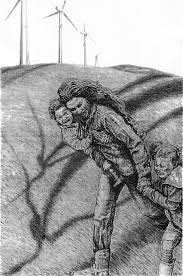
THREE SIBLINGS WHO claimed their family had to abandon their home due to illnesses allegedly caused by a nearby windfarm have secured €225,000 as a settlement of their High Court damages claims.
The awards, were part of settlements made without admission of liability, made to Laura, David and Jack Kelleher.
The siblings claimed that they, along with their parents, had to leave their family home at Gowlane North, Donoughmore, Cork in late 2016 several months after a ten-turbine wind farm went into operation.
They claimed that the noise, vibrations and shadow flicker from the turbines, located just over 700m from their family farm, resulted in them suffering from various illnesses.
These included nosebleeds, ear aches, skin rashes, swollen and painful hands, loss of power in their limbs, sleep disturbance, and headaches.
Through their father Valentine Kelleher, the three siblings sued Green Energy Supply Ltd, which owns and operates a wind turbine installation known as Knockduff Wind Farm in Cork.
The actions were also against company director Michael Murnane of Gortyleahy, Macroom, Cork, who is the owner of Green Energy Supply….
Will wind turbine debate blow ill will on TVO’s “Political Blind Date”?
Published on: February 19, 2020|By: Frances Learment

A Port Elgin couple who allege the Unifor wind turbine in Port Elgin caused a long list of debilitating health issues will be part of the conversation Feb. 25 on TVO’s “Political Blind Date.”
The edition features Bill Walker, PC MPP (Bruce-Grey-Owen Sound) – who has called for a moratorium on new wind power development – and Associate Minister for Energy, and Peter Tabuns, NDP MPP (Toronto-Danforth) and the debate will include hydro rates, energy policies, and community windmills…..

Original posted FaceBook January 1, 2020 on Vents et Territoires – Contre l’éolien industriel


So it begins and to be continued. Christine Burke started legal action challenging the Ontario Government, Ministry employees and the Wind companies. October 30, 2019 @ 10am is the next scheduled court date.
SAVE THE DATE come out and show your support. Car pooling is encouraged.
Next Court Date: October 30, 2019 @ 10am
(Dates and times subject to change on short notice)
Location: Blenheim court house, 21633 Communications Rd, RR#5, Blenheim
“The accusations – largely concerning the potential for contamination of private water wells by black shale and hazardous metals in the North Kent area – were submitted by Dover resident Christine Burke. The private prosecution charges – filed under section 14 of the Environmental Protection Act – name Ontario Environment minister Jeff Yurek, the Ministry of the Environment and several wind turbine companies with projects in the area.”
Wind case put over to Oct. 30|by: Trevor Terfolth|Chatham Daily News| August 14, 2019
Court adjourned until October for wind turbine, Environmental Protection Act charges|CBC News|August 14, 2019
Lawyers to review 2,000 pages of documents in CK water contamination case|
“When the pile driving and construction of the wind turbines started on our shallow aquifer our drinking water slowly turned black and is now unsafe to consume, cook with or even bathe in,” she says in court documents. “This issue continues today and we are not the only family affected by this devastation.”
Engie Canada, Pattern Energy Group and Samsung Renewable Energy are all also charged in relation to their work building the East Lake St. Clair Wind Farm and North Kent 1 Wind Farm.”
Ontario minister, wind companies charged under environmental protection act|| Published July 26, 2019- The Star
 Mothers Against Wind Turbines Inc.