
Time for the truth in Ontario

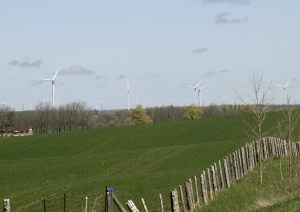
Victoria Day weekend in Canada is a time for picnics and fun with family and friends, for many people.
One set of grandparents living on a farm in Ashfield-Colborne-Wawanosh Township in Huron County thought that would be fun too, and were looking forward to having their two young granddaughters come and stay for a lovely weekend in the country.
But it was not to be.
Early on the morning of the holiday Monday, the grandmother said, “there was a horrible tonal* noise — whine and whooing that made staying on the second level of our home intolerable.”
Later on that same morning, she said, she had “severe pressure and pain” in her ear.
Then, “Our eight year old granddaughter complained of a ‘sore forehead’.” The child has complained of sore ears at times in the past while visiting her grandparents’ home, but never at any other time.
Outside, the family discovered, the whining and whooing noise was everywhere.
“We had to leave here [our home] with those little girls,” the grandmother said.
“We have no freedom to do as we want in our private surroundings. It makes me weep.”
The family, who wishes to remain anonymous, like so many other families forced to endure the noise and vibration from wind turbines. They live with 11 wind turbines within two kilometres of their home, the closest of which is just over 700 metres from the house.
They filed a complaint with the Ministry of the Environment and Climate Change District Office, and added this statement:
“You are harming us.”
Ontario Minister for the Environment and Climate Change Glen Murray recently promised in the Legislature that his staff were responding to such complaints and that they would ensure the rules on noise emissions would be enforced.
Ontario families who did not ask to be exposed to these noise emissions deserve to have the Ministry fulfill its mandate, and protect all citizens from harm.
The Spills Action Line for the MOECC can be reached at 1-800-268-6060 to report excessive wind turbine noise, vibration and shadow flicker. If you call during business hours, you will be referred to the local Business Office. From the website:
You must report a spill if it:
SOURCE: Wind Concerns Ontario
ABSTRACT:
The topic of the risk of harm to human health associated with wind energy facilities is controversial and debated worldwide. On March 29, 2017, Carmen Krogh presented at the University of Waterloo which considered some of the research dating back to the early 1980’s. A snapshot of some of the current research available in 2017 was provided. The research is challenged in part by the complexities and numerous variables and knowledge gaps associated with this subject. This presentation explored some of these research challenges and provided an update on the growing body of evidence regarding human health risk factors. Included was the emerging research indicating risks to those working in this field.
BIO:
Carmen M Krogh is a full time volunteer and published researcher regarding health effects and industrial wind energy facilities and shares information with communities; individuals; federal, provincial and public health authorities, wind energy developers; the industry; and others. She is an author and a co-author of peer reviewed articles and conference papers presented at wind turbine scientific noise conferences. Ms Krogh is a retired pharmacist whose career includes: senior executive positions at a teaching hospital (Director of Pharmacy); a drug information researcher at another teaching hospital; a Director of a professional organization; and a Director (A) at Health Canada (PMRA). She is the former Director of Publications and Editor in Chief of the Compendium of Pharmaceuticals and Specialties (CPS), the book used by physicians, nurses, and health professionals for prescribing information in Canada.
 Video: University of Waterloo- Livestream: Industrial Wind Turbines Can Harm Humans
By Nina Pierpont, MD, PhD.
The French National Academy of Medicine has used this document in an attempt to redefine “Wind Turbine Syndrome”:
In summary, the health nuisances seem to be primarily visual (disfigurement of the landscape and its psychosomatic consequences) and to a lesser degree noise (of an intermittent and random character as generated by wind turbines of older generations). Medically, wind turbine syndrome is a complex and subjective entity with several factors contributing to its clinical expression, some related to the wind turbine itself, others to the complainants and to the social, financial, political, and communication environment (p. 14).
To reach this conclusion, the authors first review turbine noise levels and hearing thresholds, concluding that noise levels are low. They then review the following potential mechanisms:
The authors continue:
The authors proceed to discuss how to ameliorate the effects of wind power development, assuming (as they do) that wind energy is a political given. They propose extending the setback distance from 500 to 1000 m, while recognizing that this is neither politically feasible nor likely to be effective with larger turbines (p. 17).
They discuss caps on dBA noise levels relative to pre-construction and suggest that post-construction enforcement should be improved (p. 15). They suggest design features that affect airflow over and around the blades or stop the turbines when noise thresholds are exceeded (p. 16).
They recommend better public discussion and profit-sharing:
Out-of-date on noise descriptions. Does not use the “wind turbine signature” of pulsatile infrasound/low frequency noise with duration of 4 to 100 msec, which is perceptible at sound pressure levels as low as 60 dB (Punch & James 2016, Cooper 2014).
Never mentions migraine as a clinical entity affecting 18% of women and 6% of men; individual differences are instead treated as a reason to discredit physiologic causation and discredit as psychological frailty the population affected. They cite 4 to 20% affected, saying this is so close to the 10% considered affected by traffic noise in Europe that it is acceptable. This is tantamount to defining a sacrifice population and includes blaming of victims.
All the recommended interventions are either in place, have been tried and are useless, or have been called for for years but require changes in human nature, reducing the recommendations herein to “tuttut, let’s all behave better.”
This document attempts to redefine “wind turbine syndrome” to represent factors which are actually not wind turbine syndrome. Wind turbine syndrome is the reaction of migrainous or motion-sensitive people to wind turbine acoustic emissions, the latter now well defined as sharply pulsatile lowfrequency noise. Wind turbine syndrome is different from hysteria or nocebo, as it occurs in people by surprise, who had no thoughts about the turbines before the turbines were installed and turned on and the symptoms began.
I challenge every member of the French working group and their consultants, listed in the report, who self-identifies as having migraine, motion sensitivity, or balance problems, or their family members, including children with developmental disorders such as autism in which auditory and position/balance processing are distorted, to spend a week in a wind park. This would be simple to accomplish and could lead to a tidy “exposure” experiment without ethical obstacles, as the authors believe that they could not be affected as they do not have the psychological limitations and shortcomings they blithely attribute to affected people and use as an excuse to dismiss them.
Nina Pierpont, MD, PhD
19 Clay St
Malone, NY 12953
518-483-6481 ph
518-207-4488 fax
pierpont@twcny.rr.com
References:
Jerry L. Punch and Richard R. James, “Wind Turbine Noise and Human Health: A Four-Decade History of Evidence That Wind Turbines Pose Risks,” The Journal at Hearing Health & Technology Matters (October 2016), 72 pp.
Steven Cooper, “The Results of an Acoustic Testing Program: Cape Bridgewater Wind Farm,” The Acoustic Group Report for Energy Pacific, 44.5100.R7:Msc (November 26, 2014), 224 pp.

Source: Friends Against Wind
 REPORT
The planned extension of the terrestrial wind energy sector raises an increasing number of complaints from associations of local residents reporting functional disturbances achieving what is known as the “wind turbine syndrome”. The aim of this report was to analyze the real health impact and to propose recommendations that could reduce its potential impact.
If the terrestrial wind does not seem to directly induce organic pathologies, it affects through its noise and especially visual nuisance the quality of life of a part of the residents and thus their “state of complete physical, mental and social well-being “Which today defines the concept of health.
In order to improve the acceptance of the wind and to reduce its direct or indirect health impact, the working group recommends:
– to ensure that during the authorization procedure the public inquiry is carried out with the aim of fully informing the local populations, facilitate consultation between them and the operators, and facilitate referral to the prefect by the complainants ,
– to allow the installation of new wind turbines only in areas where there has been consensus among the population concerned as to their visual impact, given that the increase in their size and their planned extension may alter Sustainably the landscape of the country and to elicit opposition and resentment on the part of the riparian population – and general – with their psychic and somatic consequences.
– to systematize acoustic compliance checks, the periodicity of which must be specified in all authorization orders and not on a case-by-case basis,
– to encourage technological innovations likely to restrict and “bridle” in real time the noise emitted by the wind turbines and to equip the oldest wind turbines,
– to reduce the threshold for triggering emergence measures to 30 dB A outside the dwellings and to 25 inside, (while leaving the wind turbines under the regime of the Classified Installations for the Protection of the Environment) ,
– undertake, as recommended in the previous report, a prospective epidemiological study on health nuisances.
* Member (s) of the Academy of Medicine
The authors state that they have no conflict of interest in relation to the content of this report.
May 21.2018: Bulletin in French via Wind Watch
READ ORIGINAL BULLENTIN IN FRENCH- link no longer active May 21.18
Download Report pdf (in French)
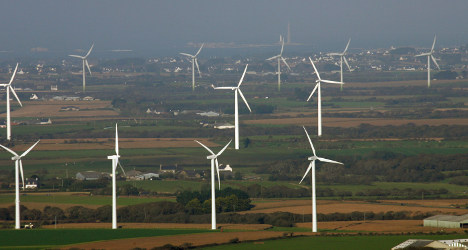
 Conclusions: Physiological measurements indicate that nights with low frequency band amplitude modulation and LAEq,8h=45 dB, slightly open window (LAEq,8h=33 dB indoors) impacted sleep the most. In particular, amplitude modulation and the presence of beating were important constituents of the wind turbine noise contributing to sleep disruption
Presented: Buenos Aires – 5 to 9 September, 2016 PROCEEDINGS of the 22nd International Congress on Acoustics
Wind Farm Noise: Paper ICA2016-440 Physiological effects of wind turbine noise on sleep Michael G. Smith(a), Mikael Ögren(b), Pontus Thorsson(c), Eja Pedersen(d) and Kerstin Persson Waye(e) (a) University of Gothenburg, Sweden, michael.smith@amm.gu.se (b) University of Gothenburg, Sweden, mikael.ogren@amm.gu.se (c) Chalmers University of Technology Sweden, pontus.thorsson@akustikverkstan.se (d) Lund University, Sweden, eja.pedersen@arkitektur.lth.se (e) University of Gothenburg, Sweden, kerstin.persson.waye@amm.gu.se
Our Experiment in Environmental Ethics
To the Editor:
Back in the 1960s, Yale psychology professor Stanley Milgram conducted a research experiment whose results shocked the nation.
Participants were told that they were taking on the role of ‘teacher’ in a study of methods to improve learning. An authority figure told the ‘teacher’ to administer increasingly powerful electric shocks to a ‘learner’ in the next room whenever a question was answered incorrectly. There actually were no shocks and the learner was part of the research team, but the ‘teacher’ heard increasing cries of pain with each ‘shock’ administered. Even as the intensity of the shocks approached the maximum of 450 volts, the authority insisted that the shocks should continue – that the anguished screams, the banging on the wall, the pleas about heart conditions, and ultimately the ominous silence from the other room should all be ignored.
It was believed that most people would defy the authority figure once they became aware that the shocks were seriously harming another person. But that was not the case: almost 2/3 of participants continued to obey the authority figure, administering ‘shocks’ until the very end.
I was reminded of the Milgram experiments recently while attending two Public Service Board hearings on new proposed sound limits for industrial wind facilities. Because there have been problems, a lower standard of 35 dBA, (down from 45 dBA) has been proposed. (The World Health Organization recommends 30 dBA.)
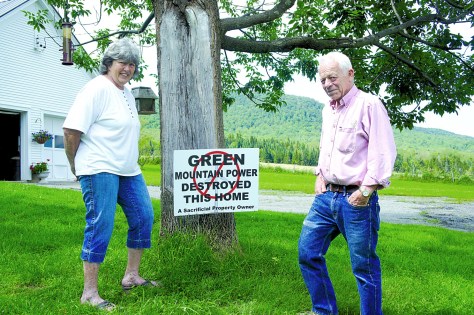
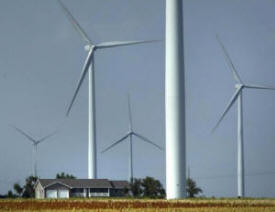
Those who live close to Vermont’s existing industrial wind facilities have described a range of symptoms that include sleeplessness, headaches, ringing ears, and nausea. For fifteen months, Shirley Nelson, who lived less than a mile from the Lowell wind project, kept detailed recordings of decibel readings (from a monitor installed at their home by the developer, Green Mountain Power) and the health effects she and her husband were experiencing. Entries from her ‘noise diary’ clearly demonstrate the sustained and cumulative adverse effects of living near the turbines at the previous standards.

The Therrien family, who lived near the turbines in Sheffield, pleaded for years for relief – from the PSB, the wind developer, the town of Sheffield, former governor Shumlin and other state officials – to no avail. Their symptoms? “Disturbed sleep, headaches, tinnitus (ear ringing), sense of quivering or vibration, nervousness, rapid heartbeat, high blood pressure, nausea, difficulty with concentration, memory loss and irritability.”
At the Montpelier hearing, the lawyer who represents the proposed Swanton Wind project told the Board to ignore these symptoms – dismissing them as coming from “complainers” and “outliers” whose testimony was just “anect-data”. Instead, he said, the Board should focus solely on submitted peer-reviewed studies that show no health impacts from proximity to industrial wind facilities
In other words: trust authority; ignore the pleas from the other room; continue administering the shocks.
What about other peer-reviewed studies showing that infrasound from industrial wind turbines does affect human health? And it’s hard to dismiss as mere “anect-data” the fact that deteriorating health forced the Therriens and their two young children to abandon a home they loved.
At the hearings, several residents of Lowell (perhaps believing that new standards would threaten their cash cow) not only implied that their neighbors were lying about the health impacts they’ve experienced, but claimed to live much closer to the turbines – with no ill effects – than they actually do. And the few supporters drummed up by VPIRG and industry promoter Renewable Energy Vermont callously waved off the impacts on humans, wildlife, land and water. Some actually called for raising the noise standard to make it easier on the industry.
Reading from talking points generated by VPIRG, someone commented, “There are only eight families complaining….”
What is the magic number that will elicit empathy from VPIRG? Thirty families? A hundred?
In the Milgram study, the pain the ‘teachers’ believed they were inflicting was justified by the supposed benefit of a better understanding of human learning. In Vermont, the justification from developers is that industrial wind is a ‘clean’ solution to climate change. And there are politicians, ‘environmental’ celebrities and non-profit organizations willing to put on a white coat and hold a clipboard to pose as the ‘authority’ on the industry’s behalf.

But for those who find clear-cutting, blasting, and bulldozing mountain ridgelines, degrading water sources, eliminating wildlife habitat, and killing birds and bats ‘clean’ and ‘green’, take a look at before-and-after photos of entire valleys in China destroyed by the mining of rare earth metals, a critical component in industrial wind turbines. Where there were once thousands of acres of carbon-sequestering grasslands there are now mountains of toxic sludge. Four thousand tons of material must be mined to produce the two tons of metals needed for each 3-megawatt turbine.
Production tax credits, the sale of renewable energy credits, and the requirements of state renewable energy portfolios have made the buildout of industrial ‘renewables’ very profitable for corporations, even when the climate benefits are marginal or non-existent. Utility law professor Kevin Jones at Vermont Law School describes all this as a ‘shell game’ that has actually led to an increase in Vermont’s greenhouse gas emissions.
Clever marketing has induced some of us to engage in moral relativism, ethics without substance, and environmentalism at the cost of its soul. If you find yourself arguing in favor of throwing someone under the bus because your favorite pop-‘environmentalist’ says it’s necessary, ask yourself what you would have done in Milgram’s lab.
Suzanna Jones lives off the grid in Walden.
Suzanna Jones
Walden, Vermont
Letter to Editor Published Caledonia Record on May 22, 2017


For anyone experiencing shadow flicker from turbines, and especially if you have been told erroneously NOT to report it, please read this message to us from the MOECC. We advise everyone to report to the MOECC, and the wind power developer but above all, to always include the MOECC in your reporting. Be sure to get an Incident Report number when you call.
MOECC: Thank you for your inquiry. The Ministry remains committed to reviewing and assessing all complaints related to the operation of a wind facility.
To register a complaint, please contact either the local MOECC district office (during business hours), or the Spills Action Centre (after hours).
Complaints received by the Spills Action Centre will be assessed and forwarded to the appropriate MOECC district office for action.
I thank you again for your inquiry.
Shannon Seko
Senior Manager, Spills Action Centre
Ministry of the Environment and Climate Change
5775 Yonge Street, Suite 500
Toronto, ON M2M 4J1
Spills Action Centre -Reports after business hours can be made by calling:
Business Hours– Report to your local District Office
 Abstract: Canada has ratified international conventions which recognize the individual’s right to the enjoyment of the highest attainable standard of health. Despite the adoption of these covenants governments sometimes support policies and practises which trade off individual human health with other conflicting interests. This review evaluates the individual’s right to health against government policies and practices which support wind energy deployment in Canada. Our analysis presents government documents, peer reviewed literature, and other references which support the conclusion that wind energy deployment in Canada can be expected to result in avoidable harm to human health. This harm conflicts with contemporary health and social justice principles. Governments have a responsibility to help Canadians maintain and improve their health by generating effective responses for the prevention of avoidable harm. Individuals have a right to make informed decisions about their health. Knowledge gaps and potential risks to health should be fully disclosed. Individuals should not be exposed to industrial wind turbines without their informed consent.
Keywords: Wind Turbines, Policies and Practices in Canada, Harm to Human Health, Human Rights, Social Justice
Krogh, C. and Horner, B. (2017) Human Health, Rights and Wind Turbine Deployment in Canada. Open Journal of Social Sciences, 5, 166-185. https://doi.org/10.4236/jss.2017.55012

 Abstract: Environmental noise pollution is an ever-increasing problem. The various sources: Aircraft, Road Traffic and Wind Farms are reviewed, but the latter source, because of the intrusive, impulsive and incessant nature of the sound emitted, is the major focus of this review. Wind turbines produce a range of sound but it is the Infrasound and low frequency noise which deserves special attention. Infrasound is considered to be below the range of human hearing so it is not measured in routine noise assessments in the wind farm planning process. There is, however, evidence that many can register it and a sizeable minority is sensitive, or becomes sensitised to it. The actual route of transmission still requires elucidation. The net effect of the entire range of noise produced is interference with sleep and sleep deprivation. Sleep, far from being a luxury is vitally important to health and insufficient sleep, in the long term, is associated with a spectrum of diseases, particularly Cardiovascular. The physiological benefits of sleep are reviewed, as is the range of diseases which the sleep-deprived are predisposed to. Governments, anxious to meet Green targets and often receiving most of their advice on health matters from the wind industry, must commission independent studies so that the Health and Human Rights of their rural citizens is not infringed. Public Health, in particular, must remember its roots in Utilitarianism which condoned the acceptance of some Collateral Damage provided that the greatest happiness of the greatest number was ensured. The degree of Collateral Damage caused by wind farms should be totally unacceptable to Public Health which must, like good government, fully exercise the Precautionary Principle. The types of study which should be considered are discussed. Indeed, the father of Utilitarian Philosophy, Jeremy Bentham, urged that government policy should be fully evaluated.
Keywords: Environmental Noise Pollution, Wind Farms, Infrasound, Health Impacts
Evans, A. (2017) Environmental Noise Pollution: Has Public Health Become too Utilitarian? Open Journal of Social Sciences, 5, 80-109. https://doi.org/10.4236/jss.2017.55007
 Mothers Against Wind Turbines Inc.