Category Archives: Health

Wind and water, right and wrong

Right-Wrong

The Chatham Voice|January 15, 2018| Letter to Editor

Sir: This wind-water issue in north Chatham-Kent has been dragging on – it seems like – forever. Is it just me, or does it feel like there is a lot of crap going on around the issue that is successfully distracting people from a real and serious issue. The ‘crap’ I am referring to is the politics (of wind power), the personalities (of Randy Hope and Kevin Jakubec) and the lame excuses getting in the way of meaningful action.

First is the excuse that the windmill projects are not to blame for the water quality issues. The only thing I can say to that is to please stop insulting our intelligence! It is NOT a coincidence that these wells, which have produced clean water for years and years, suddenly and en masse became spoiled at the same time that the construction of these mega-project windmills started.

The second excuse is the sediment in the water, and whether it should be tested, how it should be tested, and whether it is harmful to human health. My answer to this is quite simple: if you don’t know for sure, err on the safe side. Test it for everything you can, and if there are potential risks that exist, consider them real.

Mayor Hope wants to argue that the residents are not drinking the sediment, but perhaps he was sleeping through the science class that taught us sediment is made up of particles ranging in size from those you can see to microscopic ones that are essentially dissolved and part of the solution that can pass through filters and be consumed.

What if 20 years down the road it is found out that the black shale sediment in these wells is the root cause of widespread health issues among the rural population in these wind turbine areas? Is council blessed with some crystal ball that allows them to foresee the future? Is council willing to take the risk of being wrong? Do they want that on their conscience?

Behind all this smoke and mirrors is a real issue about water, and the rights we all have to water. More importantly, and what should concern every citizen in C-K, is the obvious and deliberate disregard our elected leadership in Chatham-Kent has towards this right. Those council members that are not giving their all to defend the water rights of those citizens in Dover and Chatham Townships are the same members that the rest of us across C-K are going to be counting on to look after our best interests when/if our need arises, whatever that need may be. How does that make you feel? How much confidence do you have that they will do the “right thing” when your time arises?

Here is the bottom-line: Water security is a principle where no exception should be made and no ground be given. It’s one of those hills that are worth dying for and something community leaders are elected to valiantly protect. We cannot let these wind companies walk away making millions off C-K’s wind resources and leave behind a trail of spoiled wells and plastic water tanks. If they are going to leave here and benefit from C-K for years to come, the least they can do is leave CK the way they found it!

We should all be paying attention and contacting our local councillors, demanding that they do their job, do the right thing and stand up for the basic rights of their fellow C-K citizens. This is not about wind any longer, it is about water – a basic human requirement and right! And we should be judging our elected leaders by their actions on this important community issue. Municipal elections are less than a year away – let’s hope this issue has a solution in-principle by then.

Rick Youlton

Chatham, Ontario

Ministry of Environment & Climate Change Misleading the Public

windTurbineSyndrome1-814x400

January 17, 2018

A group of municipal officials sent a formal letter to the supervisor of the Owen Sound office of the Ministry of Environment and Climate Change (MOECC) following a presentation by the MOECC on the subject of wind turbine noise, noise reports, and adverse health effects.

While thanking manager Rick Chappell for his presentation, Stewart Halliday and Mark Davis, deputy mayors speaking on behalf of the group, said it was disappointing, and designed to mislead the public into thinking there are not problems with wind turbine noise in Ontario.

It’s time to stop denying the health effects, the Multi-Municipal group said, and get on to the business of alleviating the real suffering.

The letter follows.

M U L T I – M U N I C I P A L W I N D  T U R B I N E W O R K I N G  G R O U P

11 January, 2018

Andrew Barton, District Supervisor Andrew.Barton2@ontario.ca

Rick Chappell, District Manager Rick.Chappell@ontario.ca

Ministry of the Environment and Climate Change

101 –17th Street East

Owen Sound, Ontario N4K 0A5 Dear Mr. Barton and Mr. Chappell,

RE: Your presentation to our meeting of 14 December, 2017

Thank you for taking the time to make your presentation to the Multi-municipal Wind Turbine Working Group.

As councillors, we have had ongoing complaints from a significant number of residents living near wind turbines in our area who are suffering harm to their health. The video we presented to you documents the experience of some of those affected. It will also help you to understand the widespread anger and disillusionment with the MOECC’s failure to act on their behalf.

Much of the suffering could have been avoided had the local MOECC offices identified to their standards division that the public were adversely impacted (as confirmed by complaints and field monitoring) even when the turbines might have been compliant with the A weighted limits, since those limits were not appropriately corrected for the cyclical nature of the sound that is unmatched in nature, the tonality, the frequency spectrum, and the dominance of the sound above the local environment, and the other special characteristics of the wind turbine sound.

As recently revealed in FOI disclosure, there have been hundreds of complaints. Failure to resolve them, declining to shut down problematic arrays, and relying on proponent estimates of noise emissions only creates growing distrust of the MOECC.

Your presentation was disappointing. It appeared to be designed to mislead the public into thinking there are no health problems. You presented a rosy picture of a government that is busy working  on our behalf. But our experience shows that it is not.

You admitted at the meeting that you are aware that some people living near wind turbines are getting sick. You agree that IWTs cause annoyance and that leads to health issues. It is time to accept this and move forward— to protect the public so that they are not adversely impacted.

The urgent need for action is confirmed by the recent decision of Australia’s Administrative Appeals Tribunal (AAT) that declared: “We accept that the evidence points to an association and a plausible pathway between WTN and adverse health effects (of a physical nature) mediated by annoyance, sleep disturbance and/or psychological distress”.

The Ministry’s commitment to the Statement of Environmental Values (SEV) under the Ontario Environmental Bill of Rights (EBR) (1994) stipulates that it will use “a precautionary, science-based approach in its decision-making to protect human health and the environment” and that “it will place priority on preventing pollution [in this case harmful noise emissions] . . . minimizing the creation of pollutants that can adversely affect the environment. . . . The Ministry will ensure that staff involved in decisions that might significantly affect the environment is aware of the Ministry’s Environmental Bill of Rights obligations”.

You can no longer justify continued inaction by falsely assuming that “components of wind turbine sound including infrasound and low-frequency sound have not been shown to present unique health risks to people living near wind turbines”.

Scientific, peer reviewed work carried out on infrasound and wind turbines by NASA under the direction of the highly respected Dr. Neil Kelley between 1981 and 1988 demonstrated the infrasound component of wind turbine emissions and its adverse effect on nearby residents. The World Health Organization has issued warnings that “the evidence on low frequency noise is sufficiently strong to warrant immediate concern”; “low-frequency noise . . . can disturb rest and sleep even at low sound pressure levels”; “other primary physiological effects can also be induced by noise during sleep, including increased blood pressure; increased heart rate; … vasoconstriction; …cardiac arrhythmia”.

Ambrose and Rand (2011, 2012), Basner et al. (2014), Cooper (2014), James (2013), and Nissenbaum (2012) all related measurements of wind turbine emissions (including infrasound) directly to diarized symptoms reported by those living nearby. Thorne’s study (2013), which took place over seven years, collected acoustic data at a number of homes so that cumulative exposures could be estimated. It concluded that health is “seriously and adversely affected”. Swinbanks paper presented in Glasgow in 2015 did not support your position. The MOECC failed to refer to  published peer reviewed documentation by Tachibana and Kuwano in the Noise Control Engineering Journal 62(6) 503-520 (2015): “Wind Turbine Noise (WTN) generally has dominant low frequencies and is easily transmitted into buildings, causing residents psycho-acoustical annoyance and sleep disturbance”.

We would be happy to provide you with these documents.

How did it get to this state of affairs that local residents have a greater understanding of the problems than the people whose salaries are paid by the taxpayers to protect us? We await some timely, responsible, diligent enforcement action from your office to alleviate the suffering of our residents.

Yours truly,

Stewart Halliday, Deputy Mayor Municipality of Grey Highlands, Chair

Mark Davis, Deputy Mayor Municipality of Arran-Elderslie, Vice-chair

Reposted from Wind Concerns Ontario

IN MEMORIUM- Stephana Johnston

PRTNovZVP
Wind Warrior- Stephana Johnston

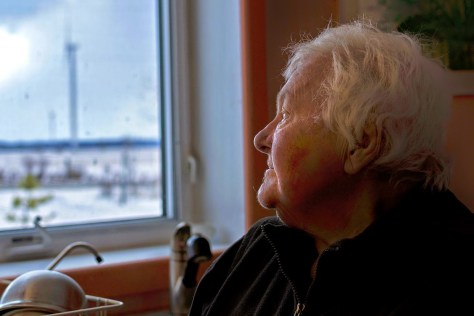
CLEAR CREEK, Ont. (20/11/14) -Stephana Johnston looks out her window at the wind turbines surrounding her home in Clear Creek, a hamlet on the shores of Lake Erie.  Johnston has been a fierce opponent of wind farms and believes they have plagued her with an array of heath problems.  When asked why many of her neighbours did not suffer from the symptoms she described, Johnston replied, “When a ship hits rough waters there’s always a few passengers that get sick, but no one doubts or ridicules them…All I’m asking for is that same respect.” Photo by Zachary Prong.

This slideshow requires JavaScript.


Noise Pollution & Birds with PTSD

Impacts of new noise from industrial wind turbines in our environment have created “habitat degradation” and have been an overriding issue in the fight to protect our families and environment. The response to the sound emitted from wind turbines is much more complex than how loud it is. There are reports globally of negative impacts due to exposure to wind turbines causing some families to abandon their homes for respite and relief. The following article highlights the impact of  industrial noise on birds resulting in measurable stress markers. Some birds become so stressed by noise pollution their response is similar to what is found in PTSD (post traumatic stress disorder).

bluebird 2
A western bluebird searches the ground from a perch. (Dave Keeling/California Polytechnic State University)


“The body is just starting to break down,” Lowry said.

To Lowry, the fact that humans respond to stress in the same manner as animals as distantly related as birds suggests that this response is ancient and deeply ingrained. And it raises questions about how humans handle exposure to unrelenting noise. The mother bluebird that nested near a compressor and was unable to leave when the sound became unbearable may not be so different from a low-income human family forced to rent an apartment near a flight path or loud industrial site.

The Washington Post|January 9, 2018|By: Sarah Kaplan

Some birds are so stressed by noise pollution it looks like they have PTSD

The bluebird didn’t realize what she was getting herself into when she chose her new home, about 75 yards from a natural gas compressor. It was only as the days and weeks wore on that the low whine of machinery started to take a toll. It was harder to hear the sounds of approaching predators, or even the normal noises of the surrounding world, so she had to maintain constant vigilance. Her stress hormone levels became skewed; her health deteriorated. She couldn’t resettle elsewhere, because she had a nest full of hatchlings to tend. Yet her chicks suffered too, growing up small and scantily feathered — if they survived at all.

Scientists couldn’t ask the bluebird what she was feeling. But when they sampled the bird’s blood, as part of a study of 240 nesting sites surrounding natural gas treatment facilities in northern New Mexico, they found she showed the same physiological symptoms as a human suffering from post-traumatic stress disorder.

“Noise is causing birds to be in a situation where they’re chronically stressed . . . and that has really huge health consequences for birds and their offspring,” said Rob Guralnick, associate curator of biodiversity informatics at the Florida Museum of Natural History.

Read Article

New Year & No Relief for families impacted by North Kent Wind

The Chatham Voice|January 10, 2018

Water tanks freeze up

The new year isn’t bringing any hope for a better situation for 12 families issued water tanks in the North Kent 1 Wind Farm project (NKW1) area north of Chatham.

The recent unseasonably cold weather resulted in water in the tanks and lines being frozen solid, according to Water Wells First (WWF) spokesperson Kevin Jakubec.

At a press conference last week at the home of Jessica and Paul Brooks on Brook Line, the family shared their continued frustration with the lack of action by the wind farm company and the Ministry of the Environment and Climate Change to fix their well, which was contaminated with black sediment back in the summer.

“This morning (Jan. 5) the Brooks family at 9597 Brook Line woke once again without water,” Jakubec said. “It was July 29 when they filed their complaint with the MOECC and the report showed their well had 30 times the turbidity of their baseline testing results before NKW1 started pile driving. They met the burden of proof of contamination.”

“Earlier in the week, the water was frozen solid inside the water tank supplied by Samsung & Pattern. The water tank was part of a requirement on the developers in the North Kent Wind REA Permit issued by the MOECC requiring that water tanks be installed when any impacts occurred to a water well.”

Jakubec said his group, Water Wells First, advocated for months and incurred substantial legal costs to see that measure was put in place to protect families in case their wells experienced the same sediment and flow reduction that happened in the former Dover township.

While the bitter cold hasn’t helped, Jakubec asked why Samsung and Pattern Energy aren’t providing a practical water source for the affected families in this extreme cold, and why are 12 families still on water tanks six months later?

Also, a big question Jakubec said is what has the MOECC been doing to find practical solutions to the loss of so many wells in such a short amount of time in Chatham township and where are the reports they have been promising for months that look at conflicting results from well testing AECOM has done on the affected wells and MOECC testing on the same well?

Spokespersons for the MOECC have said previously they are still working on the report but give no firm timeline and when it will be released.

The lack of action by the province to find out how and why the groundwater is contaminated is also a source of frustration for WWF members.

“This is highly unusual. Brownfields and industrial sites that have contaminated the groundwater beneath them have to go through extensive clean up measures or face severe court fines by the MOECC,” Jakubec noted. “Why does the MOECC not impose those requirements on Samsung and Pattern, the developers of the North Kent Wind farm?”….

Read rest of article

Frozen Water Tanks & North Kent Wind

Chatham Daily News| January 2, 2018|By: Trevor Terfloth

water tanks
Jessica Brooks, who has had issues with her water well, is shown with her frozen tank on Tuesday. (Trevor Terfloth/The Daily News)

Residents dealing with frozen tanks

Due to the bitter cold temperatures, residents near the North Kent Wind project found themselves without their temporary water source over the holidays.

Several water wells in the project area, currently under construction by Samsung Renewable Energy and Pattern Energy, have been clogged with sediments shortly after pile-driving took place for constructing the turbines.

Jessica Brooks, who lives on Brook Line with her husband Paul, had been dealing with a frozen exterior tank, which had been installed as an interim solution in the summer.

“New Year’s Eve, we had friends who were watching the house call us and say the water stopped running,” she said while her metal tank was being serviced on Tuesday.

Brooks said she was under the impression the tank wasn’t going to be needed for so long. She said there were problems with freezing at the outtake in the beginning of December.

“When I contacted both the Ministry of the Environment and Pattern Energy, nobody got back to me. We got it moving ourselves,” she said.

She had a bucket of well water with sediment in it that the family uses to flush the toilet.

“It’s just been frustrating,” she said. “We’ve been saying this (freezing) was going to happen.”

Kevin Jakubec, spokesman for the grassroots organization Water Wells First, said he’s aware of five households dealing with frozen tanks.

He said the problem could have been far worse if there was more snow.

“Imagine if we had a foot of snow,” he said. “If we have a blizzard, you are not going to get these trucks down these roads.”

In an e-mail to The Daily News, Pattern Energy stated it “received one report of a frozen tank this morning and the issue has been resolved.”

The company has maintained that the evidence doesn’t support the idea that pile-driving vibration has an impact on well water.

The Ministry of the Environment and Climate Change stated that North Kent 1 proactively supplied an alternative water supply to any complainant that had requested one, including bottled water for consumption and a water tank for all other domestic use.

“The company is responsible for addressing any concerns with the water supplies that have been provided, including addressing any issues related to freezing or access during snow events,” the ministry said.

“The ministry is continuing its review of well water assessment reports submitted by the company related to complaints over impacts during wind turbine construction. The ministry anticipates communicating the results of the ministry’s review directly with the well owners over the next few weeks.”…..

Read rest of article

Cherish Your Suffering

Rex Murphy: Cherish your suffering, Ontario; Premier Wynne’s green gods know of your sacrifice

Those outside the faith, and mere loitering agnostics, see nothing here but a catalogue of burdens. Shackles of an alien god. But to those within the covenant, they are the way stations on the hard and stony path to delicious rewards reserved for the elect.

National Post| January 6th, 2018|Rex Murphy

TS20161220CR20
Premier Kathleen Wynne

It cannot have escaped the attention of many that Ontario is most unsettled these days. That its industries are anxious, its debt colossal, its citizens not in a pleasant mood. Ontario is in a lot of pain. But let me assure readers outside Ontario that it has not all been for nothing. There are rewards. They are subtle, intangible, but they are real. Let me explain.

Those who share the faith and endorse the morality of global warming derive very much the same satisfactions that attended fidelity to the less demanding dogmas of earlier and less ambitious creeds. The carbon regime, tax hikes on gasoline, failed or failing long-term contracts, fear and trembling in the manufacturing sector, the gnashing of teeth in poorer (and now colder) households, Ontario Hydro’s ever-swelling levies, the despoliation of rural vistas by towers of whirling, bird-bashing windmills: These, each in itself, and all in combination are the acknowledged costs of the Great Greening.

Those outside the faith, and mere loitering agnostics, see nothing here but a catalogue of burdens. Shackles of an alien god. But to those within the covenant, they are the way stations on the hard and stony path to delicious rewards reserved for the elect. This is the true chemistry of belief. What appear as obstacles to heretics, appear to believers as smooth escalators to a higher state. Accepting, embracing what must be done supplies them with a sense of inner sanction, endows them with that peace of mind which a lesser scripture records, rather churlishly, as passing all understanding……

Read article

Niagara Wind Tell Tale Sign

Somewhere in the Niagara Wind project spotted a tell tale sign. July-August- September 2017~Wind turbine electricity Production~ 30 MW/ 230 MW capacity~ 13% = FAILURE

In your own words

wind turbine shadowGatehouse Media found more than 450 families who have publicly complained about the impacts of living near wind farms. Have a similar experience? Tell your story.

Tell Gatehouse Media about your experience living near an industrial wind farm. 
All submissions will be considered for publication.

Questions? Contact them.
Published stories can be viewed at:
http://gatehousenews.com/windfarms/in-your-own-words/

Robbed of Health

Emmetsburg News| Letter to Editor|December 27th, 2017

Body Reflex affected by Industrial Wind Turbines

Residents, visitors and sensitive passerby, your daily life will be gravely impacted by the proposed 170 to 198 Industrial Wind Turbines 24/7 constant blinking, constant shadow flicker, constant noise, constant vibrations, constant electro-magnetic energy emissions because your body reacts to the overstimulation. You do not choose to react. The miraculous body has an autonomic reflex similar to the knee jerk response. The body PCO2 Respiratory Reflex becomes affected.

The Pre-Construction Analysis provides evidence this specific Palo Alto?County Industrial Wind Project will affect our health. Removing any doubt. Sadly, you will be robbed of health.

The PCO2 Response Reflex in humans means automatically your body processes react to exposure. You have excessive CO2 and the brain and lungs hyper-ventilate. The autonomic nervous system reflex becomes affected leading to brain lesions over time in the brain stem. The adverse evolutionary problem affecting respiratory control has been studied since the 1980’s through brain MRI.

Since 1988, Dr. Mariana Alves-Pereira from Lusofona University, Portugal has been studying and clinically caring for patients who reside in close proximity to Industrial Wind Turbines from around the globe. The same causative link are found in in patients living in Industrial Wind Turbine Projects in Japan, Finland, Spain, New Zealand, Russia, China, Canada, US; wherever.

Unfortunately, wind does not stay on the private property line. Acoustical trespassing of harmful emissions intrudes upon anyone in electro-magnetic energy wave. Concerned citizens, I care about your health, feel free to contact me for more information.

Dr. Alves-Pereira presented these findings to the Minnesota Legislative Energy Commission on?October 19, 2017 and I shared them with the Board of Supervisors prior to their vote on 10/24/2017. Shockingly, none of the Supervisors read the pre-construction evidence presented on this project.

Lois Stillman

Emmetsburg