Category Archives: Green Energy

Offshore Turbines in Great Lakes facing International Opposition

Plans to install wind turbines in the Great Lakes is facing international opposition by environmentalists and like minded organizations.  Globally significant flyways intersect and traverse the large lake systems which are located in North America. Wind development sites such as Wolfe Island in Ontario have documented high avian and bat mortalities due to wind turbines. Pressures of development are intensified with proposed multiple wind projects such as those in the Amherst Island area on Lake Ontario.  Next Era’s Summerhaven facility on the shores of Lake Erie has reported deaths of 24.99 bats per turbine in 2014. It is a widely held criticism that death rates are under reported as they are generated by the wind developers.  READ: http://www.nexteraenergycanada.com/pdf/summerhaven/BirdBatMonitoring/Summerhaven_2014_BirdBatMonitoringSummary.pdf

The threat of imminent extinction of several bat species in North America due to white nose syndrome ( a deadly spreading fungal infection) combined with high mortality rates arising from turbine operations is raising alarms world wide.  The Great Lakes still supports a strong commercial and sports fishery. The impacts of wind power to fresh water species remains a large unknown.  It is never too late to do the right thing.  Wind generation complexes do not belong in such sensitive habitats.

Offshore wind plan in Lake Erie criticized internationally

By John Miner, The London Free Press

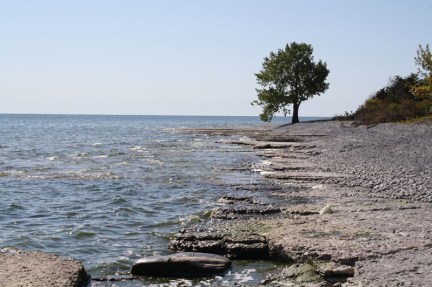
lake-erie-ice

The fight to keep industrial wind turbines out of Lake Erie has become an international effort.

Environmental groups from Spain, France and the United Kingdom have now joined North American organizations in opposing a plan to build a pilot wind farm in western Lake Erie, near the Ohio shore, along the U.S. side of the border.

“I really feel there is a good chance of stopping it. Public outrage can do this,” said Sherri Lange, chief executive of North American Platform Against Wind Power, a Toronto-based coalition opposing wind farm development.

Known as the Icebreaker Project, the wind farm proposed for Lake Erie near Cleveland would involve the installation of six turbines to test the feasibility of building larger wind farms in the lake. It would be the first industrial wind farm in a fresh water lake in North America.

Ontario, meanwhile, has kept a moratorium slapped in place on offshore wind farms in the Great Lakes along its borders with the waterways.

Proponents have described Lake Erie as the Saudi Arabia of wind energy, with the potential for more than 1,000 wind turbines.

But the project has sparked intense opposition from a broad range of environmental groups who say the offshore turbines will disrupt migration routes for birds and bats, damage marine life and pose a pollution hazard.

Lange said she and others thought the Icebreaker Project had been defeated in 2014 after U.S. state officials cited a string of deficiencies, but then the project was given a $40-million grant earlier this year by the U.S. Department of Energy.

David Karpinski, vice president of operations for Leedco, the wind farm developer, said the project is continuing to move forward to gain the necessary government approvals.

“We are continuing to build momentum,” he said. “The detailed engineering is completed and we are moving into the commercial relationships for contractors to source and build what we need here.”

The current plan is to start construction the summer of 2018, Karpinski said.

Last week, the Ontario government said it has no plans to lift its moratorium on Great Lakes wind-farm development that had been imposed five years ago.

Industrial wind farms, with their highrise-sized turbines, have been deeply polarizing in Ontario, especially in the province’s southwest that is home to the largest wind farms and the most number of turbines. Some communities have declared themselves “unwilling hosts” for the projects, which Ontario’s Liberal government embraced with its green-energy law in 2009 as it took away local control over where the projects can be built.

Announced in the run-up to a provincial election, the Ontario government originally justified its moratorium on offshore wind development on the grounds there wasn’t enough scientific information on the potential impact of the turbines in the lakes.

jminer@postmedia.com

twitter.com/JohnatLFPress

wolfe-island
Wolfe Island- One of the highest recorded site for avian and bat deaths due to wind turbines in North America

READ ARTICLE AT: http://www.lfpress.com/2016/10/23/offshore-wind-plan-in-lake-erie-criticized-internationally
Hungarian Law that would Kill wind turbines

hungarian-wind“Hungary’s President János Áder has referred an amendment of the electricity act back to Parliament for review for it has practically bans the installation of wind turbines in the country. ”

October 21, 2016, 1:27 pm  english version Hungarian version

The Hungarian government created a series of new regulations with the aim to prohibit the installation of new wind turbines in the country. The amendment of the energy law was worded carefully so it does not explicitly ban wind farms since the EU would most certainly object to that. Instead, the new law bans wind turbines in a 12-kilometre radius around populated areas.

A colleague of the Faculty of Science at the Eötvös Loránd University created a map with a geoinformatics software which illustrates the areas where the law applies. Red marks the banned and white the permitted areas. Cannot see any white spots? Exactly!

Áder referred the bill approved on 11 October back to Parliament for a review, saying it

  • does not help the execution of the Paris climate agreement (At the Paris climate conference in December 2015, 195 countries adopted the first-ever universal, legally binding global climate deal. The agreement, which is due to enter into force in 2020, sets out a global action plan to put the world on track to avoid dangerous climate change by limiting global warming to well below 2°C.)
  • contradicts the action plan on the utilisation of renewable energy for 2010-2020; and
  • implements unjustified administrative restrictions.

 The government secured itself from all sides against wind turbines. Additional clauses in the new law stipulate that wind turbines cannot be installed “within 40 km of Hungarian Defence Force radars, and within 15 km of military airports”, as well as any area where they would “decrease military and defence capabilities”.

According to another clause, the installation of wind turbines on agricultural land is restricted to those which have been officially out of cultivation for at least three years. Additionally, only 2-megawatt wind turbines, i.e. those with outdated technology are allowed and at no more than 100 m height.

READ AT:  http://www.portfolio.hu/en/economy/hungarian_president_throws_back_law_that_would_kill_wind_turbines.31987.html


Bad Actors

“How did we get here? How did the people of Ontario become the enemy of the state?”

ostrander-point-ert-1

Posted: October 21, 2016 at 8:49 am   /   by

The image remains seared into the consciousness of everyone who witnessed the grotesque spectacle. The full power and fury of the state and its legal might, side by side with one of most powerful law firms in Canada, arrayed against the grey-haired volunteers of the Prince Edward County Field Naturalists. Five Goliaths against one David.

One side funded by taxpayers and corporate interests, the other by donations and the kindness of individuals in this community. One side working to forestall the demise of species at risk, the other side hungrily pursuing profits. Alongside them were government lawyers dispatched from Toronto to defeat the County’s Field Naturalists.ostrander-point-shore

How did we get here? How did the people of Ontario become the enemy of the state?

At a moment in history when liberal democracy looks more fragile than it has done in 70 years, the troubles infecting this province may seem trivial by comparison. It isn’t trivial to the folks of PECFN still working to pay their legal bill. Nor to the folks still battling yet another powerful developer and an unrepentant province in South Marysburgh. Or on Amherst Island.

Yet it is only by understanding how and why governments turn against their people that we see the roots of unrest and decay in democracy. A goodly portion of Americans who despise Donald Trump will vote for him next month, not because they believe he is a better candidate than his opponent, but because they want to throw a brick through the window of a government they believe is working against their interests.

To be clear, this isn’t a defence of their choices, but rather a caution that we are not immune to the illness that has infected American politics in this cycle.

I expect most of the handful of folks who volunteer with PECFN would not describe themselves as political. Their interests lie mostly in the natural world and the beasts that populate it. PECFN didn’t set out do battle with a provincial government indifferent to the plight of its own endangered species, or with a corporation determined to reap profits from industrializing the County’s south shore. They were thrust into this fight because the provincial government shredded its own protections and safeguards to give corporate interests free rein.

But why? What drives elected officials to use the state’s power and resources against those working to protect the natural world it has abandoned?

We got a glimpse last week when Kathleen Wynne defended her government’s cap and trade emmissions scheme. She told a business audience in Niagara Falls that Ontarians are “very bad actors” in terms of per capita emissions of greenhouse gases. It wasn’t a slip of the tongue—or offhand remark. These words were part of a scripted speech.

Fortunately for the wretched folks in this province, we have a premier who understands good and bad—better than we do. She has unveiled the selfish and narrow view through which we see the world around us. Kathleen Wynne will be our better selves.

In this morality play your provincial government has decided it will not work in your interest— but rather what it believes your interest ought to be. It knows this better than you. Kathleen Wynne, and Dalton McGuinty before her, believe they know what is best, and cling to the hope that history will judge them better than Ontario’s weak and myopic voters do now.

Maybe.

But untethered by accountability to its voters and deaf to its ministries’ advice and counsel, provincial Liberals have made a terrible mess of the energy supply system in Ontario. It will take decades to fix. It has squandered billions of dollars chasing schemes unworthy of a Nigerian postmark. It has pushed manufacturing jobs out of the province. And it has rendered electricity bills that are unaffordable for many of its poorest rural residents. Meanwhile, it has made a select group of developers very, very wealthy.

In turn, they have dutifully filled her parties’ coffers— to arm her for the next election.

How is it that the most righteous tend to be the most susceptible to corruption and misdeeds? There is something distinctly Shakespearean in this tragedy.

In 2011, facing an election Energy Minister Brad Duguid announced a moratorium on offshore wind development. Loud opposition was building in Duguid’s own riding at the prospect of industrial wind turbines rising just offshore from the Scarborough Bluffs. The science was unsettled, he said. But it was politics pure and simple. Duguid and the Liberals won the election. This week, taxpayers of this province learned the cost of his calculation.

This is because Duguid’s decision also scuttled a project to build offshore wind turbines near Wolfe Island by American developer Windstream Energy. The company sued. Last week ,a court awarded the company $25 million plus its legal expenses of nearly $3 million. Ontario taxpayers are on the hook for this bill. Furthermore, the developer maintains that its 300 MW contract, worth $5.2 billion, is still in effect.

It is the largest award ever ordered under the North American Free Trade Agreement—yet it is just the most recent cheque written by this government for power that will not be generated.

Ontarians have, indeed, been very bad actors.

RICK@WELLINGTONTIMES.CA

Join PEPTBO for their Fall Dinner on October 29 at the Waring House Inn Banquet Hall. Noted ornithologist Jean Iron will be the keynote speaker. For more information visit peptbo.ca or call the Waring House at 613- 476-7492 ext. 4220.

READ AT: http://wellingtontimes.ca/bad-actors/

Sound of turbines is an ethical issue

sound-1

Assessing the need for industrial wind farms and their siting requires ethical values. The wind industry repeatedly dismisses the adverse health effects of living close to industrial wind farms. The claims are made on the fact that there have been few “peer-reviewed” articles directly connecting adverse health outcomes to the proximity to wind farms. However there is a plethora of published complaints worldwide linking health complaints to living near wind farms.

As a physician I was intrigued by this discordance. My experience with human disease told me that we all were missing something. I began to research the health impact of industrial wind farms on those individuals living in close proximity. I wish to share my conclusions.

Wind turbines produce audible and inaudible sound waves. Not all individuals living close to wind turbines are adversely affected. Nevertheless a significant number are intolerant in the long term. High levels of audible wind noise are clearly associated with degradation of health, which is improved as the decibel level is decreased. Inaudible infrasound and its effect on human and animal health has not been adequately studied. The lack of scientific information linking infrasound to adverse health outcomes may be because we are just beginning to understand the alterations in human physiology confronted with infrasound. There is a growing body of evidence that infrasound matters and may be the cause of negative health outcomes.

Recent research suggests that the inner ear is capable of sensing infrasound and affecting the way we sleep, learn, problem solve and interpret the environment around us. Some communities have recognized the existence of adverse health impacts and have begun to legislate to protect individuals.

Back to ethics. Why then are we in such a hurry to place wind farms so close to living organisms when there is a potential for an adverse outcome? Corporate and ethical responsibility no longer is a matter of how much money is donated to a person or a cause. Rather, ethical corporations should not adversely affect the environment and degrade human life. Instead of siting industrial wind close to populations, why not look to conservation and other renewables that don’t have associated health complaints? Is it ethical to ask that some suffer while others prosper? I would argue no. I would argue my peers would agree when they review the emerging data.

DAVID A. CHERRY, M.D.

Windham

Published October 19 , 2016  Rutland Herald:

http://www.rutlandherald.com/article/20161019/OPINION02/161019623

Knowledge Partner in Wind Turbine Health Study

The municipality of Bluewater is now officially a “knowledgeable partner” in the study being conducted by the Huron County Health Unit, the University of Waterloo and Wind Concerns Ontario into the relationship between health problems and wind turbines.

Council approved the motion this week and will issue a letter of support acknowledging that position.

Mayor Tyler Hessel explains the role of the municipality and the Health Unit at this point is collecting complaints from residents who live close to turbines and are experiencing health issues.

He’s adds he’s looking forward to hearing back from the people at the Health Unit working on that, and their analysis of the complaints.  Hessel says that analysis might form future actions of the municipality.

READ AT: http://blackburnnews.com/midwestern-ontario/midwestern-ontario-news/2016/10/19/municipality-bluewater-knowledgeable-partner-turbine-study/

Taking on the law and winning

val-martin“Congratulations to Val Martin, who took on An Bord Pleanala in the High Court and won. This amazing achievement is testimony to the fact that it is possible for a person, with no formal legal training, but with bucketloads of planning knowledge and guts, to take on the State apparatus in the High Court and win.”   Republic of Ireland

Reblogged:  https://the-law-is-my-oyster.com/2016/10/17/well-done-val/

Here is the story in Val’s own words:

“In 2009, the predecessor to Raragh developments applied for planning permission for a wind farm at Kingscourt. Cavan 09/270, It supplied an Environment Impact Statement (EIS) (of sorts). Despite objection from 38 households the Local Council granted permission and it was appealed to ABP. They carried out a sort of EIA and granted planning permission.  As the developer did not know details of the cables at the time, a specific condition was that the planning permission did not include the connecting cables.

In 2015, the developer applied to extend the period of operating time for the wind farm until 2020. He stated that an EIS has been provided with the first application and Cavan Co. granted the application stating that an EIA had been done in 2010.  In May 2015, the developer applied for a declaration under Section 2 of the PDA to declare the 5.5 km of underground cables to the ESB sub-station in Kilnalun, Co. Meath to be development and exempted development.     Cavan Co. Council referred it to ABP (No.RL . 02. 3369).

On the 3rd May, 2016, the Board stated that it was a “development”  and “an exempted development”.  This would have allowed the whole work to go ahead.

I took a judicial review No 2016/460/JR acting as a lay litigant (presenting the case myself). I claimed that the underground cabling was not a “development” but a “project” and accordingly it could never be classed as an exempted development.  I cited the O’Grainne judgment and its ratio decidendi (binding part of the judgment) where the Judge said “In truth I have already concluded the wind farm and cabling are one project”.    I cited a few European cases which proved that a project can be split into phases and that the 2nd or subsequent phases must be assessed under the EIA Directive. In other words, when deciding whether its environmental effects are acceptable, it must be assessed with the cumulative effects of the entire project, and not just the phase currently under consideration.

The Board and the wind farm developer opposed me. They served me with a cart load of documents and I simply wrote in the legal submission that the High Court has no role to play in assessing planning applications, but must confine itself to the law alone.    The Board Lawyers, Philip Lee and Co. caved in and the developer’s lawyers did too.    The Barrister for the Board arrived in Court No 1 before Judge McGovern and said “this is the man who beat Board Pleanala” in a good humoured way.  There was no need for the 2-day trail which had been allocated.

The Judge said he would quash the decision of the Board and award me costs.  

Should anyone want copies my case and legal argument, just ask and I will send to you as hard copies. I acknowledge the help of Pat Swords, David Malone, Owen Martin, Francis Clauson, committee chairman Mike Muldoon, Dublin solicitor (and friend) George McGrath , campaigners all over the country and neighbours at Kingscourt for their encouragement.

Essentially the law is:

1) projects cannot be developments.

2) Projects can be split but all information known should  be provided at each phase.

3)   Projects cannot be processed under the PDA alone.

4) The PDA (part X) is the vehicle for processing an EIA.

5) One major cop,  well spotted by David Malone and used by me is that Article 2(4) of the EIA Directive allows for exemption a project from an EIA in exceptional circumstances.   If this is done government must inform the EU Commission and comply with a number of conditions which are very strict.  I think this would cover situations like where there is some sudden and unforeseen important event where development would have to be done without submissions for the public.   An international summit or the like.  This is the only way a project can be exempted.

The developer’s lawyers indicated that they did not want to remit the application to the Board. I do not know if they will now apply for an EIA for the cables and planning permission, that is for another day.

Regards

Val Martin”

Well done Val.  Respect!


Boiling Point Reached Over Testing Delays On Port Elgin Wind Turbine

Continued delays of acoustic testing of the Unifor wind turbine in Port Elgin has Saugeen Shores council sounding off.

Council is filing a complaint with Ontario Ombudsman Paul Dube regarding the Ministry of Environment and Climate Change’s promised testing of the turbine, which has not yet been completed.

Deputy Mayor Luke Charbonneau says the MOECC originally told council they would have the acoustic audit completed by June of this year, but adds it has been delayed at least three times since then, with the Ministry now saying the audit won’t be completed until at least next summer.

He says a sound testing company has been conducting preliminary data in the area of the turbine, which is located at Unifor’s Family Education Centre at the south end of Port Elgin, although that data has not been shared with either the MOECC or the municipality.

“We don’t know what the results of those tests have been, we have no audit, [MOECC] doesn’t know, so what’s going on?   It’s really simple to me, we need to know if this turbine is operating in compliance with the law,” says Charbonneau.

Charbonneau says the MOECC is blaming weather, a lack of wind and turbine down-time as the reasons for the testing delays.

Charbonneau’s home is one of more than 100 homes and cottages located within the 550-metre setback typically required for industrial wind turbines, though he says his family has not had any issues with the operation of the turbine, other than one complaint regarding shadow flicker, which was resolved.

Charbonneau says more than 50 complaints regarding the turbine’s operation have been received since February, most recently two weeks ago when a resident complained of the turbine making a thumping noise.

The 250-foot Unifor wind turbine was constructed by what was then the Canadian Auto Workers Union in 2012 and went into service a year later.

READ AT: http://blackburnnews.com/midwestern-ontario/midwestern-ontario-news/2016/10/13/boiling-point-reached-testing-delays-port-elgin-wind-turbine/

Blue Water Hears about Health Study

wind-turbine-autumn-540x400Bluewater Council Hears From Wind Concerns Ontario
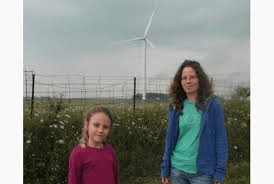
Councillors with the Municipality of Bluewater now have a better understanding of a wind turbine study that’s just beginning.

Warren Howard, a director with Wind Concerns Ontario, appeared before council Monday night to outline the study they are conducting with the University of Waterloo and the Huron County Health Unit.

Howard explained the goal of the study is to determine if there is a link between wind turbine noise and the symptoms being reported by people who live near them.

Many of the studies so far have been focused on audible noise, but Howard says there are other types of noise created by wind turbines and their study will look at the full spectrum of noises.

As part of the presentation, Howard asked for a letter of support from Bluewater council, and that was granted.

Howard is hoping they’ll be able to collect significant data within six months from which they can draw some conclusions.

READ ARTICLE: http://blackburnnews.com/midwestern-ontario/2016/10/04/bluewater-council-hears-wind-concerns-ontario/

Scant disclosure on wind turbine bird mortality

esther-and-daughterDear Editor

I just read “What’s a few chopped up birds” (From The Top of the Pile, Sept. 22) on wind turbines and bird deaths in Alberta and Saskatchewan. Way to go Saskatchewan for actually taking this issue seriously. We’ve never had this happen in Ontario!

I’m from southwestern Ontario, but moved to New Brunswick two years ago when the turbines went up. For six years I fought them, went to tribunal hearings, videotaped the scummy company Nextera destroying an active eagle nest, got sued by the same company because I parodied their logo as NexTerror and organized and attended uncountable protests during that time. If I would have stayed, remained surrounded by turbines, the kids’ school surrounded by turbines, I would have continued, but our health came first and we left the land I was born and raised on.

I’ve since realized the wind companies are killing way more birds and bats than the media or researches know, with impunity. The last report on bird/bat mortality that any wind developer released to the public was in 2012 (Transalta’s Wofle Island), then all of a sudden the whole industry stopped releasing these reports. I couldn’t find them anywhere.

Bird Studies Canada wouldn’t release the documents. They are confidentially working with the wind companies, on a voluntary basis. I asked the wind company Nextera for it. They told me they could give me a two-page summary in a couple months.

Other avenues were also blind alleys calling for freedom of information requests for what should be public documents.

After many months, and a faked ‘appeal’ by the wind company to delay the release, they came. My heart sank and my blood boiled. In six months the two local Nextera projects killed eight red-tailed hawks and 14 vultures. You can imagine what the raptor population will be in that area when the 20-year lifespan of this project is over. We lived on flat, prairie-like farmland, with small woodlots, good raptor habitat. But not now that there are more than 200 wind turbines there.

I decided to file freedom of information requests for all the wind projects in Ontario. There are more than 110 projects. I had to source out and make a comprehensive list and then presented it to the FOI office and the Renewable Energy co-ordinator for the MNRF. You know what the Ministry of Natural Resources and Forestry guy said? “I didn’t even know about half of these projects.” This is the guy in charge of wind turbines and wildlife in the province, and he doesn’t even have a list of the wind projects there? I asked them if they are studying the massive cumulative impacts these projects will be having on the bird and bat populations. His answer was no, not unless there is some secret study going on. So nobody is looking into it. Not a soul. It’s all eyes closed to these massive killers.

They told me it will probably costs me thousands of dollars to retrieve these documents through the FOI. I took a breath and said, “Do it.” I’ll set up a Go Fund Me, or something. These need to be made public. I’ve posted what I have so far on a Google Drive page open to the public. At some point it might be a good idea to do this in Alberta as well. We asked the New Brunswick Ministry of Natural Resources for these documents and they just emailed them to us, free of charge, in two days. We asked the Nova Scotia government and they mailed us the documents, through an FOI request, for $5. But in Ontario “It’ll cost you thousands”. Obviously information they don’t want getting out when they put an enormous price tag on it. /that’s not open government.

Esther Wrightman

St. Andrews, N.B.

Letter Published Battlefords News- Optimist: http://www.newsoptimist.ca/opinion/letters/scant-disclosure-on-wind-turbine-bird-mortality-1.2351436

Bill 13- Have a Say

Bill 13, Ontario Rebate for Electricity Consumers Act, 2016

The Committee intends to hold public hearings in Toronto on Monday, October 3, 2016.

Interested people who wish to be considered to make an oral presentation on Bill 13 should provide their contact name, mailing address, phone number, and email address to the Clerk of the Committee by 3:00 p.m. on Friday, September 30, 2016.

Those who do not wish to make an oral presentation but wish to comment on the Bill may send a written submission to the Clerk of the Committee at the address below by 6:00 p.m. on Monday, October 3, 2016.

An electronic version of the Bill is available on the Legislative Assembly website at: www.ontla.on.ca.

Shafiq Qaadri, MPP, Chair
Christopher Tyrell, Clerk

Room 1405, Whitney Block
Queen’s Park, Toronto, ON  M7A 1A2

Collect calls will be accepted.

Ces renseignements sont disponibles en français sur demande.

SOURCE Standing Committee on Justice Policy

“EXPLANATORY NOTE

The Ontario Rebate for Electricity Consumers Act, 2016authorizes financial assistance for certain Ontario electricity consumers in respect of electricity costs.  Consumers receive the financial assistance by means of an 8 per cent reduction in the amount payable before tax under their electricity accounts for each billing period.  The amount of financial assistance for a billing period is required to be shown on invoices issued to consumers for the billing period.

The Act authorizes the making of regulations to reimburse electricity vendors for amounts credited to consumers’ accounts under the Act. The Act authorizes the making of various other regulations, including to set out other ways for consumers to receive financial assistance, to alter the default rules in the Act for how to calculate the financial assistance and to limit or alter who is entitled to financial assistance.

The Act contains administrative and enforcement provisions, including requirements relating to record keeping by electricity vendors and authorization for inspections and inquiries with respect to amounts of financial assistance provided and reimbursements to electricity vendors.  The Ontario Energy Board Act, 1998 is amended so that provisions of the Ontario Rebate for Electricity Consumers Act, 2016 and regulations made under it will be enforceable by the Ontario Energy Board.

The Act also amends the Ontario Clean Energy Benefit Act, 2010 to authorize the making of regulations under that Act in respect of cut-off dates for financial assistance under that Act.”

READ BILL 13: http://www.ontla.on.ca/web/bills/bills_detail.do?locale=en&Intranet=&BillID=4126