Category Archives: fighting big wind.

We Won! Project is harmful to health & environment

Clearview residents halt wind turbine development

Big Oil turns on to wind power

swindle-bus-311Big oil and its relationship to wind power is not new for opponents of wind turbine projects. Community groups opposing harmful impacts of wind power will enviably face inaccurate accusations they are puppets funded by big oil masters. Careful examination of parent companies of wind facilities in Ontario find the limited partnerships are often cleaved from entities using fossil fuel power generation as its principle source for profit making. Electricity made in these companies power plants is done mainly by using fossil fuels (such as natural gas). It has been claimed that the big oil incorporations not only follow the lure of subsidies but they also helped to create the current political stage and renewable energy policies.  This in turn fuels the spin of green energy money markets. Following the money it is clear making money remains the primary goal. Managing the marketing of big oil’s image held by consumers makes how electricity is generated just an after thought.

“It remains unclear if offshore wind can be a steady moneymaker without government support, which besides tax credits and minimum rates can include guaranteed access to power grids.”

Oil producers turn to wind power 

Credit:  Zeke Turner, Sarah Kent | Dow Jones | December 27, 2016 | www.theaustralian.com.au ~~

The Netherlands wants to build the world’s largest offshore wind project, and an unlikely company is helping: Royal Dutch Shell.

The oil-and-gas giant is facing shareholder pressure to develop its renewable business. Add in falling construction costs for such projects, and Shell has decided to join a handful of other oil companies aiming to leverage their experience drilling under punishing conditions at sea.

Norway’s Statoil is already building its third offshore wind farm, in the Baltic Sea, and is developing the world’s first floating wind farm off the east coast of Scotland. Denmark’s state-owned Dong Energy – once a fossil-fuel champion – is now the biggest player in the offshore wind market.

A Shell-led consortium won a bid this month to build and operate a portion of the Netherlands’ giant Borssele wind project in the North Sea. Once complete, the Shell-built section will generate enough power for roughly a million homes at a price of €54.5 ($A79.20) per megawatt hour – a customer rate approaching that of cheaper power sources like coal or gas.

Offshore wind’s competitiveness is highly subject to local power prices and government measures, including tax credits, subsidies and rate guarantees. Nonetheless, in European markets, the wind industry had thought near parity was years away.

“Right now the offshore wind project is competitive with any power source,” said Dorine Bosman, Shell’s manager developing its wind business.

Offshore windpower projects involve driving steel foundations into the sea floor for towers that support building-size turbines with propellers wider than the wingspan of an Airbus A380. Though historically more expensive to build than onshore wind farms, offshore projects can take advantage of less restricted space and stronger, more consistent winds.

The technological arms race to build these complex projects economically is so heated that many companies, including Shell, won’t disclose how much they are investing, treating their commitments like a trade secret.

Fossil-fuel companies’ push into wind reflects their growing sensitivity to global efforts to limit climate change and how that will affect consumer demand for their main offering: oil and gas.

France’s Total wants 20 per cent of its portfolio to consist of low-carbon businesses within the next 20 years. Shell established a new division this year focused on investing in sources such as wind, solar and biofuels. Statoil has a $US200 million fund for projects such as wind technology and batteries.

Investments by big European oil companies in wind and other renewable energy sources remain small – around 2 per cent of their overall capital-spending budgets, according to McKinsey. The industry is cautious about betting big on alternatives after getting burned in the past.

It remains unclear if offshore wind can be a steady moneymaker without government support, which besides tax credits and minimum rates can include guaranteed access to power grids.

“It should be the ambition of everybody to not have subsidies,” Ms Bosman of Shell said.

Lower costs – brought on by technological improvements, economies of scale and low interest rates – are helping move the sector in that direction. Earlier this year the windpower industry was targeting a price of €100 per megawatt hour by 2020; subsequently three auctions of project rights this year in the Netherlands and Denmark settled on rates below that level.

Shell previously pulled back from involvement in offshore wind that proved unprofitable and says it will be primarily an oil-and-gas supplier for decades to come. But the improving economics of wind power have prompted the company to dip its toe back in the water, joining others in crowding the heavily subsidised specialists that once dominated the sector.

Dong Energy has sold off a large portion of its fossil-fuels business, including five Norwegian oil and gas fields, and now has 29 per cent of the world’s built offshore wind capacity, according to spokesman Tom Lehn-Christiansen. Goldman Sachs Group Inc. took an ownership stake in Dong Energy in 2014, and the company went public in June.

Statoil has invested $US2.1 billion since 2010, or about 20 per cent of a single year’s capital budget, in offshore wind parks. After two years of whipsawing oil prices, offshore wind’s relatively stable prices are dreamlike for oil executives, said Irene Rummelhoff, Statoil’s executive vice president for renewables.

Even Exxon Mobil, which hasn’t put the same emphasis on renewables, has dabbled with the technology, with the idea of using floating wind turbines to help power its offshore oil and gas platforms.

Although solar power is expected to be the fastest-growing renewable energy source over the next five years, the International Energy Agency forecasts offshore wind capacity will triple by 2021. While that will remain below 1 per cent of global capacity, the growth prospects are particularly attractive in regions such as Northern Europe where sunlight is in short supply for half the year.

Japan, China, India and Taiwan are all poised to place bets on offshore wind now that its cost is coming down, according to the industry group Global Wind Energy Council.

In the US, President-elect Donald Trump has been sceptical of wind power, warning of its cost, unsightliness and risks to wildlife. However, Texas was a forerunner of onshore wind energy in the US under the watch of former governor Rick Perry, Mr Trump’s pick to lead the Energy Department.

Offshore wind in the US got a boost this month when the country’s first park went online off the coast of Block Island, Rhode Island. Days later, Statoil won a bid for a potential project in the Atlantic Ocean south of Long Island – its first offshore wind lease in the US.

Jeffrey Grybowski, CEO of Deepwater Wind, which developed the Block Island project, said the oil companies will face a tougher landscape in the US compared with Europe because of bureaucratic hurdles and fewer incentives.

“We think our competitors are going to have a lot to learn,” he said.

Dow Jones Newswires

Source:  Zeke Turner, Sarah Kent | Dow Jones | December 27, 2016 | www.theaustralian.com.au

Falsified Dates for FOI Requests

vive-a-la-resistance-2One of the skills  acquired in fighting  wind turbines is how to obtain and extract information held by the Ontario government using Freedom of Information (FOI) requests.  Information that should be freely accessible without obstruction but is not.  Knowledge is power and who controls the data controls the known story.

Details of wind projects, bird and bat kills by wind turbines, negative impacts to environment, and  even how many people have filed complaints about adverse health effects are within the Ministry of the Environment and Climate Change’s jurisdiction. Information and data held, protected and only released reluctantly in bits and pieces with persistent repeated requests. The process is convoluted, bureaucratic and most importantly time consuming.   The time involved enables strict time lines applied in appeal hearings at the Environmental Tribunal Review.  The government has an expected service response time of 30 days and if not met the delay must be given with a justified explanation.  That is not what has happened.

“…auditors concluded dates “were systematically adjusted by staff” in the FOI office to show completion of requests within the 30-day requirement period.”

A recent audit shows the MOECC failed in its duties and has been changing the dates of FOI requests. The government has lied by falsifying the dates. MOECC has now been caught begging the question what else has also been falsified?

Ontario environment ministry deliberately falsified dates on FOI requests: https://www.thestar.com/news/queenspark/2016/12/19/ontario-environment-ministry-deliberately-falsified-dates-on-foi-requests.html

Commissioner Beamer’s Response December, 19, 2016


The Green Energy Act is Undemocratic


rights-and-responsibiltiesMayor Higgins of North Frontenac has petitioned in Ontario court to be an intervenor in the Judicial Review (JR) application filed by CCSAGE Naturally Green (over the approval granted for the White Pines project in Prince Edward County). Green Energy Act removes Municipal government’s authorities over the placement and operations of renewable energy projects.  Renewable Energy projects and installation of wind turbines have devastated rural communities in a manner that urban areas are not subject to.


The purpose of the JR is to ask Ontario Superior Court questions of law about the burden imposed, processes followed, biases and Constitutionality surrounding the Green Energy Act (GEA). The GEA is the legislation that creates Renewable Energy Approvals required to authorize wind projects. GEA: https://www.ontario.ca/laws/statute/09g12

“The JR has the potential to help protect all rural Ontario from the continued onslaught of these industrial machines. If you are an organization, coalition or individual anywhere in Ontario who has suffered as a result of actual or threatened installation of turbine projects, you may be able to assist in one of two ways. One, by applying to the Court for status as an Intervenor for which a lawyer is required for those incorporated, and, two, by providing us with an affidavit containing information not otherwise already dealt with”.

APPLICATION FOR JUDICIAL REVIEW – AN EXPLANATION: https://ccsage.wordpress.com/gea-judicial-review/

Mayor Higgins Motion for Intervener Status


Noise issue still popping up

whack-a-mole

“You’d think we could all take a rest. Not so. Wind-industry moles spring up in every corner of the state, begging to be whacked.”

Noise issue still popping up
November 19,2016

Windham and Grafton soundly voted down the industrial wind proposal for our towns. You’d think we could all take a rest. Not so. Wind-industry moles spring up in every corner of the state, begging to be whacked.

The mole of the week: the Vermont Public Service Board’s “Proposed Rule on Sound from Wind Generation Facilities.” 

The gist of this rule-making is: “Help us figure out impossible rules that can’t be monitored or enforced, concerning the noise that can be legally inflicted on Vermonters by our friends, the wind developers.”

You might feel that such rules mean it’s still open season on Vermont’s communities, given that unenforceable standards amount to nothing more than a knowing nod to the wind profiteers. If you’re right, then let us give this particular mole the whacking it deserves.

READ MORE: http://www.rutlandherald.com/article/20161119/OPINION06/161119587

Dutton/Dunwich Opponents of Wind Turbines

ddwt.pngHello DDOWT Supporters,

WE NEED YOUR HELP!

In light of Energy Minister Glenn Thibeault’s recent announcement suspending LRP-2, we are now calling on the provincial government to also cancel the recent LRP-1 contracts, including the Strong Breeze Wind Project in Dutton Dunwich. Ontario does not need the energy and this cancellation would save Ontarians Billions of dollars!

We need your help by participating in our letter writing campaign. It is easy and will only take a quick moment of your time.

Below you will find a copy of the letter we are asking you to sign. All you need to do is send us your email address, either in an email to info@ddowt.ca, or in a private message through Facebook. You will then be emailed a ‘DocuSign’ to sign. Simply open it and follow the on screen instructions to review and sign the letter. Once we receive your signed copy, a hard copy will be printed and mailed to the addressees stated in the letter on your behalf. We encourage each member of your family to sign a copy of the letter. Just send their email address and we will send a separate letter for them. Rest assured that any information you provide will remain confidential, and will be used only to send these letters .

If you would prefer to mail a copy of the letter on your own, contact us and we will provide you the necessary information and addresses.

In addition to the letter writing campaign, our DDOWT volunteers will be going door to door with a petition to show the strong support in our community for cancelling this project. Please participate in both of these efforts as they are absolutely necessary for added pressure on the provincial government. If you would like to sign the petition, but do not receive a visit by the end of November, please contact us through email or Facebook.

If you have any questions, please do not hesitate to contact us.

Thank you for your continued support! The fight is not over!!

DDOWT

email:  info@ddowt.ca

website: http://www.ddowt.ca

facebook: http://www.facebook.ca/DDOWT

letter

Bad Actors

“How did we get here? How did the people of Ontario become the enemy of the state?”

ostrander-point-ert-1

Posted: October 21, 2016 at 8:49 am   /   by

The image remains seared into the consciousness of everyone who witnessed the grotesque spectacle. The full power and fury of the state and its legal might, side by side with one of most powerful law firms in Canada, arrayed against the grey-haired volunteers of the Prince Edward County Field Naturalists. Five Goliaths against one David.

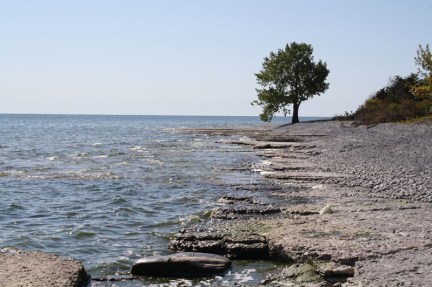
One side funded by taxpayers and corporate interests, the other by donations and the kindness of individuals in this community. One side working to forestall the demise of species at risk, the other side hungrily pursuing profits. Alongside them were government lawyers dispatched from Toronto to defeat the County’s Field Naturalists.ostrander-point-shore

How did we get here? How did the people of Ontario become the enemy of the state?

At a moment in history when liberal democracy looks more fragile than it has done in 70 years, the troubles infecting this province may seem trivial by comparison. It isn’t trivial to the folks of PECFN still working to pay their legal bill. Nor to the folks still battling yet another powerful developer and an unrepentant province in South Marysburgh. Or on Amherst Island.

Yet it is only by understanding how and why governments turn against their people that we see the roots of unrest and decay in democracy. A goodly portion of Americans who despise Donald Trump will vote for him next month, not because they believe he is a better candidate than his opponent, but because they want to throw a brick through the window of a government they believe is working against their interests.

To be clear, this isn’t a defence of their choices, but rather a caution that we are not immune to the illness that has infected American politics in this cycle.

I expect most of the handful of folks who volunteer with PECFN would not describe themselves as political. Their interests lie mostly in the natural world and the beasts that populate it. PECFN didn’t set out do battle with a provincial government indifferent to the plight of its own endangered species, or with a corporation determined to reap profits from industrializing the County’s south shore. They were thrust into this fight because the provincial government shredded its own protections and safeguards to give corporate interests free rein.

But why? What drives elected officials to use the state’s power and resources against those working to protect the natural world it has abandoned?

We got a glimpse last week when Kathleen Wynne defended her government’s cap and trade emmissions scheme. She told a business audience in Niagara Falls that Ontarians are “very bad actors” in terms of per capita emissions of greenhouse gases. It wasn’t a slip of the tongue—or offhand remark. These words were part of a scripted speech.

Fortunately for the wretched folks in this province, we have a premier who understands good and bad—better than we do. She has unveiled the selfish and narrow view through which we see the world around us. Kathleen Wynne will be our better selves.

In this morality play your provincial government has decided it will not work in your interest— but rather what it believes your interest ought to be. It knows this better than you. Kathleen Wynne, and Dalton McGuinty before her, believe they know what is best, and cling to the hope that history will judge them better than Ontario’s weak and myopic voters do now.

Maybe.

But untethered by accountability to its voters and deaf to its ministries’ advice and counsel, provincial Liberals have made a terrible mess of the energy supply system in Ontario. It will take decades to fix. It has squandered billions of dollars chasing schemes unworthy of a Nigerian postmark. It has pushed manufacturing jobs out of the province. And it has rendered electricity bills that are unaffordable for many of its poorest rural residents. Meanwhile, it has made a select group of developers very, very wealthy.

In turn, they have dutifully filled her parties’ coffers— to arm her for the next election.

How is it that the most righteous tend to be the most susceptible to corruption and misdeeds? There is something distinctly Shakespearean in this tragedy.

In 2011, facing an election Energy Minister Brad Duguid announced a moratorium on offshore wind development. Loud opposition was building in Duguid’s own riding at the prospect of industrial wind turbines rising just offshore from the Scarborough Bluffs. The science was unsettled, he said. But it was politics pure and simple. Duguid and the Liberals won the election. This week, taxpayers of this province learned the cost of his calculation.

This is because Duguid’s decision also scuttled a project to build offshore wind turbines near Wolfe Island by American developer Windstream Energy. The company sued. Last week ,a court awarded the company $25 million plus its legal expenses of nearly $3 million. Ontario taxpayers are on the hook for this bill. Furthermore, the developer maintains that its 300 MW contract, worth $5.2 billion, is still in effect.

It is the largest award ever ordered under the North American Free Trade Agreement—yet it is just the most recent cheque written by this government for power that will not be generated.

Ontarians have, indeed, been very bad actors.

RICK@WELLINGTONTIMES.CA

Join PEPTBO for their Fall Dinner on October 29 at the Waring House Inn Banquet Hall. Noted ornithologist Jean Iron will be the keynote speaker. For more information visit peptbo.ca or call the Waring House at 613- 476-7492 ext. 4220.

READ AT: http://wellingtontimes.ca/bad-actors/

Taking on the law and winning

val-martin“Congratulations to Val Martin, who took on An Bord Pleanala in the High Court and won. This amazing achievement is testimony to the fact that it is possible for a person, with no formal legal training, but with bucketloads of planning knowledge and guts, to take on the State apparatus in the High Court and win.”   Republic of Ireland

Reblogged:  https://the-law-is-my-oyster.com/2016/10/17/well-done-val/

Here is the story in Val’s own words:

“In 2009, the predecessor to Raragh developments applied for planning permission for a wind farm at Kingscourt. Cavan 09/270, It supplied an Environment Impact Statement (EIS) (of sorts). Despite objection from 38 households the Local Council granted permission and it was appealed to ABP. They carried out a sort of EIA and granted planning permission.  As the developer did not know details of the cables at the time, a specific condition was that the planning permission did not include the connecting cables.

In 2015, the developer applied to extend the period of operating time for the wind farm until 2020. He stated that an EIS has been provided with the first application and Cavan Co. granted the application stating that an EIA had been done in 2010.  In May 2015, the developer applied for a declaration under Section 2 of the PDA to declare the 5.5 km of underground cables to the ESB sub-station in Kilnalun, Co. Meath to be development and exempted development.     Cavan Co. Council referred it to ABP (No.RL . 02. 3369).

On the 3rd May, 2016, the Board stated that it was a “development”  and “an exempted development”.  This would have allowed the whole work to go ahead.

I took a judicial review No 2016/460/JR acting as a lay litigant (presenting the case myself). I claimed that the underground cabling was not a “development” but a “project” and accordingly it could never be classed as an exempted development.  I cited the O’Grainne judgment and its ratio decidendi (binding part of the judgment) where the Judge said “In truth I have already concluded the wind farm and cabling are one project”.    I cited a few European cases which proved that a project can be split into phases and that the 2nd or subsequent phases must be assessed under the EIA Directive. In other words, when deciding whether its environmental effects are acceptable, it must be assessed with the cumulative effects of the entire project, and not just the phase currently under consideration.

The Board and the wind farm developer opposed me. They served me with a cart load of documents and I simply wrote in the legal submission that the High Court has no role to play in assessing planning applications, but must confine itself to the law alone.    The Board Lawyers, Philip Lee and Co. caved in and the developer’s lawyers did too.    The Barrister for the Board arrived in Court No 1 before Judge McGovern and said “this is the man who beat Board Pleanala” in a good humoured way.  There was no need for the 2-day trail which had been allocated.

The Judge said he would quash the decision of the Board and award me costs.  

Should anyone want copies my case and legal argument, just ask and I will send to you as hard copies. I acknowledge the help of Pat Swords, David Malone, Owen Martin, Francis Clauson, committee chairman Mike Muldoon, Dublin solicitor (and friend) George McGrath , campaigners all over the country and neighbours at Kingscourt for their encouragement.

Essentially the law is:

1) projects cannot be developments.

2) Projects can be split but all information known should  be provided at each phase.

3)   Projects cannot be processed under the PDA alone.

4) The PDA (part X) is the vehicle for processing an EIA.

5) One major cop,  well spotted by David Malone and used by me is that Article 2(4) of the EIA Directive allows for exemption a project from an EIA in exceptional circumstances.   If this is done government must inform the EU Commission and comply with a number of conditions which are very strict.  I think this would cover situations like where there is some sudden and unforeseen important event where development would have to be done without submissions for the public.   An international summit or the like.  This is the only way a project can be exempted.

The developer’s lawyers indicated that they did not want to remit the application to the Board. I do not know if they will now apply for an EIA for the cables and planning permission, that is for another day.

Regards

Val Martin”

Well done Val.  Respect!


Save Amherst Island

1fb09b95-6de8-4274-9330-dddc2cb00505

APAI CALLS ON IESO TO CANCEL WINDLECTRIC’S FIT CONTRACT AND SAVE $500 MILLION – YES, $500 MILLION

APAI President Michèle Le Lay has called on Dr. Tim O’Neill, Chair, and Members of the Board of the Independent Electricity Operator of Ontario to cancel a contract with Windlectric Inc.(Algonquin) due to the inability of the company to achieve its Commercial Operation Date (COD) and comply with its contractual obligations.

In its 2016 Q2 Quarterly Report Algonquin advises that construction is expected to take 12 to 18 months and that the Commercial Operation Date (COD) will be in 2018. This timeline is contrary to what was submitted to the Environmental Review Tribunal and to the Ontario Energy Board. A COD of 2018 is seven years from the date of award of the contract.

Cancellation of the contract at this time would enable the IESO to achieve cost avoidance exceeding $500 million over the next 20 years based on the high cost of power generation at 13.5 cents per kilowatt-hour set out in the contract with Windlectric and based on the IESO’s commitment to pay Windlectric to not produce power when capacity exceeds demand. Cancellation of the Windlectric contract could be achieved without penalty due to noncompliance and would address in part the IESO’s budget challenges and energy poverty in Ontario.

Rick Conroy, in the “The End of Reason” from the Wellington Times, explains the Kafkaesque and cruel nature of allowing the Amherst island project to continue especially in light of the unused power capacity of the nearby Lennox Generating Station and the Napanee Gas Plant under construction.

In summary:

• Windlectric cannot comply with the Commercial Operation Date in its Fit Contract.

• At a time of skyrocketing hydro rates and financial challenges the IESO could save $500 million over the next 20 years by cancelling the Windlectric Contract without penalty.

• Existing nearby generating capacity is almost never used and will increase when the Napanee Gas Plant comes online. Intermittent and expensive power from wind turbines on Amherst Island is not necessary

The End of Reason
Rick Conroy The Wellington Times

wellingtontimes.ca

From Amherst Island, you can see the Lennox gas-fired generating station sitting idle most days. The plant sits just across the narrow channel. It burns both oil and gas to produce steam that, in turn, drives generators to create electricity. The plant has the capacity to generate 2,100 MW of electricity—enough to power more than a million homes. But that electricity is rarely ever used. Over the last decade, the Lennox station has operated at less than three per cent of its capacity. That means it is idle much more often than it runs. Yet it earns more than $7 million each month—whether it runs or doesn’t. Such is Ontario’s hyper-politicized energy regime.

Last Thursday was a warm day across Ontario— one of the warmest in a hot summer. With air conditioners humming, electricity demand across the province peaked at 22,312 MW. Meanwhile, Lennox sat idle all day. As it does most days.

So it seems odd that yet another gas-fired generating plant is emerging from the ground next to the mostly-idle Lennox station. It will add another 900 MW of generating capacity to a grid that clearly doesn’t need any more.

From Amherst Island, it must seem cruel. Within a couple of kilometres, there is enough unused power generating capacity to light millions of homes, yet island residents are being forced to give up their pastoral landscape— for the sake of an intermittent electricity source that nobody needs.

Last week, an Environmental Review Tribunal rejected an appeal by Amherst Island residents seeking to stop Windlectric, a wind energy developer, from covering their island home from end to end with industrial wind turbines, each one soaring 55 storeys into the sky.

Amherst Island is tiny. Just 20 kilometres long and 7 kilometres wide, there is no place, no horizon, no home that can avoid being transformed by this out-of-scale industrialization.

The treachery gets worse. Amherst Island is administered by a council that presides over the larger Loyalist Township from the mainland. Last year, council made a deal with the wind developer, agreeing to receive a $500,000 payment each year the wind turbines spin. It is a lot of money for a municipality that operates on a $12-million budget annually.

But perhaps the most disappointing bit of this story is the damage that has been done to friendships and families on Amherst Island. Just 450 people live here. It swells to about 600 in the summer. It was a close community in the way island life tends to be.

Industrial wind energy has, however, ripped this community in two. Property owners hoping to share in the windfall from the development are on one side and those who must endure the blight on the landscape for a generation or more on the other.

Lifelong friends no longer speak to each other. At St. Paul’s Presbyterian service on Sunday mornings, the wind energy benefactors sit on one side of the church, the opponents on the other. A hard, angry line silently divides this community.

The Environmental Review Tribunal concluded not enough evidence was presented in the hearings to say the project will cause serious and irreversible harm to endangered species including the bobolink, Blanding’s turtle and little brown bat.

The decision underlines the terrible and oppressive cruelty of the Green Energy Act—that the only appeal allowed for opponents is whether the project will cause serious harm to human health or serious and irreversible harm to plant life, animal life or the natural environment. It is a profoundly unjust restriction on the right of people to challenge the policies and decisions of their government as they directly impact their lives.

The folks on Amherst Island weren’t permitted, for example, to argue that the power is unneeded— that this project is a grotesquely wasteful use of provincial tax dollars. Their neighbourhood already boasts enough electricity capacity to power a small country, yet it sits idle—at a cost of millions of dollars each month. It might have been a useful addition to the debate—but this evidence wasn’t permitted.

Nor were island residents allowed to appeal the fundamental alteration of their landscape. Nor the loss of property value. They can’t undo the broken friendships and the hollow feeling that hangs over the church suppers or the lonely trips across the channel.

Wide swathes of reason and logic have been excluded in the consideration of renewable energy projects in Ontario.

To the extent that urban folks are even aware of what green energy policies are doing to places like Amherst Island, they console themselves by believing it is the cost of a clean energy future—that diminishing the lives of some rural communities is an acceptable trade-off for the warm feeling of doing better by the planet.

Yet these folks need to explain to Amherst Island residents how decimating their landscape, risking the survival of endangered species and filling the pockets of a developer with taxpayer dollars for an expensive power supply that nobody needs makes Ontario greener.

Visit Amherst Island. Soon.

Remember it as it is today. Mourn for its tomorrow.

Association to Protect Amherst Island:  http://www.protectamherstisland.com/