

Category Archives: fighting big wind.
Wind Power-Experiment in Environmental Ethics
Our Experiment in Environmental Ethics
To the Editor:
Back in the 1960s, Yale psychology professor Stanley Milgram conducted a research experiment whose results shocked the nation.
Participants were told that they were taking on the role of ‘teacher’ in a study of methods to improve learning. An authority figure told the ‘teacher’ to administer increasingly powerful electric shocks to a ‘learner’ in the next room whenever a question was answered incorrectly. There actually were no shocks and the learner was part of the research team, but the ‘teacher’ heard increasing cries of pain with each ‘shock’ administered. Even as the intensity of the shocks approached the maximum of 450 volts, the authority insisted that the shocks should continue – that the anguished screams, the banging on the wall, the pleas about heart conditions, and ultimately the ominous silence from the other room should all be ignored.
It was believed that most people would defy the authority figure once they became aware that the shocks were seriously harming another person. But that was not the case: almost 2/3 of participants continued to obey the authority figure, administering ‘shocks’ until the very end.
I was reminded of the Milgram experiments recently while attending two Public Service Board hearings on new proposed sound limits for industrial wind facilities. Because there have been problems, a lower standard of 35 dBA, (down from 45 dBA) has been proposed. (The World Health Organization recommends 30 dBA.)
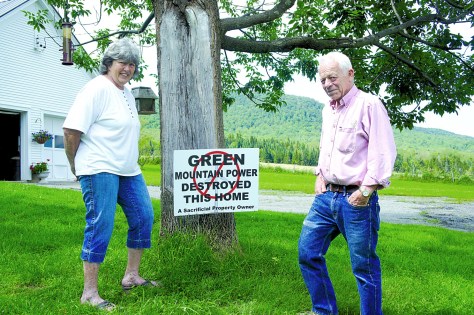
Those who live close to Vermont’s existing industrial wind facilities have described a range of symptoms that include sleeplessness, headaches, ringing ears, and nausea. For fifteen months, Shirley Nelson, who lived less than a mile from the Lowell wind project, kept detailed recordings of decibel readings (from a monitor installed at their home by the developer, Green Mountain Power) and the health effects she and her husband were experiencing. Entries from her ‘noise diary’ clearly demonstrate the sustained and cumulative adverse effects of living near the turbines at the previous standards.

The Therrien family, who lived near the turbines in Sheffield, pleaded for years for relief – from the PSB, the wind developer, the town of Sheffield, former governor Shumlin and other state officials – to no avail. Their symptoms? “Disturbed sleep, headaches, tinnitus (ear ringing), sense of quivering or vibration, nervousness, rapid heartbeat, high blood pressure, nausea, difficulty with concentration, memory loss and irritability.”
At the Montpelier hearing, the lawyer who represents the proposed Swanton Wind project told the Board to ignore these symptoms – dismissing them as coming from “complainers” and “outliers” whose testimony was just “anect-data”. Instead, he said, the Board should focus solely on submitted peer-reviewed studies that show no health impacts from proximity to industrial wind facilities
In other words: trust authority; ignore the pleas from the other room; continue administering the shocks.
What about other peer-reviewed studies showing that infrasound from industrial wind turbines does affect human health? And it’s hard to dismiss as mere “anect-data” the fact that deteriorating health forced the Therriens and their two young children to abandon a home they loved.
At the hearings, several residents of Lowell (perhaps believing that new standards would threaten their cash cow) not only implied that their neighbors were lying about the health impacts they’ve experienced, but claimed to live much closer to the turbines – with no ill effects – than they actually do. And the few supporters drummed up by VPIRG and industry promoter Renewable Energy Vermont callously waved off the impacts on humans, wildlife, land and water. Some actually called for raising the noise standard to make it easier on the industry.
Reading from talking points generated by VPIRG, someone commented, “There are only eight families complaining….”
What is the magic number that will elicit empathy from VPIRG? Thirty families? A hundred?
In the Milgram study, the pain the ‘teachers’ believed they were inflicting was justified by the supposed benefit of a better understanding of human learning. In Vermont, the justification from developers is that industrial wind is a ‘clean’ solution to climate change. And there are politicians, ‘environmental’ celebrities and non-profit organizations willing to put on a white coat and hold a clipboard to pose as the ‘authority’ on the industry’s behalf.

But for those who find clear-cutting, blasting, and bulldozing mountain ridgelines, degrading water sources, eliminating wildlife habitat, and killing birds and bats ‘clean’ and ‘green’, take a look at before-and-after photos of entire valleys in China destroyed by the mining of rare earth metals, a critical component in industrial wind turbines. Where there were once thousands of acres of carbon-sequestering grasslands there are now mountains of toxic sludge. Four thousand tons of material must be mined to produce the two tons of metals needed for each 3-megawatt turbine.
Production tax credits, the sale of renewable energy credits, and the requirements of state renewable energy portfolios have made the buildout of industrial ‘renewables’ very profitable for corporations, even when the climate benefits are marginal or non-existent. Utility law professor Kevin Jones at Vermont Law School describes all this as a ‘shell game’ that has actually led to an increase in Vermont’s greenhouse gas emissions.
Clever marketing has induced some of us to engage in moral relativism, ethics without substance, and environmentalism at the cost of its soul. If you find yourself arguing in favor of throwing someone under the bus because your favorite pop-‘environmentalist’ says it’s necessary, ask yourself what you would have done in Milgram’s lab.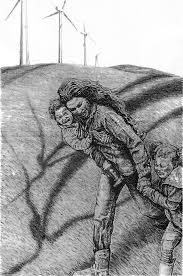
Suzanna Jones lives off the grid in Walden.
Suzanna Jones
Walden, Vermont
Letter to Editor Published Caledonia Record on May 22, 2017
Shadow Flicker
You have to see it to believe it. You have to see it to understand the intrusive severe nature of trespass for residents whose homes are now adjacent to industrial wind turbines. You have to see it to gain an idea of the damaging effects of being exposed to strobing shadow flicker in the most private of places your home.
““As it stands, shadow flicker is annoying and annoyance is a serious health issue under the World Health Organization.”
Wind facilities are NOT good neighbours.
Dashwood couple’s problem with shadow flicker raises ire
Big Green and Mean
Big ‘Green’ and Mean: A Wind-Energy Giant Attacks Small-Town America
by ROBERT BRYCE May 2, 2017 4:00 AM @PWRHUNGRY
The world’s biggest wind-turbine company has filed lawsuits against five rural governments because they stand between it and millions in tax subsidies.
NextEra Energy, which bills itself on its website as “the world’s largest generator of renewable energy,” is suing a tiny municipality in one of Oklahoma’s poorest counties. In mid February, NextEra, which operates 110 wind projects in 20 states, filed lawsuits in both state and federal court against the town of Hinton, population: 3,200. Why is the wind giant suing the Caddo County town? Simple: Hinton stands between NextEra and nearly $18 million per year in federal tax subsidies. NextEra isn’t suing only Hinton. Since last October, the wind giant has filed lawsuits against five rural governments from Oklahoma to Michigan, all of which have imposed limits on wind-turbine development.
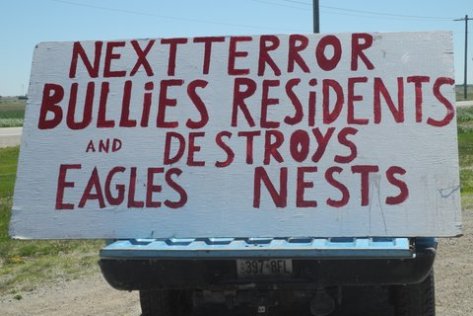
The company has also filed a libel suit against Esther Wrightman, a Canadian activist who opposed a project NextEra wanted to build in Kerwood, Ontario. Wrightman’s offense? She called the company “NexTerror” and “NextError” on her website, ontario-wind-resistance.org. That libel suit, filed four years ago, is still pending.
To be certain, the oil and gas industry has filed lawsuits against local governments that have sought limits on hydraulic fracturing. The difference is that NextEra is using taxpayers’ money to fund its courthouse mugging of small-town America. Between 2008 and 2015, according to a recent report by the Institute on Taxation and Economic Policy, NextEra accumulated profits of $21.5 billion but didn’t pay a dime in federal income taxes. Over that time frame, only ten other American companies received more in tax subsidies than NextEra. Nor does it appear that NextEra will be paying federal taxes any time soon. In its 10-K filing for 2016 with the Securities and Exchange Commission, the company reported $3 billion in tax-credit carryforwards that it can use to directly offset tax liabilities in future years. Remember, tax credits are more valuable than a deduction from revenue or accelerated depreciation. As my accounting consultant (and brother) Wally Bryce, a CPA, reminds me: “You’d much rather get a tax credit because it applies dollar for dollar against what you owe the government.”
NextEra wants more tax credits. And it’s litigating to get more. But each lawsuit NextEra files against a yet-smaller rural town or yet-smaller website owner provides another example of the backlash against Big Wind and, even more appalling, how Big Wind is using the issue of climate change as an excuse to make a run on the Treasury. Since 2015, more than 130 government entities in states from Maine to California have moved to reject or restrict the encroachment of the wind industry. And while other wind companies have also sued small towns, none can match NextEra’s scorched-earth tactics……
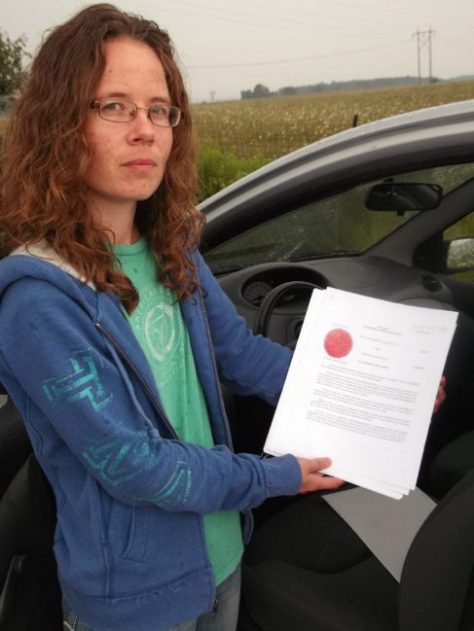
SLAPP Lawsuit Filed by NextEra Against Esther Wrightman
Statement of Defense filed by Esther Wrightman
Damages & Costs for families forced to abandoned their homes
Ireland’s wind industry has been put on notice. Damages and costs will be decided for the families adversely harmed by the noise emitted from wind turbines. The implications for the industry will no doubt reverberate worldwide. (Read prior court ruling by following link below)
Enercon Admits Liability in High Court Ireland
Court Case Has “Serious Implications” For Wind Farms – Local Campaigner
The future of wind farms in Ireland could be called into question this week.
Seven families from Cork, who claim they had to leave their homes five years ago due to noise levels, will have damages and costs decided by the High Court tomorrow.
It is the first action of its kind in this country and may open industrial wind developers to further legal challenges.
Laois woman Paula Byrne, PRO of Wind Aware Ireland, outlines the significance of the case.
Listen here: http://www.midlands103.com/news-centre/court-case-serious-implications-wind-farms-local-campaigner/

So you say you wanna Revolution?
 “Can you imagine what our environmental groups could achieve, given the number of people with a good focused knowledge of environmental compliance, and not necessarily a lawyer or somebody with deep enough pockets to be able to afford a lawyer? We could really put the brakes on unsuitable development and the rape of our countryside.”
Source: So you say you wanna Revolution?
Shut them down! Turbines Exceed Noise Regulations
Ontario has had years to respond to the knowledge that industrial wind turbines are exceeding noise limits. Regulations that the wind industry lobbied for.
In Huron-Bruce county residents continue to battle government to enforce existing regulations to protect and preserve health from intrusive noise of industrial wind turbines. The document below is just one example of many submitted to Ontario from adversely impacted residents:
The pressure continues to mount on the MOECC (Ministry of Environment and Climate Change). The turbines are emitting noise above regulated limits with tonal qualities. Ontario on their own admission and as on the public record- will use the ‘law’ to enforce protections. Do the right thing.
SHUT DOWN THE TURBINES NOW!
Tests Find Some Huron Bruce Turbines Exceed Noise Regulations
APRIL 12, 2017 4:18PM
The MPP for Huron Bruce has called on the province to shut down all industrial wind turbines that fail to comply with noise regulations.
Lisa Thompson says test results released April 7 indicate that the noise levels of turbines near two Huron Bruce residences exceed Ministry of Environment noise guidelines.
The results also acknowledged the possibility that tonal noises are being produced.
However, instead of agreeing to shut down the turbines, Environment Minister Glen Murray claimed the law is being enforced and complaints are being dealt with quickly.
“It has taken two years get these results. The next round of testing could take at least another year and a half,” says Thompson. “I don’t know what this minister thinks quick means, but suffering for three and a half years before anything gets done doesn’t sound quick to me.”
“The Black and Stachura families as well as other families across Ontario have been suffering for far too long from the impacts of IWTs which were built too close to their homes.” said Thompson. “The Minister needs to acknowledge the test results and once and for all do right by the people of Ontario affected by industrial wind turbines.”
She calls on the Minister to acknowledge the test results, and do the right thing.
Deep ‘Green’ Hypocrisy: Wind Power Cult Happily Ignores Bird and Bat Blood Bath
“This brings us to indefatigable wind warrior Esther Wrightman, an Ontario wind turbine refugee who fled to New Brunswick. Last year she filed a Freedom of Information request (FOI) with the Ontario Ministry of Natural Resources and Forestry in order to obtain the wind industry’s mandatory bird and bat mortality reports. In January she finally received “loads” of them, for a hefty fee. The mortality numbers are disturbing. Esther writes:
As the bird and bat mortality reports are slowly uncovered, the numbers just seem to get worse and worse. I never imagined it could get this low, but then again nobody was releasing this info to the public, so how were we to know?”
Source: Deep ‘Green’ Hypocrisy: Wind Power Cult Happily Ignores Bird and Bat Blood Bath
Judicial Review of White Pines Wind
The judicial review of the White Pines cultural heritage process, brought by Liz Driver and Edwin Rowse against wpd Canada and Ontario, will take place on Thursday and Friday, April 6–7, at Osgoode Hall, in Toronto. The hearing begins at 10 am each day.
It will be important to show the court that the community cares about the project’s visual impacts and construction vibrations on the County’s cultural heritage.
Osgoode Hall is at the northeast corner of Queen and University. There is Green P parking underground next door at City Hall or parking across the street under the Four Seasons Centre for the Performing Arts. Osgoode Subway Station is at the intersection.
More Information: CCSAGE NATURALLY GREEN (“CCSAGE”)

Remedy Hearing – Little Brown Bats take centre stage
 WE THOUGHT IT WAS OVER! TURBINE FIGHT STILL GOING! REMEDY HEARING FEB. 28TH!
Wind project developer (WPD) have been granted another chance that could allow them to install wind turbines at Clearview. They lost at the Tribunal on the grounds the project would cause serious harm to human health due to the wind turbines interfering and creating risks for safe aviation movements at the adjacent Collingwood airport. Serious harm to bats was proven. 
ON TUESDAY, FEB. 28. LITTLE BROWN BATS ARE CENTRE STAGE!
A REMEDY HEARING has been granted to allow WPD to present their mitigations measures which need to prove that the mortalities caused by the wind turbines will not cause irreversible harm to the critically endangered bat population which is facing possible extinction.
Hearing
(28-Feb-17, 10:30 AM)
Hearing
(01-Mar-17, 10:00 AM)
WHERE? Council Chambers, Collingwood, Town Of Collingwood, P.O. Box 157, 97 Hurontario Street, Collingwood, ON
To confirm dates and times look up case number 16-036 under hearings section on the Environmental Review Tribunal website: http://elto.gov.on.ca/ert/hearings/
[220] The Tribunal finds that over the lifespan the Project, it is more likely than not that the Project will cause serious harm to the local population of little brown myotis from which it will not recover and cannot be reversed. Therefore, without additional mitigation measures in place, the Tribunal finds that engaging in the Project in accordance with the REA will cause irreversible harm to little brown myotis.
16-036 WIGGINS V. ONTARIO(MOECC): http://elto.gov.on.ca/ert/hearings/
DECISION:
 Mothers Against Wind Turbines Inc.