Category Archives: Environment

Frozen Water Tanks & North Kent Wind

Chatham Daily News| January 2, 2018|By: Trevor Terfloth
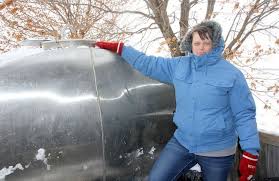
water tanks
Jessica Brooks, who has had issues with her water well, is shown with her frozen tank on Tuesday. (Trevor Terfloth/The Daily News)

Residents dealing with frozen tanks

Due to the bitter cold temperatures, residents near the North Kent Wind project found themselves without their temporary water source over the holidays.

Several water wells in the project area, currently under construction by Samsung Renewable Energy and Pattern Energy, have been clogged with sediments shortly after pile-driving took place for constructing the turbines.

Jessica Brooks, who lives on Brook Line with her husband Paul, had been dealing with a frozen exterior tank, which had been installed as an interim solution in the summer.

“New Year’s Eve, we had friends who were watching the house call us and say the water stopped running,” she said while her metal tank was being serviced on Tuesday.

Brooks said she was under the impression the tank wasn’t going to be needed for so long. She said there were problems with freezing at the outtake in the beginning of December.

“When I contacted both the Ministry of the Environment and Pattern Energy, nobody got back to me. We got it moving ourselves,” she said.

She had a bucket of well water with sediment in it that the family uses to flush the toilet.

“It’s just been frustrating,” she said. “We’ve been saying this (freezing) was going to happen.”

Kevin Jakubec, spokesman for the grassroots organization Water Wells First, said he’s aware of five households dealing with frozen tanks.

He said the problem could have been far worse if there was more snow.

“Imagine if we had a foot of snow,” he said. “If we have a blizzard, you are not going to get these trucks down these roads.”

In an e-mail to The Daily News, Pattern Energy stated it “received one report of a frozen tank this morning and the issue has been resolved.”

The company has maintained that the evidence doesn’t support the idea that pile-driving vibration has an impact on well water.

The Ministry of the Environment and Climate Change stated that North Kent 1 proactively supplied an alternative water supply to any complainant that had requested one, including bottled water for consumption and a water tank for all other domestic use.

“The company is responsible for addressing any concerns with the water supplies that have been provided, including addressing any issues related to freezing or access during snow events,” the ministry said.

“The ministry is continuing its review of well water assessment reports submitted by the company related to complaints over impacts during wind turbine construction. The ministry anticipates communicating the results of the ministry’s review directly with the well owners over the next few weeks.”…..

Read rest of article

Cherish Your Suffering

Rex Murphy: Cherish your suffering, Ontario; Premier Wynne’s green gods know of your sacrifice

Those outside the faith, and mere loitering agnostics, see nothing here but a catalogue of burdens. Shackles of an alien god. But to those within the covenant, they are the way stations on the hard and stony path to delicious rewards reserved for the elect.

National Post| January 6th, 2018|Rex Murphy

TS20161220CR20
Premier Kathleen Wynne

It cannot have escaped the attention of many that Ontario is most unsettled these days. That its industries are anxious, its debt colossal, its citizens not in a pleasant mood. Ontario is in a lot of pain. But let me assure readers outside Ontario that it has not all been for nothing. There are rewards. They are subtle, intangible, but they are real. Let me explain.

Those who share the faith and endorse the morality of global warming derive very much the same satisfactions that attended fidelity to the less demanding dogmas of earlier and less ambitious creeds. The carbon regime, tax hikes on gasoline, failed or failing long-term contracts, fear and trembling in the manufacturing sector, the gnashing of teeth in poorer (and now colder) households, Ontario Hydro’s ever-swelling levies, the despoliation of rural vistas by towers of whirling, bird-bashing windmills: These, each in itself, and all in combination are the acknowledged costs of the Great Greening.

Those outside the faith, and mere loitering agnostics, see nothing here but a catalogue of burdens. Shackles of an alien god. But to those within the covenant, they are the way stations on the hard and stony path to delicious rewards reserved for the elect. This is the true chemistry of belief. What appear as obstacles to heretics, appear to believers as smooth escalators to a higher state. Accepting, embracing what must be done supplies them with a sense of inner sanction, endows them with that peace of mind which a lesser scripture records, rather churlishly, as passing all understanding……

Read article

Unexpected impact from wind turbine projects

Wingham Advance Times|January 5th, 2018|Letter to Editor

Dear Editor,

Issues with wind turbine projects continue to impact municipalities and residents in unexpected ways. In the early summer I attended a drainage meeting in Ashfield-Colborne-Wawanosh council chambers. This meeting concerned a drain extension for the Glenn municipal drain. The drain crosses road allowances that have underground electrical lines for the K2 Wind project. At this meeting the drainage engineer stated that a larger culvert would be required because the presence of these underground lines meant that work could not be done as deeply.

As a landowner affected by the proposed work, I asked the engineer how many crossings were involved and how much more this larger sized culvert would cost. No answer was provided. I then questioned why anyone else other than K2 Wind should be paying for this extra cost. Again, no answer was received.

At a second meeting on this project in December 2017, the engineer reviewed the final plans and stated that for the crossing of power lines on Tower Line, a larger culvert would be installed due to the depth problem. In the question period, I again asked how much extra cost this would add to the project. The engineer explained that the crossing was on road allowance so the township would be picking up the cost, not the individual landowners. But who does he think the landowners are, if not taxpayers who will all have to pick up the extra cost? So, yes, I am paying for this extra cost and so is every landowner in the township.

Our council brags about how they got community benefit money from the K2 Wind project. Yet, when they accept extra cost on projects like this, the township is essentially subsidizing the wind company from the general coffers. This undermines the benefit of any money received. Once again, the taxpayer gets shafted.

When a municipal council allows extra costs for such things as drainage works to be loaded onto the ratepayers, you have to wonder who they are really working for. So ratepayers in municipalities with wind turbines need to be on the alert for the hidden costs with these projects. Taxpayers already subsidize the wind turbines through inflated hydro rates. They shouldn’t be shafted twice with more hidden subsidies.

To date, my questions about additional costs and who is footing the bill for the extra work on this drainage project remain unanswered.

George Alton Kenruth Farms

Concerned Resident of Ashfield-Colborne-Wawanosh

Samsung “K2 Lake”: Water& drainage impacts during construction of K2 Wind Project in 2014


Niagara Wind Tell Tale Sign

Somewhere in the Niagara Wind project spotted a tell tale sign. July-August- September 2017~Wind turbine electricity Production~ 30 MW/ 230 MW capacity~ 13% = FAILURE

Pseudo environmentalism misses the point

12963355_603246169843196_7809569198267345245_n
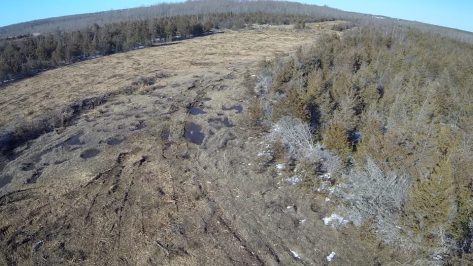
Destruction of wild places occurring globally for construction of wind turbines.                                  WPD wind developer land clearing in globally endangered species Blanding’s Turtle habitat.                              Prince Edward County, Ontario

Colorado Springs Independent|January 3rd, 2018|Letter to Editor

It’s interesting — and frustrating at the same time — to see the anger and uproar from environmentalists in recent news stories surrounding the blue picture frame at Garden of the Gods and the power plants in Colorado Springs.

With regard to the “Blue Frame,” people act like it was in a wilderness area instead of being in an urban area. The big picture, though, is this supposed environmental concern for the region with regard to the power plants. These plants were installed in the area of high-density power consumption, which at least makes this large population center responsible for their consumption.

The recent ideas are to put the undesirable power-generating alternatives out in the country disguised as “green technology” — wind turbines and solar panels euphemistically referred to as “wind farms” and “solar gardens.” That sounds so nice and harmless and makes people feel good about themselves as they look around their urban areas, and as long as they don’t have to see these behemoth eyesores with the required transmission lines it’s all good.

I understand that the image of Colorado (at least among Front Range urbanites) doesn’t include the plains, but that shouldn’t give them the right to trash out this area of relatively undisturbed land to feel good about themselves.

I just hope that real environmental groups will step up and see these things for what they are — a huge increase in the destruction of the environment. If people in urban areas really cared for the environment they would want power generation to be confined to the area of consumption instead of increasing their footprint out in the countryside.

Pierce Pritchett, Yoder

Big Wind- An Out of Date Solution

Turbines_J.-Marijs_Shutterstock

Rutland Herald| Letter to Editor|December 28th, 2017

A recent Rutland Herald editorial, entitled “Powering up,” concluded that we need to move with urgency toward the renewable power of the future. While that is correct, the editorial goes on to complain that “old ways” of thinking dominate the discussion in Vermont. At issue: the editorial then proceeds to propose “old ways” to move us forward.

When it comes to energy development in Vermont, the industrial wind industry leads the “old way” pack. Wind operators and developers have been living off federal subsidies since the early 1990s and have been wreaking havoc in Vermont for just as long. It’s time to boot them out of the state and employ creative Vermontsized energy solutions.

The editorial employs the “old way” strawman tactic when citing the arguments of industrial wind opponents. Legitimate concerns of Vermonters are minimized when the only argument acknowledged against ridgeline destruction is to mock “the exquisite timidity of those who grieve over birds killed by wind turbines.” It’s a cheap shot that does nothing to advance the conversation.

We should instead be talking about the entire range of problems industrial wind development brings to Vermont: mountaintop dynamiting, destruction of intact eco-systems, stormwater runoff, habitat destruction, habitat fragmentation, noise and health impacts to neighbors and wildlife, safety risks, community division, aesthetic degradation, tourism, property devaluation, and, yes, impacts on birds, bats, and even bears.

We should also talk about what does and doesn’t work. As environmentalist Suzanna Jones recently told us, “Despite the platitudes of its corporate and government backers, industrial wind has not reduced Vermont’s carbon emissions. Its intermittent nature makes it dependent on gas-fired power plants that inefficiently ramp up and down with the vicissitudes of the wind. Worse, it has been exposed as a renewable energy credit shell game that disguises and enables the burning of fossil fuels elsewhere.”

The editorial expresses concern about mass extinction facing numerous species around the globe. Bravo! Then let’s protect the ecosystems that will enable those species to migrate, adapt and survive and abandon the “old way” of thinking that allows our ridgelines and forest habitat to be destroyed by energy developers and their energy sprawl. As wildlife biologist Sue Morse tells us: “New England’s ridgelines will play an increasing and integral role as global climate change forces countless species of plant and animals to seek new habitats in which to adapt and survive.”

The editorial call for an improved large-scale infrastructure capable of transmitting intermittent power from remote, industrial-scale wind plants is another “old way” solution; rural areas are sacrificed to enable our unsustainable wastefulness. Treasured areas like the former Champion Lands, once valued for their ecological significance, become collateral damage. Large-scale transmission from rural to urban areas is a misguided “old way” use of our resources.

There is both wind and sun in our urban areas (Lake Champlain Wind Park, www.champlainwindpark.com) anyone?). We should be supporting renewable development in already-developed areas while protecting undeveloped areas.

We should also be emphasizing community scale generation facilities sited in the communities that they serve. This would reduce energy loss over lengthy transmission lines, improve system reliability, and preserve our vital wildlife habitat. This is the Vermont-scale approach that is in tune with Vermont values.

Some view turbines on distant ridgelines as a visible sign of our commitment to climate action. They’re wrong. A closer look shows that those turbines are exacerbating the very climate impacts that we wish to avoid. Industrial wind plants are putting money in the pockets of investors, developers and a few landowners, but they’re not addressing the very real and pressing problem of climate change.

The industrial wind lobby is fond of saying say we need to make sacrifices. We do. But where those sacrifices come from, whether or not they’re effective and, most certainly, who profits and who loses from them should shape our solutions. We need to change the way we live, we need to stop being so wasteful, and we need to support solutions that actually work. We need to invest in unsexy work of weatherization, efficiency and demand reduction. We should support renewable development in already-developed areas and prevent new development in resource rich areas. We should be focusing on the least destructive renewable technologies and develop microgrids around community scale generation.

Yes, we need to sacrifice, but that doesn’t mean sacrificing our natural resources. It means changing the way we live and protecting the earth. All of it.

Noreen Hession is a retired engineer, community organizer and environmental activist who lives in the Northeast Kingdom.

Good Neighbours Do Not Do This to Others

This slideshow requires JavaScript.

On the shores of Lake Erie in Haldimand County- Ontario, Canada hundreds upon hundreds of industrial wind turbines intrude, harm, harass and trespass.

Osage Nation Fights Wind Development

osage nation
“Standing Bear said the Osage Nation will continue to fight any infringement to the tribe’s mineral rights and environmental heath.”

“Rising over the treeless, rolling prairie and ranch lands, 15 miles west of this vibrant Osage County town, drivers along U.S. Highway 60 notice the sudden appearance of 84 wind farm towers, reaching hundreds of feet into the blue sky.

Instead of the sounds of birds singing a summer’s song or a south breeze sweeping the bluestem grass, travelers will hear a slow, steady whirring noise, as the giant blades rotate in the relentless wind on the prairie, attached to turbines to generate electricity.

At night, the slow, steady red blinking lights attached to the top of the turbine towers can be seen from a 30-mile radius.

The massive wind farm is part of Osage Wind, a project of Tradewind Energy and its parent company, Enel North America.”

Read article:  OSAGE NATION: Wind farm stirs legal battles

800 Pound Gorilla

Tom-Behrends-Noise-Generator-Gorilla-ad-600x457

I got back from Iraq in 2007 with two turbines within 1,000′ across the road on a neighbor’s property. Then the noise started, followed by shadow flicker when fall rolled around. I contacted my Jackson County Minnesota planning & zoning director who said everything was done to state specifications. He gave me the contact information to the company that was managing the wind turbines. That started a long battle with are they noisy, how noisy are they, there is no way to accurately test them, etc.

I have seen some right things and some wrong things in my 56 years in this country and 29-1/2 years in the National Guard. This whole wind power scam is just plain wrong. I feel there should be a national class action lawsuit on this issue, and frankly am surprised there hasn’t been one. The problem is there are those that think this is “green” energy, while the rural residents are tortured every single day by noise pollution and shadow flicker to name a couple. There is a “wind farm” in the planning process and the high pressure salesman talked to my brother three times getting the same answer: no. Then he had the gall to stop at my place.

I have always wanted this cartoon to be drawn up as I feel they are trampling the little guy and his family out here, making their acreages unlivable as mine is. So I had my sign maker draw it up, changed a few things here and there and had it published. I feel if I can prevent one person or family from going through the torture and hell I have gone through the last ten years, it will be worth it. As citizens we expect our government to take care of us and look out for our best interests. It has failed in the past with arsenic, asbestos, DDT, lead in paint, pipes and gasoline, Agent Orange and who knows how many other things they thought were safe to begin with. I think wind turbines fit right in the same category.

Tom Behrends, Brewster, MN

Download PDF

Source: National Wind Watch

Wind turbines bring a lot of questions

Letter published in:  wallaceburgcourierpress.com
Friday, December 1, 2017

I have heard the stock statement answers from the premier, MOECC minister, his staff, Chatham-Kent mayor and council, municipal administration and the main owners of the North Kent wind farm that it is making me sick.

These stock answers are:
–We take the concerns about ground water seriously.
–We take a very cautious, scientifically-based approach when setting standards for renewable energy projects to protect the health of the Ontario people.
–Pile driving vibrations do not affect water wells.
–Our Government is committed to clean energy.

The concerns of residents in some of the affected areas in the former Dover Township have been made aware to the Ministry in 2012. The problem arose in the former Chatham Township shortly after pile driving started in June of this year, just as was predicted by Water Wells First, based on what had happened in Dover which has the same Kettle Point Black Shale in the aquifer.  MOECC’s solution was to take turbidity tests which represents the clarity of water and not the heavy metals that are being carried in the water, some visible and some only visible under a microscope.

Dr. Colby states that the lead, arsenic mercury and uranium carried in the particles in the water will not render it unsafe. At the same time, he refuses to touch or have it tested and certainly would not drink it.

Scientific based approaches are as effective as is intended by those doing the testing.

I saw a vibration monitor on the Centre Side Road that was affixed to a well casing, which is not in contact with the bedrock, with a hose clamp that was not tightened to hold it tightly against the casing to pick up vibration. In addition, it was less then 100 meters from the road and at least 550 meters from the pile driving site. Does it seem reasonable to have a busy road between the site monitored and the sensor? Does it seem reasonable that no analysis is being done on the black matter suddenly appearing in wells that have been pristine for decades? Is that what a scientifically based cautious approach is all about?

So, computer models and engineer’s theory say that pile driving does not affect water wells!  No one has heard of a major water well problem for years, yet within two or three months of pile driving at least 16 water wells have been adversely affected. Engineer’s theory also said that the Titanic was unsinkable. Engineer’s theory and model said that the O ring in the Challenger space shuttle was adequate, but its failure caused an explosion and a major crisis in the USA space program. There is precedence for engineer’s theories and models for being wrong. Could this be another? Does actual observation not have preference over theory?

Our government is committed to clean energy apparently at the cost of water wells. Perhaps if the following questions were answered, it would shed some light on why they have this commitment.

How much money was paid by the wind industry to individuals, political parties and the Ontario government for the privilege of building turbines in Ontario without interference?

How much money was paid by the wind industry to individuals and the municipality to become friendly hosts for turbine construction?

How much money would it take to stop construction and stop operation of turbines until their negative impact on environment issues, especially water, are properly assessed by an independent party, since our politicians, local and provincially, obviously had not done “due diligence” prior to signing the agreements?

Are the citizens of this province being used as pawns in a system that is broken? Are some ministries, such as MOECC, actually company self-monitoring agencies that are incorrectly being paid by our tax dollars rather then the companies that they refuse to police. How do we change things? Is common sense dead?

Peter J Hensel
Dover Centre

Titanic_sinking,_painting_by_Willy_Stöwer
Titanic sinking, painting by Willy Stöwer