 Throughout the industry’s life industrial wind turbine showed steady increases in real costs with each round of procurement. It became more expensive to acquire and more poorly sited –…
Source: Industrial wind turbine industry found dead in Ontario

Throughout the industry’s life industrial wind turbine showed steady increases in real costs with each round of procurement. It became more expensive to acquire and more poorly sited –…
Source: Industrial wind turbine industry found dead in Ontario
 Wind Warriors share the common quest seeking information about wind power. Information sources are often not available, incomplete or obscure.
The Independent Electricity System Operator is a starting point to understand the components of Ontario’s energy grid. Experts are aware of IESO’s short comings and limitations but for citizen researchers the information presented marks a good place to begin the quest for knowledge and data about how power is generated.
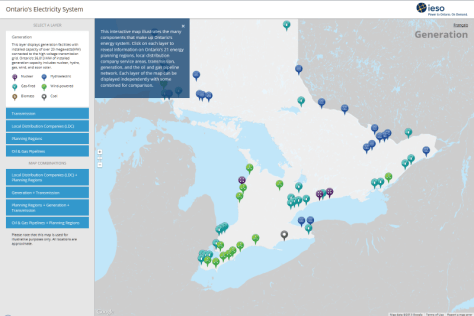
ELECTRICITY GENERATION SITES: http://www.ieso.ca/ontarioenergymap/index.html
WIND CONTRACTS: https://www.powerauthority.on.ca/current-electricity-contracts/wind
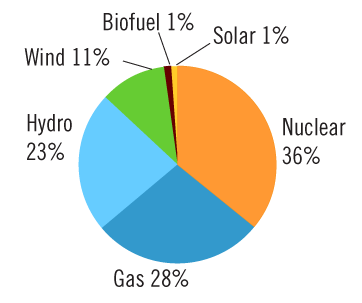
SUPPLY OVERVIEW: http://www.ieso.ca/Pages/Power-Data/Supply.aspx#list
ABOUT IESO: http://www.ieso.ca/Pages/About-the-IESO/default.aspx
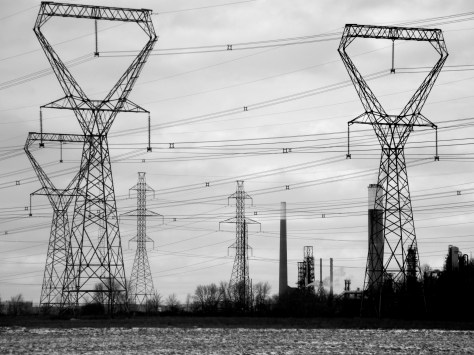
“Ontario’s legislature must repeal Green Energy and Green Economy Act, legislation that drove unprecedented politicization of power sector decision making and needlessly harms ratepayers.” Tom Adams Energy Expert
Ontario’s electricity bills are rising and Global News asked a panel of experts to weigh how they would make things better. The responses focused on the influence of renewable generation and cost impacts to those who foot the bills. Parker Gallant, Jane Wilson of WCO, Mark Winfield, and Tom Adams provided insights into the causes of the current deepening consumer crisis. Energy poverty which is forcing the heart wrenching decision whether to eat or try to pay the electricity bill.
“Premier Wynne’s “mistake” will continue to drive up our bills for some time. If she pays any attention to the dreamy musings of Environmental Defence and their ilk in the drive for 100% renewables, those heart-wrenching stories will become a daily occurrence.”
November 25, 2016; Parker Gallant Energy Perspectives
A recent press release from Environmental Defence announced the launch of yet another effort to “green” Ontario via an organization formed by the usual cadre of environmental non-government organizations (ENGO).
This one, the 100% RE or Renewable Energy, pushes the insanity of suggesting Ontario’s “next energy plan should empower citizens and communities to join the global movement toward 100 per cent renewable energy.” It suggests Ontario “should follow the lead of communities, such as Oxford County, that are transitioning to clean and healthy 100 per cent renewable energy”.
It is apparent that the people at Environmental Defence — the same ENGO that was a participant in the creation of the Green Energy Act — somehow believe they are superior energy planners than those with qualifications. Beyond Environmental Defence, the 100%RE group includes the usual suspects such as the David Suzuki Foundation, Pembina, Greenpeace, the Ontario Clean Air Alliance, Physicians for the Environment, the Registered Nurses Association of Ontario and several lesser known names, including the Toronto Environmental Alliance and TREC. The latter were responsible for the Toronto Exhibition Place wind turbine used by countless Ontario Liberals as a photo-op but which generates almost no usable power and whose control now rests in the hands of Toronto Hydro. TREC have placed a plaque at the base of the turbine with the names of the people who invested in the turbine and have no hope of ever seeing a return on their money. One of the names on the plaque is Dianne Saxe, the current Environmental Commissioner. (It appears supporting industrial-scale wind turbines that kill birds and bats did not deter the Ontario Liberal government from appointing Ms. Saxe as commissioner of the environment.)
Now, with Premier Wynne’s recent mea culpa at the Ontario Liberal Party convention when she referred to Ontario citizens having to choose between heating their house or buying food, one has to wonder: exactly why did it take her so long to admit to her mistake? Maybe it’s because the Ontario media has recently noted rising electricity bills are causing energy poverty; the hard-luck stories in print and on TV are often heart-wrenching. Those stories, and the relentless arrival of the monthly hydro bill, has had a lot to do with recent polling results showing that 67% disapprove of the job Premier Wynne is doing.
One of the obvious “mistakes” Premier Wynne made was not paying attention. When she was confronted by communities back in August 2013 declaring themselves “unwilling hosts” to industrial wind turbine developments, her response, as reported in the Ottawa Citizen, was to shrug it off: “Wynne has asked the Ontario Sustainable Energy Association to raise awareness in communities slated for the turbine projects about the benefits of hosting, including the financial gains that can come from being power generators in a cash-strapped economy.”
Was she so naive that she didn’t realize those “financial gains” would come from the pockets of average households, and that OSEA claimed responsibility for developing the Green Energy Act that had a role in rising electricity bills?
Her announcement on the repeal of the 8% provincial portion of the HST is at best comparable to sticking her finger in a dike to stop the flood. It has apparently slipped her mind she was part of the team that placed the tax on our energy bills, while simultaneously blessing a 10% rebate known as the Ontario Clean Energy Benefit.
The net gain to households from those actions was a 2% reduction, at the same time as the Ontario Energy Board was approving rate increases for both the electricity and distribution lines on our bills that were multiples of the 2% net gain from the Liberal government actions.
The upcoming plan to add a “cap and trade” tax to households will quickly negate the latest 8% reduction. On top of the new tax, Ontario Power Generation, which generates about 60% of the power we consume in the province, has submitted a rate application to the OEB that could add $63 to the average bill.
Premier Wynne’s “mistake” will continue to drive up our bills for some time. If she pays any attention to the dreamy musings of Environmental Defence and their ilk in the drive for 100% renewables, those heart-wrenching stories will become a daily occurrence.
Creating the Green Energy Act based on faulty ideology, and with no comprehensive cost-benefit analysis in place was a big mistake — one that remains fundamentally not corrected.
“Our children are our world and they’ve always been well cared for and loved,” said Carol. “But here we are, feeling scared and horrified because this could happen to us.”
Terrified, Carol and her husband do all they can to remain strong for their family.
I usually wait till the kids are in bed and I know they’re asleep,” Carol said. “Then I cry, because I try to be as positive as I can for them.”
Wealth is not only measured in money but what resources you can access to create a safe home for your family and children. Electricity is an essential service in a cold climate country like Canada. Rates in Ontario are out of control and an increasing number of homes are now in default and cannot pay their bills. Without electricity furnaces don’t heat, food isn’t kept safe for consumption in cooled refrigerators, water pumps don’t bring water to a home, sump pumps in basements sit idle allowing water to seep in resulting in mold and structural damage. What has fuelled the crisis of today?
The tipping point has its roots in the Green Energy Act of 2009 which included the institution of a cryptic entity called the Global Adjustment. This mechanism is used for recovering differences in costs such as introducing renewables generation systems and the priority access to the grid given for wind and solar. It includes the cost of the contracts held with renewable generators which are paying above market rates for electricity, selling electricity at a loss for out- of- sync demand generation and a growing frequency of payments for curtailment.
Consequences for political decisions made surrounding energy policies are personal. Having your electricity cut off for non- payment is a nightmare but it is also a measure our society. How do we protect the vulnerable and what will be done?
Cancelling wind contracts would save billions in costs and would be for the greater good.
Read more about Carol’s family at: Hydro One leaves family of 6 without electricity for months: http://globalnews.ca/news/3085450/hydro-one-leaves-family-of-six-without-electricity-for-months/
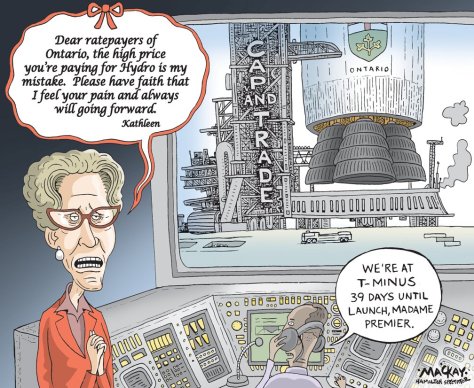
http://mackaycartoons.net/2016/11/21/tuesday-november-22-2016/
Ontario’s energy policy is generating anger and attracting media attention as rates spiral out of control and residents face the heart wrenching dilemma of whether to heat or eat. Energy poverty that the Premier acknowledges is her government’s mistake but fails to take action to correct. A good place to start is to cancel wind power generation contracts and stop construction of any wind project not yet built. It is never too late to do the right thing.
Robyn Urback · Columnist · CBC News November 23, 2016
Wynne has recognized her ‘oopsies’ and is asking for Ontarians’ patience and trust to fix the problem
“Aside from the repeated, incessant warnings — there was no warning.
Ontario’s energy costs have spiraled out of control. Consumers are struggling to pay their hydro bills and still have enough money left to buy a ticket to one of the premier’s cash-for-access fundraisers.
Who — with the exception of everyone — could have foreseen that wasting billions of dollars on cancelled gas plants, paying way above market value for green energy contracts, producing too much energy and selling it to other jurisdictions at a loss, and investing in smart meters that didn’t actually do what they were supposed to do would translate into skyrocketing electricity bills for everyday Ontarians?
Why didn’t someone — besides the auditor general, both opposition parties and various economic experts — say something?
Now Ontario finds itself in a mess of its own making, locked in unsustainable contracts and a looming cap-and-trade scheme that will make hydro bills even more expensive, all while some Ontario families have “had to choose between paying the electricity bill and buying food or paying rent,” according to Premier Kathleen Wynne. Thanks, guys.
“Our government made a mistake. It was my mistake. And I’m going to do my best to fix it,” Wynne admitted in a rare moment of contrition during her address to her party’s annual general meeting this past weekend.
“In the weeks and the months ahead, we are going to find more ways to lower rates and reduce the burden on consumers,” she added…”
READ ARTICLE AT: http://www.cbc.ca/beta/news/opinion/ontario-hydro-bills-1.3862838
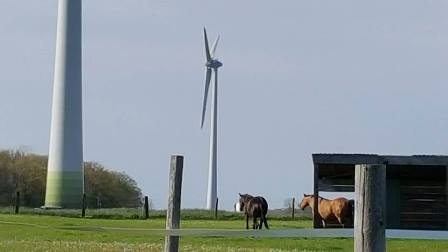
Ontario is engaging in review of its Long Term Energy Policy and encourages public consultation. Attend a consultation session or provide your opinion online.
Ontario has a robust energy supply and it begs the question why contract for even more wind power or build projects such as Amherst Island, White Pines, Fairview Wind? Wind power continues to demonstrate it is out- of -phase with demand and we are selling the unnecessary electricity at a loss and burden of cost to ratepayers. Will the Independent Energy System Operator conduct a critical cost benefits analysis for all renewable energy power sources?
Wind power continues to create adverse harm to the environment and human health. Wind facilities remain fire walled behind the statues of the Green Energy Act shielding it from independent review. This has resulted in disabled protective standards that must be met by other sources of power generation.
Cancel the contracts. Ontario has the power.
For more information visit the Ministry of Energy of Ontario website: http://www.energy.gov.on.ca/en/ltep/
Here is the schedule for consultations to the end of the month:
| Tuesday, November 15th | Sault Ste. Marie Algoma’s Water Tower Inn 360 Great Northern Road | 6pm-8pm |
| Wednesday, November 16th | Timmins Days Inn and Conference Centre 14 Mountjoy Street South | 6pm-8pm |
| Thursday, November 17th | St. Catharines Holiday Inn & Suites Parkway Conference 327 Ontario Street | 6pm-8pm |
| Monday, November 21st | Guelph Holiday Inn Guelph Hotel and Conference Centre 601 Scottsdale Drive | 6pm-8pm |
| Tuesday, November 22nd | Pembroke Best Western Pembroke Inn & Conference Centre 1 International Drive | 6pm-8pm |
| Wednesday, November 23rd | Ottawa Nepean Sportsplex 1701 Woodroffe Ave, Nepean | 6pm-8pm |
| Thursday, November 24th | Kingston Holiday Inn Kingston Waterfront 2 Princess Street | 6pm-8pm |
| Monday, November 28th | Windsor Holiday Inn Hotel and Suites 1855 Huron Church Road | 6pm-8pm |
| Monday, November 28th | Kitchener Holiday Inn Hotel and Conference Centre 30 Fairway Road South | 6pm-8pm |
| Tuesday, November 29th | London Best Western Plus Stoneridge Inn and Conference Centre 6675 Burtwistle Lane | 6pm-8pm |
| Wednesday, November 30th | Mississauga Mississauga Living Arts Centre 4141 Living Arts Dr |
Indigenous people’s events:
| Mattagami First Nation | Mattagami Community Complex 75 Helen Street, Gogama | |
| Nov. 17 | Matawa First Nation | TBC |
| Nov. 21 | Bar River Métis | TBC Sault Ste. Marie |
| Nov. 22 | Sandy Lake First Nation | TBC Sandy Lake |
| Nov. 24 | Mohawks of the Bay of Quinte | Mohawk Community Center 1807 York Road.,Deseronto |
| Nov. 25 | Historic Saugeen Métis | Historic Saugeen Métis Interpretive Learning Centre 204 High Street, South Hampton |
| Nov. 28 | Red Sky Métis Independent Nation | TBC Thunder Bay |
| Nov. 29 | Atikameksheng Anishnawbek First Nation | Atikameksheng Anishnawbek Community Center 37 Reserve Road, Naughton |
| Nov. 30 | Manitoulin Island | Manitoulin Hotel and Conference Centre 66 Meredith Street East, Little Current |
| Dec. 6 | Algonquins of Ontario | Pembroke |
| Dec. 7 | Aamjiwnaang First Nation | Aamjiwnaang Community Centre 1972 Virgil Avenue, Aamjiwnaang First Nation |
| TBC | Métis Nation of Ontario | TBC Toronto |
 Why pro-wind studies often use a 10 km radius
Author: | Health, Property values (published 2011)
Last week I was reading of an Australian study, by a Professor Gary Wittert, which had shown sleeping pill usage for those living near wind turbines was no greater than the general population . The study compared those living within 10 km of turbines with those living more than 10 km away. There have been similar studies with property values using a 5 mile or 10 km radius that showed property values are not affected by wind turbines. Had you ever thought why they pick a 10 km radius?
Consider this graphic. It shows 1 km bands with the calculated area for each band shown in blue.

Let’s keep it easy and assume that households are evenly distributed and there is one household for every 10 square kilometers.
So, within 2 km (the two innermost bands) of the turbine, the area is 3.1 + 9.4 km² (=12.5 km²) which would represent 1.2 households.
Now let’s consider the two outermost (9 km and 10 km) bands. The area of these bands is 53.4 + 59.7 km² (=113.1 km²) which represents 11.3 households. So the outermost bands have about TEN TIMES the number of households of those living within 2 km, making sure that the contribution of the inner bands is diluted, swamped, covered up or however else you would describe it.
Or consider if you live within 2 km of a turbine. The outer bands of those living from 2–10 km from the turbine adds up to 301.6 km², which would represent 30.1 households – which is 24 TIMES the number of households within 2 km.
No wonder your voice is being “drowned out”. The bigger the circle, the more “dilution” occurs.
Add this to the list of things where “size matters”, and next time you see a study like this, consider the radius and area that was chosen. The choice of the circle size plays a major role in the result obtained and speaks volumes about the motivation of the author.
by Alec Salt, Professor, Department of Otolaryngology, Washington University School of Medicine
 Hello DDOWT Supporters,
WE NEED YOUR HELP!
In light of Energy Minister Glenn Thibeault’s recent announcement suspending LRP-2, we are now calling on the provincial government to also cancel the recent LRP-1 contracts, including the Strong Breeze Wind Project in Dutton Dunwich. Ontario does not need the energy and this cancellation would save Ontarians Billions of dollars!
We need your help by participating in our letter writing campaign. It is easy and will only take a quick moment of your time.
Below you will find a copy of the letter we are asking you to sign. All you need to do is send us your email address, either in an email to info@ddowt.ca, or in a private message through Facebook. You will then be emailed a ‘DocuSign’ to sign. Simply open it and follow the on screen instructions to review and sign the letter. Once we receive your signed copy, a hard copy will be printed and mailed to the addressees stated in the letter on your behalf. We encourage each member of your family to sign a copy of the letter. Just send their email address and we will send a separate letter for them. Rest assured that any information you provide will remain confidential, and will be used only to send these letters .
If you would prefer to mail a copy of the letter on your own, contact us and we will provide you the necessary information and addresses.
In addition to the letter writing campaign, our DDOWT volunteers will be going door to door with a petition to show the strong support in our community for cancelling this project. Please participate in both of these efforts as they are absolutely necessary for added pressure on the provincial government. If you would like to sign the petition, but do not receive a visit by the end of November, please contact us through email or Facebook.
If you have any questions, please do not hesitate to contact us.
Thank you for your continued support! The fight is not over!!
DDOWT
email: info@ddowt.ca
website: http://www.ddowt.ca
facebook: http://www.facebook.ca/DDOWT

In Vermont wind power developers are offering direct financial incentives to facilitate the latest proposed industrial wind turbine development. Critics are very clear that they feel the offering is a mechanism to buy the vote. Wind proponents spin it as sharing the economic benefits of wind power. The United States is not alone in having money being used as the carrot on the stick to silence opponents. 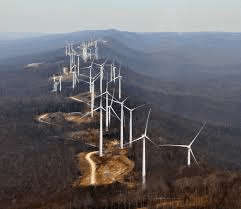
In Ontario many local municipalities fall silent opposing renewable projects when their acceptance is facilitated by the payout of Community Vibrancy Funds offered by wind developers.

The Haudenosaunee people of the Six Nations located within the Haldimand tract territories are also being engaged via installed governance structures (which are bitterly contested due to historic forced installment under the Indian Act). Six Nation Band Council along side other entities such as HDI have become willing part- owners of renewable energy projects with the promise of big monetary buy outs. The price tag for good will metered against mandatory consultation about development guaranteed in the Canadian Constitution. Agreements for project ownership are funded with borrowed monies indebting cash strapped communities along the Grand River. The decision to participate fueled with promises of monies and pay outs totaling in the tens of millions of dollars for some of the renewable projects. The price point rising with each agreement according to perceived level of threat of facing opposition and fear of direct action being taken against the projects. Many residents of Six Nations Territories are demanding to be shown the money as questions continue to swirl over the legitimacy of signatory authority of consent on the contracts and in particular alarm is raised over claimed clauses extinguishing sovereign rights for the lands. Community consensus which is the traditional model of Iroquois government has not been reached. This was evidenced by the appeals from the Men’s Fire Council from the Six Nation Territories at the Environmental Tribunal. Controversy and division over wind power continues today within the close- knit community.
Community disruptions and harms caused by wind power is not and will not healed by any amount of money.
Vermont: Closing Arguments: Wind Power not Green vs Financial benefits to the Community http://www.chestertelegraph.org/2016/10/31/op-eds-closing-arguments-wind-power-not-green-vs-financial-benefits-to-communities/
 Mothers Against Wind Turbines Inc.