Category Archives: Adverse Health Effects

Nation Rise Wind set to break ground

The Ontario government promised to repeal the Green Energy Act  which permits renewable energy projects but that promised has failed to halt  Nation Rise Wind.   The project was appealed at the Environmental Review Tribunal and remains strongly opposed by concerned citizens.   The project developers are giving a time line of June 2019 to break ground for construction even as the project remains under Ministerial appeal.

National Valley News|May 17, 2019

June groundbreaking on Nation Rise wind project turbines, developers tell council

BERWICK — The 30-megawatt Nation Rise wind project is set to break ground on turbine foundations next month in the rural countryside here — right around the same time the Doug Ford Conservatives celebrate one year since their election on a platform staunchly opposed to such initiatives under the previous Liberal regime’s Green Energy Act.

Ken Little of EDP Renewables, associate director with EDP Renewables Canada — the company that is (now) minority stakeholder and developer of the 28 to 33 turbine project — apprised North Stormont council of the ironic construction timeline in a presentation this week.

Little said that site-clearing and preparation will continue through the end of May with a possible start on an access road into a planned electrical substation by then as well. Construction on the actual turbine foundations and the substation, west of Crysler, will begin in June, he reported to a packed Council Chambers, where a large number of the public overflowed available seating into the hallway outside the room. The developer sees the turbines in place and sending power into the grid by December.

“We did have the ability to start construction in limited fashion for May 9th,” Little explained, clarifying this month’s activities have so far involved “people … more or less identifying areas for work to begin.” But with geotechnical approval received this week, “we’ll be moving into more fulsome construction in the next one to three weeks, in terms of starting access roads” and crew facilities, he added.

Though it has “a lot of approvals to go forward now from the Ministry of Environment,” Little conceded the company still awaits some local and South Nation Conservation permits before installing “individual and specific components” of the wind farm. “So while we may have some approvals, if there’s other local permits that we need to have required for that, we will seek to have those permits prior to starting construction, obviously to make sure we’re in compliance with any local regulations on that,” he pledged.

No mention was made of the project opponents’ last-ditch appeal to Ontario’s Minister of Energy to quash the project, whose ruling had yet to be received on the evening of the May 14 council meeting. The Ford government to date has killed more than 750 pending Green Energy Act projects signed by the previous Wynne Liberals.

Little was accompanied at the podium by EDPR’s Tom LoTurco, director of development for the Eastern US and Canada. A couple more of their company colleagues also watched from the sidelines.

See their presentation on the construction schedule, followed by council questions below
READ ARTICLE

Rally to raise awareness of electromagnetic hypersensitivity

Wind turbines have sensitized a number of rural folk to health problems arising from electricity generation and it’s associated infrastructure.  Reports are increasing of individuals newly diagnosed with electromagnetic hypersensitivity after wind turbines and associated infrastructure (eg- transmission lines, substations, etc) were built adjacent to their homes.

Woman’s College Hospital runs a multidisciplinary Environmental Health Clinic which is one of a kind in Ontario.  The clinic provides leading edge access to clinical care and diagnosis for people with chronic complex environmentally-linked conditions such as Myalgic Encephalomyelitis/Chronic Fatigue Syndrome (ME/CFS), Fibromyalgia (FM) and Environmental Sensitivities, including both Multiple Chemical Sensitivity (ES/MCS) and Electromagnetic Hypersensitivity.

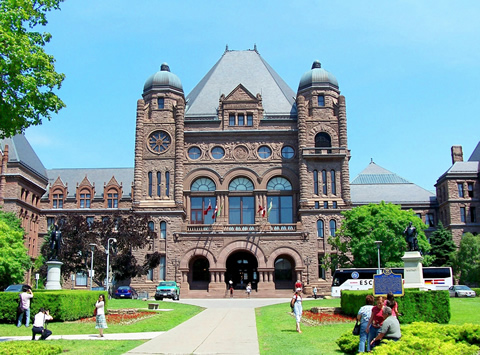
queens-park_480
Queen’s Park, Toronto Ontario

Rally to Increase Awareness Regarding Electrosmog and Electromagnetic Illness

updates

Rally is being rescheduled for a later date.  Conference will proceed as planned.


womans college hospital
Woman’s College Hospital

Impacts of Wireless Technology on Health Symposium

May 31/19 ~8:00AM-4:30PM~ Women’s College Hospital, Burton Auditorium~ Toronto

Hosted by  Woman’s College Environmental Health Clinic the event  includes 13 speakers on topics ranging from IARC (International Agency for Research on Cancer) implications, health impacts and epidemiological evidence of EMF exposures, home assessments, legal issues, impacts on students and teachers, advocacy and next steps.

Register at: Impacts of Wireless Technology on Health

($100 registration fee)

WIRELESS TECHNOLOGY SYMPOSIUM_FLYER

Irish Wind Energy Apologies to Adversley Impacted Communities

ireland turbines

Agriland|Aisling Kiernan|

IWEA apologises to wind farm communities across Ireland

The Irish Wind Energy Association (IWEA) has apologised to communities across Ireland who have been negatively impacted by the development of wind farms – via its members – in their localities.

The association’s head of communications and public affairs Justin Moran also confirmed that a new focus on community and public engagement would ensure that relations between residents and developers will improve “going forward” as wind energy gets set to step up a gear in this country.

Moran’s comments come in the aftermath of the publication of a series of articles by AgriLand in which community groups from Donegal to Kerry laid bare the difficulties both they and the local environment now face as a direct result of wind farm developments in their area.

He also pointed out that the latest phase of the Renewable Electricity Support Scheme (RESS) – which the organisation anticipates will be up and running early next year – will place an obligation on all wind farm developers to offer an investment opportunity to people in the community.

IWEA, meanwhile, is a trade association that represents companies involved in the planning and development of wind farms in Ireland. It represents all the big players in the industry including Brookfield, Coillte, Bord na Móna, ESB and SSE.

‘Bridging the great divide’

Speaking about the fallout between developers and communities Moran said there was “an acceptance” in the industry that the way in which member companies engaged with communities in the past “was not the way”.

There would be an acceptance in the industry that the way in which we engaged with communities in the past – and the way we have engaged with communities – is not the way to be doing it.

He continued: “Wind farm developers need to realise that the people who live in these areas have been there long before they arrived.”

Moran went on to say that it was public knowledge now that situations have arisen in rural Ireland where, when locals tried to explain to developers why they simply could not place a wind turbine in a particular area or on a specific piece of land, communication subsequently broke down.

“We need to listen to what local people are saying to us. We all know there are cases where developers came in and locals were able to tell them that they would not be able to put a wind turbine in such and such a location for whatever civic or environmental reason it was,” he added.

Developers very often don’t know these things and the feedback from the community is very, very important in all of this.

“Engaging with the community and sharing knowledge will result in a more effective project for everybody concerned.

“Information that is given in an open, transparent, accessible and a factually correct way is the way forward and results in a better experience for everyone.

“We need to be more conscious of doing that.”

Infrasound Effects

Infrasound is found within our natural environment but it is the emissions generated by sources such as industrial wind turbines that are raising concerns.  There are growing reports of adverse health symptoms from residents whose homes are adjacent to electrical generation complexes powered by the wind.  The following letter points out negative health effects arising from exposure to man- made sources of infrasound were known and studied prior to current day rapid expansion of wind powered installations.

infrasound_orig
The Advertiser-Tribune| Letters to the Editor|December 1, 2018

Infrasound effects

I congratulate Seneca County for being selected to participate in one of the largest experiments to determine the effects of infrasound on human organ systems. With large numbers of massive wind turbines planned in this densely populated county, medical effects on internal organs can be analyzed.

The size of the proposed wind turbines ensures the generation of low-frequency infrasound. The proximity of wind turbines to schools guarantees that as children age, internal organ deterioration can be compared to child control groups from similar demographic locations lacking wind turbines. After 10, 20 and 30 years, researchers can evaluate effects on human internal organs from infrasound. This is important, because western scientific research and medical literature has little written concerning short, or long-term infrasound effects on human organs such as lung, heart and kidney.

However, infrasound effects on internal organ tissue have been studied by numerous researchers in the former Soviet Union. They found that infrasound waves cause significant changes to heart tissue and other internal organs.

In the 1990s, European investigators studied internal organs in animal subjects and human workers exposed to infrasound. They found significant changes in lung tissue and heart pericardium. The authors also were concerned with potential damage to internal kidney structures.

In January 2018, German researchers presented results concerning infrasound effect on cardiac tissue contractility. They found cardiac tissue exposed to infrasound decreased tissue contractility by 25 percent.

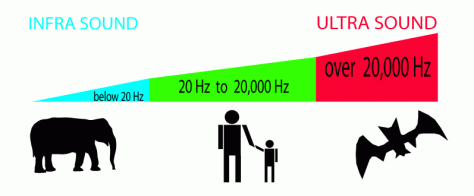
Seneca County wind farm companies state that wind farm sound levels will only approach 55dbA. That information is misleading concerning infrasound. The“A” designation is a filtration formula including only audible sound between 20Hz and 20,000Hz. Infrasound is defined as occurring between 0-20Hz and is not identified with the dbA formula.

With multitude turbines planned, decibel level determination may be problematic. Overlapping sound wave energies add together, similar to overlapping ripples on water from multiple stones dropped simultaneously. Some waves cancel out. Other waves enlarge. Wind turbine numbers become directly proportional to infrasound wave energy multiplication. Also, infrasound waves are stable, traveling great distances.

For those interested in their own personal research on infrasound effects, information was obtained for this letter from the PubMed website (Key words: infrasound AND heart, or infrasound AND physiological effects) and the Wikipedia website. Soviet research, translated from Cyrillic, was obtained from the archives at The National Library of Medicine at the National Institutes of Health, Bethesda, Maryland.

Retired Capt. Michael T. Curran,

U.S. Navy,

New Riegel

Lake Erie Groups Rev Up Opposition

Cleveland.com| By Laura Johnston| April 15, 2019

WI070625_151.tif
Lake Erie Shoreline

Lake Erie groups rev up opposition to Cleveland wind turbine project, as developers negotiate with state

CLEVELAND, Ohio – The project has been on the horizon for a decade and a half: six wind turbines erected in Lake Erie, in the first freshwater wind project in North America.

But fervor over the issue is revving up now among boaters, as the developer, the nonprofit Lake Erie Energy Development Co., works through stipulations with the state.

The Lake Erie Marine Trades Association — made up of boat dealers, clubs and other enthusiasts — opposes the $126 million, 20.7-megawatt project dubbed Icebreaker, planned for 8 miles north of Cleveland. So does the nonprofit Lake Erie Foundation.

Both LEEDCo. and its opponents point to hundreds of pages of documents they say prove their points.

The fight is not so much over the six turbines up for state approval right now – but for the wind farm it could precipitate: thousands of spinning blades the Lake Erie Foundation fears will desecrate Lake Erie.

LEEDCo. CEO Lorry Wagner says there are “currently no plans” for more turbines. “You can have all the dreams and aspirations you want, but until you climb that first hill and see what’s out there, you better focus on that first hill.”

But Icebreaker is a pilot project, with a $40 million grant from the U.S. Department of Energy. LEEDCo. has partnered with Norway-based Fred Olsen Renewables, and its website says “we can build an industry and supply chain in Northeast Ohio that will creation 8,000 new good paying jobs and pump nearly $14 billion into our economy by 2030… as the industry grows here.”

An expansion would require more studies and more approvals.

Said foundation board member John Lipaj: “You cannot treat this as a six-turbine stand-alone project. We have to be realistic and treat it for what it is.”……

READ MORE HERE

No wind turbines on Great Lakes

wolfe island foggy
Wolfe Island Wind Turbines

Boating Industry|April 9, 2019

MBIA urges boaters to voice their opposition to wind turbines in the Great Lakes

The Michigan Boating Industries Association, along with environmental groups, boating associations, and property owners are urging boaters to raise their voice in opposition of the proposed Icebreaker wind power turbines in Lake Erie.

Nicki Polan, executive director of MBIA says: “MBIA is not opposed to alternative sources of energy. But, regarding wind farms in our Great Lakes, we find far too many unanswered questions and documented risks to the health and aesthetics of these unique and often times fragile bodies of water. We stand opposed to plans such as the one being considered in Ohio now and we encourage all boaters and boating businesses to join us in communicating this to Ohio.”

Michigan borders on four of the five Great Lakes including a large portion of Lake Erie. Many Michigan residents’ boat on Lake Erie, and many Michigan businesses and citizens live and work along its shores.

Only 2.5% of the world’s water is fresh water, and 20% of that is coming from the Great Lakes.

“Building wind turbines in Lake Erie will threaten clean water, boating access, one of the world’s best perch and walleye fisheries, bird migration, the safety and health of coastal residents, and so much more,” said Polan.

The initial goal of the Icebreaker plan is to place 6 wind turbines, with a final goal of 1,200 wind turbines in Lake Erie, costing an estimated $24 billion.

“Wind power has proved to be very high cost with low return,” said MBIA Board Member Jim Coburn of Coburn & Associated in Macomb, Mich. “Many wind turbine projects in the U.S. and overseas have been abandoned because of this. Why this is even being considered in our Great Lakes is beyond me.”

The case against turbines is extensive, including the fact that exploding and burning turbines can be commonplace. Each turbine contains over 400 gallons of industrial lubricants in their gearboxes.Gearbox seals are known to fail and will leak oil into the waters below. But when they burn there is no way to reach and extinguish them. As the 300-foot turbine blades burn, they create toxic emissions polluting the air and waters below.

Source: Boating Industry

Why have people vacated their homes?

I often get this question: “Why have people vacated their homes, or are feeling sick, around windmills in Brown County”. This is not a unique scenario. Very large industrial-scale wind turbines placed irresponsibly close to families’ home have similar impacts worldwide. The impacts do not discriminate between young or old, rich or poor. Some people are more susceptible to the negative impacts (one consistent correlation is people who are sensitive to motion sickness).

This German video does a pretty good job describing the issue. Please note that the turbines in this video are MUCH smaller and less impactful than the 8 Duke Energy wind turbines in Glenmore that were unanimously declared a Human Health Hazard by the Brown County Government Board of Health.

Duke’s turbines in Brown County are among the largest in the country placed among the closest to homes. They are 493 feet tall and have 2.5 Megawatt generators (One megawatt = 1,000 kilowatts = 1,000,000 watts). You will also note that the turbines in this German video are over 700 meters (over 2,100 feet) from homes – the turbines in Glenmore are as close as 1,100 feet from homes.

Wisconsin Public Service (owned by We Energies) purchases the power from this project and it is regulated by the Town of Glenmore who apparently refuses to enforce the clear and protective language in their own ordinance and conditional use permit. Families are living away from the homes they still own; residents who can not move away have submitted affidavits attesting to the fact that they continue to feel severely ill when around the spinning turbines; and little is being done to bring any relief.

It breaks my heart to hear callous comments from well intentioned people that have not experienced the impacts in these homes first hand or even taken the time to talk with the impacted residents. The question I ask these people who don’t understand is why would people make this up. People do not leave the homes they still own and maintain for no reason. They do not want to sleep and do homework in their basements because it is the only place in their homes where they can get a little relief. They do not enjoy coming forward only to be the subject of ridicule and voluntarily devaluing their homes. The symptoms our neighbors express are shared world wide.

Even those profiting from renting land to wind developers have sued them because of claims of the unlivable conditions around the turbines. This is a social justice issue – Shirley Wind in Glenmore is arguably one of the most studied wind farms in the country and ample evidence is known on the conditions around these particular turbines. If you would like to know more, please don’t hesitate to call or write me – I can direct you to those that can provide the answers and have first hand experience. Hope some of this information is of value.

Thank you for reading this long post.

Steve Deslaurie, Brown County Supervisor
April 5, 2019

Source: Community for Steve Deslaurie,


Charter Challenge Against Green Energy Act

The Green Energy Act is far from being repealed in Ontario.  The Charter Challenge led by CCSAGE continues on with the recent filing of a Notice of Application to proceed filed in the Ontario Superior Court of Justice.

Read Notice of Application here:

Source:
Notice of Application required to continue the Charter Challenge to the Green Energy Act by Alan Whiteley

no_wind_400x400

Experience of a Lifetime

You are invited to live the life of an experience you will always remember.

You are invited to bring your family, your grandchildren (young children) and your pets to spend an all expense paid week (bring your computers to enable you to continue to work) in the “green” area of industrial wind turbine business contracts.

Experience first hand shadow flicker, low frequency vibration, infrasound, children covering their ears because the noise hurts, computers that work but only when not impacted by turbine activity.  Sleeping in the basement is optional.

Enjoy the night sky.  Red blinking lights that penetrate your lodging, the backyard and the skies for tens of kilometres in the distance (because turbines are sooooo tall you can see them very very far) is one of the most unnatural scenes at night in rural Ontario.  As a preview please watch  the video to see the view from the USA over Lake Erie to Ontario.  The night sky daily looks like a runway, but it is the shoreline littered with turbines.  I hope you enjoy the view.

News 5 Cleveland published on Apr 19, 2017

Taste sediment-filled water which has been approved for consumption and usage.  Clean potable water can be purchased for a costly amount.

Experience what so many people in rural Ontario are forced to live with daily.

Experience what will happen to the people of North Stormont when you choose to approve the Nation Rise Wind project knowing the outcome.

Please note you will not be allowed to leave the premises to sleep in your vehicle should the vibrations become unbearable.

You are encouraged to purchase your lodging at a fire-sale price as property values in industrial wind turbine areas are greatly reduced.

We, the impacted people, hope you will enjoy your stay and the experience of what we live with daily.  We look forward to your offers of purchase.

Please advise me of dates available before June 1, 2019 and I will make your arrangements.

Following June 1, 2019 there will be a one year waiting period for the construction of the Nation Rise Wind project IF allowed to proceed.  Accommodations will be equitable to those presently offered.

Ruby Mekker
Ontario

Cows are dying & humans are sick since Nozay wind opened

Since the opening of the Nozay wind farm, cows are dying and humans are sick

25 mars 2019 / Thibault Dumas (Mediacités)

(Original article in French)

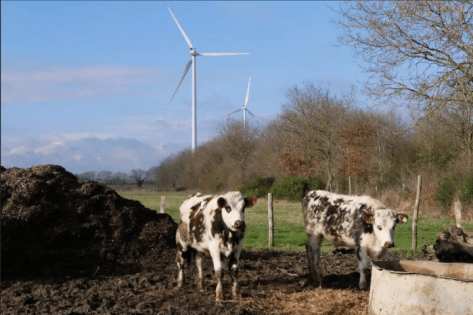
cattle and wind turbine
Nozay, Northern France

Animals dying, sick men, two farmers on the verge of financial asphyxiation … Since the installation of a wind farm in 2012 in Nozay, between Nantes and Rennes, state services are clueless in the face of effects secondary as alarming as unexplained. A situation that preoccupies the Ministry of Ecological Transition.

  • Nozay (Loire-Atlantique), report

In a steady whirring, the blades of wind turbines crack the air, a hundred meters overhanging pastures. The west wind blows and the sky comes alive on this winter Wednesday, around Nozay (Loire-Atlantique), along the N137, which connects Nantes to Rennes. At the foot of eight turbines running at full speed, prefectural orders pile up, nailed to wooden posts. ”   It’s sure our story is a crazy story   ,” sighs, looking right into the eyes, a local farmer. On the side of the prefecture of Loire-Atlantique, it concedes, through the voice of its secretary general, Serge Boulanger, ”   [ we ] are in front of an atypical situation, for which we must find explanations   .

This ”   crazy story    today affects dozens of inhabitants of four neighboring municipalities (Nozay, Abbaretz, Puceul, Saffré) and strikes two farms mainly  [ 1 ] , installed around wind turbines. ”   We are going to burst in every sense of the term, financially or at the level of our health   “, alarmed the farmer Céline Bouvet, 44 years old, as determined as exhausted by five years of a Kafkaesque fight led to his side. counterpart Didier Potiron, 50 years old. Neither is described as ”  anti-wind   . They even declined all the offers of service of collective opponents.

”   The chronological coincidence with the construction work and then the start-up of the wind turbine is disturbing enough to justify further investigations  

READ FULL ARTICLE

French farmers say their cattle are dying from electricity generated by wind turbines, solar panels

The Blaze Toledo|March 27, 2918