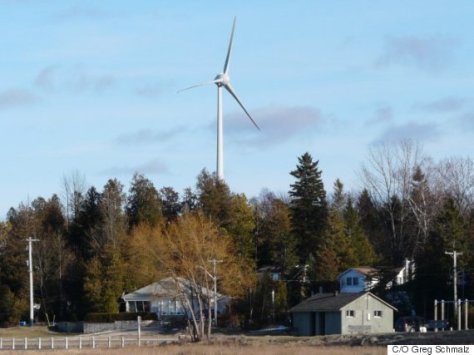
Continued delays of acoustic testing of the Unifor wind turbine in Port Elgin has Saugeen Shores council sounding off.
Council is filing a complaint with Ontario Ombudsman Paul Dube regarding the Ministry of Environment and Climate Change’s promised testing of the turbine, which has not yet been completed.
Deputy Mayor Luke Charbonneau says the MOECC originally told council they would have the acoustic audit completed by June of this year, but adds it has been delayed at least three times since then, with the Ministry now saying the audit won’t be completed until at least next summer.
He says a sound testing company has been conducting preliminary data in the area of the turbine, which is located at Unifor’s Family Education Centre at the south end of Port Elgin, although that data has not been shared with either the MOECC or the municipality.
“We don’t know what the results of those tests have been, we have no audit, [MOECC] doesn’t know, so what’s going on? It’s really simple to me, we need to know if this turbine is operating in compliance with the law,” says Charbonneau.
Charbonneau says the MOECC is blaming weather, a lack of wind and turbine down-time as the reasons for the testing delays.
Charbonneau’s home is one of more than 100 homes and cottages located within the 550-metre setback typically required for industrial wind turbines, though he says his family has not had any issues with the operation of the turbine, other than one complaint regarding shadow flicker, which was resolved.
Charbonneau says more than 50 complaints regarding the turbine’s operation have been received since February, most recently two weeks ago when a resident complained of the turbine making a thumping noise.
The 250-foot Unifor wind turbine was constructed by what was then the Canadian Auto Workers Union in 2012 and went into service a year later.
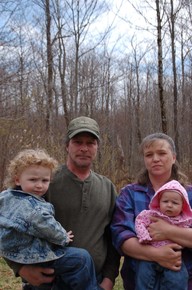
“Deep in the night, when things were quiet on the highway, a low hum came from the opposite direction, punctuated occasionally by louder noises, the Therriens say. Soon, they say, they and their two small children were plagued by sleeplessness, nausea and other problems.”
SHEFFIELD, Vt. (AP) — Once it was just another cabin on a Vermont hillside. Now it’s an emblem in the debate over noise from the growing wind energy industry.
Studies have repeatedly found no evidence connecting noise from wind power turbines to human health problems. But critics question the soundness of those studies. Among them are Steve and Luann Therrien, who say a wind farm near their home made their lives hell.
The case has created a fissure among environmentalists in this liberal state with a reputation for green thinking, pitting those who see wind energy as key to reducing reliance on pollution-spewing fossil fuels against those convinced audible noises and inaudible “infrasound” present health threats to those living nearby. And each side questions the objectivity of the other’s research.
The Therriens’ old cabin is up 5 miles of dirt road from town, but is just a quarter-mile from a rural stretch of Interstate 91. The highway noise largely didn’t bother them.
But after the 16 turbine towers of the Sheffield Wind Project went up on a nearby ridgeline in 2011 — the closest about three-quarters of a mile away and five within a mile — things changed, the Therriens say.
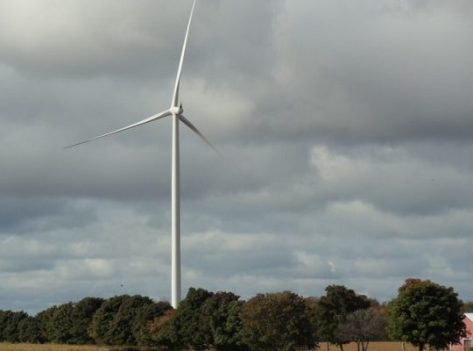
Councillors with the Municipality of Bluewater now have a better understanding of a wind turbine study that’s just beginning.
Warren Howard, a director with Wind Concerns Ontario, appeared before council Monday night to outline the study they are conducting with the University of Waterloo and the Huron County Health Unit.
Howard explained the goal of the study is to determine if there is a link between wind turbine noise and the symptoms being reported by people who live near them.
Many of the studies so far have been focused on audible noise, but Howard says there are other types of noise created by wind turbines and their study will look at the full spectrum of noises.
As part of the presentation, Howard asked for a letter of support from Bluewater council, and that was granted.
Howard is hoping they’ll be able to collect significant data within six months from which they can draw some conclusions.
A Four-Decade History of Evidence that Wind Turbines Pose Risks
Jerry L. Punch i, Richard R. James ii
Abstract
Many expert-review panels and some individual authors, in the U.S. and internationally, have taken the position that there is little literature to support concerns about adverse health effects (AHEs) from noise emitted by industrial wind turbines (IWTs). In this review, we systematically examine the literature that bears on some of the particular claims that are commonly made in support of the view that a causal link is non-existent. Investigation of the veracity of those claims requires that multiple topics be addressed, and the following specific topics were targeted for this review: (1) emissions of infrasound and low-frequency noise (ILFN) by IWTs, (2) the perception of ILFN by humans, (3) the evidentiary bases for establishing a causative link between IWTs and AHEs, as well as the physiological bases for such a link, (4) recommended setback distances and permissible noise levels, (5) the relationship between annoyance and health, (6) alternative causes of the reported health problems, (7) recommended methods for measuring infrasound, (8)foundations for establishing a medical diagnosis of AHEs due to IWTs, (9) research designs useful in establishing causation, (10) the role of psychological expectations as an explanation for the reported adverse effects, (11) the prevalence of AHEs in individuals exposed to IWTs, and (12) the scope and quality of literature addressing the link between IWT noise and AHEs. The reviewed evidence overwhelmingly supports the notion that acoustic emissions from IWTs is a leading cause of AHEs in a substantial segment of the population.
i Professor Emeritus, Department of Communicative Sciences and Disorders, Michigan State University, East Lansing, MI, USA
ii E-Coustic Solutions LLC, and Adjunct Professor, Department of Communication Disorders, Central Michigan University, Mt. Pleasant, Michigan, USA
Energy Poverty is a direct serious harm to health that has resulted from Ontario’s energy policies. Poverty determines your level of health. Not being able to pay your hydro bill is an adverse health outcome resulting from the pursuit of renewable energy projects without careful consideration of benefits and costs. The Green Energy Act and rates paid for renewable energy (wind & solar) generated electricity has fueled the crisis of soaring hydro rates. There is a growing fury among those who can no longer bear such political agendas. The pressure is building. People are demanding Government serve people, not only the interests of the “green” industries.
City Hall Protest Targets Skyrocketing Hydro Rates- Hamilton, Ontario
A rally against oppressive hydro bills attracted at least 100 protesters in front of city hall, and enough supportive horn honking on Main Street to sometimes drown-out speakers assailing Premier Kathleen Wynne’s government.
Most notable were those mobilized enough by the issue to get downtown by 5 p.m. and who have never publicly protested anything before.
Home electricity bills have skyrocketed in the last five years: off-peak prices have increased 47 per cent, and on-peak prices have increased 67 per cent.
That’s why Lori Balkom took part in her first protest, holding a sign standing close enough to the road to feel the breeze from cars driving by honking.
“My last bill was $850,” she said. “Last summer it was $500 … There are people out there who can’t afford food because of (their hydro bills). It’s not right.”
Her sisters Debbie Leblanc and Patti Glenn joined her. Leblanc lives in a building for seniors, and said at least one woman couldn’t afford to turn on air conditioning this summer and had to hang out in a mall instead.
Jeff Coe happened upon the protest while out for a walk and was swept up in it and signed a petition.
“I’m all for conservation, I conserve my kilowatt hours, but the bill keeps going up,” he said. “So that’s why I’m here, too.”
The focus of the rally was Wynne: signs called on her to resign, and labelled her government “corrupt or stupid.” The most popular read: “Keep hydro public,” a reference to calls for Wynne to reverse the privatization of Hydro One, the province’s electricity transmission monopoly.
Politicians from the provincial Progressive Conservatives and NDP spoke, but the rally’s organizer, Sarah Warry-Poljanski, was the focal point, dressed in work boots, bright orange hydro worker-style coveralls, and white hard hat.
“With the cost of hydro we are all suffering … seniors and pensioners, people working two or more jobs just to get by,” she shouted into the microphone. “This is unacceptable … The (government) needs to stop serving themselves, and serving us.”
Nowhere else in Ontario would a temporary cement plant be permitted by a public school. Please ask Minister Murray (minister.moe@ontario.ca) and Premier Wynne (premier@ontario.ca) to revoke the Renewable Energy Approval for turbines on Amherst Island.
August 2016 letter to Minister Murray
Dear Minister Murray,
I am the mother of two daughters (ages 7 and 10) who attend Amherst Island Public School. I was a Participant in the Environmental Review Tribunal (ERT) regarding the above issue.
The panel dismissed my concerns regarding the siting of the cement batch plant, and my belief that the safety of children in their school environment will be compromised.I am formally requesting that you reverse the ERT decision based on my belief that the placement of the concrete batching plant and all associated construction activity for this project directly adjacent to the school will result in harm to children.
My appeal to you is based on the following three points:
1. The cumulative impacts on children of all the construction activities that this project introduces have not been adequately considered, in particular the impacts to Amherst Island Public School.- The evidence presented by the Approval Holder at the ERT broke down the project into detailed, individual activities, whose negative impacts are deemed to be negligible.But the ERT omitted to consider any examination of collective impacts to children.- Because each activity was looked at in isolation and not with an integrated approach, the potential harm of the project’s cumulative impacts has been overlooked.
It remains my opinion that the Director of Environmental Approvals did not adequately consider the cumulative nature of the concrete batch plant and activities and the impacts to the health and safety of students. Given that the concrete batching plant and associated construction for this project will occur less than 1 km from our elementary school, it actually appears that the single group who stands to experience the most negative effects from this project will likely be the children attending Amherst Island Public School.
2. It is unclear who is responsible for safety associated with this project.
It is still unclear who is responsible for safety and oversight in relation to the school environment. During the ERT, I learned that there would be extensive construction traffic from this project passing by our school, in addition to a concrete batching plant in proximity to the school that would not be allowed by our municipality if not for the Green Energy Act.
3. The “Burden of Proof” required by the ERT can only be accomplished by exposing children to unacceptable risk.
The UN Convention on the Rights of Children is clear: Governments have a responsibility to protect children. The best interest of the child shall be a primary consideration in government decisions.
I believe that by approving the project, the Director has authorized the Developer to introduce plausible harm to children.- The ERT found that during my submissions, I had not met “the test” of serious harm to human health. In the case of Amherst Island, to provide undeniable “proof” that the health of children will be impacted by the project would mean allowing the project to move forward as approved, and then assessing outcomes to children after months of exposure.
In Canada, in 2016, we do not permit such trials on children. However, that is threshold of the “legal test” that must be attained in order to successfully defend my children.
We must be reasonable, and consider the Precautionary Principle, which states that when risk of harm is scientifically plausible, actions should be taken to avoid or diminish the harm, and these actions are interventions that are undertaken before harm occurs.
Amherst Island is close to 16 Km long. Why did the Director not ask the Approval Holder to find a different location for the cement plant? Why weren’t these concerns noted in the ERT decision?
Minister Murray, if this project is allowed to move forward as approved, without adequate assessment of the cumulative impacts to the Amherst Island school environment, then our children become the test to see if the decisions of the Director were right or were wrong.
All children deserve better. In order to support the health, safety and welfare of children attending a public school in Ontario, I would respectfully request that you reverse the ERT decision in relation to the placement of the concrete batch plant for this project, and amend the conditions related to the concrete batch plant.
In the words of Dalton McGuinty “It’s never too late to do the right thing”.
Amherst Island Public School. No place for a cement mixing plant.
Few Vermonters will defend wind turbines, so the national organization comes to the rescue. Go look at the American Wind Energy Association’s members: mostly large multinational corporations heavily invested in fossil fuel and nuclear.
The industry’s global attitude of blaming the victims is offensive in the extreme. Abuse people once by making them sick and unable to sleep; abuse them again by telling everyone it’s all in their heads. Same story everywhere.
At a Sept. 19 ribbon cutting in Searsburg, Governor Shumlin celebrated making people in the region sick and unable to sleep. He wants more Vermonters to suffer.
Position of the National Institute of Public Health – National Institute of Hygiene on wind farms
Position of the National Institute of Public Health – National Institute of Hygiene on wind farms
The National Institute of Public Health – National Institute of Hygiene is of the opinion that wind farms situated too close to buildings intended for permanent human occupation may have a negative impact on the well-being and health of the people living in their proximity.
The human health risk factors that the Institute has taken into consideration in its position are as follows:
the emitted noise level and its dependence on the technical specifications of turbines, wind speed as well as the topography and land use around the wind farm,
aerodynamic noise level including infrasound emissions and low-frequency noise components,
the nature of the noise emitted, taking into account its modulation/impulsive/tonal characteristics and the possibility of interference of waves emitted from multiple turbines,
the risk of ice being flung from rotors,
the risk of turbine failure with a rotor blade or its part falling,
the shadow flicker effect,
the electromagnetic radiation level (in the immediate vicinity of turbines),
the probability of sleep disruptions and noise propagation at night,
the level of nuisance and probability of stress and depression symptoms occurring (in consequence of long exposure), related both to noise emissions and to non-acceptance of the noise source.
In the Institute’s opinion, the laws and regulations currently in force in Poland (regarding risk factors which, in practice, include only the noise level) are not only inadequate to facilities such noise source as wind turbines, but they also fail to guarantee a sufficient degree of public health protection. The methodology currently used for environmental impact assessment of wind farms (including human health) is not applicable to wind speeds exceeding 5 m/s. In addition, it does not take into account the full frequency range (in particular, low frequency) and the nuisance level.
In the Institute’s view, owing to the current lack of a comprehensive regulatory framework governing the assessment of health risks related to the operation of wind farms in Poland, an urgent need arises to develop and implement a comprehensive methodology according to which the sufficient distance of wind turbines from human habitation would be determined. The methodology should take into account all the above-mentioned potential risk factors, and its result should reflect the least favourable situation. In addition to landform (natural topography) and land use characteristics, the methodology should also take into consideration the category, type, height and number of turbines at a specific farm, and the location of other wind farms in the vicinity. Similar legislative arrangements aimed to provide for multi-criteria assessment, based on complex numerical algorithms, are currently used in the world.
The Institute is aware of the fact that owing to the diversity of factors and the complicated nature of such an algorithm, its development within a short time period may prove very difficult. Therefore, what seems to be an effective and simpler solution is the prescription of a minimum distance of wind turbines from buildings intended for permanent human occupation. The setback criteria are also a common standard-setting arrangement.
Having regard to the above, until a comprehensive methodology is developed for the assessment of the impact of industrial wind farms on human health,the Institute recommends 2 kmas theminimum distance of wind farms from buildings. The recommended value results from a critical assessment of research results published in reviewed scientific periodicals with regard to all potential risk factors for average distance usually specified within the following limits:
0.5-0.7 km, often obtained as a result of calculations, where the noise level (dBA) meets the currently acceptable values (without taking into account adjustments for the impulse/tonal/modulation features of the nose emitted),
1.5-3.0 km, resulting from the noise level, taking into account modulation, low frequencies and infrasound levels,
0.5-1.4 km, related to the risk of turbine failure with a broken rotor blade or its part falling (depending on the size of the piece and its flight profile, rotor speed and turbine type),
0.5-0.8 km, where there is a risk of ice being flung from rotors (depending on the shape and mass of ice, rotor speed and turbine type),
1.0-1.6 km, taking into account the noise nuisance level (between 4% and 35% of the population at 30-45 dBA) for people living in the vicinity of wind farms,
the distance of 1.4-2.5 km, related to the probability of sleep disruptions (on average, between 4% and 5% of the population at 30-45 dBA),
2,0 km, related to the occurrence of potential psychological effects resulting from substantial landscape changes (based on the case where the wind turbine is a dominant landscape feature and the rotor movement is clearly visible and noticeable to people from any location),
1.2-2.1 km, for the shadow flicker effect (for the average wind turbine height in Poland, including the rotor from 120 to 210 m).
In its opinions. the Institute has also considered the recommended distances of wind farms from buildings, as specified by experts, scientists, as well as central and local government bodies around the world (in most cases recommended from 1.0 to 5.0 km).
On August 24, 2016, Barbara Ashbee from Ontario wrote to Marie-Eve Héroux, member of the panel developing the WHO Environmental Noise Guidelines for the European Region:
Dear Mme. Héroux,
My name is Barbara Ashbee.
I live in Mulmur, Dufferin County, Ontario and I am writing to submit information on wind turbine noise in our communities to include in your research.
An industrial wind turbine installation had serious impact on our family personally and many others in our neighbourhood, our province, country and globally.
I have met with many impacted families here in Ontario and have corresponded with others out of province. I didn’t know any of these people before the effects of wind turbines changed our lives.
In 2008/2009 my husband and I both had our health seriously impacted after a turbine project started up around our home. The adverse health effects started petty much right away.
We had loud cyclical noise and a vibration and humming in our house that made sleep impossible, ongoing, multiple nights in a row. I had no idea how serious and dangerous sleep deprivation was until I experienced it first-hand. Due to ongoing exposure to the emissions from the turbines our health declined to the point that we had to leave our home.
My husband and I were both healthy and happy adults. We took no medications and we enjoyed life and our work outside the home. We had purchased our bungalow 3 years before the turbine project was built and had done a lot of updating with plans for it to be our retirement home. We were building my husband’s new garage/workshop at the same time the turbines were being built. We had no idea that they were going to cause us problems as we had not heard of any issues from the first phase that was erected in 2006. I was taking photos and sharing them with my family as the project was erected. In fact when one of our neighbours came to us in 2006 and asked if we would have any concerns with them putting one on their property we said of course not.
We were not anti-turbine or anti-wind and we had not been informed by anyone that there were problems.
We were harmed by these wind turbines surrounding us and even as we had engineering noise reports showing out of compliance cyclical noise, a vibration and infrasound measured inside of our home and dirty electricity our government continued to tell us that the wind company was running in compliance and there was nothing they could do. Only after our pleas to our government and attempts to have the noise and vibration problems corrected did we find out that there had been many families before us that had been billeted, bought out by the developer, or forced to move because they couldn’t take living in their homes anymore.
Along with sleep deprivation we experienced headaches, stomach aches, episodes of dizziness, nausea, impaired cognitive and memory function, heart palpitations and chest pressure, infection requiring antibiotics, pressure in the head and ears, a bleeding nose that required liquid nitrogen treatment, and just before we moved out of our home my husband was diagnosed with hyper thyroidism, something he had never had before. We knew what was causing it and informed his specialist. He was not put on any medication and after we moved his levels returned to normal and he has not had an issue since.
Being exposed to the cyclical noise, the low frequency noise and infrasound left us physically ill and with no resolution offered and no ability to shut the turbines off, we were completely disempowered. Unable to have the problems fixed and unable to stay in the home we loved has been very distressing. The realization that our lives were deemed worthless by authorities was hard to take.
Our pets were also affected with one dog in particular whimpering and crying when the conditions were the worst. They were at times antsy, restless and bothered, sometimes crying, sometimes going from room to room. It was not normal behaviour. It was heartbreaking and so we started to look for a place to move. We asked locally about renting a mobile home to park on our driveway to get out of our house. We were not successful. We moved our bed into our detached garage but the noise and vibration was no better. We started to make inquiries about renting another house but with three dogs and 2 cats it was not easy and it is extremely hard to leave everything we had knowing that if they would just shut the project off we could at least get some sleep. We kept hoping a solution was around the corner. We just kept trying to resolve it.
An attempt by the wind company was made to move us to a property that they had purchased one concession over from us but it was rank with mold so we had to abort that. In the end we purchased a tent and we moved our bed, a night table, a lamp and a heater out into the tent and spent our remaining days on our property sleeping outside. The vibration was not as bad as it was in the house and they had agreed to shut 5 surrounding turbines down. While it was pretty cold some nights, it was better than in our house. Our pets slept outside with us.
I am quite confident you will hear the word torturous from other impacted people and I can attest to the fact that description nails it. To be deprived of sleep, with no power to shut the noise or vibration off, to have your health decline from the impacts of the noise, infrasound and vibration in the sanctity of your own home, the very place you normally turn for restorative sleep and relaxation is pure torture. It is unbearable. It is spirit crushing and heartbreaking.
The ultimate insult of having gone through this, to having fought for our home and lost, to losing faith and trust in any authority that we thought was concerned about people’s health and wellness, is to have it happen to even more families in our area and globally because it continues.
Were you to meet any of these families, the small children, the seniors, teens, it doesn’t matter age, gender, race, religion or economic background, if you could meet with these people and listen to them, it would be a huge step in understanding. Please, as you consider the research, the academic input, the physicians, acousticians and others who are giving you information, please also talk to the people. Talk to the ones who have been harmed. Talk with the families who have first-hand experience. You will find their personal accounts and symptoms are the same regardless of what country they come from or what language they speak.
I am appealing to you to investigate fully and to order turbines cease operation until the people have had a genuine hearing of their complaints. Nobody consented to having their lives so negatively impacted. This is clearly a case of terribly flawed policy trumping health and wellness.
It should never have happened.
– Attached is a compilation of statements from wind turbine affected families in Ontario that were drawn from early news reports, personal comments from meetings and testimony from different communities in Ontario. This compilation is a number of years old now and represents a small snapshot of affected families. The purpose for compiling it was to inform our government that the complaints are the same and that they are growing. Hundreds more turbines have been built since and every project has additional impacted families. Not only did early turbine projects cause harm but the newer turbines are much larger and yet the setbacks remain the same. Wind Turbine Impacts in Ontario – A small collection of testimony
– I am attaching an abatement plan, drawn up by Ministry of Environment field officers in our area that ultimately never made it to the public. It was shelved by authorities.
The officers acknowledged and reported on many occasions that they knew people were being harmed and that it was not trivial but nothing happened to help the people they were trying to help. FOI_1NR_03046.pdf FOI_P00_03046_11.12 02.pdf
– This is a link to windvictimsontario.com where testimony, video statements, and interviews of impacted people can be found. Much of this info is found on websites as no ministry or agency in any level of government in Canada has gathered or reviewed the complaints.
In the past 8 years since this happened to us, I could supply reams of letters, documents and testimony all supporting the need for an investigation and for the turbine projects to cease operating so innocent families can live in their own homes and try to recuperate from the turbine emissions that harm them.
The people living among these wind power centers need relief.
That these projects are allowed to continue to operate where complaints, illness and home abandonment have been made is cruel and inhumane.
Please keep me posted on your progress with your research and please contact me if I can help in any way. I am pleading with great urgency that you please help those who are being impacted right now.
There stands to be a landmark Huron County Board of Health Meeting, Thursday, September 1, 2016, starting at 9:00 a.m.in the Auditorium of the Health and Library Complex, Huron County Health Unit, 77722B London Rd., Clinton, Ontario.
Under section 8.1 of the agenda is a recommended motion that
“the Board of Health agrees to the request made during its August 4, 2016 meeting for the Health Unit’s participation in the proposed investigation into wind turbines and reported associated human health effects, to be conducted in partnership with Wind Concerns Ontario and the University of Waterloo”
It is expected that the Board will pass the above motion. Given the public is typically not allowed to speak, I would hope there will also be additional clarification on next steps, providing residents with an opportunity to make informed choices on how each can best support efforts moving forward.
Many people are suffering and I encourage everyone who is able to please attend. A crowd in the public gallery at these meetings is important and powerful. Don’t leave it to others to show up and please pass the word along to family, friends and neighbours.
It takes great courage for people to share their concerns, especially when it comes to something as personal as health. Tremendous efforts on the part of many have brought us to this point and I want to thank all who have worked so hard to ensure the health concerns of Huron County residents are going to be addressed.

 SHEFFIELD, Vt. (AP) — Once it was just another cabin on a Vermont hillside. Now it’s an emblem in the debate over noise from the growing wind energy industry.
 Bluewater Council Hears From Wind Concerns Ontario
 Energy Poverty is a direct serious harm to health that has resulted from Ontario’s energy policies. Poverty determines your level of health. Not being able to pay your hydro bill is an adverse health outcome resulting from the pursuit of renewable energy projects without careful consideration of benefits and costs. The Green Energy Act and rates paid for renewable energy (wind & solar) generated electricity has fueled the crisis of soaring hydro rates. There is a growing fury among those who can no longer bear such political agendas. The pressure is building. People are demanding Government serve people, not only the interests of the “green” industries.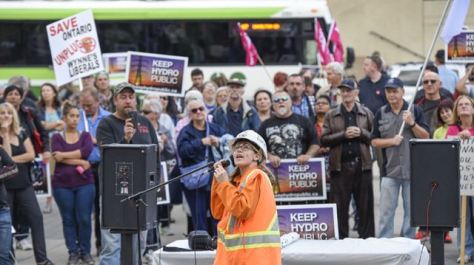
 Nowhere else in Ontario would a temporary cement plant be permitted by a public school. Please ask Minister Murray (minister.moe@ontario.ca) and Premier Wynne (premier@ontario.ca) to revoke the Renewable Energy Approval for turbines on Amherst Island.
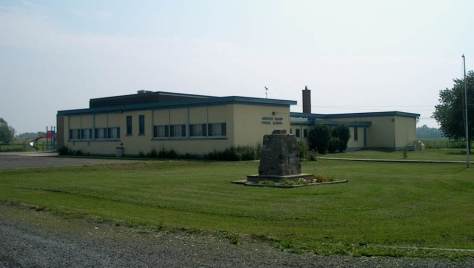 Amherst Island Public School. No place for a cement mixing plant.
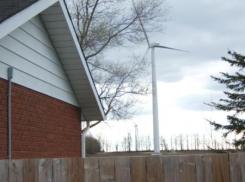
 We were harmed by these wind turbines surrounding us and even as we had engineering noise reports showing out of compliance cyclical noise, a vibration and infrasound measured inside of our home and dirty electricity our government continued to tell us that the wind company was running in compliance and there was nothing they could do. Only after our pleas to our government and attempts to have the noise and vibration problems corrected did we find out that there had been many families before us that had been billeted, bought out by the developer, or forced to move because they couldn’t take living in their homes anymore.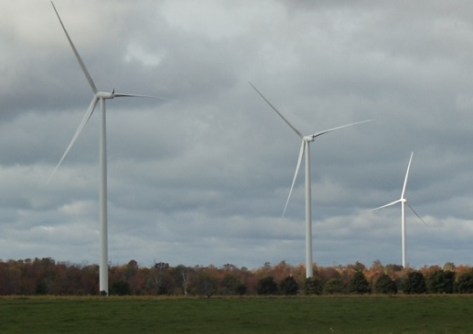
 Mothers Against Wind Turbines Inc.