
By Ellwood Shreve, Chatham Daily News
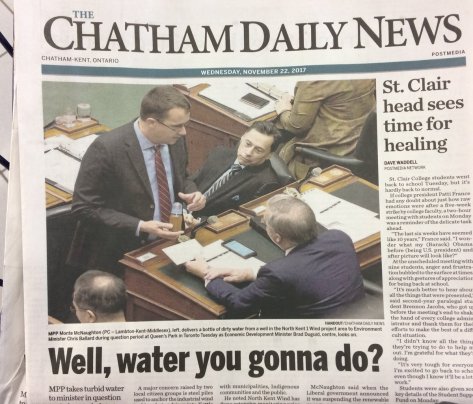
Lambton-Kent-Middlesex MPP Monte McNaughton delivered a bottle of turbid water to Environment Minister Chris Ballard in the Ontario legislature Tuesday to emphasize the impact wind turbine construction has had on area water wells.
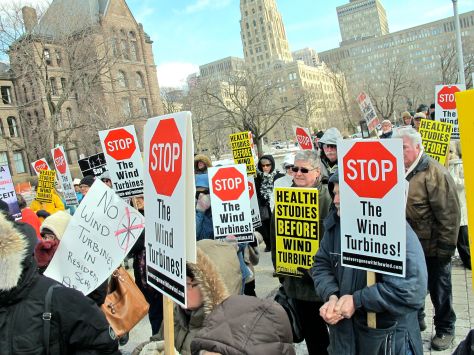
Here is an excerpt from a report on the recent meeting in Clinton, announcing the launch of the Huron County public health investigation into wind turbine noise.
A few notes: as far as we are aware, the “study” is actually an “investigation” under the Health Protection and Prevention Act of Ontario, in which reports of adverse health effects may be reported and investigated. The only association with the University of Waterloo was the review by the ethics committee of that university — the university is not involved in any other phase of the project.
Wind Concerns Ontario had proposed to carry out Phase II of the study which would involve follow-up measurements in homes identified as problematic by the Health Unit, as part of a research study by a multi-disciplinary team. Although federal government funding was not achieved for that proposal, efforts to fund that initiative are ongoing.
This project is the first of its kind in Ontario; it was initiated based on reports of adverse health effects by residents of Huron County made to their health unit, and is supported by them.
For more information about the Huron County Health Unit project please visit the website here.
By John Miner
ONTARIO FARMER November 7, 2017
Huron County’s on-again, off-again study on the health impact of wind farms is moving ahead with warnings from the researchers about what it can’t accomplish.
Even if the results in the end definitely show that wind farms are damaging the health of residents, the county’s health unit will not be able to order the turbines stopped, a public meeting was told.
“We do not have the authority to curtail or shut down wind turbines. If you are thinking of participating in the study in the hope that we will shut down the turbines, we want you to understand we cannot do that,” Dr. Erica Clark, an epidemiologist with the Huron County Health Unit, announced at the start of a public information session attended by about 60 people.
Courts have determined that Ontario health units do not have the legal ability to issue orders to protect public health in cases where the provincial government has given that responsibility to another body, Clark said.
In the case of wind farms, the government has given the power to regulate wind turbines to the Ministry of the Environment, not public health units, she said.
Dr. Maarten Bokhout: “If research indicates there are health issues, that can be raised with the Ontario government”
Dr. Maarten Bokhout, Acting Medical Officer of Health at the Huron County Health Unit, said while he cannot step on the Environment Ministry’s toes and he does not have the power to write orders against wind turbines, the results of the study will be published online, including interim reports.
The health unit’s one-year study, established in collaboration with the University of Waterloo and reviewed by the university’s ethics committee, will look at how people are annoyed by noise, vibration and light [shadow flicker] from wind farms.
The goal is to establish how many people are bothered by wind turbines in the county and determine if environmental conditions that make the noise, vibration light and sensations from wind turbines worse.
The study will rely on residents living within 10 km of a wind turbine who volunteer to keep a diary of their experience within their own home.
Participants are asked to record their observations at least once a week.
The researchers will not be making any actual sound or vibration measurements for the study.
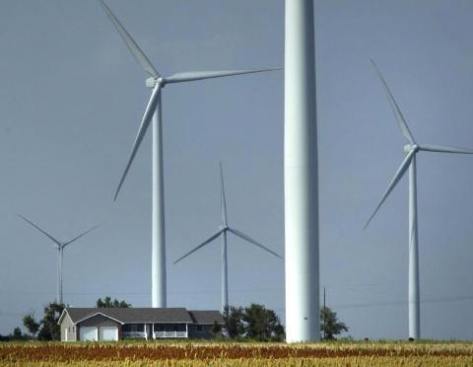
Huron County is home to more than 300 industrial wind turbines and some of the largest wind farms in the province.
Some residents have blamed the turbines for a series of health problems, including headaces, nausea, dizziness and insomnia.
Clark, who is principal investigator on the study, said they want participation from both people who have been bothered by wind turbines and those who haven’t experienced any problems.
The 10-kilometre study zone around wind turbines means thousands of Huron County residents are eligible to sign up for the project, including all of the towns of Goderich and Exeter.
…
See the print edition of Ontario Farmer for a related story: Rural residents skeptical government would act on wind
Source: http://www.windconcernsontario.ca/huron-county-wind-turbine-noise-investigation-launched/
To be able to sleep
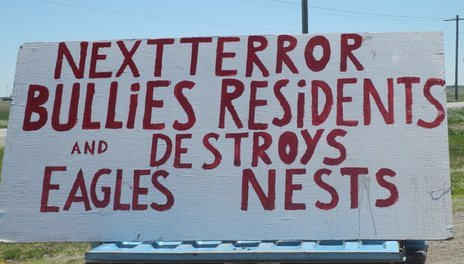
“The biggest recipient of taxpayer cash on ACENY’s roster is the world’s biggest and most-litigious wind-energy producer: NextEra Energy …NextEra is using some of that taxpayer cash to sue small towns including Hinton, Okla., and Almer and Ellington in Michigan. What did those tiny towns do to irritate the energy giant, which has a market capitalization of $73 billion? They prohibited installation of wind turbines, the latest models of which now stand about 800 feet high.”
Last month, Anne Reynolds, executive director of the Alliance for Clean Energy New York, complained that the state is a “tough place to develop” big renewable-energy projects due to a “spirited tradition of home rule.” This came after her group and the Nature Conservancy released a report lamenting the fact that siting new renewable-energy projects is often “lengthy, uncertain and sometimes unsatisfactory for both developers and communities.”
It should be. With good reason, numerous upstate towns are actively fighting the encroachment of Big Wind. To cite just one recent example: Last month, the Watertown City Council unanimously approved a resolution opposing the development of eight industrial wind-turbine projects totaling 1,000 megawatts of capacity, because the projects could impair military training capabilities near Fort Drum.
Over the past decade or so, members of Reynolds’ group — some of America’s biggest subsidy miners — have collected $18.7 billion in federal and state subsidies. The burgeoning backlash against Big Wind means a growing group of rebellious New York towns stand between Reynolds’ members and even more taxpayer gravy.
The $18.7 billion sum was obtained by matching ACENY’s membership roster with data from Subsidy Tracker, a program run by Good Jobs First, a Washington-based government-accountability organization. That $18.7 billion includes all federal grants, tax credits, loans, loan guarantees and state subsidies.
The subsidies are corrosive. They encourage wind-energy companies to use legal action to bully rural landowners and small towns. They also induce the wind industry to kill more wildlife, including bats and birds.
The biggest recipient of taxpayer cash on ACENY’s roster is the world’s biggest and most-litigious wind-energy producer: NextEra Energy, which has collected nearly $5.5 billion in federal and state subsidies. NextEra is using some of that taxpayer cash to sue small towns including Hinton, Okla., and Almer and Ellington in Michigan. What did those tiny towns do to irritate the energy giant, which has a market capitalization of $73 billion? They prohibited installation of wind turbines, the latest models of which now stand about 800 feet high.
Speaking of bullying, NextEra also has a pending defamation lawsuit against Esther Wrightman, a Canadian activist who had the temerity to call the company “NextError and “NexTerror” on her Web site.
Another ACENY member: Spanish energy company Iberdrola (the parent company of its US subsidiary, Avangrid), which has collected $2.2 billion in subsidies. In 2012, shortly after Iberdrola began operating its Hardscrabble wind project, several dozen residents of Herkimer County filed a lawsuit against the company due to the nuisance, noise and sleep disturbance caused by Iberdrola’s turbines. That case, which now has 68 plaintiffs, is still pending.
Last year, after the New York town of Clayton imposed a six-month moratorium on applications for new wind-energy projects, Iberdrola sued the town, claiming the moratorium was illegal. But a state court sided with Clayton. And last November, citizens from two Vermont towns, Grafton and Windham, voted overwhelmingly to reject a proposed Iberdrola wind project.
Multibillion-dollar subsidies for Big Wind are also fueling widespread destruction of American wildlife. While the deadly effect that wind turbines have on birds, in particular eagles and other birds of prey, has been well documented, Big Wind is also killing hundreds of thousands of bats per year.
A paper published last year in Mammal Review found that wind turbines are now the largest single cause of bat mortality. A report by the conservation group Bird Studies Canada found that “across Canada, bat fatalities were reported more often than birds, accounting for 75 percent of all carcasses found.” To be sure, bats don’t get as much good press as eagles and hawks, but they are critical pollinators and insectivores.
In short, while Reynolds and other members of ACENY claim their push for renewable energy is about climate change, the numbers from Good Jobs First show that what they really want is more corporate welfare. And more corporate welfare for the group’s members means bad news for America’s small towns and even worse news for our wildlife.
Robert Bryce is a senior fellow at the Manhattan Institute.
Read article: http://nypost.com/2017/11/09/stop-subsidizing-the-big-wind-bullies/
Wallaceburg and area have formed a wind action group and are actively fundraising to appeal at the Environmental Review Tribunal if the anticipated approval for the Otter Creek wind project being developed by Boralex and Walpole Island First Nation is issued. Water well contamination is a hot issue as they learn from reports of dirty well water in other areas such as Chatham Kent and the North Kent wind project.

By David Gough
Tuesday, October 31, 2017
The Wallaceburg and Area Wind Concerns group is prepared for a fight.
The group held their first public meeting last week at the UAW Hall where they outlined their concerns, as well presenting their plan on fighting the proposed Otter Creek wind project.
The group is currently raising money so they can try and stop the wind turbine project. The group has set up an account at Wallaceburg’s TD bank, and estimates that a legal fight will cost at least $10,000 and possibly much more, depending on a number of variables.

Recruitment is now underway for the new wind turbine study.
This study has been reviewed and received research ethics clearance through a University of Waterloo Research Ethics Committee (ORE 22115). However, the decision to participate is yours.
The Huron County Health Unit Medical Officer of Health will not be writing an order under section 13 of the Health Protection and Promotion Act. A single study will not provide enough evidence to prove causality. Further, the Medical Officer of Health does not have the authority to write an order under section 13 of the Health Protection and Promotion Act to curtail or shut down wind turbines. An Ontario Health Services Appeal and Review Board decision and Ontario Superior Court of Justice judicial review outline the limits on a Medical Officer of Health’s authority to write orders.
You are eligible to participate if you are an English speaking Huron County resident and live within 10 km of a wind turbine. To see if your household is eligible, please view the eligibility map [PDF]. If you are having trouble opening the PDF, please see below.
If you live within five km of a wind turbine you will be mailed an information letter and consent form. If you live 5-10 km from a wind turbine you can still participate by reading the information letter on this website, downloading and printing the consent form, and returning the completed consent form to the Huron County Health Unit by mail or in person. You can also find copies of the information letter, consent form, parent permission form, child assent form, Registration Survey and Observation Diary at any branch of the Huron County Library. A copy of the map showing what areas of the county can participate in the study is also available at all branches of the Huron County Library.
 What scares you?
Researchers continue testing infrasound impacts used in a haunted house setting and are analysing what will increase a fright response.
“Infrasound is a sound that’s below what we can hear, below 20 hertz. But you can still feel it. It’s like a low, rumbling base sound,” associate professor Rodney Schmaltz explained.
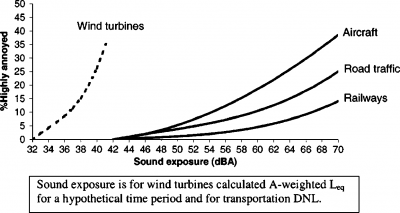
Infrasound is found and has been measured in homes being exposed to industrial wind turbines noise emissions. Reported adverse health symptoms of impacted residents adjacent to industrial wind turbines mirror many of the reactions observed by researchers looking to increase the spook experience when using infrasound.
Half of the volunteers would go through with the low frequency noise, half would go through without it.
“The hair on the back of your neck goes up; you feel something.”
“You might go, ‘Oh, it’s a ghost!’ When in fact it’s just infrasound,” Schmaltz said.
By: Sarah Kraus
Reporter Global News
October 20, 2017
With Halloween just around the corner, researchers are using Edmonton’s scariest haunted house to test a theory on how sound contributes to fear.
MacEwan University professors chose to conduct their study at Deadmonton in the old Paramount Theatre for the second year in a row.
In its fourth year in Alberta’s capital, Deadmonton is known for providing a thrill.
“You can basically expect an intense, very scary walk-through experience, like you’ve never experienced before,” explained owner Ryan Kozar.
“It’s not like the old haunted house rides that you’d see at the fair back in the day.”
He normally tries to spook all of the senses in the haunted house.
“You walk into the summoning room — there’s cemetery sounds. You go through the woods, the swamp scene — there’s swap sounds, there’s crickets. It brings it all to life. There might be some scents in there, too.”
Researchers from MacEwan University are especially interested in analyzing the impact of an inaudible sound.

 Mothers Against Wind Turbines Inc.