All posts by pbiljan

Town Wants to talk Turbine

FYI – S-T-O-P  = Smithville Turbine Opposition Party and S.T.O.P  = Saugeen Shores Turbine Operation Policy

SAUGEEN SHORES – 

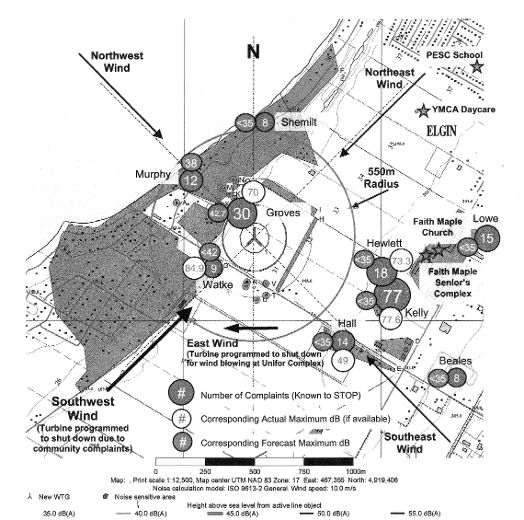
1297784400318_ORIGINALBecause “secrecy breeds mistrust,” Saugeen Shores Coun. John Rich wants “openness and transparency” from officials with the Ministry of Environment (MOE), and UNIFOR (formerly CAW), concerning previously undisclosed noise test results that “appear to reveal” the union’s Port Elgin industrial wind turbine has operated out of compliance with provincial noise regulations.

Through a Freedom of Information (FOI) request, Saugeen Shores Turbine Operation Policy (S.T.O.P) received data detailing 300 complaint-driven observations of noise emissions from the CAW/UNIFOR turbine. The Town’s Notice of Motion said “these observations appear to reveal several incidents where noise emissions from the UNIFOR turbine exceeded the noise standards set by the the MOE.. .which have not been previously disclosed either to the Town of the public at large.” The majority of complaints dealt with sleep disturbance, but also included reports of headaches, nausea, vertigo and other health-related issues.

S.T.O.P spokesman Greg Schmalz brought the information to Council in September at a community forum, and after a review of the data, Saugeen Shores Deputy-Mayor Luke Charbonneau, and Councillors John Rich and Mike Myatt, tabled a Notice of Motion at the Dec. 14 Council meeting to invite CAW/UNIFOR and the MOE to “share and review” the data at a meeting with the Town and S.T.O.P.

Regardless of support or opposition to wind energy, Coun. Rich said “you have to be in support of openness and transparency” by the MOE and CAW/UNIFOR, because “secrecy breeds mistrust.”

“What we want to see is more openness and opportunity for everyone to have discussion. If there is no problem, there is no issue, then things go the way they are. But if there is a problem, then it must be addressed at that time, but I think it’s important that we add a little sunlight to this and make sure we know what’s going on,” Rich said.

Deputy-Mayor Charbonneau said the “real nub” of their Motion is the existence of the FOI documents that “indicate, or at least gives the appearance, that the CAW/UNIFOR turbine has been operating in exceedence [sic] of its noise limits.”

He said that although the MOE required, and CAW/UNIFOR promised, third-party testing to verify turbine operation compliance, it is “concerning” that they have no evidence, and hopes the meeting will get the parties together to determine if the turbine is operating within the provincial guidelines.

Mayor Mike Smith recounted how CAW/UNIFOR had refused a past Town request for the resources to have independent testing done, and said there’s been no contact between the Town and CAW/UNIFOR for several years.

Speaking during the regular open forum prior to the Dec. 14 Council meeting, Schmalz said if the requested meeting occurs, S.T.O.P. will make “simple and reasonable” requests to address the main complaint of sleepless nights by shutting down the turbine from 7 p.m. to 7 a.m.

By Frances Learment Thursday, December 17, 2015

Wind Farm campaigners will fight on despite council ruling on noise nuisance

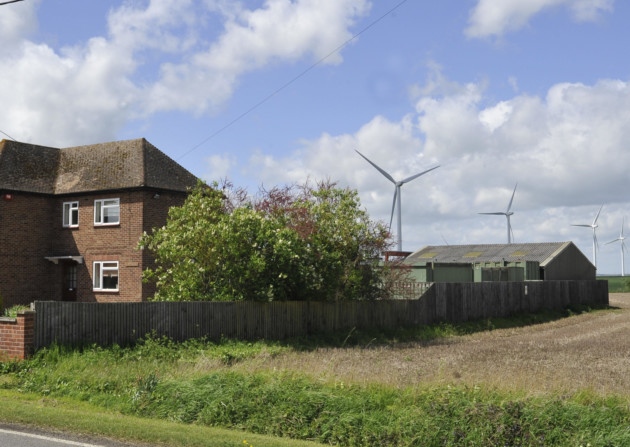
image (1)The Cotton Farm Residents’ Association (CFRA) was set up in January 2013, after eight wind turbines were installed on the former airfield at Graveley, near St Neots. CFRA has already won a concession from operators, Greencoat, who are running the turbines in “curtailed mode” to alleviate the noise problems, but according to campaigners this has been unsuccessful in terms of reducing the noise.

But the CFRA hopes new evidence from the Independent Noise Working Group (INWG) could lead to an overhaul of planning conditions and tighter controls on installing turbines so close to homes.

Conservative MP Chris Heaton-Harris, presented the INWG report to Government a few weeks ago and says: “This type of noise has been ignored by developers and government until recently, but there is a growing body of evidence that demonstrates the nuisance.

“I have been lobbying ministers about the issues and presented them with evidence proving how damaging this noise can be and suggesting solutions.”

Data from the Graveley noise monitor has been presented to the minister in an effort to expose the devastating effects of noise for those living close to wind turbines.

Graveley resident Bev Gray, who sits on the INWG, said: “The Cotton Farm data is playing an important role in adding to the wealth of evidence and knowledge in providing an alternative methodology of controlling noise from wind farms.”


read more: The Hunts Post, Dec 10 2015

Day 21: Report on ERT on White Pines Wind Project Clock Has Been Stopped

Dear APPEC Supporters,
The evidence phase of the ERT on the White Pines wind project has concluded. The ERT will return to Prince Edward County on January 20, 2016. Two days, the 20th and 21st , have been schedule for oral submissions. The location is to be announced.

Our great thanks to everyone who attended the hearings. Although the Tribunal members never acknowledged your presence we know it made a difference.

The volunteers who provided coffee, lunches and other refreshments during the long days of hearings deserve special mention: John Ambrose, Janice and Gord Gibbins, Janna McCarthy, Janet and Doug Murphy, Orville Walsh and others – thanks to all of you.

Regards,
Paula Peel
Secretary, APPEC


Report on Environmental Review Tribunal Hearing on White Pines Wind Project‏‎

December 15

by

Paula Peel, APPEC


On Day 21 the Environmental Review Tribunal (ERT) heard the last witness in the appeal of the White Pines wind project.

APPEC tried to call three Reply Witnesses: Dr. Shawn Smallwood, an expert in avian wildlife behaviour and conservation; Robert McEwen, P. Eng., a structural engineer; and Kari Gunson, a road ecologist. Mr. McEwen and Ms. Gunson were intended to respond to WPD’s witness Shawn Taylor, who had done a survey of municipal roads on the day before he testified. Eric Gillespie, counsel for APPEC, asked the Tribunal either to disallow the new evidence collected at the 11th hour or to allow APPEC an opportunity to respond. Mr. Gillespie argued that each party should have an equal opportunity to reply to the full submission of the other. Continue reading Day 21: Report on ERT on White Pines Wind Project Clock Has Been Stopped

Being clean and green comes with a cost

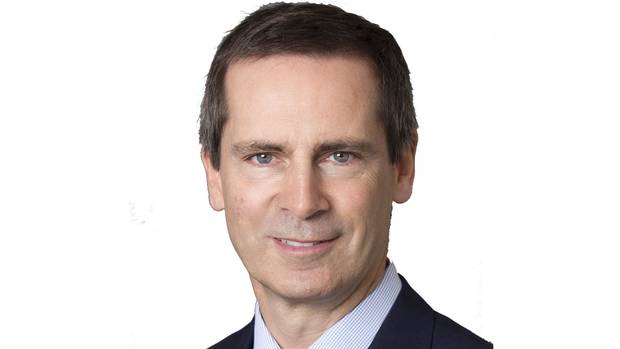
Dalton McGuinty was premier of Ontario from 2003 to 2013.

dalton-mcguinty“There’s no free lunch.” I hated it went my dad used to say that. It meant I was going to have to pay up. He wanted me to understand there is almost always some kind of cost that has to be paid if you want to receive benefits. My father’s words came back to me as I listened to the recent reports about the costs of Ontario’s electricity system. These reports have sparked a healthy debate. But the best debates are the best informed. To help shed more light, I have some insights that can help inform the debate around the costs of our electricity.

When we formed the government in 2003, we discovered pretty quickly that after years of neglect, Ontario’s electricity system was in desperate need of costly repairs and new investment. In the previous decade, electricity generation had fallen by 6 per cent while demand had grown by 8 per cent. During the summer of 2004, we made an extraordinary request of Ontarians asking them to dramatically reduce their electricity usage because we didn’t have the power to meet demand.

What’s more, our electricity system had become a huge North American contributor to air pollution. At the same time the previous government had increased our reliance on coal by 127 per cent, doctors were warning us that our coal plants were responsible for 1,800 premature deaths and more than 300,000 cases of illness every year. The single greatest cause of children visiting Ontario hospitals was asthma, aggravated by bad air. Economists told us coal was costing us $4.4-billion every year in health and environmental costs.

read more:  DALTON MCGUINTY Contributed to The Globe and Mail Published Monday, Dec. 14, 2015

Report on Environmental Review Tribunal Hearing on White Pines Wind Project‏‎ December 11 by Henri Garand, APPEC

a347bbee-792c-4aab-82bb-9989a2ff235bOn Day 20 the Environmental Review Tribunal (ERT) on the White Pines wind project heard APPEC witness Rick James and an expert witness for developer WPD, Dr. Dale Strickland.

Mr. James, qualified previously as an acoustician, presented new evidence in reply to Denton Miller, witness for the Ministry of Environment and Climate Change (MOECC).  Following new ministry guidelines and omitting disallowed wind turbines T7 and T11, he calculated that 13 “points of receptions” (i.e., homes) would suffer noise above 40 dBA.

Continue reading Report on Environmental Review Tribunal Hearing on White Pines Wind Project‏‎ December 11 by Henri Garand, APPEC

APAI ERT Day 2 December 8, 2015

ERT Day 2

Note: The ERT continues on Wednesday Dec 9 at 10:00 am at St. John’s Hall in Bath. APAI attendance is hugely important as the next two hearing days …will be in Toronto on Dec 10 and 11. The Tribunal will deliver its decision this morning on the motion described below.

Location: Toronto

Tribunal: Mr. Robert Wright & Mr. Justin Duncan

Lawyers

Appellant: Eric Gillespie, EKG, LLP
Approval Holder: John Laskin and John Terry, Torys LLP
MOECC: Andrea Huckins

The Tribunal heard the Approval Holder’s motion
1) To exclude the reply witness statements of Les Stanfield, Daryl Cowell, Kari Gunson, Roy Nagle, Shawn Smallwood, Carl Phillips and much of the reply witness statements of Christina Davy;
2) To order that the two reply witness statements of Dr. Carl Phillips be excluded;
3) To order that much of the reply witness statement of Dr. Christina Davy be excluded; and
4) That further and other relief as this Approval Holder requests and the Tribunal permits.

Mr. Laskin and Mr. Tory, argued that APAI by providing new witnesses had withheld the bulk of its case. First, by refusing to provide witness statements on the date it was required to do so, and second, by confirming that it would be calling two only witnesses while actually holding back the bulk of the case and third, by filling that case for the first time “dressed up” as reply with one day to go before the originally scheduled hearing start date. He added that APAI had quadrupled the number of expert witnesses and was trying to drop a new case on the Approval Holder. They submitted that with APAI’s last minute “manoeuvre”, it was seeking to file the bulk of the expert statements and that it was a clear case of case-splitting and it was a conduct that the Tribunal should not tolerate.

They referred to decisions from other cases from different courts to support the motion and advised that allowing such a transparent “gaming” of the system would make a mockery of the Tribunal’s process and fundamentally undermine the integrity and fairness of this proceeding.

Mr. Laskin used details of each of the new witness statements to conclude that none of the new witnesses could fairly be characterized as reply witnesses. As for Dr. Phillip’s and Dr. Davy’s replies, he insisted that there was nothing that had not already been “pre-rebutted”in the initial witness statement.

He concluded by qualifying this as being improper, intended to create surprise and confusion and that if successful, it would severely prejudice the responding parties and fundamentally compromise the fairness of this proceeding.

Mr. Gillespie, representing APAI requested that the motion to exclude of the Approval Holder be dismissed. He explained the sequence of events since Sept 8, 2015, when APAI filed its Notice of Appeal including the change in counsel and told the Tribunal that if this evidence was not permitted in this circumstance, it was clear that APAI would not be able to present its case.

He reminded the Tribunal that after APAI filed its two witness statements– one from a health witness, Dr. Carl Phillips (a PhD with health policy expertise) and the other from an environmental witness, Dr. Christina Davy (a bats and Blanding’s Turtle expert) on October 26, 2015,the Approval Holder filed ten (10) witness statements responding to the APAI’s case. These statements responded not only to the issues raised by APAI in the witness statements of Dr. Phillips and Dr.Davy, but to the statements of the participants and presenters.

Mr. Gillespie pointed out that among the 10 witnesses called, 9 witnesses are experts. Three experts, Andrew Taylor, Caleb Hasler and Ronald Brooks addressing the Blanding’s Turtle issue; three experts, Andrew Taylor, Eric Bollinger, Paul Kerlinger, addressing the bird issues raised in the Witness Statements of Thomas Beaubiah and William R Evans; two experts, Andrew Taylor and Scott Reynolds, addressing the bats issue.

He emphasized that the extensive material covered by the Approval Holder’s witnesses in response to the Appellant’s case warranted a similarly detailed and thorough Reply from the Appellant in order to adequately meet the onus of the will cause test under section 142.1 of the Environmental Protection Act, R.S.O. 1990, c. E.19.

He added that a narrow reply would preclude the APAI from making its full case that the Approval Holder has the right to reply and in such an instance where there is extensive material to reply to, it was appropriate to call new witnesses.

Mr. Gillespie emphasized that if the motion is accepted, The Tribunal will not have the best nor the most accurate evidence before it. He added that this would not be in the best interests of a fair hearing or in the public interest.

He explained that each of the witnesses directly assesses the evidence of the Approval Holder’s witnesses. Their responses directly reply to these witnesses. He refuted that this was not “bolstering” or “case splitting” and argued that it was the primary purpose of reply witness statements. As set out in their expertise and witness statements, each of the witnesses is also differently trained, differently qualified, and has extensive but very different experience. He assured the Tribunal that ach brought their own expertise and perspective to their assessment.

Mr. Gillespie reminded the Tribunal that in response to the Appellant’s case, the Approval Holder ha called nine (9) expert witnesses. Three of the experts, Andrew Taylor, Caleb Hasler and Ronald Brooks all address the issue of serious and irreversible harm to the Blanding’s Turtle. The chart appended to the Response to the Notice of Motion clearly outlines areas of overlapping evidence between the witnesses. Three witnesses, Andrew Taylor, Eric Bollinger and Paul Kerlinger address bobolinks, their habitats, risk to mortality, risk of displacement, habitat fragmentation, compensation habitat and mitigation measures to varying degrees. While both witnesses Andrew Taylor and Scott Reynolds address bat habitat, risk to mortality and mitigation measures to varying degrees.

He concluded by emphasizing that this extensive overlap of evidence between the expert witnesses creates an unfair and prejudicial situation for APAI. Not only does the extent of overlapping evidence ultimately protract a short hearing, it also created a situation where the Approval Holder has been given the opportunity to repeatedly bolster their own case, while attempting to stop the Appellant from responding or replying to an appeal in which the Appellant bears the onus of meeting the statutory test.

The ruling on the motion was deferred to Wednesday, Dec 9.

Tribunal continues on Wednesday Dec 9 at 10:00 am at the St John’s Hall in the Village of Bath


Day 19: Report on ERT on White Pines Wind Project

Report on Environmental Review Tribunal Hearing on White Pines Wind Project

December 8

by

Henri Garand, APPEC


On Day 19 the Environmental Review Tribunal (ERT) of the White Pines wind project heard the testimony of Dr. Robert McCunney, an expert witness for developer WPD.

Robert McCunney, MD, has a Boston clinical practice and is a research scientist at the Massachusetts Institute of Technology.   Funded by the Canadian and American Wind Energy Associations, he headed teams in both 2009 and 2014 that produced status reports such as the recent “Wind Turbines and Health: A Critical Review of the Scientific Literature.”   Though not licensed to practice medicine in Ontario, Dr. McCunney has testified on behalf of the wind industry at other ERT hearings.

The Tribunal qualified Dr. McCunney as “a medical doctor specializing in occupational and environmental medicine, with the particular implications of noise exposure.”

WPD counsel James Wilson asked Dr. McCunney to comment on wind turbine sounds.  He said that noise is characterized by loudness and pitch, low frequency is associated with vibrations, and infrasound is inaudible below 107 db(A).  The last feature also occurs in the natural environment (e.g., wind and waves) and in actions of the human body such as breathing.  Turbine infrasound cannot be distinguished beyond 300m.

Dr. McCunney’s 2014 literature review, based on 162 published papers, concluded that “(1) infrasound sound near wind turbines does not exceed audibility thresholds, (2) epidemiological studies have shown associations between living near wind turbines and annoyance, (3) infrasound and low-frequency sound do not present unique health risks, and (4) annoyance seems more strongly related to individual characteristics than noise from turbines.”   Nothing Dr. McCunney has read since publication changes his opinions.

In cross-examination, APPEC counsel Eric Gillespie established that Dr. McCunney has never treated anyone complaining of turbine-related symptoms or conducted any original field research. Though he lives near a wind turbine, his home is 1500m away.

Mr. Gillespie asked Dr. McCunney to confirm the findings in several studies cited in his literature review that turbine sounds annoyed 7-18 percent of nearby residents.  But Dr. McCunney said this is similar to other environmental noise.  Moreover, he does not accept the concept of “wind turbine syndrome,” in which a number of symptoms are associated with wind turbines and disappear in their absence.

Dr. McCunny was then asked to consider the 2015 Australian Senate inquiry, which received almost 500 worldwide submissions on wind turbine noise.  He said he had not read it, but he was critical of its reliance on a range of unverified reports rather strictly published studies.  He did accept, however, the finding that the “distinction between direct and indirect effects is not helpful.”

Finally, Mr. Gillespie asked at what distance from turbines complaints would cease.  Dr. McCunney expressed confidence in Ontario’s 550m minimum setbacks.

In re-examination WPD’s Wilson asked about sleep anxiety and deprivation, which can lead to serious medical conditions.  Dr. McCunney said no study shows a causal relation between these symptoms and wind turbines.   His 2014 literature review identifies “longitudinal assessments of health pre- and post-installation” and “enhanced measurement techniques to evaluate annoyance”—but not sleep problems—among “further areas of Inquiry.”

All problems start after the installation of Industrial Wind Turbines.

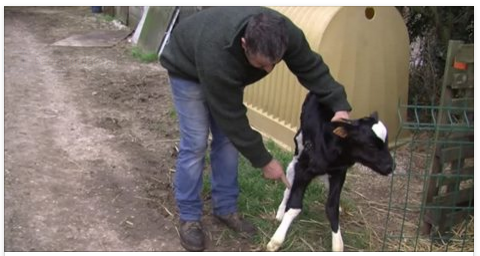
French Farmer Sues Wind Farm Over Stressed Cows

Published December 10, 2015

CaptureFrance, host of the U.N. climate conference, prides itself on being one of the world’s top innovators in wind energy technology, and wind turbines have become a symbol of the country’s commitment to clean energy. But the French government is coming under fire from farmers and others who say the proximity of some of the turbines is hurting wildlife and cattle. VOA Europe Correspondent Luis Ramirez went to a dairy farm in the northern Picardy region to get one farmer’s story

FOLLOW LINK TO LISTEN TO THE FARMER EXPLAIN WHAT HAS HAPPENED TO HIS ANIMALS AND LIFE.