The South Gippsland Shire Council and local residents have won a legal fight against the Bald Hills Wind Farm (BHWF) near Tarwin Lower, about 150 kilometres south-east of Melbourne.
Key points:
A council in Victoria’s south-east has won a historic legal battle against a wind farm near Tarwin Lower
Last year, the operator of the Bald Hills Wind Farm sued the South Gippsland Shire Council after a report found turbine noise was affecting the wellbeing of nearby residents
The Supreme Court yesterday ruled there were no legal errors made by the council
The operator of the windfarm sued the council in March last year after it commissioned an independent report, which found noise from the farm’s turbines was having an adverse impact on the comfort and wellbeing of residents.
The company appealed against the council’s findings and sought a judicial review of the report, claiming it was incorrect and unlawful, but the Supreme Court yesterday ruled no legal errors were made throughout the council’s investigation….
The Ontario Court of Appeal has upheld a lower court decision saying the Ford government was within its rights to cancel numerous renewable power projects that had not yet met a critical milestone in the approvals process.
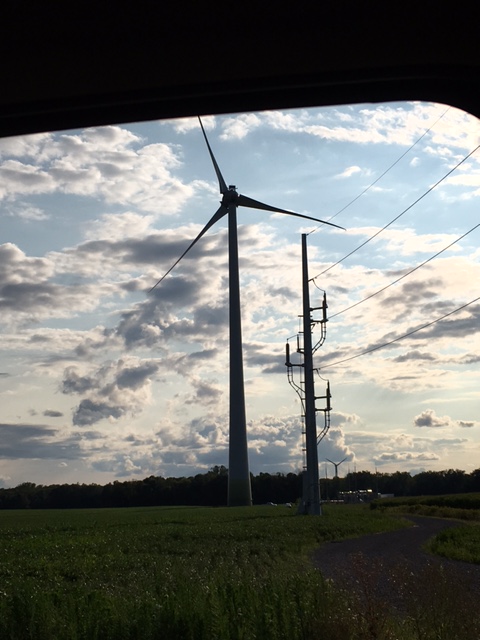
I am beside myself with these frigging turbines. Whomping and Roaring through the house. House is vibrating. My body is vibrating. My chest feels likes it’s going to cave in. My ears hurt and are plugged. My sinuses are burning. My headache has been constant for 9 days straight. Vertigo has been a huge challenge ALL day. Ears are screeching.
I’m too damn tired to drive away from my home and sleep in some parking lot……..
Industrial Wind Turbines pose tremendous risks to Lake Erie, Lake Ontario
New York now making reckless push to industrialize recreational waters
July 15, 2020 Press Release
What You Need to Know
New York State is considering allowing massive industrial wind turbines to be installed within just a few miles of the shore lines of Lake Erie and Lake Ontario.
The stunning panoramic views, ecology and economies of the lakes are at risk.
Save Ontario Shores calls on Gov. Cuomo to stop the assault on Upstate New York to benefit New York City’s energy needs.
“Both papers present cause for concern for all existing lake stakeholders including recreational boating, fishing, tourism, commercial shipping, and wildlife-especially bird and bat seasonal migration,” said SOSVice President Kate Kremer.
“All shoreline communities of the United States and Canada should be concerned and attentive to this reckless push to industrialize these international waters. The stunning panoramic views, ecology and economies of the lakes are at risk.”
The White Paper states that
“if feasible, renewables development in the Great Lakes can play a key role in New York’s path to a diversified clean energy economy.”
NYSERDA proposes development of a feasibility study to consider wind energy development in Lake Erie and Lake Ontario through a “framework that is sensitive to environmental, maritime, economic, and social issues while considering market barriers and costs.”
This feasibility study “would consist of three primary components: stakeholder outreach, analysis and policy options,” and would include interactions “with a wide variety of governmental agencies, industry, non-profit and for-profit organizations, indigenous nations and other community groups and organizations that may be… supportive or adversarial to the development.”
The White Paper admits that in the near term, “Great Lakes wind projects are unlikely to be cost-competitive,” but ends with a comment which should be most concerning to Western New Yorkers:
“…such projects would interconnect in the region of the state with the greatest proportion of renewable energy development relative to native load…”
This is a serious problem, according to New York’s grid operator, because new renewable energy will displace older renewable projects upstate unless transmission upgrades allow the power to be transported downstate. Upstate already has 88% zero emissions electricity generation. These lakes are along way from the energy needs of New York City and Long Island where 70% of their electricity is generated from fossil fuels. “Offshore industrial wind turbines will need to be massive in order to be cost competitive because they are incredibly expensive to install,”
Great Lakes of North America
Kremer said. “Lake Erie and Lake Ontario are less than 60 miles wide making proximity to the shoreline closer to shore than ocean-based turbines. Lakes Erie and Ontario are the smallest and already the most stressed of the five Great Lakes from decades of industrial runoff and other uses along their shores.
“Stirring up legacy pollutants that are in the sediment of the lakes is an environmental disaster in the making. The lakes need restoration, not additional stresses.”
The SGEIS is an environmental document focusing on ecological impacts of the Climate Leadership and Community Protection Act and it discusses the merits of wind turbines in Lake Erie and Lake Ontario in order to meet the Act’s goals. This DPS document has a more aggressive goal than the White Paper, stating, “Great Lakes offshore wind is expected to contribute to the 70 by 30 goal in addition to oceanic offshore wind.” DPS expects completion of the Icebreaker Wind project in Lake Erie off Cleveland, Ohio,will “renew interest in off shore wind in the Great Lakes…and therefore warrants additional analysis in this SGEIS.
”The Icebreaker project was recently given a permit that includes the condition that turbines be shutdown at night for half the year due to danger to migrating bird and bats, highlighting the environmental devastation Great Lakes turbines can have.
The SGEIS report states 66 percent of New York’s Lake Erie waters and 17.6 percent of its Lake Ontario waters might be suitable for development. Industrial wind turbines would be sited within 10 miles of the Lake Erie shoreline and within one to two miles of the Lake Ontario shoreline. “The 70 by 30 goal will require a massive amount of land in scenic agricultural upstate towns whose right to zone for these industrial projects has been diminished,”said SOS President Pam Atwater.
“Residents are rising up in revolt against these projects. They are bringing forth lawsuits. So now Albany comes up with the idea to industrialize one of New York’s most attractive and economically important assets by placing industrial wind turbines a few miles offshore in the lakes. We have been fighting an onshore industrial wind project for many years on lake shore land and now the State is planning them in the Great Lakes. This is an all-out assault on Western New York from land, sea and air.”
Significant impacts include area-use conflicts that would result in the displacement of commercial and recreational vessels from fishing grounds, and/or displacement of fish from fishing grounds. Offshore wind energy may limit certain fishing practices, restrict access to fish, or displace fish from traditional fishing areas.
Proximity to the shoreline would create unavoidable visual impacts.There will be habitat impacts and bird and bat collisions. Although the SGEIS does concentrate on environmental issues, there are two significant technical issues pertinent to Great Lakes wind presented in the paper which must be overcome in order to achieve the goal of contributing tothe70 by 30 goal,according to SOS Energy Committee member Steve Royce, who researched both papers.
First, there are limitations in the size of commercial ships which can safely navigate the locks and waterways in and leading to the Great Lakes.Because of this limitation, only turbines less than 4 megawatts could be transported and installed, unless “development of a new or adapted fleet of construction vessels” is achieved. “A limit of four megawatts in turbine size may make development in the Great Lakes economically unfeasible.Larger turbines would be needed to justify any project in the Great Lakes,”said Royce.
Second is the problem of ice in the Great Lakes. While floating foundations are being developed for use with turbines in the oceans, freshwater ice presents a problem to this technology due to lateral forces imparted by ice and freezing of the substructure.
“Whether wind turbines will be installed in Lake Erie and Lake Ontario as part of the 70 by30 goal, one thing is for certain: it will happen unless our state leaders can be made to recognize that the ecology of the lakes,and the beauty for which New York was once known are more important than an intermittent, undependable source of a relatively minute amount of electricity which might be achieved from our lakes,”
Royce said.
“We are calling on Gov. Cuomo to stop the assault on Upstate New York. Scenic rural areas, including Lake Erie and Lake Ontario, are now threatened by massive industrialization due to his renewable energy goals,”said Atwater.
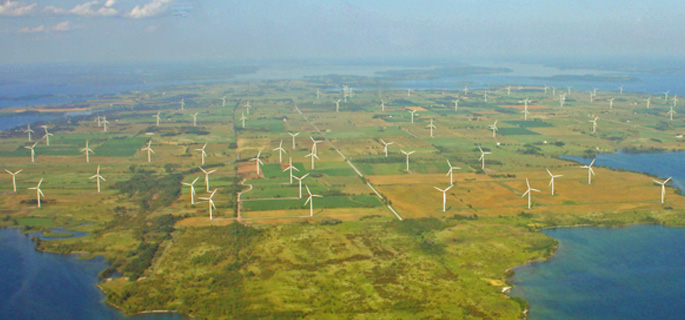
On Shore industrial wind turbines seen in an aerial view of Wolf island, Lake Ontario
Two ships traveling the Welland Canal in Ontario collided. Thankfully no injuries to the crews on board were reported. One was transporting coal and the other industrial wind turbine components.
“As is often the custom in Ontario on hot humid summer days, most of the IWT (industrial wind turbines) took the day off so the 4,800 MW of capacity they have was virtually silent. Had they operated at 100% of capacity they would have delivered 115,000 MWh but instead they only managed to puff out 7,440 MWh and had 400 MWh curtailed (at 11 PM) meaning they operated at a level of capacity of 6.8% including the curtailed MWh. As the morning broke at hour 9 AM they generated 8 MWh or 0.017% of capacity. Fortunately, we didn’t need their power as nuclear, hydro and gas easily supplied our needs throughout the day even though total market demand reached 22,641 MWh and Ontario demand peaked at 19,342 MWh or 402,000 MWh for the full day. Our net exports were north of 45,000 MWh which earned us ratepayers only about $750,000 while costing us close to $7 million.”
Francis Racine Published on: July 3, 2020 | Last Updated: July 3, 2020
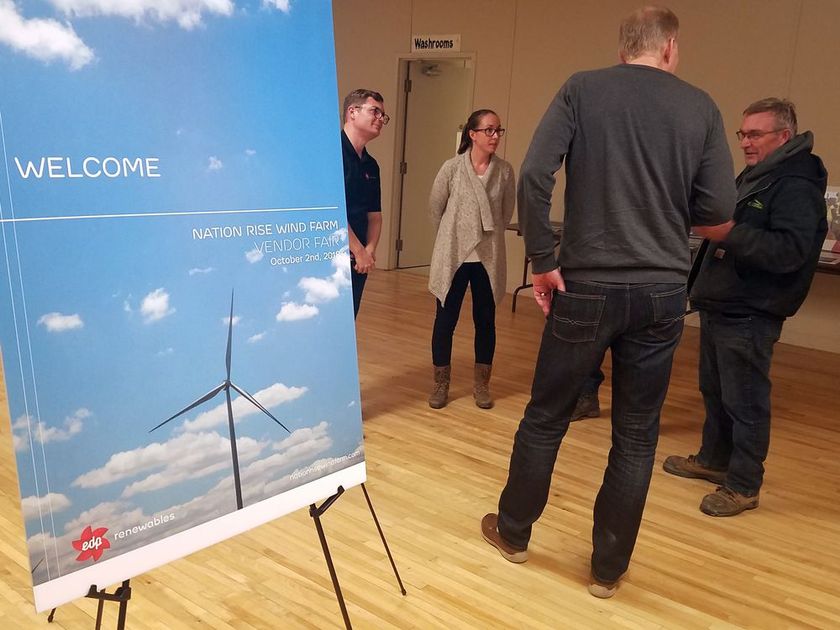
NORTH STORMONT — A group of North Stormont residents said they will continue opposing EDP Renewables’ Nation Wind Rise Farm, which they deem harmful to their community.
The project will see the completion of 29 wind turbines in the northern section of the township. Its timeline has been marred with controversy, opponents to the project slowed down its approval as much as they could, then appealed it to the Environmental Review Tribunal, then asked Ontario Minister of Environment, Conservation and Parks Jeff Yurek to kill the approval when they lost their appeal.
Construction came to a grinding halt in December, Yurek’s decision to revoke its Renewable Energy Approval (REA), citing concerns for the safety of local bat populations. EDP Renewables appealed the minister’s decision in April to the Ontario Superior Court of Justice, who reinstated the project’s approval in its decision in early May….
Nation Rise Wind Project , North Stromont Township, Ontario
We do not consent
An open letter to: Ontario Attorney General Doug Downey, Premier Doug Ford, Minister of Environment, Conservation and Parks Jeff Yurek.
In September 2019, residents of North Stormont Township and abutting townships sent Eastern Ontario Health Unit medical officer of health Dr. Paul Roumeliotis, as well as the premier, the attorney general, the ministers of health, environment, and energy a notice of non-consent. It was signed by people of all ages— children and adults.
The people do not consent to any “discharge of contaminant,” e.g., environmental respiratory contaminant(s) in any form; vibration, shadow flicker, infrasound/low-frequency vibration or noise.
This week, the residents are again sending a Notice of Non-Consent to the Government of Ontario’s attorney general, premier, and Minister Yurek, again telling you they do not consent to any “discharge of contaminant.”
They do not consent under the Nuremberg Code, to be made a medical experiment for a turbine size, make and model never tested in Ontario, erected in clusters, with many close to homes – just over the legal 550-metre distance – established when turbines were much smaller.
It is known that infrasound can travel 20 kilometres. Residents in the approximate ringed areas are in danger. The people did not consent.
No one in the project or surrounding areas agreed to be exposed to infrasound, low-frequency noise, vibration or shadow flicker; they never agreed to having individual or clustered turbines in close proximity to their homes.
The health impacts are known in other Ontario industrial wind projects.
The Ontario facts are known; Ontario residents do not consent.
I believe it is criminal negligence by the current Ontario government to knowingly expose thousands more residents of all ages to harm by allowing the Nation Rise Wind Farm project to proceed.
Legislation similar to the legislation which stopped the White Pines Wind project must be enacted to permanently cancel the Nation Rise Wind project.
Did you think wind power is green energy? Not in pristine Norwegian wilderness, it isn’t. Learn more about how wind turbines are tearing apart Norway, its nature, and its culture, and not saving the climate. This video series aims to bring Norway’s wind power controversy to an international audience.





 Mothers Against Wind Turbines Inc.