All posts by mum4kids

A Holiday season spent reading ‘worthless pile’ of turbine documents

blade_railway_20171221_073210FB_letter
Wind turbine blades are shown being transported by rail through Dundas County.

National Valley News| December 31st, 2017| Letter to Editor

Good morning, Ms. Wynne.

First off, thanks for taking the time to read my last letter to you and getting back to me.

That said, I still have not heard back from Mr. Ballard nor Mr. Thibeault, nor did you answer my two questions.

I acknowledge that my last letter was a tad long and that you may not have had the time to read the whole thing, and as such I am re-asking my two questions and await your response.

1. Given that the timing of the Notice of Posting to the Environmental Registry is completely inappropriate, will you repost the 45-day period to start January 1, 2018?

2. Who is ultimately accountable to the citizens of North Stormont when problems arise during the construction and 20-40 year operational period of the Nation Rise Wind Farm Project? Do we send our bills to the Premier of Ontario, the project developer/owner or to the participating land owners who invited the foreign owned wind developer into the township in the first place?

While waiting for you to answer my two questions, I spent numerous hours between field and office work reading the thousands of pages of EDPR prepared documentation in the off chance that you will not move the end of Christmas Day deadline to submit comments into the MOECC Registry.

What are my conclusions to date, you may ask?

Well, the EDPR-prepared documents are generously sprinkled with hundreds if not thousands of promises to the people, birds and bats and the environment of North Stormont.

For example, EDPR is promising that each turbine will not kill more than 10 bats and 14 birds per year, they will keep turbine noise within the old (not new) MOECC noise guidelines (we’ll hardly hear them like a soft whisper at most) and they will “lightly grade“ the areas where the access roads and lay down areas will go in.

There are two problems with this.

1. EDPR seems to have problems “keeping promises” at least to my wife and me. Perhaps others on my distribution list have had better experiences. EDPR made one promise to me and another to my wife during the so called “consultation meetings” with citizens of North Stormont, and sadly they are zero for two in keeping their promises with us;

2. Your Ministry of Environment and Climate Change (MOECC) does not appear to have the tools, resources, and/or interest to strictly enforce wind turbine companies’ promises. The most recent example of this came to light this past week in the Kincardine area where citizens have lodged numerous complaints about noise emanating from the Enbridge Underwood Wind Project. The turbines have been in place since 2007 and given the number of complaints received since the project start up the MOECC and Enbridge decided to perform a noise audit in 2011. Here comes the head scratcher, we are on the verge of the end of 2017 and the noise audit is still not completed. The MOECC confirmed that the MOECC and the wind project developer have been going back and forth with each other for over six years and they still can’t figure out whether there is a problem or not with noise levels emanating from the turbines. In the meantime citizens within the project area continue to have their lives disrupted because of the turbines.

This is unconscionable in 2018 Ontario.

Ontario is blessed to have an Auditor General that is absolutely committed to rooting out waste and mismanagement in Ontario. An example of this happened again this past week where Ms. Lysyk dropped another bombshell on the Energy File where she reported out that private electricity generators fleeced the rate and taxpayers of Ontario to the tune of some $260 million over the past few years.

The Energy File seems to be in complete and utter disarray.

Again Ms. Wynne I urge you to cancel the Nation Rise Wind Project to avoid further embarrassment to your government and if that is not possible just yet, please allow us to enjoy our Christmas season without the need to continue reading the worthless pile of turbine documents.

I look forward to hearing your answers to my two questions soonest.

Thanks for your time and attention.

Raymond Grady,
Crysler

In your own words

wind turbine shadowGatehouse Media found more than 450 families who have publicly complained about the impacts of living near wind farms. Have a similar experience? Tell your story.

Tell Gatehouse Media about your experience living near an industrial wind farm. 
All submissions will be considered for publication.

Questions? Contact them.
Published stories can be viewed at:
http://gatehousenews.com/windfarms/in-your-own-words/

Big Wind- An Out of Date Solution

Turbines_J.-Marijs_Shutterstock

Rutland Herald| Letter to Editor|December 28th, 2017

A recent Rutland Herald editorial, entitled “Powering up,” concluded that we need to move with urgency toward the renewable power of the future. While that is correct, the editorial goes on to complain that “old ways” of thinking dominate the discussion in Vermont. At issue: the editorial then proceeds to propose “old ways” to move us forward.

When it comes to energy development in Vermont, the industrial wind industry leads the “old way” pack. Wind operators and developers have been living off federal subsidies since the early 1990s and have been wreaking havoc in Vermont for just as long. It’s time to boot them out of the state and employ creative Vermontsized energy solutions.

The editorial employs the “old way” strawman tactic when citing the arguments of industrial wind opponents. Legitimate concerns of Vermonters are minimized when the only argument acknowledged against ridgeline destruction is to mock “the exquisite timidity of those who grieve over birds killed by wind turbines.” It’s a cheap shot that does nothing to advance the conversation.

We should instead be talking about the entire range of problems industrial wind development brings to Vermont: mountaintop dynamiting, destruction of intact eco-systems, stormwater runoff, habitat destruction, habitat fragmentation, noise and health impacts to neighbors and wildlife, safety risks, community division, aesthetic degradation, tourism, property devaluation, and, yes, impacts on birds, bats, and even bears.

We should also talk about what does and doesn’t work. As environmentalist Suzanna Jones recently told us, “Despite the platitudes of its corporate and government backers, industrial wind has not reduced Vermont’s carbon emissions. Its intermittent nature makes it dependent on gas-fired power plants that inefficiently ramp up and down with the vicissitudes of the wind. Worse, it has been exposed as a renewable energy credit shell game that disguises and enables the burning of fossil fuels elsewhere.”

The editorial expresses concern about mass extinction facing numerous species around the globe. Bravo! Then let’s protect the ecosystems that will enable those species to migrate, adapt and survive and abandon the “old way” of thinking that allows our ridgelines and forest habitat to be destroyed by energy developers and their energy sprawl. As wildlife biologist Sue Morse tells us: “New England’s ridgelines will play an increasing and integral role as global climate change forces countless species of plant and animals to seek new habitats in which to adapt and survive.”

The editorial call for an improved large-scale infrastructure capable of transmitting intermittent power from remote, industrial-scale wind plants is another “old way” solution; rural areas are sacrificed to enable our unsustainable wastefulness. Treasured areas like the former Champion Lands, once valued for their ecological significance, become collateral damage. Large-scale transmission from rural to urban areas is a misguided “old way” use of our resources.

There is both wind and sun in our urban areas (Lake Champlain Wind Park, www.champlainwindpark.com) anyone?). We should be supporting renewable development in already-developed areas while protecting undeveloped areas.

We should also be emphasizing community scale generation facilities sited in the communities that they serve. This would reduce energy loss over lengthy transmission lines, improve system reliability, and preserve our vital wildlife habitat. This is the Vermont-scale approach that is in tune with Vermont values.

Some view turbines on distant ridgelines as a visible sign of our commitment to climate action. They’re wrong. A closer look shows that those turbines are exacerbating the very climate impacts that we wish to avoid. Industrial wind plants are putting money in the pockets of investors, developers and a few landowners, but they’re not addressing the very real and pressing problem of climate change.

The industrial wind lobby is fond of saying say we need to make sacrifices. We do. But where those sacrifices come from, whether or not they’re effective and, most certainly, who profits and who loses from them should shape our solutions. We need to change the way we live, we need to stop being so wasteful, and we need to support solutions that actually work. We need to invest in unsexy work of weatherization, efficiency and demand reduction. We should support renewable development in already-developed areas and prevent new development in resource rich areas. We should be focusing on the least destructive renewable technologies and develop microgrids around community scale generation.

Yes, we need to sacrifice, but that doesn’t mean sacrificing our natural resources. It means changing the way we live and protecting the earth. All of it.

Noreen Hession is a retired engineer, community organizer and environmental activist who lives in the Northeast Kingdom.


Robbed of Health

Emmetsburg News| Letter to Editor|December 27th, 2017

Body Reflex affected by Industrial Wind Turbines

Residents, visitors and sensitive passerby, your daily life will be gravely impacted by the proposed 170 to 198 Industrial Wind Turbines 24/7 constant blinking, constant shadow flicker, constant noise, constant vibrations, constant electro-magnetic energy emissions because your body reacts to the overstimulation. You do not choose to react. The miraculous body has an autonomic reflex similar to the knee jerk response. The body PCO2 Respiratory Reflex becomes affected.

The Pre-Construction Analysis provides evidence this specific Palo Alto?County Industrial Wind Project will affect our health. Removing any doubt. Sadly, you will be robbed of health.

The PCO2 Response Reflex in humans means automatically your body processes react to exposure. You have excessive CO2 and the brain and lungs hyper-ventilate. The autonomic nervous system reflex becomes affected leading to brain lesions over time in the brain stem. The adverse evolutionary problem affecting respiratory control has been studied since the 1980’s through brain MRI.

Since 1988, Dr. Mariana Alves-Pereira from Lusofona University, Portugal has been studying and clinically caring for patients who reside in close proximity to Industrial Wind Turbines from around the globe. The same causative link are found in in patients living in Industrial Wind Turbine Projects in Japan, Finland, Spain, New Zealand, Russia, China, Canada, US; wherever.

Unfortunately, wind does not stay on the private property line. Acoustical trespassing of harmful emissions intrudes upon anyone in electro-magnetic energy wave. Concerned citizens, I care about your health, feel free to contact me for more information.

Dr. Alves-Pereira presented these findings to the Minnesota Legislative Energy Commission on?October 19, 2017 and I shared them with the Board of Supervisors prior to their vote on 10/24/2017. Shockingly, none of the Supervisors read the pre-construction evidence presented on this project.

Lois Stillman

Emmetsburg

No Wind Turbines on Lake Erie

lake erie ice
Lake Erie Shoreline

Cleveland.com|Letter to Editor|December 27th, 2017

By Other Voices
I am concerned about the proposed wind turbines in Lake Erie. The foreign company that wants to do this is intends to make money off our natural wind patterns by selling electricity to CPP. They do not care about the impact that this project has on us, or the local ecosystem. They just want profits.
Here are my concerns:

1. Placing these unsightly turbines in the lake would have an impact on fish. They could disrupt natural areas that support perch, steelhead, and walleye.

2. They could impact the migratory patterns of birds and local avian species such as bats and terns. They could have a negative effect on local birds like seagulls, barn swallows, and herons.

3. They have been banned in Canada.

4. They are ugly. Who wants to look at an awesome Lake Erie sunset with a wind turbine in it?

5. They create a huge navigational hazard to boaters. These turbines are proposed off a prime boating area NW of Cleveland. The 26,756 registered boaters of Cuyahoga county do not want to navigate around these obstructions during their relaxing day on the lake.

No turbines!

Jim Herold,

North Olmsted

Fully and Finally Resolving Falmouth’s Wind Debacle

mjoecool's avatarFalmouth's Firetower Wind

Entering-Falmouth-sign-4-990x250

Closure rides on the Elder et al v. Town of Falmouth Case

This pending case appeals the building commissioner and the ZBA’s decision wherein both are claimed to have incorrectly interpreted the by-law to allow the issuance of a building permit (Mar 2010) for Wind 2.

The Eilder group’s defense is grounded in a related action by the Court (Drummey v. Falmouth, 87 Mass. App. Ct. 127 (Feb 2015)), wherein Wind 1 required a special permit as part of a comprehensive bylaw scheme to control wind turbine placement and impact in the town.  Drummey v. Falmouth was the definitive case forcing then Building Commissioner Eladio Gore to order the town to apply for a special permit for Wind 1. Building Commissioner Gore claimed Wind 2 was not addressed in Drummey v. Falmouth, and was thus exempt from his Wind 1 order.

In light of recent events (Falmouth…

View original post 508 more words

2017 WIND TURBINE ACCIDENT REPORT

Summary of Wind Turbine Accident data to 30 September 2017

These accident statistics are copyright Caithness Windfarm Information Forum 2017. The data may be used or referred to by groups or individuals, provided that the source (Caithness Windfarm Information Forum) is acknowledged and our URL http://www.caithnesswindfarms.co.uk quoted at the same time. Caithness Windfarm Information Forum is not responsible for the accuracy of Third Party material or references.

The Summary may be downloaded in printable form here

This is GLOBAL data – see Detailed Accident List with sources and locations

The attached detailed table includes all documented cases of wind turbine related accidents and incidents which could be found and confirmed through press reports or official information releases up to 30 September 2017. CWIF believe that this compendium of accident information may be the most comprehensive available anywhere.

Data in the detailed table attached is by no means fully comprehensive – CWIF believe that what is attached may only be the “tip of the iceberg” in terms of numbers of accidents and their frequency. Indeed on 11 December 2011 the Daily Telegraph reported that RenewableUK confirmed that there had been 1500 wind turbine accidents and incidents in the UK alone in the previous 5 years. Data here reports only 142 UK accidents from 2006-2010 and so the figures here may only represent 9% of actual accidents.

The data does however give an excellent cross-section of the types of accidents which can and do occur, and their consequences. With few exceptions, before about 1997 only data on fatal accidents has been found.

The trend is as expected – as more turbines are built, more accidents occur. Numbers of recorded accidents reflect this, with an average of 22 accidents per year from 1997-2001 inclusive; 70 accidents per year from 2002-2006 inclusive; 135 accidents per year from 2007-11 inclusive, and 164 accidents per year from 2012-16 inclusive.

READ MORE: 
http://www.caithnesswindfarms.co.uk/AccidentStatistics.htm

UrdIpHAK
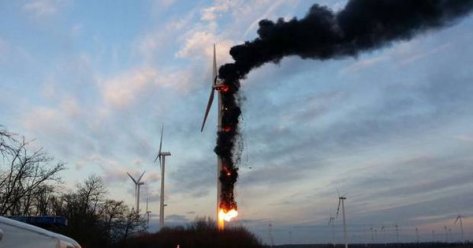
Energie Burgenland Windkraft in flames Dec.2017

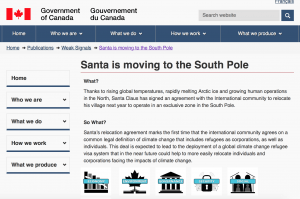
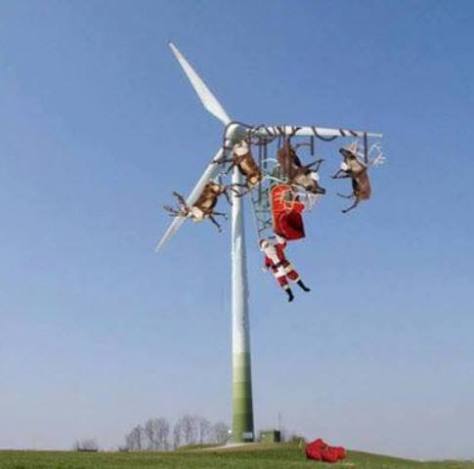
Santa’s Moving to the South Pole

santa moving to south pole
Source: http://www.horizons.gc.ca/en/content/santa-is-moving-to-the-south-pole
SAY WHAT?!  Seriously you cannot make this stuff up and it’s certainly no joke. The Canadian government has been spending our tax dollars on candy cane tainted fluff and it has truly lost its mind. The media world wide has been buzzing (Canada: Santa’s Moving To South Pole Because of Global Warming ) over a recent posting claiming Santa will be relocating to the South Pole as a refugee due to climate change.

Who is Horizons Canada? How is it influencing the political climate in the ongoing battle against the lived experience of harms from wind powered facilities?

Who we are

Policy Horizons Canada, also referred to as Horizons, is an organization within the federal public service that conducts strategic foresight on cross-cutting issues that informs public servants today about the possible public policy implications over the next 10-15 years.

Horizons’ mandate is to identify emerging policy issues and explore policy challenges and opportunities for Canada, as well as to help build foresight literacy and capacity across the Government of Canada. Horizons’ experienced futurists provide expert advice on emerging issues, foresight and scanning through one-on-one discussions, interdepartmental meetings, and facilitated workshops. All engagement requests are discussed collaboratively at the Horizons’ senior management table on a weekly basis. To engage with Horizons, please submit your request to questions@horizons.gc.ca.

Policy Horizons Canada is governed by the Deputy Ministers’ Steering Committee.

Vision: To promote a high and sustainable quality of life within a globally competitive Canada, through the co-creation and advancement of knowledge that informs and structures policy choices for the Government of Canada by way of an integrated and longer-term perspective.

Mission: To provide timely and integrated perspectives on emerging policy issues for the Deputy Minister community by: bridging people, ideas, data, issues and evidence in an open and constructive environment; co-creating knowledge for understanding complex Canadian policy challenges; and experimenting with new tools and methods.

Source: http://www.horizons.gc.ca/en/content/who-we-are

Exploring trends and postulating the future, Horizon Canada sees government policies dancing with wind and other renewables such as solar, fueling everything from the grid,  to the internet and transportation.

Emerging “Urban” Electric Grids

Increasing demand for electricity coupled with emerging sources of electricity production and storage could require new (smart, decentralized) approaches to managing the urban power grid. Over the next 10 to 15 years, cities’ power sources may shift to incorporate much higher levels of renewable energy. A growing digital economy powered exclusively by electricity, coupled with a rapid transition from fossil fuel to electric fuel for transportation(link is external) and housing could substantially increase the demand for electricity in urban areas. At the same time, declining costs of decentralized and distributed energy systems could reinforce urban energy security and pave the way for cities to reach their climate change targets. The installation of in-home batteries and renewable energy sources (solar or wind power) on private homes, public buildings and infrastructure facilities (such as warehouses and factories), and the use of vehicle-to-grid technology(link is external) could eliminate concerns over managing peak demand and allow power exchanges between households. This shift may increase pressure on centralized power utility companies to adopt a business model focused on decentralized energy systems with multiple owners.

Canada 2030: Scan of Emerging Issues – Infrastructure

santa and reindeer 3


Puppets on a string

Puppets-cover-640x430

Credit: Emmetsburg News|December 19th, 2017

At the Supervisors meeting of Oct 24, they adamantly denied the accusation that they had effectively let Invenergy and MidAmerican Energy write the Palo Alto County Wind Energy Ordinance. However, documents obtained by way of the Iowa Open Records Act indicate otherwise. The original ordinance, written Aug 11, 2016, clearly did not meet with Invenergy’s and MidAmerican Energy’s approval. In a memo from Invenergy and MidAmerican Energy to the Supervisors dated Aug 26, 2016, the company states, “there are some key provisions that must be changed if the county desires to attract and encourage the development of wind energy conversion systems” Following are some specific examples comparing the original ordinance with the one modified to meet Invenergy’s demands.

Compliance with Palo Alto County Zoning Ordinance: Original: “requirement to obtain a certificate of zoning compliance in accordance with Article 9, Section 5 of the Palo Alto County Zoning Ordinance.” – Modified: zoning compliance eliminated.

Setbacks from Permanent Residential Dwellings: Original: 2640 ft.- Modified: 1500 ft.

Setbacks from Property Lines: Original: 1000 ft. – Modified: 120% of height of wind device (approximately 600 ft).

Setbacks of Wind Energy Accessory buildings from permanent residential dwellings: Original: 2640 ft. – Modified: 1500 ft.

Shadow Flicker: Original: “No wind energy conversion system shall be installed in any location where shadow shall fall on any existing residential structures.” – Modified: “The owner-developer shall use shadow flicker computer modeling to estimate the amount of shadow flicker anticipated before mitigating any of it.” (How reassuring it is to learn that how I feel about my health will be determined by an energy company’s computer model.)

Drainage Systems: Original: “Permit required if underground electrical construction activity spans across organized drainage districts and private tile systems. – Modified: No permit required for affecting private tile systems.

These are just some of the many changes demanded by Invenergy and MidAmerican Energy to increase the profitability of their project. Clearly most of the Supervisors, with assistance from other county employees, capitulated to every demand, without considering residents who are adversely affected by the project, and who elect and pay these county officials to look after their well-being.

Instead, these same officials have forfeited the health, environment, and homes of some of their constituents to generate huge profits for companies like Invenergy, Mid-American Energy and its billionaire investors like Warren Buffet, and large wealthy landowners, most of whom are absentee. Nearly all major projects such as this involve costs and downsides, as well as any benefits. In this case there are many downsides, starting with the ill health effects on humans caused by shadow flicker, audible noise, and worst of all, infrasound, which can cause stress, sleeplessness, and nausea. Further, there can be adverse effects on farm animals as well. Also, wind turbines can kill many birds, especially when placed too close to lakes and wetlands. Therefore, it is so important to follow regulations and perform due diligence, neither of which has been undertaken by our county officials.

Dr. Stephen Mathis

Professor Emeritus,

Shippensburg University,

Emmetsburg